 MomSkoop

Family estrangement rarely comes up in casual conversation. People will happily discuss a breakup or a job loss, yet a missing sibling or parent often gets a quick change of subject.
That silence is the part that interests me most, because feelings tend to grow louder when nobody names them. The distance might bring relief, sadness, or a confusing mix of both on the same afternoon. Understanding those reactions can make them feel less strange and much easier to manage.
1. Grief Without a Funeral

Sympathy cards exist for nearly any loss, except the one where the person is still alive and simply not in your life.
Family estrangement can create a type of grief with no ceremony, no casseroles, and no clear ending.
The person is somewhere out there, yet emotionally absent, so the mind keeps the door half open.
That open door can make sadness hang around longer than you expect.
Birthdays, holidays, and even a familiar song can bring the feelings rushing back, sometimes years after the last phone call.
It helps to treat this grief as real, because it is.
You might write a letter you never send, light a candle on a hard date, or plan a fresh tradition for the holidays.
Friends may not know what to say, and that is okay.
You can tell them plainly that you are grieving and simply want someone to listen.
A counselor who understands estrangement can also give the loss a name and a shape.
Grief usually softens when it gets space, not when it gets shoved in a closet behind the winter coats.
2. Guilt and Shame That Tag Along

Relief and guilt make an odd pair of roommates, yet they often move in together after a family split.
Plenty of adult children who step away feel lighter, then wonder an hour later if they are a bad person.
Parents on the other side can carry their own heavy bag.
Many worry that friends and neighbors will judge their parenting, so they stay quiet rather than risk awkward looks.
Part of the problem is cultural.
Our society has clear scripts for divorce or loss, but very few kind words for someone who no longer speaks to a mother or brother.
Shame tends to grow in silence, so finding one safe listener can make a real difference.
That could be a trusted friend, a therapist, or an online support group for people living with estrangement.
It also helps to separate guilt from responsibility.
Feeling bad about a situation does not automatically mean you caused it, and choosing safety is not the same as being cruel.
Try speaking to yourself the way you would speak to a friend in the same spot.
You would probably offer patience instead of a lecture, and you deserve that same courtesy.
3. Anger That Lingers

Anger can be surprisingly patient.
Long after the last argument, it may still pop up while you are washing dishes or replaying an old conversation in the shower.
Sometimes the anger comes from being cut off without warning.
Other times it grows from years of conflict that never got settled, like a pile of laundry nobody wants to fold.
Unresolved anger is tiring to carry around.
It can leak into your mood, your patience with coworkers, and the way you react to small annoyances like a slow driver.
Anger itself is not the villain here.
It often signals that something felt unfair or hurtful, and that message deserves attention rather than a gag order.
Healthy outlets give the feeling somewhere to go.
A brisk walk, a punching bag, a journal full of messy honesty, or a long talk with a therapist can help release some of the pressure.
Some people find relief in writing out exactly what they wish they could say, then tearing it up.
Others prefer to explore the old patterns in counseling to understand where the hurt started.
You get to choose the approach that fits your life.
The goal is not pretending you are fine, but slowly loosening the grip.
4. Higher Risk of Anxiety and Depression

Family distance does more than change your holiday plans.
Estrangement is linked with higher levels of depression and anxiety, along with lower overall psychological well-being.
The connection tends to be stronger when someone is cut off from several relatives at once, such as both parents and siblings.
Losing a whole branch of the family tree can remove a lot of support in one swoop.
Ongoing stress plays a role too.
When a painful situation stays unsettled for months or years, the body and mind can stay on alert far longer than is comfortable.
Watch for signs that sadness or worry is sticking around.
Trouble enjoying hobbies, racing thoughts at night, or a heavy feeling that will not lift for weeks are worth taking seriously.
Talking with a doctor or licensed therapist is a solid next step if those signs show up.
Many therapists now offer video sessions, which can help if your schedule or budget feels tight.
In the United States, you can call or text 988 to reach the Suicide and Crisis Lifeline at any hour.
Reaching out is not a weakness, and it can be one of the bravest moves on a hard day.
5. A Missing Sense of Belonging
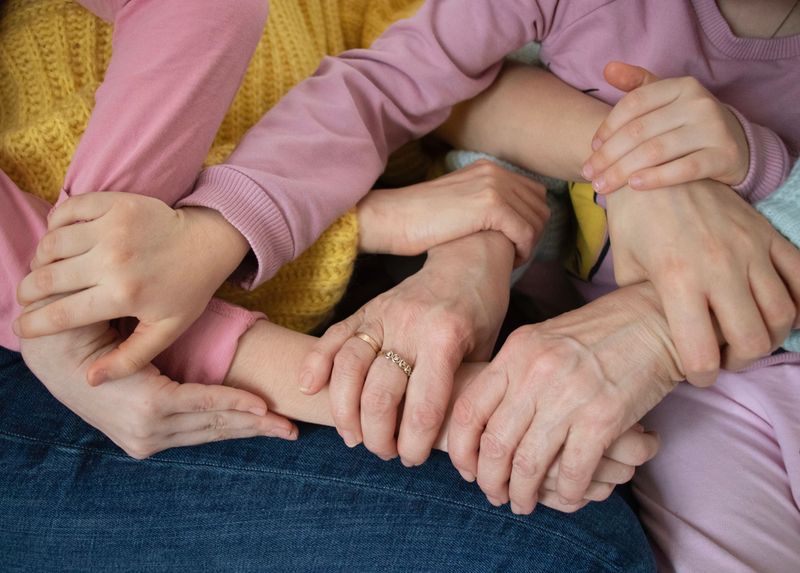
Group chats named Family Squad can sting when yours went silent long ago.
Humans are social creatures, and family is often the first place people learn where they fit.
When that connection breaks, the loss can feel bigger than one relationship.
Some people describe feeling a step apart from friends whose parents still call on Sundays and show up at graduations.
Social media does not always help.
Scrolling past matching holiday pajamas can make it seem like you missed a memo everyone else received.
The good news is that belonging can be built in other places.
Many people create a chosen family of friends, neighbors, mentors, or community groups who offer steady support.
Start small if big gatherings feel overwhelming.
A weekly coffee with one friend, a book club, a volunteer shift, or a rec sports team can slowly grow a sense of home.
Traditions can be reinvented too.
A Friendsgiving potluck or a birthday hike with people who care about you might become something you look forward to each year.
Belonging does not have to come from shared DNA.
It can come from people who keep showing up, remember your favorite snack, and ask how your week went.
6. Living Without Closure

Movies love a final scene where estranged relatives hug it out in the rain.
Real life rarely follows that script, and many family rifts simply stay unfinished.
For people on the receiving end, the hardest part can be not knowing why.
Confusion, shock, and endless guessing can loop through the mind like a song stuck on repeat.
Some families cycle between distance and reconnection several times.
Each round can reopen old hopes, then knock them down again, which makes steady footing hard to find.
Closure, it turns out, does not always come from the other person.
Sometimes you have to create your own ending, even when the story feels incomplete.
One option is to write down what you know, what you do not know, and what you can control.
Seeing those three lists side by side can make the uncertainty feel a bit more contained.
Another approach is setting a personal boundary around how much time you spend replaying the past.
You might give yourself fifteen minutes to think it over, then switch to a walk, a show, or a call with a friend.
Peace can exist alongside unanswered questions.
It just takes practice to let them sit quietly in the corner.
7. Questions About Identity

Daughter, son, sister, dad, the family role you grew up with can feel like part of your name.
When estrangement happens, that label may suddenly have nowhere to land.
A parent who no longer sees a grown child might wonder what parenthood means now.
An adult child might feel unsure how to describe their background when someone casually asks about home.
These questions can feel unsettling, almost like moving to a new town without a map.
Family stories, inside jokes, and traditions often shape how people see themselves.
Still, identity is bigger than one relationship.
Your values, interests, friendships, work, and creativity also tell the story of who you are.
Try listing qualities you like about yourself that have nothing to do with family titles.
Maybe you are the friend who remembers birthdays, the coworker who fixes the printer, or the person who makes excellent pancakes.
You can also decide which family traits you want to keep and which ones you are ready to set down.
Perhaps you hold on to a grandmother’s love of gardening while leaving behind a habit of yelling during disagreements.
Shaping your identity on purpose can feel freeing.
You are writing the next chapter yourself.
8. Self-Esteem Takes a Hit

A tiny voice can start whispering that something must be wrong with you.
After a family split, self-blame often shows up uninvited and stays for dinner.
That voice may replay old criticisms or insist you should have tried harder.
Over time, those thoughts can chip away at confidence in school, work, or dating.
Self-esteem can also suffer when someone grew up in a family that rarely offered praise.
Distance may protect you now, yet the old messages can keep echoing.
Self-compassion is a useful counterweight.
It means treating your mistakes and pain with the kindness you would offer a close friend.
A simple practice is catching a harsh thought and rewriting it.
Swap I ruin every relationship for I am learning, and some situations were never fully in my control.
Keeping a small win journal can help too.
Write down one thing each day you handled well, even if it is answering emails or cooking a real meal instead of cereal.
A therapist can help you sort fair self-reflection from unfair self-punishment.
Confidence often grows slowly, like a houseplant, but it does respond to steady care and a little sunlight.
9. Trouble Trusting Others

If you cannot count on family, who else can you trust?
Many people living with estrangement wrestle with that exact question.
Family is often where people first learn whether others will keep promises.
When that early lesson gets shaky, it can spill into friendships, romance, and even work relationships.
Some people respond by keeping others at arm’s length.
Others may overshare too quickly, hoping to finally find someone safe.
Neither reaction makes you broken.
They are understandable ways of protecting yourself after a painful experience.
Rebuilding trust works best in small steps.
Share a little, notice how the other person responds, and let the relationship earn more over time.
Pay attention to actions more than words.
A friend who shows up when they say they will, respects your boundaries, and keeps your secrets is giving you useful evidence.
It also helps to trust yourself again.
When you notice red flags and act on them, you prove that your judgment works.
Therapy approaches that focus on relationships can offer a safe place to practice.
Trust might feel rusty at first, like a bike you have not ridden in years, but it can return with patience.
10. Loneliness and Pulling Away

Declining party invitations can start as a small break and slowly turn into a habit.
People going through estrangement often pull back from social life without fully noticing it.
Shame, fear of nosy questions, or plain exhaustion can all play a part.
Who wants to explain a complicated family story over chips and dip?
The trouble is that withdrawal can shrink your support network right when you need it most.
Fewer connections often lead to sharper loneliness, especially around holidays.
Society also offers little recognition for this kind of loss.
Without public sympathy, many people feel they are coping in a bubble.
Reconnecting does not require becoming the life of the party.
Texting one friend, joining an online estrangement support community, or attending a hobby class can reopen the door.
Prepare a short, simple answer for family questions so social events feel less stressful.
Something like We are not in touch, but I would love to hear about your trip changes the subject kindly.
Volunteering can be another helpful outlet.
Helping at an animal shelter or food bank adds structure to your week and connects you with people who share your interests, no family history required.
11. Stress That Shows Up in the Body

Your shoulders might know about the family rift before your brain admits it.
Long-term emotional stress often settles into the body in sneaky ways.
Common signs include poor sleep, low energy, and trouble focusing on simple tasks.
Some people notice they catch colds more often or feel tense for no obvious reason.
For those who experienced painful family dynamics, stress responses can look like being constantly on guard.
A certain tone of voice or a holiday commercial might trigger a sudden wave of emotion.
Caring for your body can support your mind during this stretch.
Regular sleep routines, gentle movement, and meals that actually include vegetables are practical places to start.
Calming techniques such as slow breathing, stretching, or a short walk outside may help you feel more settled.
Try a few and keep the ones that suit your schedule and energy.
Do not brush off physical symptoms that stick around.
A checkup with a doctor can rule out other causes and connect you with mental health care if needed.
Your body has been carrying a heavy load.
Giving it rest and attention is not lazy, it is basic maintenance, like changing the oil in a car.
12. Ripples Through Other Relationships

Family drama rarely stays in its own lane.
The stress of estrangement can spill into friendships, marriages, and even group texts with cousins.
A partner might feel unsure how to help, or friends may feel pulled between both sides.
Relatives who stay in touch with everyone can end up feeling torn and guilty.
Old habits can sneak in too.
Without meaning to, people sometimes repeat patterns from the estranged relationship, like shutting down during arguments or avoiding tough conversations.
Clear communication helps keep the ripples small.
Let close people know what kind of support you want, whether that means listening, distracting you, or skipping the topic altogether.
Try not to ask friends or relatives to choose sides.
Giving them room to keep their own relationships can reduce tension and protect the connections you still value.
Couples counseling or individual therapy can help you spot repeating patterns before they cause damage.
Learning new conflict skills may feel awkward at first, like writing with your other hand.
Estrangement may reshape your family, but it does not have to define every bond you build.
The care you put into today’s relationships can become the healthiest family tradition you start.