 MomSkoop

Back in 2013, a short comedy video gave a catchy, rude nickname to a perfectly relaxed face, and the label stuck around for years. The joke landed because so many women recognized themselves in it, even while feeling totally calm inside. That gap between how someone feels and how she looks is what grabs my attention. A woman can be kind, funny, and happy to chat, yet strangers may still walk right past her.
Most of the time, the reasons are tiny and easy to miss. A posture, a habit, or even a pair of earbuds can quietly send a message she never meant to send. None of this means anyone needs to change who she is or smile on command. Still, I think it’s fun to spot the signals, because a few small tweaks can make the friendly person inside a lot easier to find.
1. Crossed Arms and Closed Posture

Folding your arms can feel like the comfiest thing in the world, especially in a chilly room.
Unfortunately, the people around you can’t feel the air conditioning, so they only see the pose.
To an outsider, crossed arms often look like a shield.
Add shoulders turned slightly away from the group, and your body seems to be saying the conversation is happening somewhere else.
The funny part is that many women cross their arms for reasons that have nothing to do with mood.
You might be cold, tired, unsure where to put your hands, or just used to standing that way.
A few easy swaps can open things up without feeling forced.
Try holding a drink, a notebook, or your bag strap with one hand, which keeps your arms busy but your chest uncovered.
Pointing your feet and shoulders toward the person or group you’re near also helps.
People tend to read that angle as an open door, even if you haven’t said a word yet.
Nobody needs to stand like a statue of welcome all day.
Just notice your default stance at parties or meetings, and loosen it up when you’d actually enjoy some company.
2. A Relaxed Face That Reads as Stern

Plenty of women have heard the line, “Are you mad at me?” while feeling perfectly content.
A neutral face, with lips flat and brows resting low, can look serious to someone who doesn’t know you.
Faces simply have different resting shapes.
Some mouths naturally turn down a little at the corners, and some brows sit heavier, so calm can accidentally read as annoyed.
That nickname from the comedy sketch made people laugh because it felt so familiar.
The joke works, but the real takeaway is gentler: your face isn’t doing anything wrong.
If you’d like to soften the look in social settings, small changes go a long way.
Relaxing your forehead and unclenching your jaw can shift your expression more than you’d guess.
A tiny lift at the corners of your mouth helps too.
Think of it as a pleasant thought rather than a full grin, which keeps it natural instead of stiff.
Of course, you don’t owe anyone a cheerful face while waiting for the bus.
Save the adjustment for moments when you want people to approach, like networking events or a new class.
3. Eyes That Rarely Meet Others

A quick glance is basically the doorbell of human conversation.
Before most people say hello, they look for a tiny signal that you’ve noticed them.
When your eyes stay on the floor, the menu, or the wall, that signal never arrives.
Others may assume you’re uninterested, shy, or even a little rude, when you might just be thinking about lunch.
Shy folks often avoid eye contact because it feels intense.
That’s completely understandable, and the goal here isn’t a staring contest that makes everyone uncomfortable.
Short and friendly works best.
Meet someone’s eyes for a second or two, add a small nod, then look away naturally before it gets awkward.
If direct eye contact feels like too much, try looking near the eyes, such as the bridge of the nose.
From a normal speaking distance, the other person usually can’t tell the difference.
Practice in low-pressure spots, like thanking a cashier or greeting a neighbor.
After a while, those brief glances start to feel routine, and you might be surprised how many little chats begin from one friendly look.
4. Earbuds In and Phone Out

Nothing says “please don’t talk to me” quite like earbuds plus a phone held at eye level.
It’s the modern version of a closed sign hanging on a shop door.
To be fair, sometimes that’s exactly the message you want.
A crowded commute or a long day can call for a podcast and zero small talk.
The trouble starts when the habit follows you into places where you’d enjoy meeting people.
At a gym, a party, or the first week of a new job, a screen can quietly block friendly folks who don’t want to interrupt.
Most people feel awkward tapping someone on the shoulder to ask a question.
If you look busy, they’ll often just ask somebody else, and you’ll never know the chat was coming.
One easy fix is to take one earbud out in social spaces.
It shows you’re still tuned in to the room, even while your playlist keeps going.
You could also tuck your phone away for the first ten minutes at an event.
That short window is usually when introductions happen, so being available then makes a real difference.
5. Always Surrounded by a Big Group

Having a big circle of friends is a lovely problem to have.
Still, from the outside, that circle can look a lot like a fortress.
Walking up to one person is easy enough for most people.
Walking up to one person plus six of her friends feels like auditioning in front of a panel.
Nobody wants to risk an awkward moment with an audience watching.
So even if you’re the friendliest person there, newcomers may hover nearby and then quietly drift away.
You don’t have to ditch your crew to fix this.
Simply stepping away for a few minutes, maybe to grab a snack or refill your water, gives people a natural chance to say hi.
Another option is to open the circle a bit.
Turn slightly toward someone standing at the edge and toss them a question, like how they know the host.
Groups that leave a gap in the circle tend to look more welcoming than tight huddles.
It’s a small shift in where everyone stands, but it can turn your group from a closed club into the friendliest corner of the room.
6. Sharp, Ultra-Formal Outfits
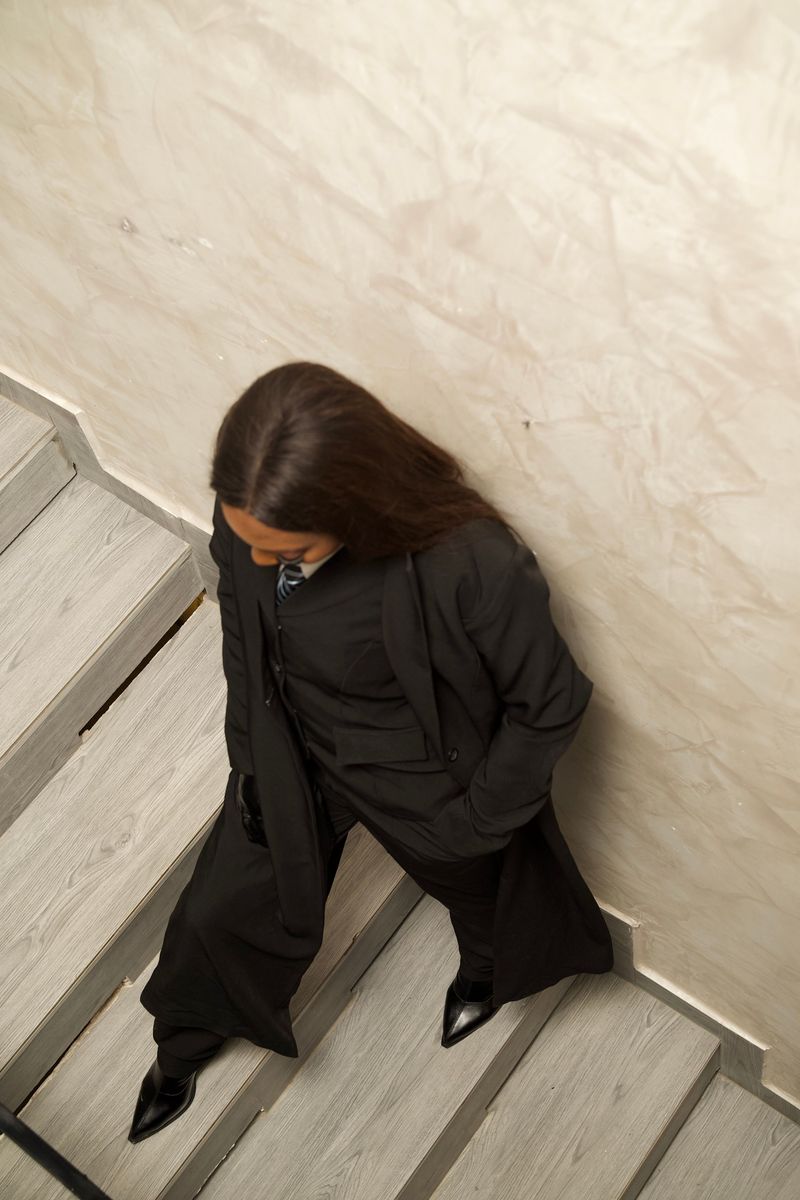
A crisp black blazer with sharp shoulders can make you feel ready to run a board meeting.
Wear that same look to a backyard barbecue, though, and people might wonder if you’re there to audit the grill.
Clothes send signals before you speak.
Very structured pieces, dark colors, and stiff fabrics can give off a serious, in-charge vibe that works great at the office.
In casual settings, that polish can create a little distance.
Others may assume you’re busy, important, or not in the mood for chit-chat, even if you showed up hoping to make friends.
None of this means ditching power suits.
If you love tailored clothes, keep wearing them, because style is personal and confidence matters.
For relaxed events, small softening touches can help balance the look.
Pair a blazer with jeans and a soft knit top, or swap black for a lighter shade like camel, sage, or sky blue.
Flowing fabrics and relaxed fits often read as more laid-back.
Think of it as matching your outfit to the room, so your clothes and your friendly mood tell the same story.
7. Bold, Dramatic Makeup

Sharp winged liner, dark lipstick, and sculpted cheekbones can look absolutely striking.
Some makeup fans even describe certain glam styles as intentionally intimidating, and they wear them proudly.
That’s part of the fun of makeup.
It lets you play with mood, and a dramatic look can feel powerful, mysterious, or a little fierce.
The catch is that strangers may take the fierce part literally.
Heavy contouring and dark lip colors can read as cool and distant, especially in daytime or casual places.
If that’s the effect you want, enjoy it fully.
Not every outing needs to invite conversation, and nobody should feel pressured to tone down their style.
For days when you’d like to seem a bit more open, you can keep one bold feature and soften the rest.
A graphic eye pairs nicely with a rosy or nude lip, while a deep red lip looks friendlier with lighter eye makeup.
Blush is another handy tool.
A touch of soft pink or peach on the cheeks can make a dramatic face look brighter, which keeps the edge while hinting that you might actually say hello back.
8. Walking With Laser Focus

Some women move through a room like they’re late for a rocket launch.
Head up, quick steps, eyes locked on the destination.
That kind of purpose is impressive, and it usually just means you have things to do.
To others, though, it can look like you’re far too busy to be bothered.
People tend to hesitate before interrupting someone who seems deep in a mission.
They don’t want to be the reason you miss a deadline, so they hold back their friendly hello.
At work, this can mean coworkers rarely stop by your desk for casual chats.
Over time, you might seem more distant than you really are.
A simple fix is to build in a few slow moments.
Walk a little slower through the break room, pause by the coffee machine, or look up and greet people as you pass.
Leaving your headphones off during those breaks helps too.
You’ll still get your work done, but coworkers will see a person who’s focused when needed and friendly in between, which is a pretty great reputation to have.
9. Quiet Confidence Mistaken for Arrogance

Saying “no thanks” without a long apology is a skill.
Strangely, it’s also a skill that sometimes gets a woman labeled as stuck-up.
Confident people often speak plainly, set clear boundaries, and don’t fill silences with nervous chatter.
Those habits are healthy, but some observers mistake calm certainty for coldness.
Those reactions often say more about the viewer’s comfort level than your attitude.
Even so, a few small touches can help others see the kindness behind the confidence.
Asking questions is a great start.
When you show curiosity about someone else’s ideas or weekend plans, you signal that you value them, not just your own opinions.
Light self-deprecating humor can also help, as long as it doesn’t undercut you.
Laughing about a spilled coffee or a wrong turn shows you don’t take yourself too seriously.
Giving credit openly is another easy move.
Saying “That was a great idea” in a meeting makes you seem secure and generous at the same time, and confidence paired with generosity is a hard combo to resist.
10. Skipping Small Talk

Chatting about the weather can feel pointless when you’d rather discuss books, travel, or that wild documentary you just watched.
Lots of thoughtful people find small talk a little dull.
Skipping it entirely, though, can backfire.
Short answers like “yep” or “fine” may come across as a polite way of ending the conversation.
Small talk works like a warm-up lap.
It gives two people a low-risk way to test the waters before getting into bigger topics.
Leading with critique can have a similar chilling effect.
If someone mentions a movie they loved and your first move is pointing out its flaws, they may decide not to share much else.
You don’t need to fake enthusiasm for traffic updates.
Instead, use small talk as a bridge by adding one detail and one question, like “It’s freezing today.
Are you more of a winter or summer person?”
That tiny addition invites a real answer.
Before long, the weather chat can turn into the deeper conversation you were hoping for, and the other person will remember you as easy to talk to.
11. Missing the Quick Hello Smile

A two-second smile might be the cheapest friendly signal around.
It costs nothing, takes almost no effort, and tells people they’re welcome to say hi.
When that little acknowledgment is missing, others have to guess.
Most people guess cautiously, so they keep to themselves rather than risk an awkward moment.
Smiling on command is not the point here, and nobody should be told to smile more.
This is simply about having a tool ready for the moments when you’d like to connect.
A handy habit is the quick face check.
Before walking into a party, a classroom, or a new office, take a breath, relax your jaw, and let the corners of your mouth lift slightly.
Pair that with a nod when you pass a neighbor or coworker.
Together, those tiny gestures say “I see you” without requiring a full conversation.
The best part is how often people return the favor.
A small smile tends to bounce right back, and that easy exchange can be the start of a friendship that began with nothing more than a friendly glance in a hallway.