 MomSkoop
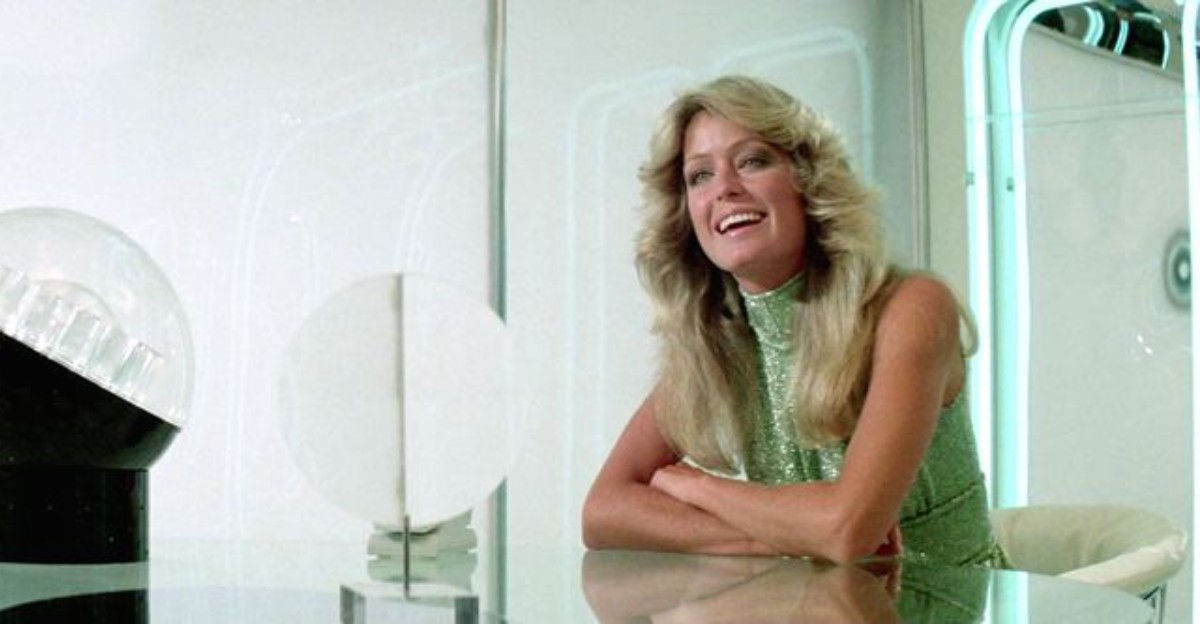
During World War II, one Hollywood actress’s long, curtain-like wave was treated as a real factory safety issue. She reportedly changed her hair to help convince women working near heavy machines to pin theirs back. That story shows how much power a single haircut can carry.
A look can start with one woman in a movie, a TV show, a skating rink, or a music video, and then show up in salons across the country for decades. A lock of hair slipped, a stylist tried a quick fix, or someone simply grabbed the scissors herself. Your own go-to hairstyle might even trace back to one of these trendsetters without you ever knowing it.
1. The Rachel
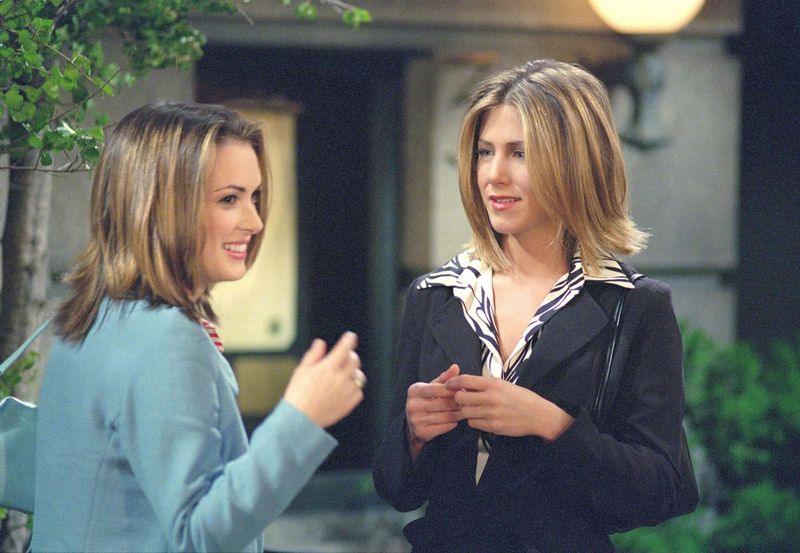
Few haircuts have their own episode credit, but this one practically does.
Jennifer Aniston debuted it as Rachel Green in the April 1995 Friends episode “The One With the Evil Orthodontist.”
Stylist Chris McMillan created the cut, and it wasn’t part of some grand plan.
He has described the look as something the two of them grew into while working with her hair.
The shape is easy to spot once you know it.
Shoulder-length hair is cut into lots of layers that frame the face and flip outward at the ends.
Caramel highlights often finished the look, adding dimension to all those layers.
Some people describe it as a mix between a bob and a shag.
Salons in the 1990s were flooded with requests for it, which is funny considering its owner.
Aniston has publicly said she didn’t love the style, partly because it was hard to recreate without McMillan.
So should you try it?
A modern version usually keeps the face-framing layers but softens the flip, which makes daily styling a lot less fussy.
Bring a photo and ask for long layers around the cheekbones.
A round brush and a blow dryer will handle most of the outward bend.
2. The Farrah
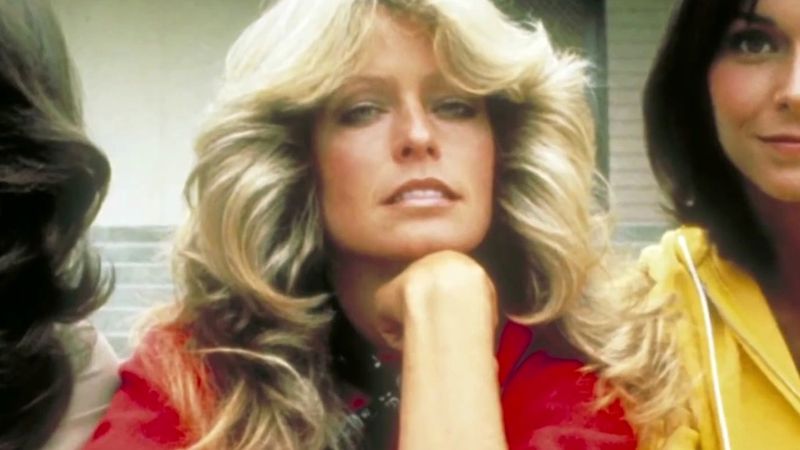
One poster, reportedly more than 12 million copies sold, put a hairstyle on bedroom walls across America.
Farrah Fawcett’s red swimsuit poster and her 1976 role on Charlie’s Angels made her feathered hair a national obsession of the late 1970s.
Who actually invented it is still a friendly little mystery.
Hollywood stylist Allen Edwards has said he created the layered look for her in 1974, while Fawcett herself credited José Eber.
The style is all about movement.
Long, blonde layers are blown back from the face in soft wings, so the hair looks full and a bit windswept.
Compared with the stiff, sprayed shapes of the 1960s, it felt loose and outdoorsy.
That shift toward bouncy, moving hair is a big reason it caught on so fast.
Women filled salons asking for “the Farrah,” and the name stuck.
You still hear it today when someone wants big, feathered volume.
Curious about a modern take?
Ask for long layers with face-framing pieces starting near the cheekbones.
At home, a large round brush helps you roll those front sections back and away from your face.
A light texture spray keeps the wings from flattening by lunchtime.
3. The Wedge
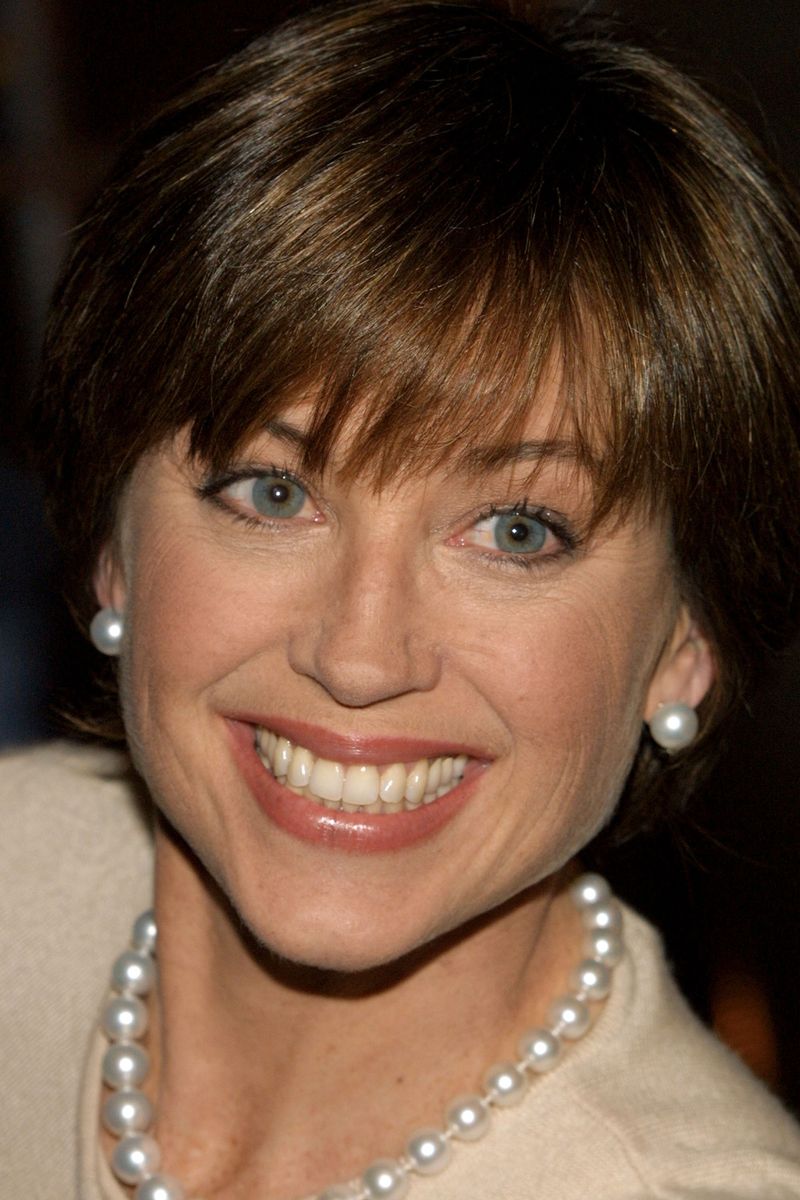
Gold medals usually go around the neck, but in 1976 one also seemed to land on a haircut.
American figure skater Dorothy Hamill won gold at the Winter Olympics in Innsbruck, and her short wedge spun right along with her.
Viewers noticed how the hair swung out during her spins and fell neatly back into place.
That bounce made the cut look practical and fun at the same time.
Technically, the wedge is a cousin of the pageboy.
It has a strong weight line with shallow, angled layers underneath that give it lift and motion.
Earlier versions looked more like a bowl cut, and the shape got shorter and sharper over time.
The result was neat from the front and wedge-shaped from the side.
Hamill’s look became so popular that Clairol made her the face of its Short and Sassy shampoo and conditioner.
That’s quite a promotion from skating rink to shampoo bottle.
If you like low-maintenance hair, this one is worth a look.
Short, stacked layers can dry quickly and keep their shape with little styling.
Ask your stylist for a stacked back with longer front pieces.
Regular trims help the angles stay crisp instead of growing out shaggy.
4. The Pob
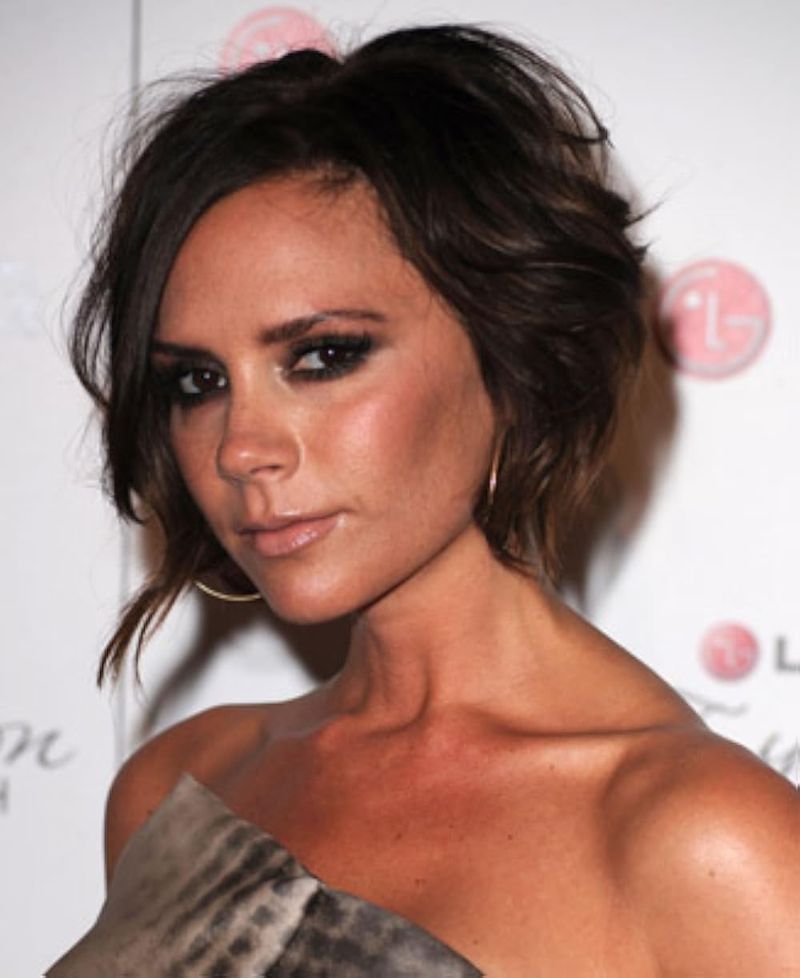
Only a Spice Girl could turn her nickname into a haircut.
The “Pob” blends “Posh” and “bob,” and Victoria Beckham made it famous around 2007.
The shape is sharp and easy to identify.
Hair is cut short in the back and gets gradually longer toward the front, creating a sleek angle along the jaw.
Plenty of people had worn angled bobs before her.
Beckham’s version, though, was so widely photographed that the cut took on her name.
Copycat versions popped up quickly in salons and magazines.
Fashion writers often described it as the bob that launched a thousand imitations.
Part of the appeal was how polished it looked with very little extra effort in photos.
The front pieces frame the face, while the shorter back keeps the neckline clean.
Want to try it yourself?
Talk with your stylist about how steep you want the angle, since a dramatic slope needs more upkeep than a gentle one.
A flat iron helps the front pieces stay smooth and pointed.
Trims every several weeks keep the back from growing into a regular bob.
It’s a good choice if you like a neat, structured look.
Just know the sharp lines show growth faster than softer cuts.
5. The Bouffant
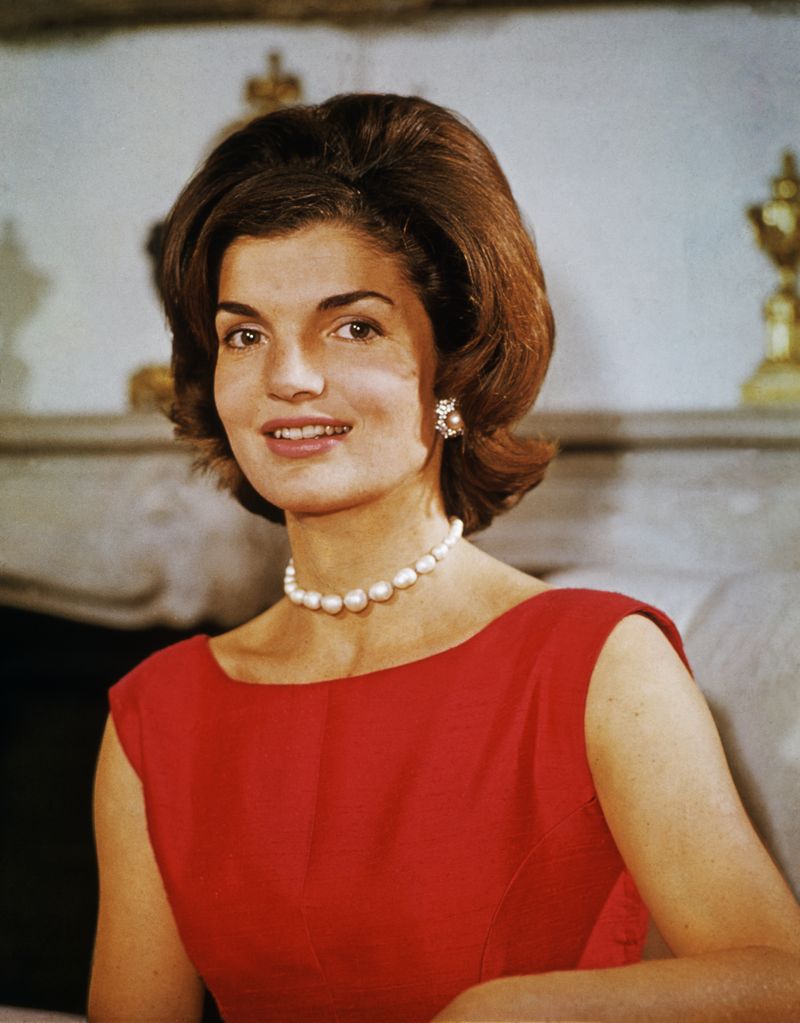
Polished, rounded, and perfectly smooth, Jacqueline Kennedy’s hair looked ready for a state dinner at any hour.
As First Lady from 1961 to 1963, she made the bouffant one of the most copied looks in America.
She didn’t build it alone.
Stylist Michel Kazan created a version in the 1950s that was described as a pageboy with the sides teased out, and Kenneth Battelle, known as Mr. Kenneth, later became her go-to stylist.
The technique involved real effort.
Hair was backcombed at the crown for height, then the top layer was smoothed over for a clean finish.
Pins and plenty of hairspray kept the shape in place.
Her version often sat low and rounded, almost like a puffed-up bob.
Her frequent public appearances made the style feel elegant rather than fussy.
Many women saw it as the hairstyle of a well-dressed, confident adult.
You can borrow the idea without a can of spray the size of a fire extinguisher.
Gentle teasing at the crown plus a smooth top layer gives a softer, modern lift.
Use a fine-tooth comb for teasing and a soft brush to smooth.
Be patient while brushing it out later to avoid tangles.
6. The Peek-a-Boo
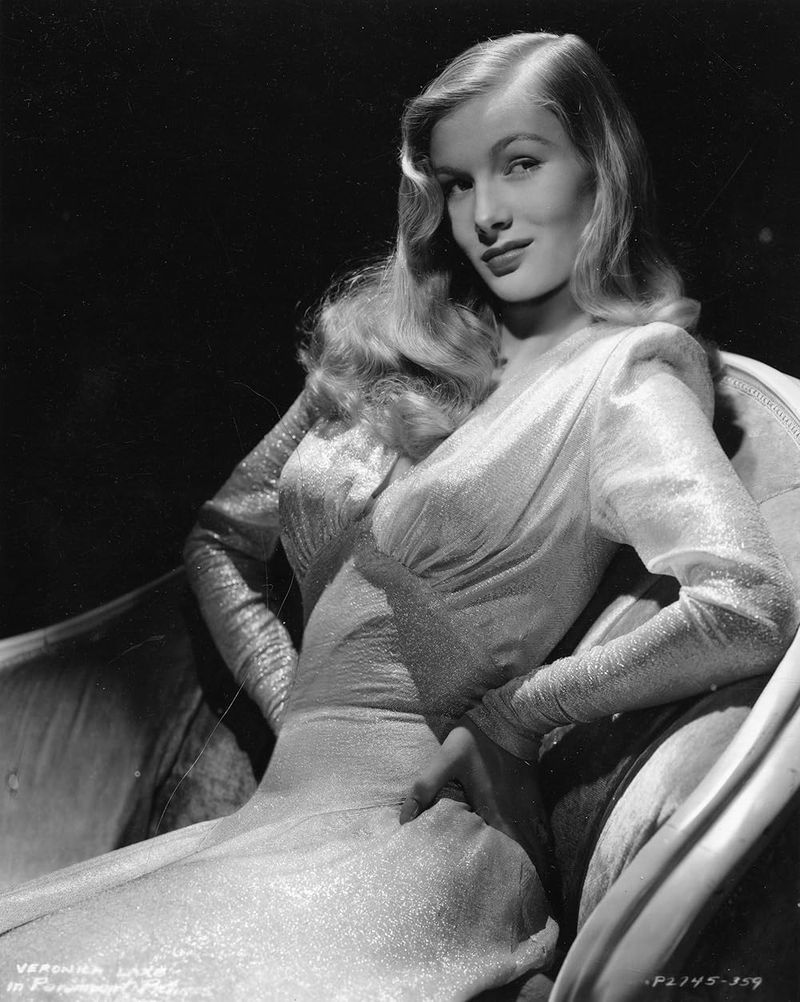
A single stray lock of hair once caught the attention of the United States government.
Veronica Lake’s peek-a-boo wave was so widely copied that, during World War II, she was asked to change it.
The concern was safety.
Women working in factories were wearing their hair down like hers, and long hair could get caught in machinery.
Lake agreed and switched to a pulled-back style for the war effort.
Not many hairstyles can claim a role in factory safety campaigns.
The look itself reportedly started by accident.
Lake described it as a natural break in her fine hair that fell over one eye, and it became her trademark.
Her long blonde hair was parted deeply on the left.
Soft waves then tumbled over her right eye, partly covering it.
The style became a sensation after her 1941 film I Wanted Wings.
It helped turn her into a box office star.
You can recreate a gentler version with a deep side part and loose waves.
Large curling iron barrels or pin curls work well for the soft bend.
Keep a clip handy, though.
Seeing out of both eyes is useful for crossing streets.
7. Marilyn Monroe Curls
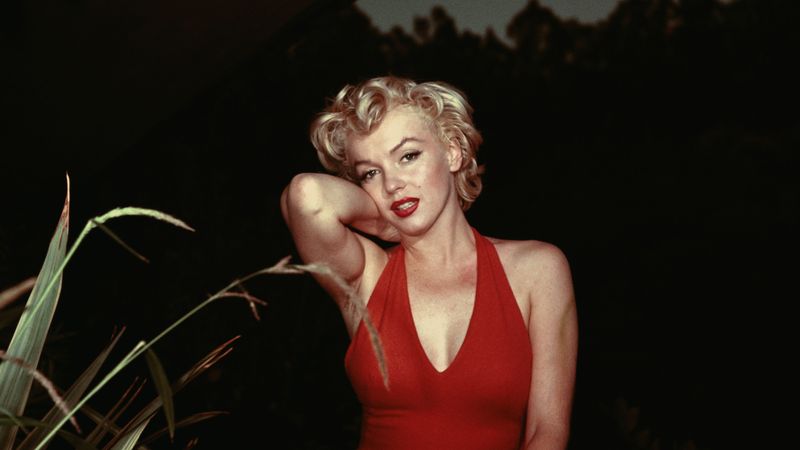
Before she was Marilyn, Norma Jeane had brown curly hair.
A modeling agency encouraged her to go blonde in 1945, and that decision helped shape one of Hollywood’s most recognizable looks.
Her first colorist, Sylvia Barnhart, lightened and straightened her hair to golden blonde.
Over the following years, the color moved toward the bright platinum shade people picture today.
The curls took serious work.
Stylists typically used pin curls or hot rollers to set the hair, then brushed it out for a softer, cloud-like finish.
Kenneth Battelle and other well-known stylists also worked on her hair during her career.
Her look changed with time, sometimes shorter and sometimes swept to one side.
That brushed-out curl is the secret most people miss.
Fresh curls look tight, while gentle brushing turns them into those famous soft waves.
Want to try it?
Set dry hair with hot rollers or pin curls, and let it cool completely before removing anything.
Then use a wide-tooth comb or soft brush to break up the curls slowly.
Shorter, layered hair usually makes the shape easier to achieve.
Platinum color is optional, of course.
The curl pattern works on brunettes and redheads just as nicely.
8. Bardot Bangs and Volume
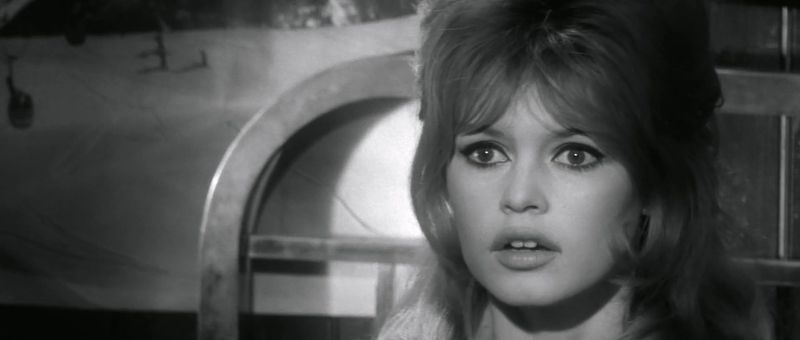
Messy hair rarely looks this intentional.
Brigitte Bardot’s tousled, voluminous style in the 1950s and 1960s made a little chaos look glamorous.
Bardot was known for preferring to do her own hair and makeup.
That hands-on approach fit the loose, lived-in shape that became her signature.
She went blonde for a film role in 1956 and kept the color afterward.
Her hair often had lots of height at the crown, sometimes in a half-up style or teased bouffant.
The famous Bardot bangs are a big part of the appeal.
They usually part in the middle and sweep to the sides, framing the face like curtains.
Her look became shorthand for a relaxed French style that people still copy.
Curtain bangs in particular keep coming back around.
Here’s a friendly tip if you’re tempted.
Curtain bangs are more forgiving than blunt bangs because they grow out into face-framing layers.
For the volume, tease the crown lightly and pin it back loosely.
Leave a few pieces around your face so it doesn’t look too tidy.
Dry shampoo can add grip and lift on clean hair.
A slightly undone finish is the whole point here.
9. Mia Farrow’s Pixie Cut
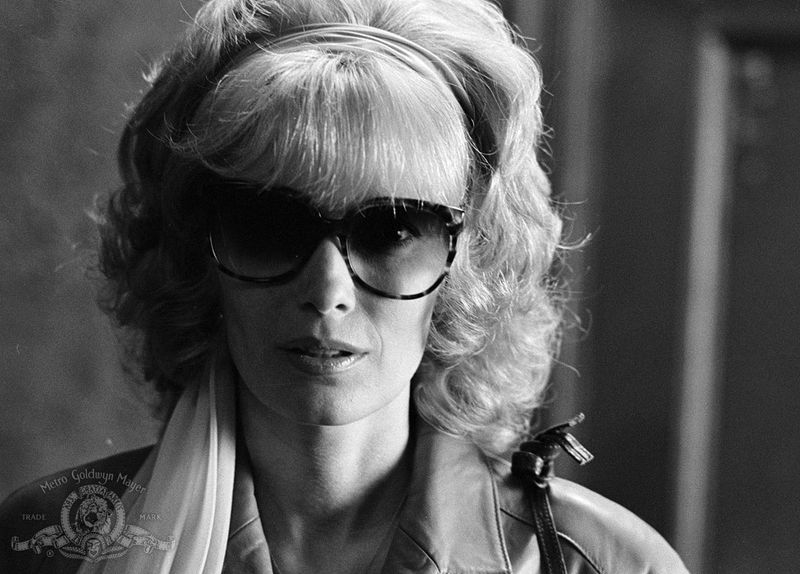
Manicure scissors and a dressing room mirror might be the most famous haircut tools in film history.
Mia Farrow has said she cut her own hair on the set of Peyton Place because she was tired of being treated like a little girl.
Famed hairdresser Vidal Sassoon often gets credit for the look.
Farrow has said his well-known session with her was largely a publicity event tied to Rosemary’s Baby, released in 1968.
Either way, the cut caused a stir.
Long hair was the norm, and a close-cropped style on a young star looked bold and surprising.
The pixie keeps the hair very short with soft, textured edges.
Light layers put the focus on the eyes, cheekbones, and neckline.
Her look helped make short hair feel fresh and modern for women.
Many celebrities have worn similar crops since then.
Thinking about going short?
A professional cut is a safer bet than a pair of manicure scissors.
Pixies need trims fairly often to keep their shape.
On the bright side, washing and drying take only minutes.
A small amount of paste or pomade adds texture to the ends.
That keeps the look soft rather than flat.
10. The Louise Brooks Bob
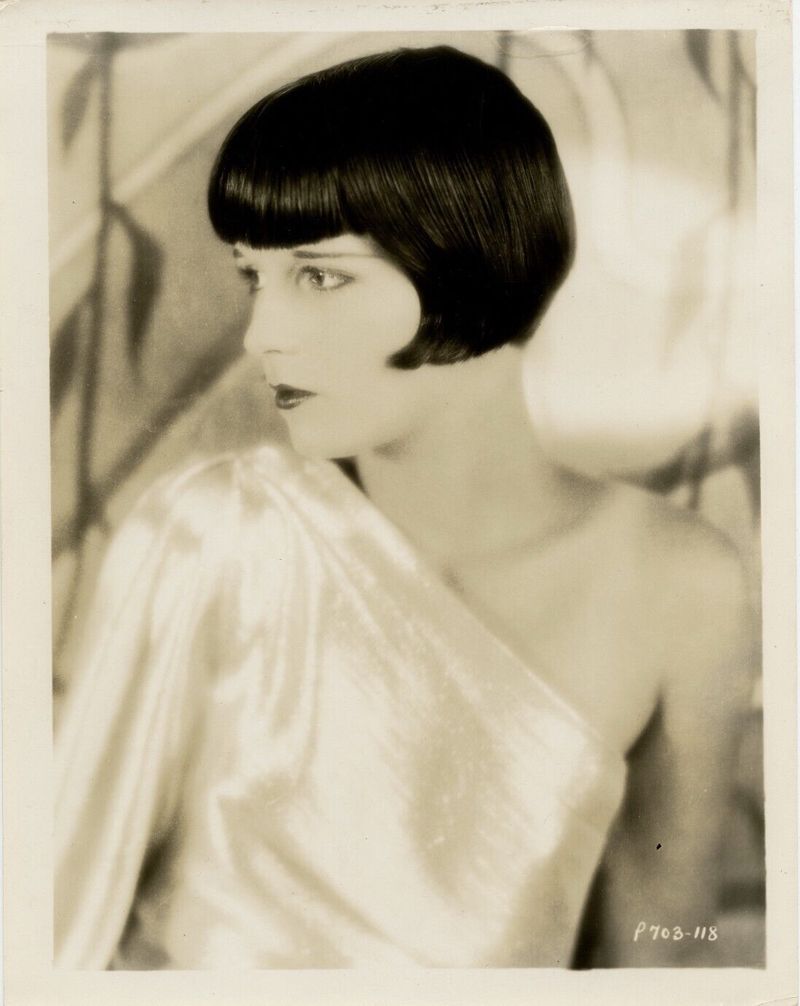
Sharp enough to cut paper, or at least it looks that way.
Louise Brooks wore a sleek, glossy black bob with blunt bangs that became a symbol of the 1920s.
Her hair history started early.
She wore a pageboy as a child and switched to a chin-length bob with fringe around age 10 for dance performances.
Later, a New York stylist refined it into her signature look.
The razor-cut bob grazed the cheeks and paired with heavy, straight bangs.
Its clean, geometric shape matched the Art Deco designs of the era.
Films like Pandora’s Box and Diary of a Lost Girl, both from 1929, put that shape front and center.
Short bobs were linked with flappers and the new freedoms many women claimed in that decade.
Her version became one of the clearest images of that moment.
Want to borrow the look?
Straight, smooth hair makes it easier, though stylists can adapt it for other textures.
Ask for a blunt line around chin or cheek level with full bangs.
A flat iron and a shine serum help keep the edges crisp.
Be ready for frequent trims.
Precision cuts lose their snap quickly once they grow.
11. Princess Diana’s Short Cut
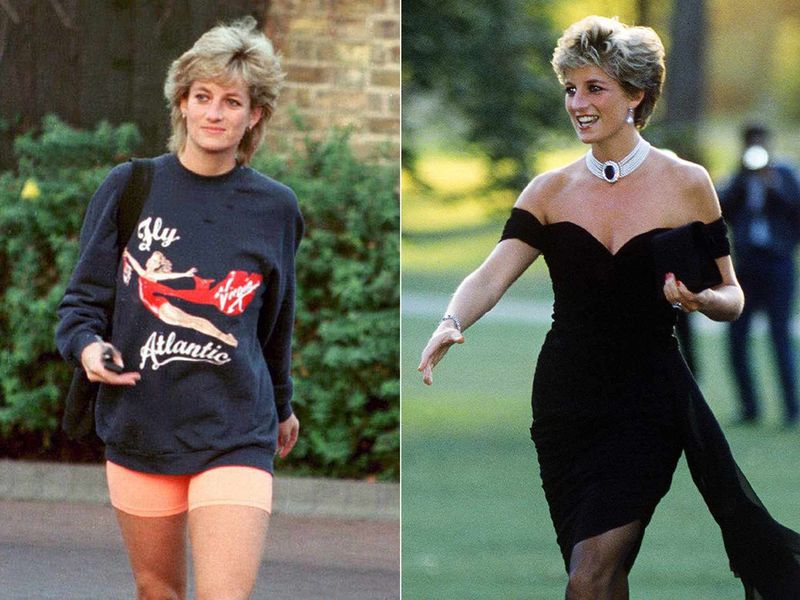
Quarter inch by quarter inch, Princess Diana’s hair got shorter without anyone making a fuss.
Her longtime stylist Richard Dalton said they trimmed it gradually over weeks to avoid public attention.
That careful approach made sense.
Changes to her hair were treated as front-page news.
Her best-known short style came later, from stylist Sam McKnight.
He has said that during a photo shoot, he mentioned he would cut it all off if he could do whatever he wanted, and Diana told him to go ahead.
The result was a short, neat, feathered cut with a little lift on top.
It moved her away from the big, fluffy look of the 1980s.
Diana herself credited the change with helping her feel more confident.
It became one of the most recognized looks of her public life.
Considering a similar cut?
Ask for short sides with a bit more length on top that can sweep to one side.
A dab of mousse and a quick blow dry add soft volume.
Texture spray keeps it light instead of helmet-like.
A gradual approach like Dalton’s also works if you’re nervous.
Shortening in steps gives you time to adjust.
12. Amy Winehouse’s Beehive
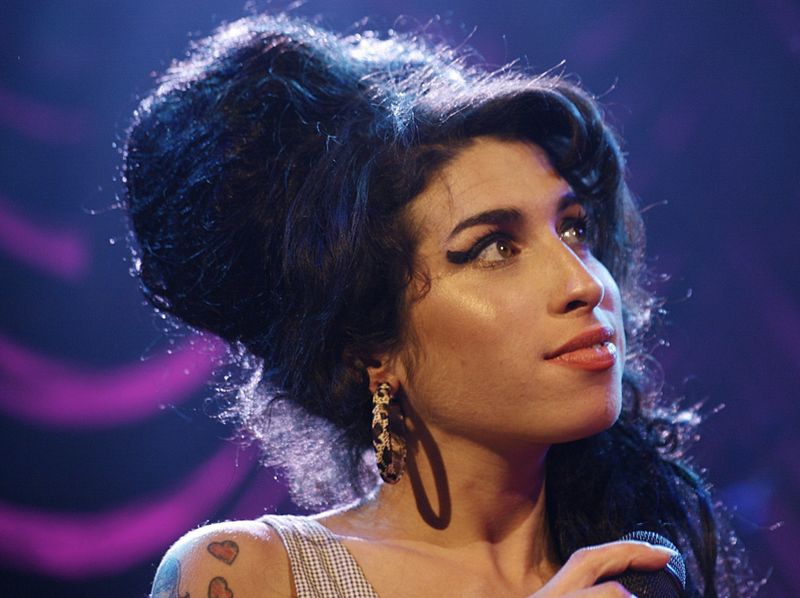
A joke turned into one of the tallest signatures in pop music.
Hairdresser Alex Foden has said he created Amy Winehouse’s giant beehive as a joke for her Back to Black music video.
He built it by backcombing her hair heavily and adding an extra hairpiece.
Foden playfully called those additions fur balls.
The beehive wasn’t new.
Margaret Vinci Heldt is credited with inventing the style in 1960.
Winehouse’s version, though, was bigger and bolder than most.
Paired with winged eyeliner and 1960s inspired outfits, it became part of her musical identity.
She brought the beehive back to a new generation in the 2000s.
Fans could spot her silhouette from across a concert venue.
Winehouse once linked the size of her hair to how insecure she felt.
That detail gives the look a more personal side.
Want a smaller beehive for a party?
Tease the crown section, smooth the top, and pin it into a rounded shape.
Clip-in volumizers or a hair donut can add height without endless teasing.
Brush out gently afterward, starting at the ends, to keep breakage to a minimum and your patience intact.