 MomSkoop
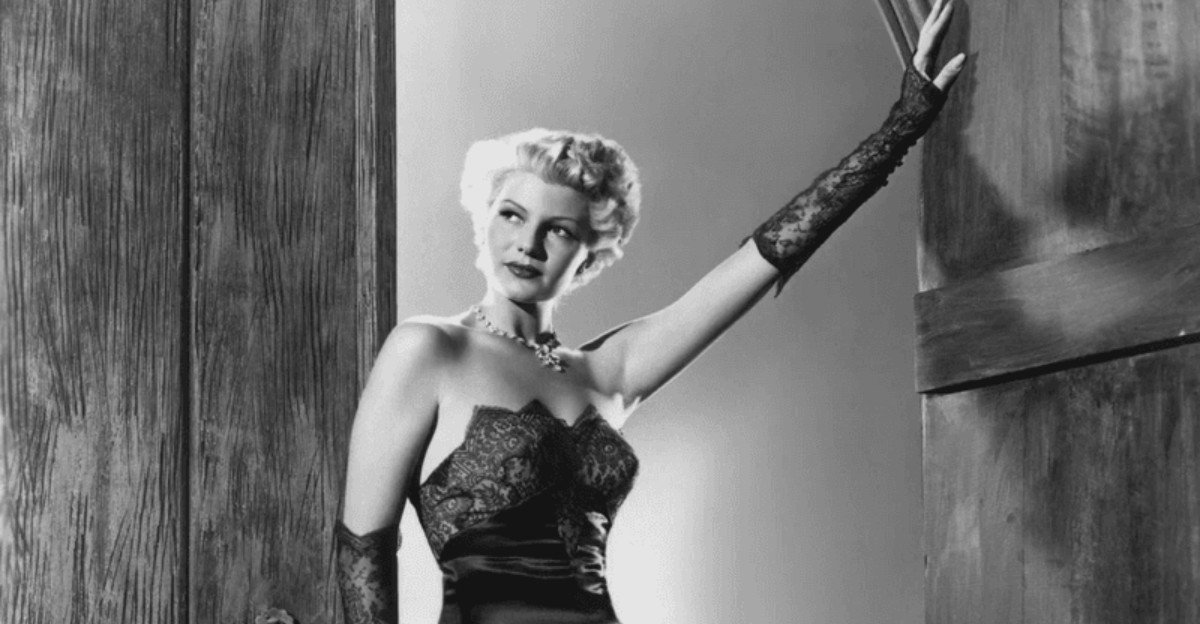
The name film noir came from French critics, who noticed in 1946 that American crime movies had turned strangely dark. Hollywood had not planned a new genre, yet the shadows, rain-slick streets, and doomed heroes kept piling up. The studios made many of these pictures quickly and cheaply, often on modest budgets. Directors like Billy Wilder and Fritz Lang turned those limits into moody lighting tricks that filmmakers still borrow today.
I love that a style built on smoke, venetian blinds, and bad decisions still feels fresh decades later. If you enjoy twisty mysteries, sharp dialogue, or characters who talk themselves into trouble, noir delivers all three in black and white. The list below covers detectives, schemers, drifters, and one very confused insurance man. Grab a snack, dim the lights, and ask yourself whom you would trust in a room full of liars.
1. Double Indemnity
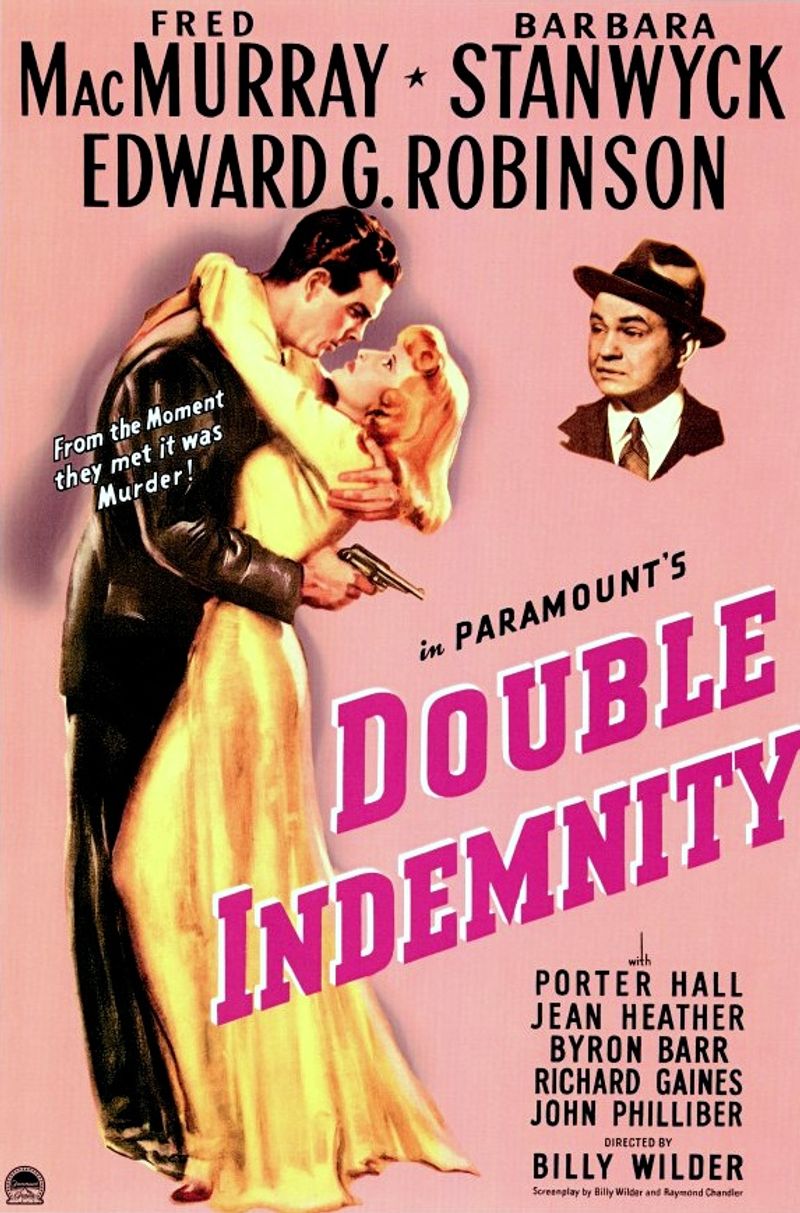
An insurance salesman walks into a fancy Los Angeles house to renew a car policy.
He walks out with a much bigger problem, and the movie never lets him off the hook.
Billy Wilder directed this 1944 classic, and he wrote the script with crime novelist Raymond Chandler.
The story comes from a James M.
Cain novel.
Fred MacMurray plays Walter Neff, a smooth talker who thinks he can outsmart the system.
Barbara Stanwyck plays Phyllis Dietrichson, and her calm, cool delivery steals nearly every scene.
Together, they plot to cash in on her husband’s life insurance policy, which includes a special double indemnity clause.
Edward G.
Robinson nearly walks away with the film as Barton Keyes, a claims manager who can sniff out a fake story.
Watch how Walter narrates the tale into a dictating machine.
That framing tells you early that things went badly, so the fun is seeing exactly how.
Many fans call this the movie that set the rules for noir.
You’ll spot the flashback, the voiceover, and the dangerous partner that later films copied again and again.
Pay attention to the friendship between Walter and Keyes, because it gives the movie its surprising heart.
2. Laura
A painting hangs over the fireplace, and a detective cannot stop staring at it.
That portrait sits at the center of one of noir’s strangest love stories.
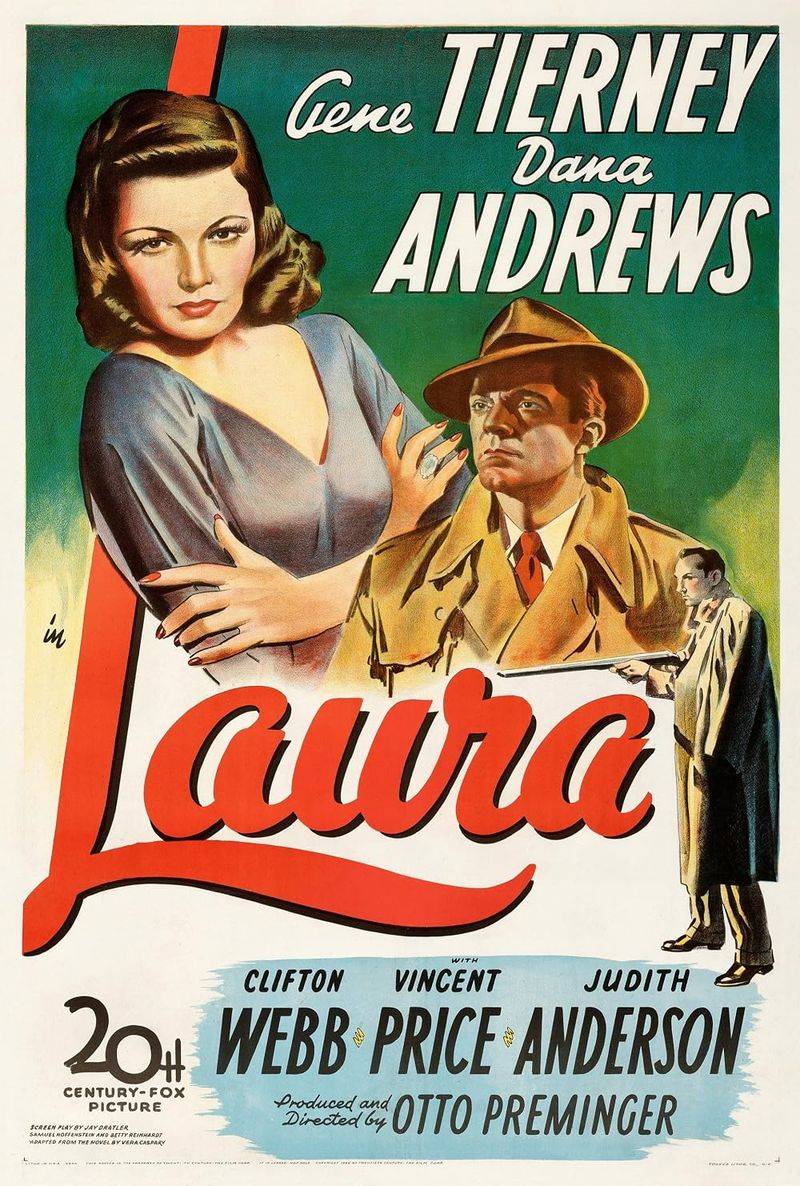
Otto Preminger directed Laura in 1944, adapting Vera Caspary’s novel from the year before.
Dana Andrews plays Detective Mark McPherson, who is investigating the case of advertising executive Laura Hunt.
He learns about her through the people who knew her best, and each of them has something to hide.
Clifton Webb is a delight as Waldo Lydecker, a sharp-tongued newspaper columnist who treats insults like an art form.
A young Vincent Price shows up as Laura’s charming but shifty fiancé, Shelby Carpenter.
Gene Tierney plays Laura, and her presence fills the movie even in scenes where she isn’t on screen.
Things take a famous turn partway through, and it’s best to go in knowing as little as possible.
Avoid online summaries if you can.
Listen closely to the music, too.
The main theme by David Raksin became a popular song, and it floats through the film like a memory.
Laura feels less like gritty street crime and more like a moody puzzle in a fancy apartment.
3. The Maltese Falcon
Few movie props have caused more trouble than a small black bird.
In this 1941 mystery, crooks across the globe want it badly, and nobody plays fair.
John Huston made his directing debut here and wrote the screenplay from Dashiell Hammett’s 1930 novel.
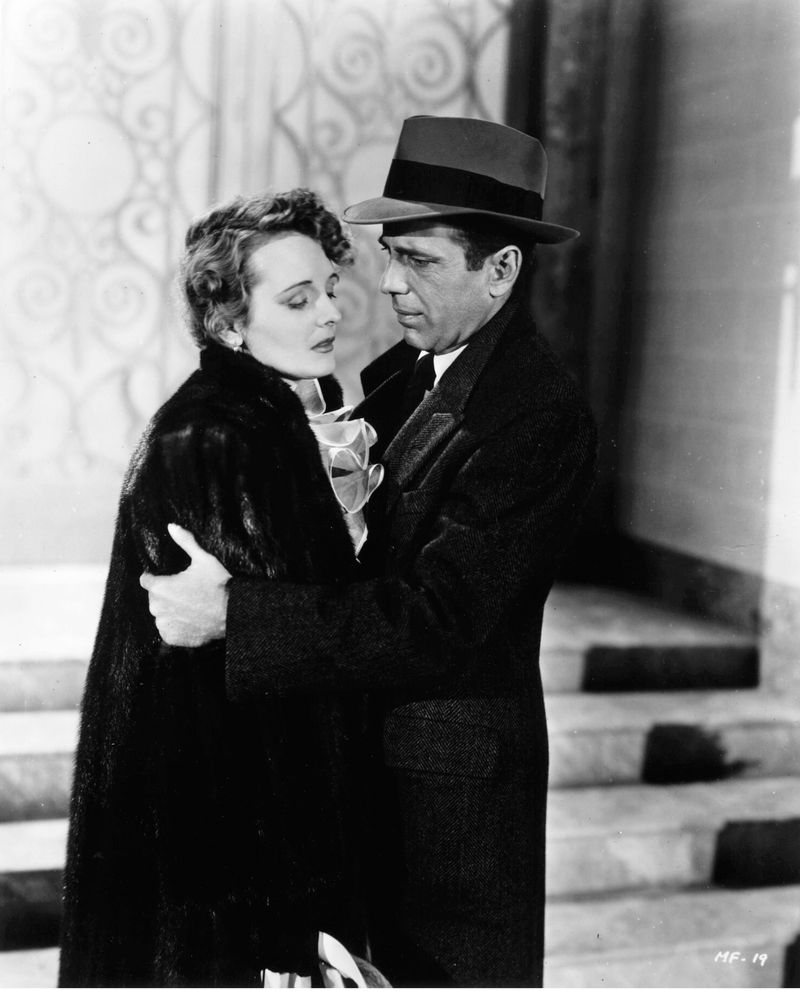
Humphrey Bogart plays Sam Spade, a San Francisco private eye whose partner is shot early in the story.
Spade then gets tangled with a group of schemers chasing a statue said to be worth a fortune.
Mary Astor plays Brigid O’Shaughnessy, who tells a new lie almost every time she opens her mouth.
Peter Lorre and Sydney Greenstreet round out the gang with fussy, funny, and slightly creepy performances.
Greenstreet was making his first film, which is wild considering how confident he seems.
Bogart had played plenty of gangsters before this role.
Sam Spade helped turn him into the tough, clever leading man audiences remember.
Notice how much of the action happens in small rooms full of talking.
The tension comes from sharp words, sly glances, and who is double-crossing whom next.
Stick around for the final line, which borrows a little Shakespeare and lands perfectly.
4. Out of the Past
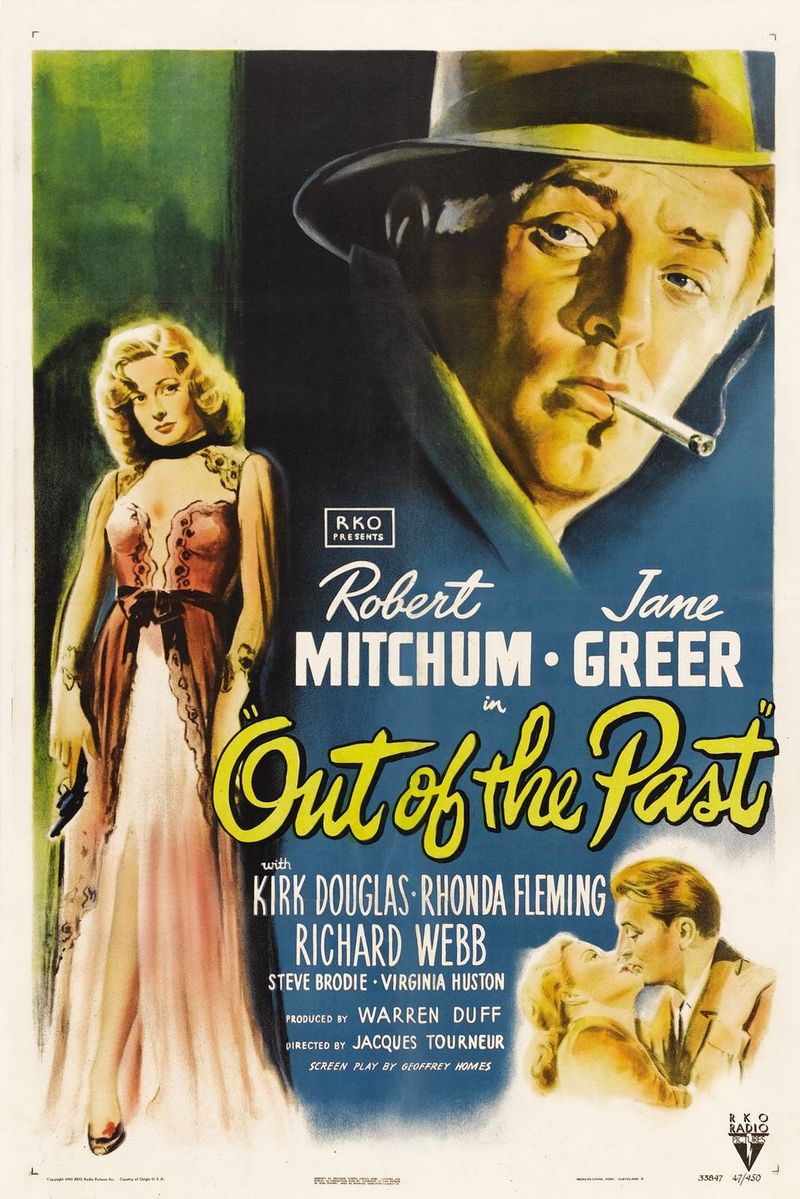
Running a gas station in a quiet mountain town sounds peaceful enough.
For Jeff Bailey, it’s a hiding spot, and his old life drives right up to the pumps.
Jacques Tourneur directed this 1947 film, based on Geoffrey Homes’ novel Build My Gallows High.
Homes was a pen name for writer Daniel Mainwaring.
Robert Mitchum plays Jeff, a former private detective with a past he would rather forget.
Through a long flashback, Jeff explains how gangster Whit Sterling hired him to find his runaway girlfriend, Kathie Moffat.
Kirk Douglas plays Whit with a grin that feels friendly and dangerous at once.
Jane Greer plays Kathie, one of the slipperiest characters in all of noir.
Mitchum barely seems to raise his voice, yet he holds every scene.
His sleepy, laid-back style makes the danger around him feel even sharper.
The story hops from small-town California to Mexico to San Francisco, and the plot thickens with each stop.
Keep track of who owes whom, because the double-crosses stack up fast.
The lighting by cinematographer Nicholas Musuraca is worth admiring on its own, especially in the nighttime scenes.
5. The Big Sleep
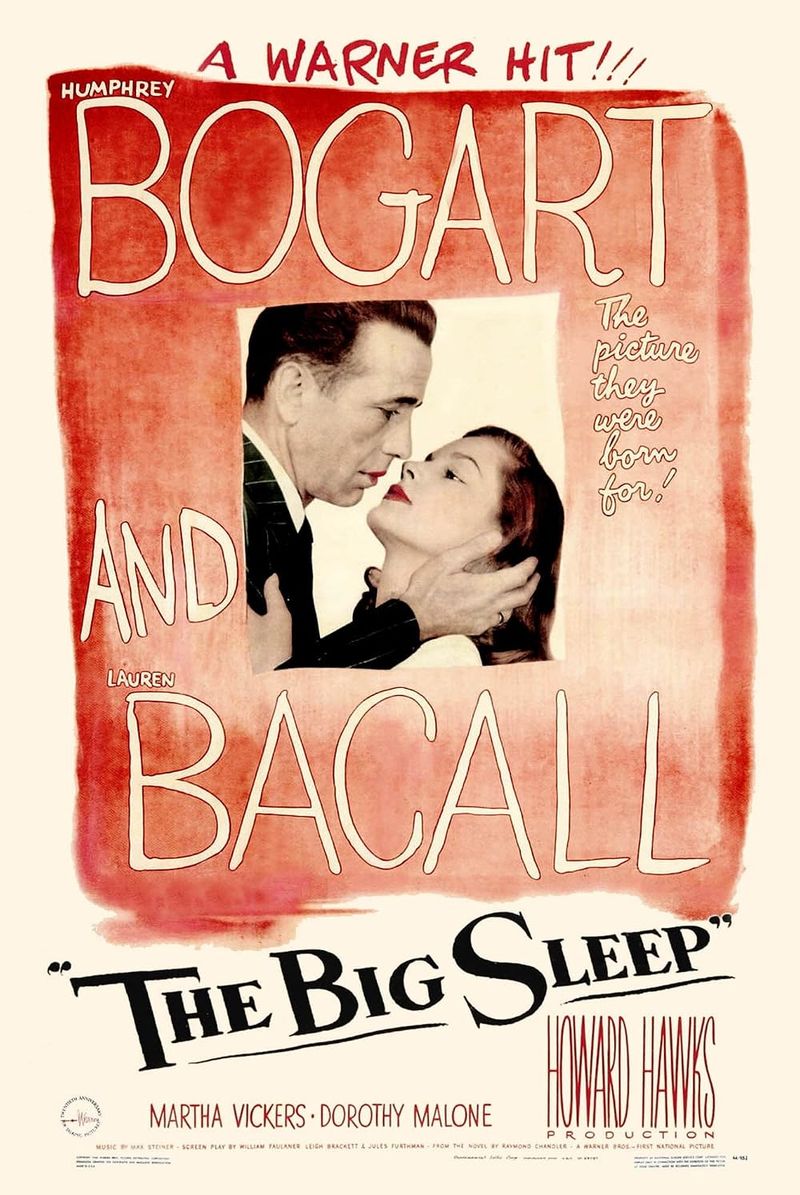
Confused by the plot?
Good news, you’re in excellent company, because this movie is famous for being hard to follow.
Howard Hawks directed The Big Sleep, which premiered in 1946.
The screenplay came from William Faulkner, Leigh Brackett, and Jules Furthman, adapting Raymond Chandler’s 1939 novel.
Humphrey Bogart plays private detective Philip Marlowe, hired by a wealthy general to handle a blackmail problem.
The job involves the general’s wild younger daughter, Carmen, played by Martha Vickers.
Soon Marlowe is dodging gamblers, crooks, and plenty of lies across Los Angeles.
Lauren Bacall plays Vivian, the older daughter, and her scenes with Bogart crackle with clever banter.
Bogart and Bacall were married in 1945, and their chemistry feels playful on screen.
Their back-and-forth dialogue is half the reason to watch.
Here’s a tip: don’t stress about solving every clue.
Treat the plot like a fun ride and enjoy the snappy lines, the moody sets, and the parade of shady characters.
Dorothy Malone also has a small, memorable scene as a bookstore clerk.
You may finish the film unsure about a few details, and that’s part of its charm.
6. Sunset Boulevard
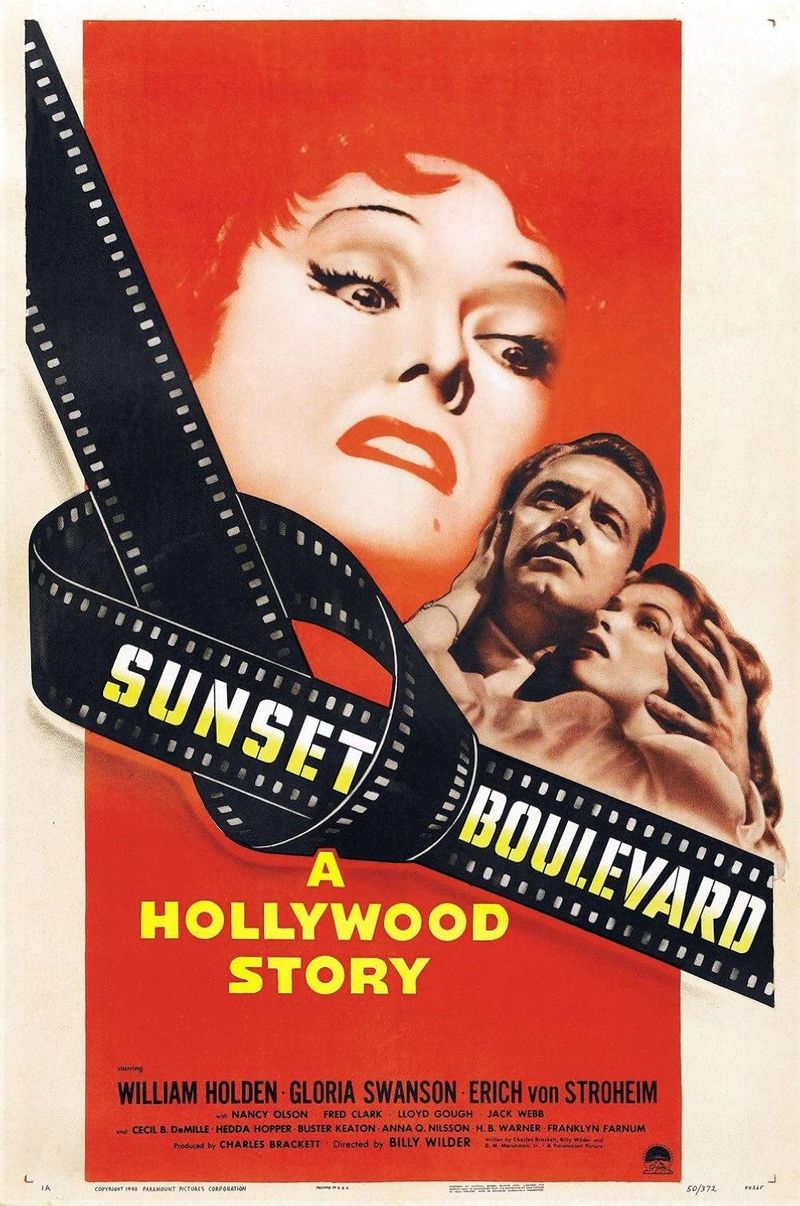
Hollywood rarely pointed the camera at itself this sharply.
Billy Wilder’s 1950 film opens with a body floating in a swimming pool, and the narrator turns out to be the guy in the water.
William Holden plays Joe Gillis, a struggling screenwriter dodging people who want to repossess his car.
He pulls into the driveway of a crumbling mansion owned by Norma Desmond, a former silent movie star.
Gloria Swanson plays Norma, and her performance is big, dramatic, and impossible to look away from.
Norma plans a grand return to the screen, and she wants Joe to help.
Erich von Stroheim plays Max, her loyal butler, whose own history adds an eerie twist.
Swanson was a real silent film star, which makes her role feel extra layered.
Real Hollywood figures, including director Cecil B.
DeMille, appear as themselves.
Charles Brackett, Wilder, and D.
M.
Marshman Jr. won an Academy Award for the screenplay.
Listen for quotable lines, including Norma’s famous claim about being ready for her close-up.
The film mixes dark comedy with sadness, so you might laugh and wince in the same scene.
7. Kiss Me Deadly
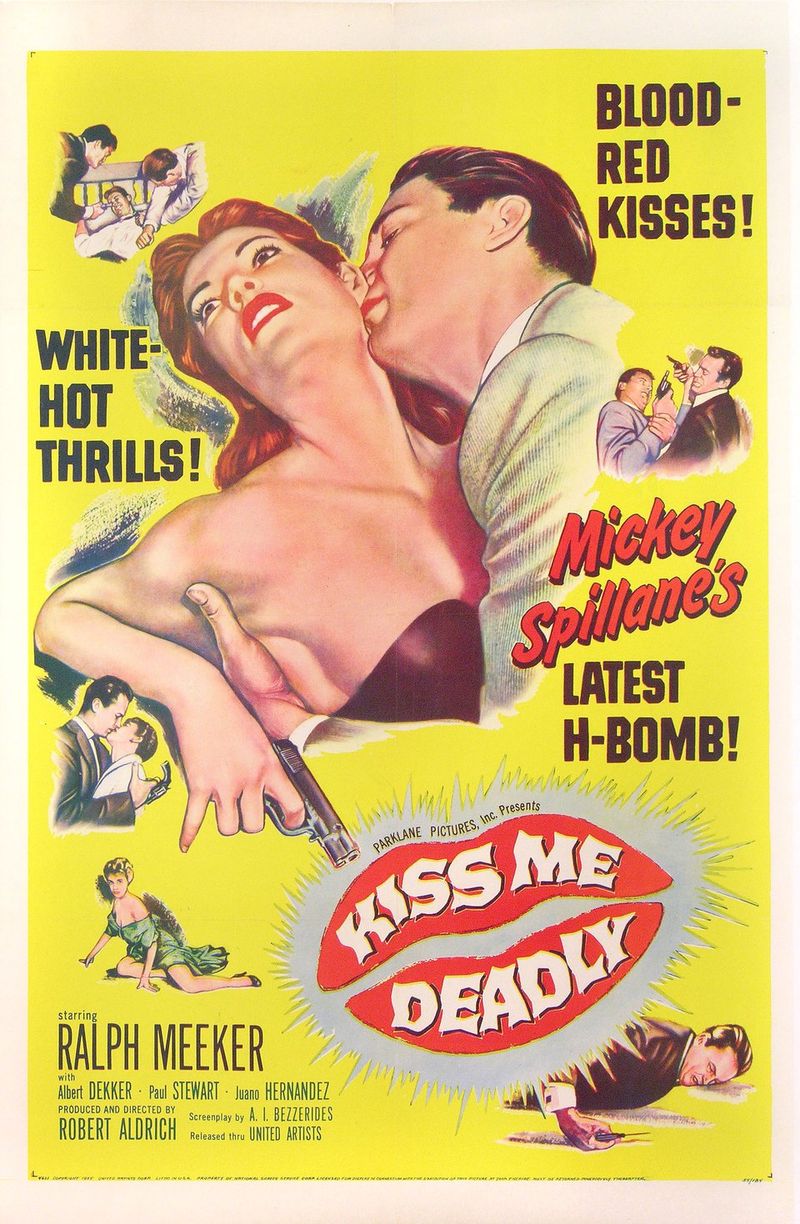
A barefoot woman runs down a dark highway in a trench coat, and the opening credits roll backward.
Right away, you know this 1955 thriller plans to do things differently.
Robert Aldrich directed Kiss Me Deadly, with a script by A.
I.
Bezzerides based on Mickey Spillane’s novel.
Ralph Meeker plays Mike Hammer, a tough Los Angeles private eye who picks up the hitchhiker, Christina.
Cloris Leachman plays Christina in her first film role.
Christina’s fate sends Hammer chasing a mystery that grows stranger by the minute.
Everyone seems to want something called the great whatsit, a box with dangerous contents.
Maxine Cooper plays Velda, Hammer’s loyal secretary, who gets pulled into the mess.
The movie arrived during the atomic age, and that worry hangs over the story.
It feels like a crime film slowly turning into science fiction.
Hammer isn’t the charming hero you might expect, and the film seems aware of it.
Notice how the camera uses odd angles and sharp shadows to make Los Angeles feel unsettling.
Movie lovers often point to the glowing box when discussing later films that borrowed the idea, so watch for that.
8. The Killers
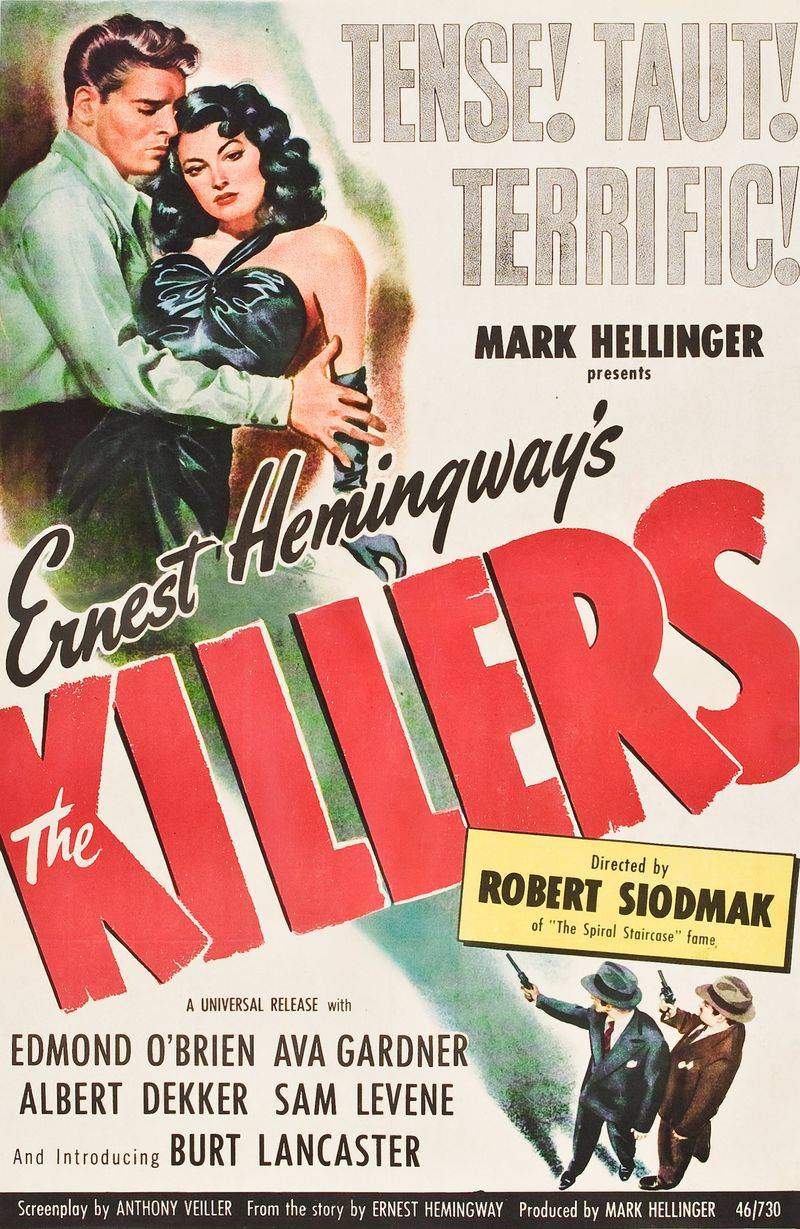
Ernest Hemingway’s short story covers only the first few minutes of this movie.
Everything after that was invented to answer one big question.
Robert Siodmak directed The Killers in 1946, with Anthony Veiller credited for the screenplay.
The opening follows two hit men who arrive in a small town looking for a gas station worker called the Swede.
Burt Lancaster plays the Swede in his very first film role, and he doesn’t try to escape.
Why would a man simply wait for trouble?
Insurance investigator Jim Reardon, played by Edmond O’Brien, wants to know too.
Reardon tracks down people from the Swede’s past, and their stories unfold in flashbacks.
The pieces slowly reveal a boxing career, a payroll robbery, and a woman named Kitty Collins.
Ava Gardner plays Kitty, and this role helped make her a major star.
Try treating the movie like a jigsaw puzzle.
Each flashback adds a new piece, and the full picture doesn’t appear until near the end.
The diner scene at the start is tense and chilly, so pay attention to how quietly it builds.
It’s a fine example of mood doing heavy lifting.
9. Gun Crazy
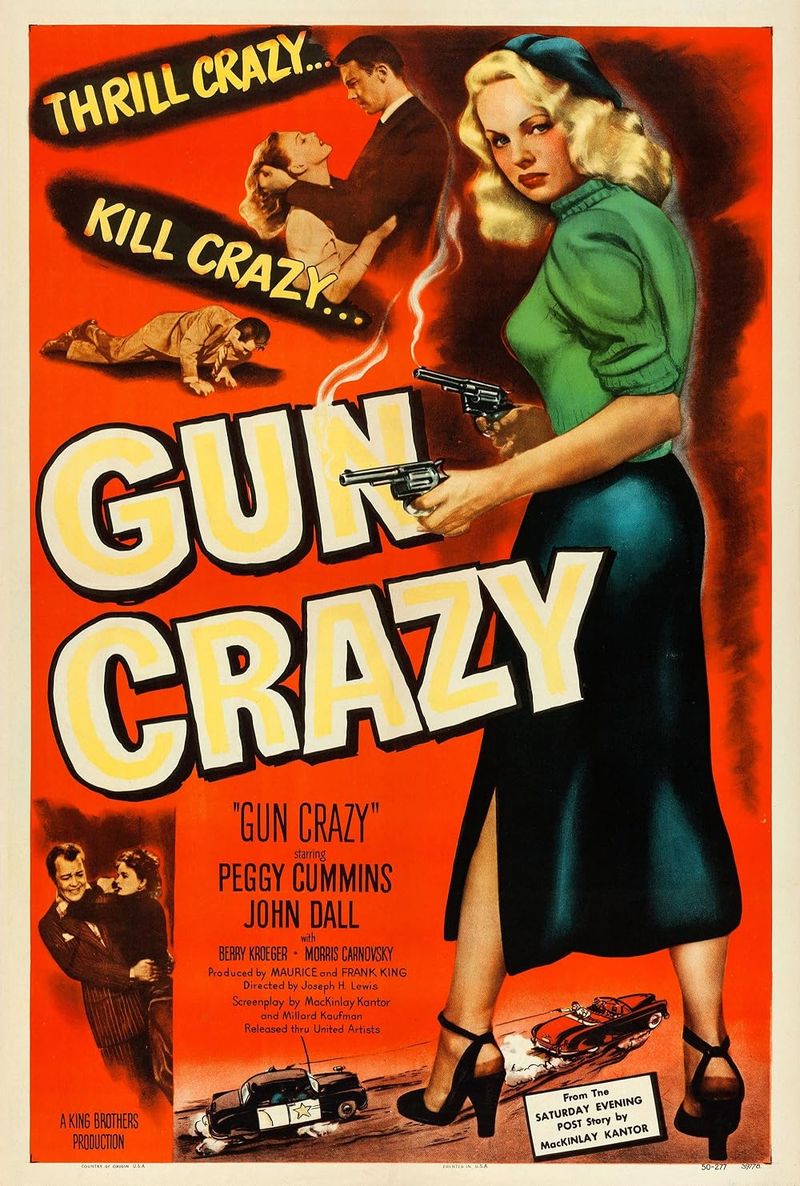
Low budget, big energy.
This scrappy 1950 crime picture punches far above its price tag, and its getaway scenes still feel bold.
Joseph H.
Lewis directed Gun Crazy, which was first released as Deadly Is the Female.
John Dall plays Bart Tare, a young man fascinated by guns since childhood.
At a carnival, he meets sharpshooter Annie Laurie Starr, played by Peggy Cummins, and sparks fly.
Annie wants money and excitement, and Bart wants Annie.
Their romance quickly turns into a cross-country robbery spree.
The script came from MacKinlay Kantor’s story, with blacklisted writer Dalton Trumbo working under the name of Millard Kaufman.
Watch for the famous bank robbery scene shot in one long take from the back seat of the car.
The camera stays put as the couple drives up, pulls the job, and speeds off, so you feel stuck along for the ride.
Cummins gives Annie a fierce, restless edge that makes her hard to predict.
Dall plays Bart as more nervous, which makes the pairing feel off-balance in an interesting way.
If you like Bonnie and Clyde style stories, this one paved the road years earlier.
10. The Postman Always Rings Twice
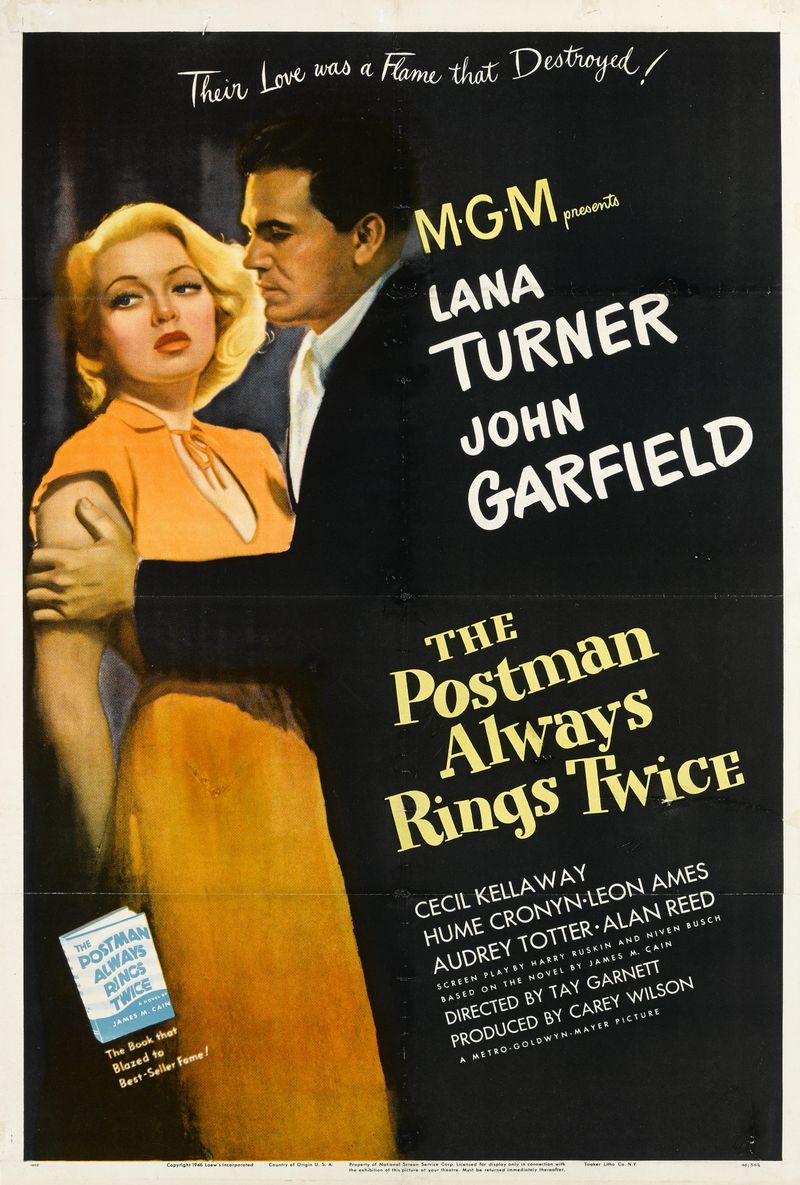
Lana Turner first appears in white shorts and a turban, and a lipstick tube rolls across the floor.
It’s one of the smoothest movie introductions of the 1940s.
Tay Garnett directed this 1946 adaptation of James M.
Cain’s 1934 novel.
John Garfield plays Frank Chambers, a drifter who takes a job at a roadside diner.
Cecil Kellaway plays Nick Smith, the cheerful, older owner, and Turner plays his unhappy wife, Cora.
Frank and Cora fall for each other fast.
Soon they’re plotting to get rid of Nick so they can start fresh, but plans keep going sideways.
Curious about that odd title?
The movie never features a mail carrier, so keep watching and see how the meaning shows up.
Cain also wrote the book behind Double Indemnity, so watching both is a fun pairing.
You’ll notice similar ideas about greed, guilt, and partners who stop trusting each other.
Turner’s mostly white costumes stand out against the grim story, and many viewers find that contrast striking.
Garfield brings a restless, street-smart energy that keeps Frank sympathetic even when his choices are terrible.
11. Scarlet Street
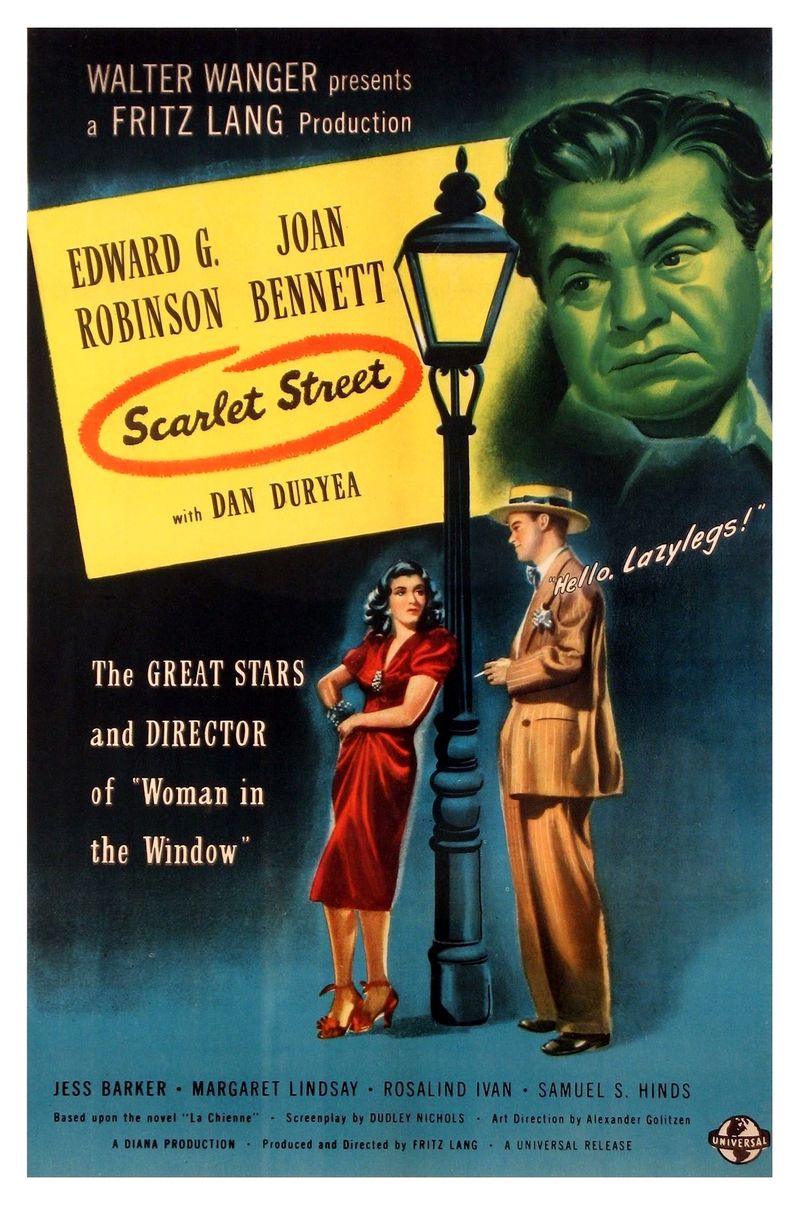
Edward G.
Robinson spent years playing tough gangsters.
In Scarlet Street, he plays a shy cashier who paints on weekends, and the change is fascinating to watch.
Fritz Lang directed this 1945 drama, with a screenplay by Dudley Nichols.
The story comes from the French novel La Chienne, which had already been filmed in France.
Robinson plays Christopher Cross, a lonely man stuck in an unhappy marriage.
One night, Chris helps a young woman named Kitty March on a city street.
Joan Bennett plays Kitty, and Dan Duryea plays her slick boyfriend, Johnny.
The pair quickly figure out how to squeeze money out of the gentle painter.
Things get stranger when Chris’s paintings end up in an art gallery.
Who gets credit for them becomes a big part of the plot.
Robinson, Bennett, and Duryea had worked with Lang the year before on The Woman in the Window.
That makes these two films a neat double feature.
Scarlet Street is darker, though, and its ending stuck out at the time.
If you enjoy stories about people being taken advantage of, prepare to shout warnings at the screen.
12. The Big Heat
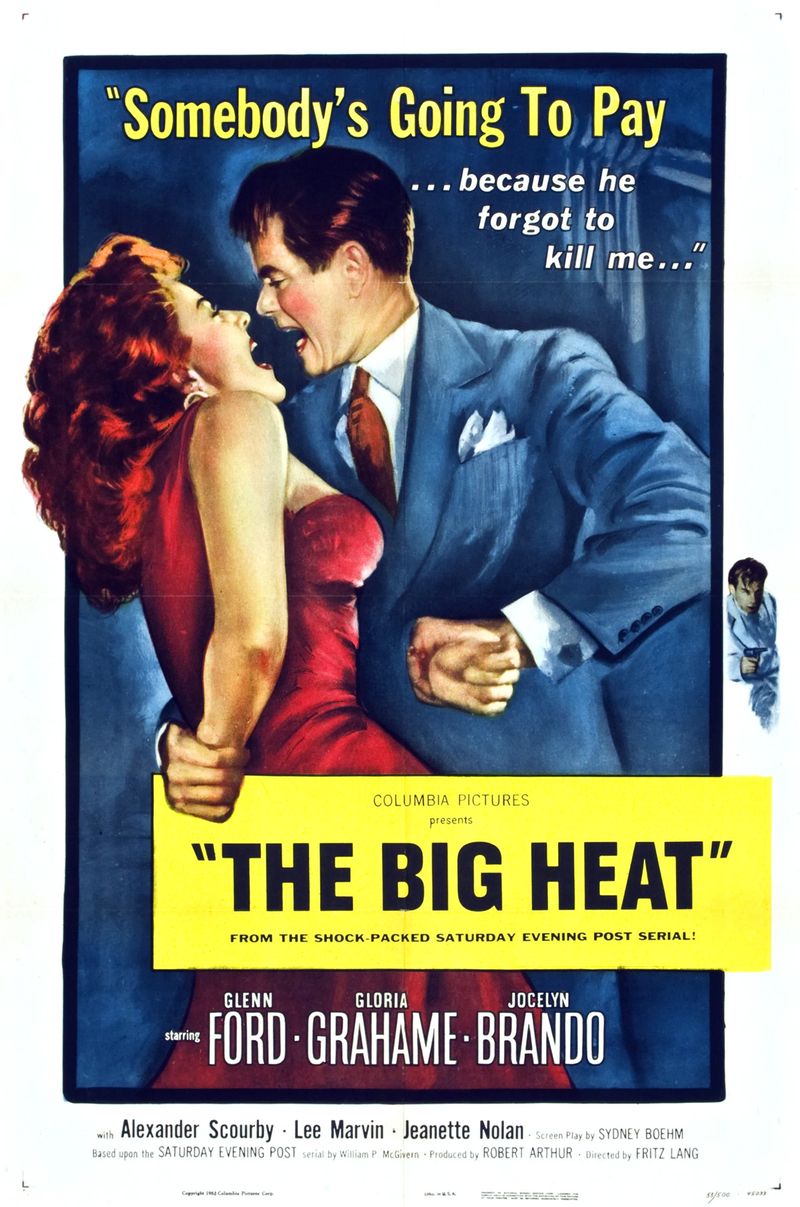
Honest cops are rare in noir, and Dave Bannion might be the most stubborn one of the bunch.
Once he starts asking questions, he simply refuses to stop.
Fritz Lang directed The Big Heat in 1953, working from Sydney Boehm’s script.
The story is based on William P.
McGivern’s serialized novel in The Saturday Evening Post.
Glenn Ford plays Bannion, a homicide detective looking into an officer’s apparent suicide.
Bannion soon uncovers a crime ring with ties reaching far into city government.
After the gang targets him and his family, he goes after them with fierce focus.
His quiet home life early on makes the later scenes hit harder.
Gloria Grahame steals the show as Debby Marsh, the girlfriend of a brutal gangster.
She starts out flippant and fun, then reveals much more depth as the story unfolds.
Lee Marvin plays the gangster, Vince Stone, and he is truly frightening.
Lang keeps the pace brisk, and the film rarely wastes a minute.
Notice how ordinary places like kitchens and apartments become dangerous spaces.
Fans of modern cop dramas will recognize the lone detective formula here, done with real grit.
13. Touch of Evil
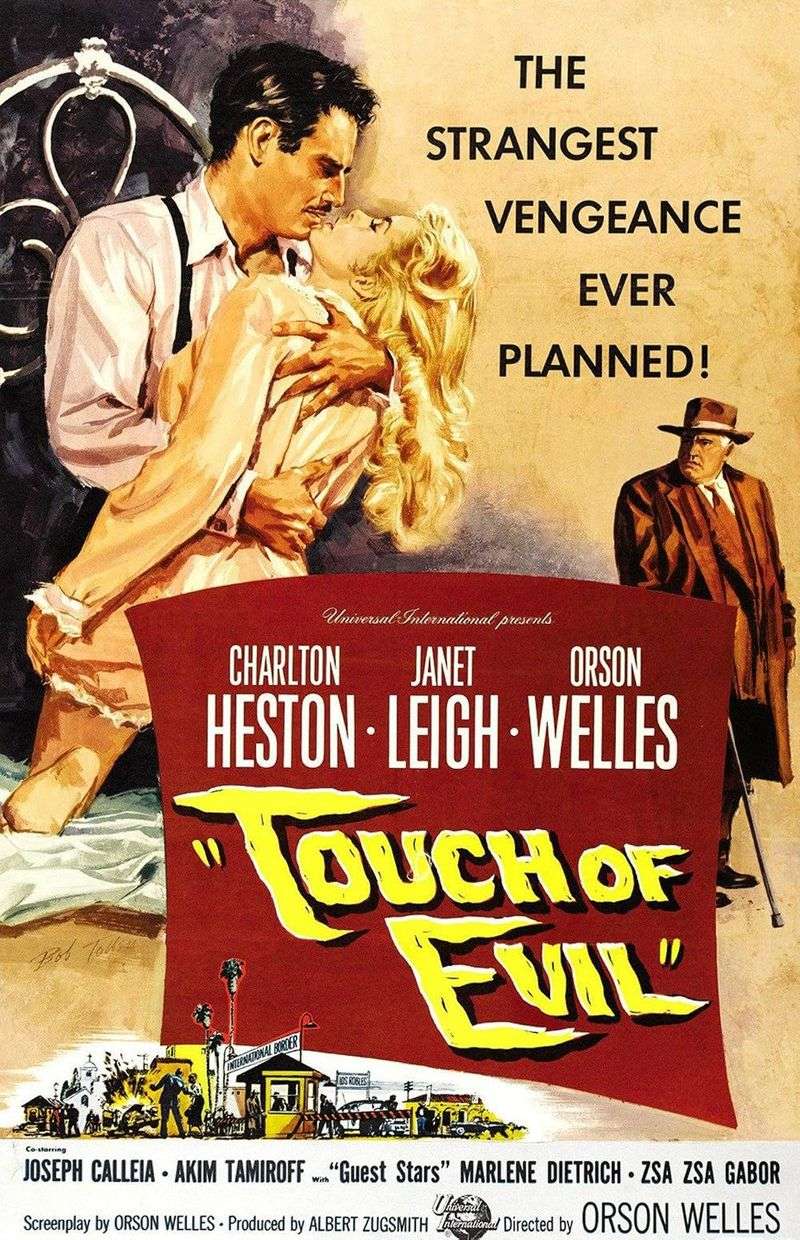
A bomb gets planted in a car trunk, and then the camera glides through a busy border town for over three minutes without a single cut.
Film students still study that opening shot.
Orson Welles wrote and directed Touch of Evil, released in 1958.
The story comes from Whit Masterson’s novel Badge of Evil.
Charlton Heston plays Mike Vargas, a Mexican narcotics official, with Janet Leigh as his new wife, Susan.
Their honeymoon gets interrupted when that car explodes near the border.
Welles plays Hank Quinlan, a local police captain who seems to solve cases with suspicious ease.
Vargas starts to wonder how Quinlan gets his evidence.
Marlene Dietrich has a small, memorable role as a fortune teller who knew Quinlan long ago.
Her scenes add a touch of sadness to the dark story.
Universal re-edited the film before release, and Welles wrote a long memo asking for changes.
A 1998 restoration tried to follow his notes, so you may find different versions.
If you have options, the restored cut is a great place to start.
Heston playing a Mexican character may feel odd to modern viewers, and that’s fair to notice.
14. The Lady from Shanghai
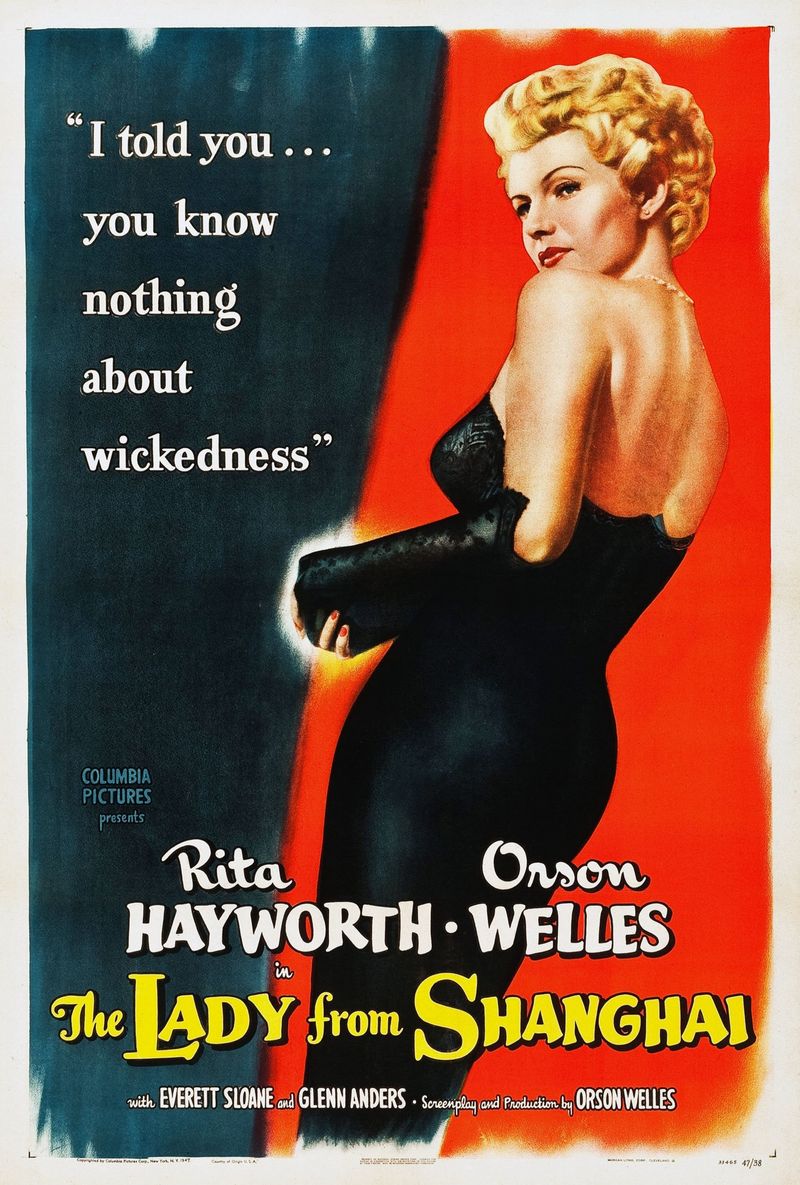
Rita Hayworth’s famous long red hair was cut short and dyed blonde for this movie.
Studio boss Harry Cohn reportedly was not pleased, and fans still talk about the look.
Orson Welles directed and starred in The Lady from Shanghai, which opened in the United States in 1948.
Hayworth, his wife at the time, plays Elsa Bannister, a mysterious woman he meets in Central Park.
Welles plays Michael O’Hara, an Irish sailor with a thick accent and questionable judgment.
Michael takes a job on the yacht of Elsa’s husband, Arthur Bannister, a powerful lawyer.
Everett Sloane plays Arthur, and Glenn Anders plays his odd business partner.
During a trip from New York to San Francisco, Michael gets roped into a bizarre plan.
The plot gets twisty, and some scenes feel almost dreamlike.
That strangeness is a big part of its appeal.
Save your attention for the finale in a funhouse hall of mirrors.
Reflections shatter and multiply, and the scene has influenced plenty of later films.
It’s a fitting way to end a noir marathon, since nothing in this genre is ever quite what it appears to be.