 MomSkoop

Feeling appreciated and valued is an important part of any healthy relationship, yet some women may gradually begin to feel overlooked by their partners. What starts as small changes in everyday interactions can sometimes develop into patterns that leave one person feeling emotionally neglected or unimportant. From a lack of thoughtful gestures to unequal responsibilities and limited emotional support, certain relationship habits can create the impression that someone’s efforts, feelings, and presence are being taken for granted.
While every relationship experiences periods of stress and changing priorities, consistently feeling unappreciated can affect emotional connection, trust, and overall relationship satisfaction. Recognizing the behaviors that contribute to these feelings can help couples better understand each other’s needs and address problems before they become deeply rooted. Here are 12 relationship habits that may cause women to feel taken for granted and explain why even seemingly small actions can have a lasting impact on a partnership.
1. Skipping the Simple Thank You

Two small words cost nothing, yet they often vanish first in a long relationship.
When thanks fade away, daily life can start feeling like a list of chores instead of a partnership.
Gratitude doesn’t need fireworks.
A quick “I really appreciate how much thought you put into this” can land better than flowers bought out of guilt.
Consistent noticing matters more than a single grand gesture.
Many couples stop saying thanks because the effort becomes routine.
She cooked last night, she’ll cook tonight, so why mention it?
That logic makes sense until she starts wondering if anyone sees her at all.
Try naming specific things. “Thanks for handling the dentist call” shows you actually noticed the task, not just the person.
Specific praise tells her you were paying attention, which is the whole point.
You could also make a tiny habit of it, like sharing one thing you appreciated during dinner or before bed.
It might feel cheesy for a week.
After that, it usually just feels nice for both of you.
Gratitude also works best when it flows both ways.
Nobody wants a scorecard, but a relationship where both people feel thanked tends to feel lighter and friendlier day to day.
2. Brushing Off Her Feelings
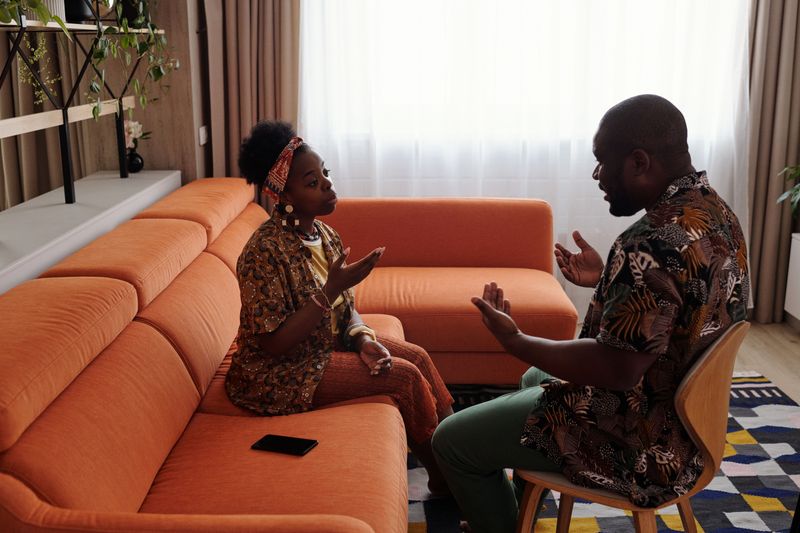
“You’re overthinking it” might be the fastest way to end a conversation you actually needed to have.
It sounds harmless, but it tells her that her feelings are a nuisance.
Dismissing emotions comes in many forms.
Interrupting her mid-sentence, rolling your eyes, or jumping straight to fixes can all send the same message.
Her perspective gets shrunk down until it barely seems to count.
Signals matter too.
A change in tone, a long silence, or a quieter mood often carries meaning.
Ignoring those clues can make her feel invisible, even when you’re sitting right beside her.
Over time, many women simply stop sharing.
That isn’t peace.
It’s distance wearing a calm disguise, and it can be much harder to undo later.
A better approach starts with listening until she’s finished.
You don’t have to agree with every point to say, “That sounds frustrating.
Tell me more.” Curiosity keeps the door open in a way that arguing rarely does.
If you’re unsure what she needs, ask directly.
Some days she wants advice, and other days she wants a listener.
Guessing wrong is normal, but asking shows respect and saves you a lot of awkward detours.
3. Assuming She Will Always Stay

Comfort is lovely, right up until it turns into autopilot.
Feeling secure in a relationship is healthy, but assuming your partner will stick around no matter what is a different story.
When that mindset settles in, her presence can shift from special to simply expected.
Her care starts looking like a built-in feature, the way a fridge keeps food cold without anyone thanking it.
Nobody wants to be the household appliance.
Steady relationships usually involve choosing each other again and again.
That choice shows up in ordinary ways, like making plans, checking in, and keeping the small courtesies you offered early on.
Think back to how you acted when you were first dating.
You probably texted to say you’d be late and asked about her day with real interest.
Those habits don’t need to disappear just because the relationship feels settled.
A few ideas can help keep effort alive.
Plan a date without being reminded, or ask a question you’ve never asked before.
Tiny surprises tell her you still see her as a person you chose, not a fixture you inherited.
Security and effort can live together happily.
In fact, they tend to get along best when both partners keep showing up.
4. Leaving Her to Start Everything

Somebody has to plan the weekend, and in plenty of homes, that somebody is always her.
She books the dinner, starts the hard talks, and usually offers the first apology too.
On paper, it might look like she just enjoys planning.
In real life, being the constant initiator can feel exhausting.
Her effort becomes so expected that it fades from view entirely.
This imbalance can leave someone feeling lonelier inside a relationship than outside one.
When one person carries the emotional weight, resentment and distance tend to creep in.
It’s a slow leak, not a dramatic blowout.
Fixing it doesn’t require a total personality change.
You could take charge of one plan each week, even something small like picking a movie or a walking route.
Starting a check-in conversation counts too.
Apologies are another place to share the load.
If you notice she’s always the one smoothing things over after an argument, try going first next time.
It shows you care about repair, not just about the fight ending.
Shared initiative sends a clear message.
You’re both invested, both curious, and both willing to make the relationship move forward instead of waiting to be steered.
5. Treating Her Time as Less Important

Running late once happens to everyone.
Running late every time she plans something is a pattern, and patterns speak loudly.
When her schedule keeps getting bumped for other people’s needs, she may start to feel like the easiest person to postpone.
Maybe her concerns get pushed to “later” while she’s still expected to answer texts right away.
That double standard stings.
Time is one of the clearest ways people show priorities.
If friends, coworkers, and hobbies always come first, she notices, even if she doesn’t say anything right away.
Of course, busy seasons are real.
Work deadlines, family needs, and money pressures can make schedules messy for anyone.
The problem isn’t being busy.
It’s treating her as the flexible option by default.
Practical fixes can be simple.
Put shared plans on a calendar you both see, and treat them like real appointments.
If you must cancel, offer a specific new time instead of a vague “soon.”
Showing up when you said you would builds trust in small, steady layers.
Each kept promise tells her that her hours matter just as much as yours, which honestly isn’t a huge ask.
6. Missing the Invisible Labor

Who remembers that the kids need new shoes before school starts?
In many households, the answer is the same person every single time.
Invisible labor covers the unseen work of running a home.
It includes meal planning, booking appointments, tracking birthdays, and noticing when the toilet paper is almost gone.
None of it looks impressive, yet the household wobbles without it.
There’s an emotional side too.
Offering reassurance, calming family tension, and keeping everyone’s moods in mind all take energy.
When that effort is simply assumed, resentment tends to grow quietly.
Doing a chore when asked helps, but it isn’t the whole picture.
The mental work of remembering and planning is often the heaviest part.
Being “happy to help” still leaves her as the manager.
Try sitting down together and writing out the recurring tasks, including the mental ones.
Then split ownership, not just the doing.
If you own school forms, you track deadlines too.
Even simply saying, “I see how much you keep track of,” can mean a lot.
Recognition doesn’t replace sharing the work, but it’s a solid first step toward a fairer, calmer home.
7. Talking Only About Logistics

“Did you pay the electric bill?” is a perfectly useful question.
It just shouldn’t be the most romantic sentence of the week.
Many couples slide into talking mostly about errands, bills, and dinner plans.
Life gets busy, and those topics need handling.
The trouble starts when practical chatter replaces actual curiosity about each other.
Without that curiosity, she can feel a strange kind of loneliness.
She’s sharing a home and a calendar, yet nobody asks what she’s dreaming about or worrying over.
It can feel like living with a friendly roommate.
Reviving deeper talks doesn’t need candlelight or a script.
Ask about the best part of her day, a memory she’s been thinking about, or something she’s excited to try.
Then listen for more than a minute.
Some couples like setting aside ten phone-free minutes after dinner for non-logistics conversation.
Others prefer chatting on walks or car rides, where talking side by side feels easier.
Pick whatever fits your routine.
Logistics will always need a seat at the table.
They just shouldn’t hog the whole thing.
A little real curiosity reminds her that you’re interested in her, not only in whether the trash went out.
8. Letting Affection Slip Away

Remember when holding hands in the grocery store felt natural?
For a lot of long-term couples, those little touches quietly disappear somewhere between the cereal aisle and year five.
Affection includes hugs, a hand on the shoulder, a kiss goodbye, or a sweet text in the middle of the day.
When those moments fade, she may start feeling disconnected or unloved, even if nothing else has changed.
It’s also tough to keep showing affection to someone who rarely returns it.
Warmth that only flows one way eventually runs low, like a phone nobody plugs in.
Comfort levels around touch vary from person to person.
Some people love constant hugs, while others prefer words or quality time.
Asking what feels good to her beats guessing.
Small rituals can bring closeness back without pressure.
A six-second hug when you get home, a kiss before leaving, or sitting close during a show all count.
None of it requires planning or spending money.
A sudden drop in affection can sometimes point to deeper issues worth talking about openly.
Often, though, it’s simply habit, and habits can shift with a little attention and good humor.
9. Ignoring Her Wins

She finally finished the big project, and the response was “Cool, what’s for dinner?” That moment can deflate a person faster than a pin in a balloon.
Achievements come in all sizes.
A promotion counts, but so does a tough workout, a finished book, or a hard phone call she’d been dreading.
When her partner shrugs these off, she may feel unseen.
Celebrating shows that her effort matters to you.
Skipping it can quietly suggest her goals rank lower than other people’s, which can chip away at her confidence over time.
The fix is pleasantly easy.
Ask follow-up questions, show real excitement, and remember to mention it later. “How did the presentation go?” means more when you actually recalled it was happening.
Celebration styles can match your budget and her personality.
Some people love a special dinner, while others prefer a handwritten note or a favorite snack waiting on the counter.
Matching her taste matters more than spending big.
Being her biggest fan isn’t a competition with her friends or coworkers.
It simply means showing up with enthusiasm when something good happens.
Most people remember who cheered loudest, and that memory sticks around for years.
10. Scrolling While She Talks

Phubbing sounds like a made-up cartoon word, but it describes something very real.
It’s short for phone snubbing, and it happens when someone chooses a screen over the person in front of them.
Even quick glances at a phone during a conversation can feel dismissive.
She’s sharing a story, and suddenly she’s competing with a sports score or a funny video.
That’s a tough match for anyone.
Phubbing has been linked to lower relationship satisfaction and more loneliness.
It can make her feel like background noise, and over time she may simply stop telling you things.
Nobody expects you to toss your phone into a lake.
Work messages and family texts are part of normal life.
The goal is noticing when the phone steals attention you meant to give her.
Simple boundaries help a lot.
Try keeping phones off the dinner table, flipping yours face down during talks, or saying, “Give me one second to finish this, then I’m all yours.” That last line respects both the task and her.
Eye contact is surprisingly powerful.
When you look up and actually listen, she knows she has your full attention, and that feels good.
11. Dodging the Hard Talks

Money, future plans, and family stress rarely make fun dinner topics.
Still, avoiding them forever is like ignoring a weird noise in your car and hoping it fixes itself.
When one partner keeps sidestepping serious discussions, the other may read it as disinterest.
She might wonder if you care about the future you’re supposedly building together.
Silence can say a lot, and not always what you mean.
Unspoken problems also have a habit of growing.
Resentment builds, and communication can start breaking down in places that seem unrelated, like arguments over dishes that are really about something bigger.
Hard conversations go better with a little setup.
Choose a calm time, not right before bed or in the middle of a rush.
Saying “Can we talk about savings this weekend?” gives both people time to prepare.
It also helps to focus on teamwork.
Use phrases like “How do we want to handle this?” instead of pointing fingers.
You don’t need to solve everything in one session.
Taking breaks is fine if things get heated.
What matters is coming back to the topic.
Showing up for tough talks tells her you’re in this for real.
12. Calling Her Needs Too Much

Needing rest, support, or a little reassurance doesn’t make someone dramatic.
It makes them human, which last time anyone checked was the whole job description.
When her needs get labeled as excessive or inconvenient, she may start feeling guilty for having them at all.
Belittling comments can make her question whether her feelings are valid.
That’s a heavy thing to carry quietly.
Here’s the ironic twist.
Once she stops voicing her needs, her partner might complain that she never talks anymore.
The silence often began with being told she was asking for too much.
Respecting needs doesn’t mean meeting every request perfectly.
You’re allowed limits too, and honest conversations can include both sides.
The key is treating her needs as reasonable topics, not annoyances to dodge.
Try responding with curiosity instead of a sigh. “What would help right now?” is a simple question that often goes a long way.
Sometimes the answer is small, like a quiet hour or a cup of tea.
Honoring someone’s needs is one of the clearest ways to show appreciation.
It tells her she’s safe to ask, and a partner who feels safe asking is far more likely to keep sharing her world with you.