
Trust is one of the most important foundations of a healthy relationship, yet even the strongest connections can be shaken by unexpected discoveries. Finding something unusual on a partner’s phone, whether it’s a secretive conversation, an unfamiliar contact, or unexplained activity, can spark uncomfortable questions about honesty and transparency. While certain digital behaviors may raise concerns, they don’t always point to betrayal. Context matters, and jumping to conclusions without understanding the full picture can create unnecessary tension between partners who might otherwise have a perfectly reasonable explanation.
In an age when smartphones hold everything from private conversations to personal memories, the boundaries between privacy and secrecy can become surprisingly complicated. What one person considers harmless may leave another feeling excluded, suspicious, or emotionally unsettled. Recognizing potentially concerning signs isn’t about encouraging surveillance or invading someone’s privacy, but about understanding behaviors that may deserve an open, respectful conversation.
1. Active Dating Apps

A swipe-right app sitting on the home screen of someone in a committed relationship is bound to raise an eyebrow.
Tinder, Bumble, Hinge, and similar apps exist for one main reason, which is meeting new people for dating.
Ashley Madison goes even further, since it openly markets itself to people seeking affairs.
Finding one does not always mean your partner is out there flirting.
Some people forget to delete an old app from before the relationship started.
Others say they open it out of boredom or curiosity, which may or may not sit well with you.
Pay attention to the details that matter most.
Is there a recent login, a fresh profile photo, or new messages from matches?
An old, untouched app tells a very different story than an active account with current conversations.
Before you say anything, take a breath and think about what you actually saw.
Then bring it up in a calm moment, not in the middle of an argument.
You might say, “I noticed this app on your phone, and it made me feel uneasy.” Starting with your feelings, instead of an accusation, gives your partner room to explain and gives you a clearer answer.
2. Secret Messaging Apps

Disappearing messages sound like something out of a spy movie, yet plenty of regular apps offer them.
Signal encrypts chats by default, and Telegram has a special Secret Chats mode.
Apps like Confide and Session also focus on keeping conversations private.
Here is the tricky part.
Lots of people use these apps for perfectly ordinary reasons, like privacy, work, or chatting with friends who prefer them.
Simply having Signal on a phone is not a red flag by itself.
What deserves attention is how the app gets used.
Messages set to vanish quickly, notifications turned off, or an app tucked into a hidden folder can all suggest someone wants a specific chat kept out of sight.
A sudden switch from regular texting to a private app, right when other behavior changes, might also feel off.
If something bothers you, ask about it plainly.
You could ask who your partner chats with on the app and why they like it.
A relaxed, open answer is usually a good sign.
Defensiveness or a sudden password change can tell you more than the app ever could, so notice the reaction as much as the reply.
3. Explicit Photos of Other People

Stumbling across intimate photos of someone else can feel like getting hit by a wave.
The shock is real, and your feelings make complete sense.
Even so, the next few steps matter a lot.
Start by noticing context.
Were the images sent recently, or are they old files from a past relationship that never got deleted?
Were they saved on purpose, or did they arrive in a group chat or spam message?
Those details change the meaning of what you found.
Hidden storage also plays a role.
Some photo vault apps look like an ordinary calculator or utility, but they open to a private gallery after a passcode.
If explicit pictures are tucked away in one of these, the effort to hide them is part of what you are reacting to.
Resist the urge to screenshot, forward, or share anything you saw.
Those images involve another person who did not agree to be part of your conversation, and sharing them can create serious problems.
Instead, describe what you found and how it affected you.
Clear agreements about what counts as okay in your relationship can help you both figure out where the line really sits for you as a couple.
4. Nonstop Texts With One Person

Late-night timestamps can tell a story that the words in a chat never do.
A thread stretching back months, with messages at 1 a.m. and 6 a.m., might leave you wondering who could possibly need that much attention.
Of course, people text best friends, siblings, and coworkers constantly.
A busy group project or a friend going through a rough patch can easily explain a lot of messages.
Volume alone does not prove romance or betrayal.
So look at the bigger picture.
Is the contact saved under a fake name or a vague label?
Does your partner flip the phone face down or step outside whenever that person texts?
Do the messages feel flirty or more personal than conversations between the two of you lately?
An itemized phone bill or the contact’s call history can sometimes show patterns you would otherwise miss.
Still, building a spreadsheet of call times usually creates more stress than clarity.
A simpler approach works better.
Mention that you noticed a lot of contact with this person and ask who they are.
Most partners with nothing to hide will happily introduce the friend, and that small step can calm things down quickly.
5. Wiped Call and Message History

An empty call log is a strange sight on a phone that rings all day.
When a recent calls screen shows almost nothing, or one particular chat keeps vanishing, it is natural to feel puzzled.
Some people are simply tidy.
They clear notifications, delete old threads, and keep storage free the way others empty a kitchen trash can.
Phones also offer settings that remove messages automatically after 30 days or a year, which can make history look thin.
The pattern is what makes this one stand out.
If messages from nearly everyone stay put, but conversations with one specific person disappear again and again, that looks less like a cleaning habit and more like a choice.
Selective deleting tends to sting because it suggests someone is controlling what you can see.
Try not to start digging through backups or cloud accounts on your own.
That move can damage trust from your side, too.
A better option is to share exactly what you noticed and ask about it.
You could say, “I saw that only your chats with this person seem to get deleted.” Specific wording keeps the talk focused and makes it harder for the discussion to spin into a vague fight.
6. Hidden Money Moves

Money can create relationship trouble just as fast as a flirty text.
Some people call it financial infidelity, which covers secret spending, hidden accounts, quiet debt, or big money choices made without telling a partner.
On a phone, clues might show up as a banking app you never knew about or payment alerts for purchases that never came up.
Peer-to-peer apps like Venmo, Cash App, or Zelle can also reveal regular transfers to someone unfamiliar.
A new credit card app can raise the same kinds of questions.
Hold off on jumping to conclusions.
Your partner might be saving for a surprise, paying off an old debt they feel embarrassed about, or helping a relative quietly.
Shame around money keeps lots of people silent, even with someone they love.
That said, shared finances work best with honesty.
Pick a calm time to talk, ideally not right after a bill arrives.
Ask open questions and share your own spending, too, so the talk feels balanced.
Some couples set a rule that any purchase over an agreed amount gets mentioned first.
A simple system like that can make future surprises much less likely and keeps both of you on the same team.
7. Location Sharing With Someone Else
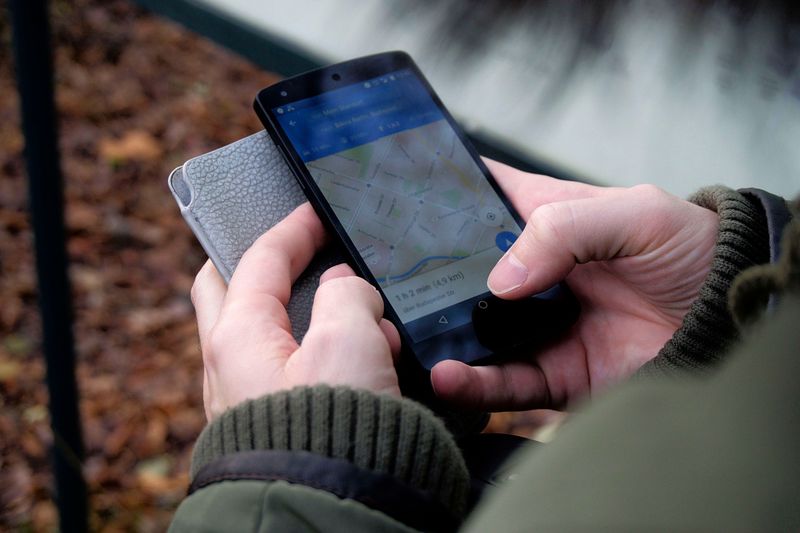
A little blue dot on a map can carry more emotional weight than it should.
Apple’s Find My and apps like Life360 let people share where they are in real time, which comes in handy for families, road trips, and safety.
Seeing your partner share their location with parents, siblings, or close friends is pretty common.
Things get more complicated when the list includes an ex or someone you have never heard of.
Sharing a live location suggests a certain closeness, so finding an unexpected name there can feel personal.
Notice whether the sharing was ever mentioned.
Was it set up long ago for a practical reason, like a shared commute, or does it seem new and quiet?
Also check how you feel about location sharing in general, since couples have very different comfort levels.
This conversation is a good chance to set clear expectations together.
Some couples love sharing locations, while others find it controlling.
Neither choice is wrong, as long as you both agree.
Ask who is on the list and why, then talk about what feels fair to each of you.
Agreeing on rules ahead of time beats discovering surprises later.
8. A Second Phone Number

Two phone numbers on one device used to require some real effort.
Now apps like Burner, Hushed, and TextNow let anyone create an extra number for calls and texts in a few minutes.
Plenty of folks use these numbers for sensible reasons.
Small business owners keep work calls separate, online sellers avoid sharing a personal number with strangers, and some people use them for dating safety.
So the app itself is not automatic proof of anything shady.
Questions start when the second number seems secret.
If your partner never mentioned it, the contacts look personal rather than work-related, or texts on that number get deleted quickly, the discretion can feel aimed at you.
Burner-style numbers can also be tossed out easily, which adds to the mystery.
A straightforward question usually works best here.
Ask what the number is for and who has it.
If the answer is a side hustle or a Marketplace listing, great, you just learned something new.
If the story keeps changing, that inconsistency is worth paying attention to.
Trust grows from answers that match up over time, so notice whether the explanation still makes sense a week later.
9. Constant Incognito Browsing

Private browsing mode looks like a little spy with a hat and sunglasses, which feels almost too fitting.
In incognito mode, the browser does not save history, cookies, or form entries on the device after you close the window.
Fun fact: incognito does not make anyone invisible.
Internet providers, workplace or school networks, and the websites themselves can still see activity.
It mainly keeps things hidden from the next person who picks up the phone.
Plenty of people use private mode for harmless stuff.
Shopping for a birthday gift, checking prices without targeted ads, or logging into a second account are all common reasons.
A totally empty history might just mean someone likes a clean browser.
The bigger signal comes from patterns combined with behavior.
Constantly wiping history, getting nervous when you borrow the phone, or quickly closing tabs might point to something your partner would rather keep quiet.
Even then, the hidden content could be embarrassing rather than hurtful.
If it keeps nagging at you, bring it up as a question about comfort and openness.
Snooping through network logs is unlikely to solve the bigger issue, which is whether you both feel safe being honest.
10. Locked Folders and Vault Apps

Calculators are not usually the most thrilling apps on a phone, unless one secretly opens a private gallery.
Vault apps often disguise themselves as basic tools, then reveal hidden photos, videos, or notes after someone types a code.
Phones also come with built-in options.
Samsung offers Secure Folder, and iPhones let users hide photos in a Hidden album that can be locked with Face ID.
These features are standard, so finding one turned on is not unusual.
What goes inside matters, though you may never see it.
A locked folder might hold passwords, ID photos, medical paperwork, or surprise gift plans.
It could also hold things your partner fears would hurt you.
Without more information, the folder itself is just a closed door.
Your reaction can shape what happens next.
Trying to guess passcodes tends to backfire and can damage trust in both directions.
Ask instead, and be honest about why it worries you.
Some couples feel comfortable sharing almost everything, while others value a bit of private space.
Talking about where you each draw that line can turn a tense discovery into a clearer understanding of how you want your relationship to work.