 MomSkoop

Love should make you feel safe, respected, and free to be yourself. Sometimes a partner uses sneaky tactics to get their way, and it can be hard to spot at first.
Learning the warning signs helps you trust your own mind and protect your well-being. Here are some common behaviors to watch for.
1. Gaslighting

“That never happened. You’re imagining things.”
If you hear lines like this often, pay attention.
Gaslighting means a partner denies events or conversations until you start doubting your own memory.
Over time, you may feel foggy, anxious, or unsure about simple facts.
You might even start apologizing for things that never went wrong.
One helpful trick is keeping private notes, such as dates, texts, or short journal entries.
Writing things down gives you something solid to check when your confidence wobbles.
Talking with a trusted friend or counselor can also help you see the pattern more clearly.
Your memory and feelings are valid, and you deserve a partner who respects them instead of twisting them.
2. Guilt-Tripping

Healthy partners can say they miss you without making you feel like a bad person.
A manipulator, though, uses guilt as a lever to change your plans or choices.
Notice how you feel after saying no. If you often feel heavy, ashamed, or like a villain for normal requests, something may be off.
Try calmly stating your decision and offering a fair compromise, like another evening together.
If the guilt keeps growing anyway, the goal may be control rather than connection, and that is worth taking seriously.
3. The Silent Treatment

Silence can be loud.
When a spouse stops speaking for days after a disagreement, the quiet becomes a punishment.
Everyone needs a cooling-off break sometimes.
The difference is that a healthy break comes with a promise, like “I need an hour, then let’s talk.” Manipulative silence has no end date and often lasts until you apologize or give in.
It can leave you walking on eggshells, desperate to fix things just to hear their voice again.
If this sounds familiar, try naming the pattern gently and suggest a clear time to talk.
Notice whether affection returns only when you surrender.
That pattern shows silence is being used as leverage.
4. Blame-Shifting

Spilled milk, missed bills, a loud outburst: somehow it all lands on your shoulders.
Blame-shifting turns a spouse’s mistakes into your fault.
You might hear, “I wouldn’t have yelled if you hadn’t upset me.” Sentences like that dodge responsibility and leave you carrying weight that isn’t yours.
Healthy adults own their actions, even when it feels awkward.
Try asking yourself, “Did I really cause this, or am I just being handed the blame?”
Staying calm and saying, “I’m responsible for my part, and you’re responsible for yours,” can set a firm boundary.
If apologies never come from their side, the imbalance deserves your attention.
5. Playing the Victim

You bring up a real concern, and suddenly your spouse is the one hurt, wronged, and misunderstood.
Somehow you end up comforting them instead.
This tactic flips the story so the problem never gets solved.
Over time, you may stop speaking up because it feels pointless or exhausting.
Everyone feels wounded sometimes, and that is human.
The warning sign is when it happens every single time you raise an issue.
Try sticking to one topic and saying, “I hear that you’re hurt, and I still need us to talk about this.” Pay attention to whether your feelings ever get room.
Fair relationships leave space for both people’s pain.
6. Emotional Blackmail

“If you really loved me, you would.” Words like these wrap a demand inside fear, duty, or guilt, and that is emotional blackmail.
The pressure can sound caring on the surface.
Underneath, the message is that you will pay an emotional price if you say no.
Fog, fear, and obligation are the three feelings to watch.
When a choice feels forced rather than free, pause.
Giving yourself time before answering takes away the pressure of the moment.
You might say, “I’ll think about it and get back to you.” Real love invites a yes, but it also survives a no without punishing you for it.
7. Controlling Behavior

Who you see, what you wear, how you spend money, where you go: a controlling spouse wants a vote on all of it, and often the final say.
It may begin as “just looking out for you.” Soon, you may feel you need permission for ordinary choices, like buying groceries or meeting a coworker for lunch.
Adults in healthy marriages share decisions, but nobody owns the other person.
Try listing areas of your life where you feel free and where you feel watched.
If the second list keeps growing, that is a red flag.
Keep your own bank access, your own phone privacy, and your own voice, because those things protect your independence.
8. Isolation From Loved Ones

Remember when you saw your friends every week?
If those visits faded because your spouse always seemed upset about them, take notice.
Isolation often creeps in slowly.
A partner may criticize your friends, start arguments before family dinners, or make outings so stressful that staying home feels easier.
The goal, often, is to leave you with nobody else to lean on.
Support from outside the marriage keeps your view of the world balanced.
Try reaching out to one person this week, even with a short text.
Rebuilding those bridges matters because people who care about you can offer honest perspective, comfort, and help if you ever need it.
9. Moving the Goalposts

You cleaned the kitchen, so now the garage is the problem.
You planned a nice dinner, so now the issue is the dessert.
Sound exhausting?
When expectations keep changing, nothing you do ever counts as enough.
That is the heart of moving the goalposts, and it keeps you chasing approval that never arrives.
Try asking for clear, specific expectations and see what happens.
A fair partner will explain and stick to what they said.
A manipulative one may shift again.
If you notice you can never win, the game itself is rigged.
Your worth does not depend on passing a test that keeps changing.
10. Weaponizing Vulnerabilities
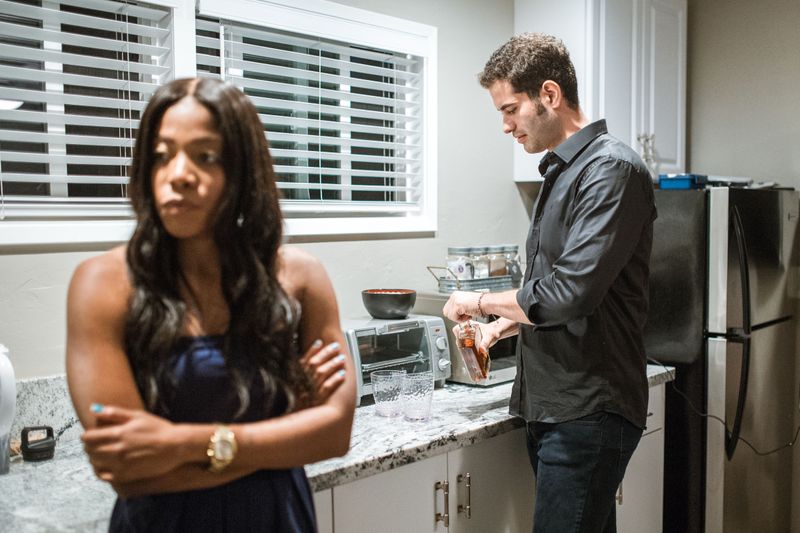
Trust means sharing your fears and old wounds, expecting them to be handled gently.
Weaponizing happens when those secrets get tossed back at you during a fight.
Maybe it is a past mistake, an insecurity about your body, or a painful childhood memory.
Hearing it used as ammunition can feel like a betrayal.
Disagreements can be heated, yet they should never target your deepest tender spots on purpose.
Notice if you start hiding feelings to stay safe.
That shift shows trust has cracked.
Consider setting a boundary like, “I won’t continue this conversation if my past is used against me,” and then follow through by stepping away.
11. Love-Bombing and Withdrawal

Flowers, sweet notes, big promises, and then suddenly a chill.
That roller coaster is called love-bombing followed by withdrawal.
The warm phase feels amazing, so you work hard to bring it back when the coldness arrives.
Your partner may not even need to say what they want.
The pattern itself trains you to behave.
Real affection stays fairly steady, even through disagreements.
Watch for cycles where kindness appears right after you comply and vanishes when you set a limit.
Tracking the highs and lows on a calendar can reveal the pattern.
Consistent care is a better sign of love than dramatic gestures.
12. Threats and Intimidation

Threats come in many forms: leaving you, spreading rumors, cutting off money, or hurting themselves or you.
Each one is meant to scare you into obeying.
Intimidation can also be quieter, like slamming doors, a hard stare, or blocking your path.
Whatever the style, fear should never be a part of a loving home.
If you feel unsafe, take it seriously.
Tell someone you trust, make a safety plan, and reach out to a local helpline or the National Domestic Violence Hotline at 1-800-799-7233 in the United States.
You do not have to handle this alone, and your safety always comes first.