 MomSkoop
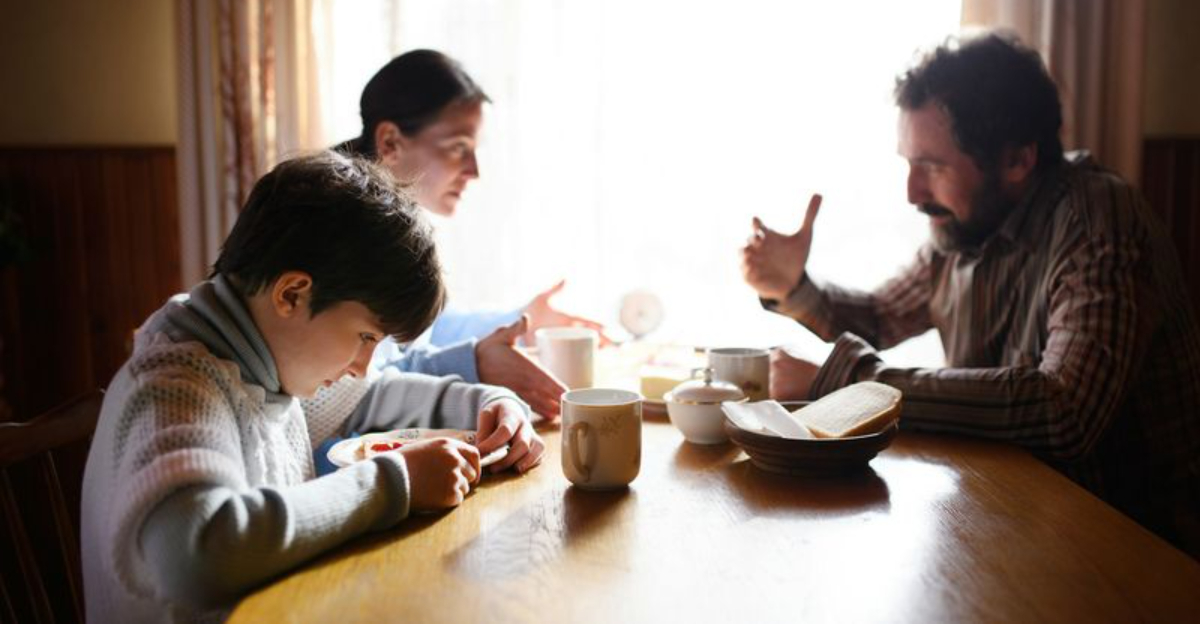
Growing up in a home where parents were unhappily married leaves a mark that doesn’t disappear when you become an adult. Many people carry emotional patterns from their childhood into their friendships, romantic relationships, and even the way they see themselves.
These patterns can feel confusing or even invisible until someone points them out. Understanding where these habits come from is the first step toward healing and building healthier connections.
1. Fear of Conflict

Walking on eggshells becomes second nature when you grow up in a home filled with tension.
For many adults raised by unhappily married parents, even a small disagreement can trigger a wave of anxiety that feels completely out of proportion to the situation.
Their nervous system learned early on that conflict meant danger—raised voices, slammed doors, or icy silence that lasted for days.
So now, avoiding any kind of friction feels like survival, not a choice.
The good news is that conflict can actually be healthy.
Learning to express disagreement calmly and respectfully is a skill anyone can build with practice and patience.
2. Hypervigilance

Some people walk into a room and immediately take the emotional temperature of everyone in it.
They notice the tiny sigh, the tight jaw, the forced smile—details most people completely miss.
This is hypervigilance, and it often starts in childhood.
When a child grows up anticipating their parents’ next argument, their brain becomes wired for constant alertness.
That skill helped them stay emotionally safe at home, but it can be exhausting in adult life.
Relationships, workplaces, and even casual social settings can feel like minefields.
Therapy and mindfulness practices can help retrain the nervous system to finally relax without feeling guilty about it.
3. People-Pleasing Tendencies

Saying yes when you mean no becomes a habit when keeping the peace was your childhood job.
Many adults raised in unhappy households learned that their own needs came second—or didn’t come at all.
People-pleasing can look like kindness on the outside, but on the inside it often feels like quiet resentment and emotional exhaustion.
You give and give while waiting for someone to finally ask how YOU are doing.
Breaking this pattern starts with small, brave moments—like declining an invitation you don’t want to accept or asking for what you actually need.
Each small act of honesty is a step toward genuine self-respect.
4. Difficulty Trusting Relationships

Trust doesn’t come easily when the relationship you watched most closely as a child was full of broken promises, cold silences, or ongoing unhappiness.
Home is supposed to be where safety lives—but for some kids, it was anything but.
As adults, they may test partners constantly, waiting for the other shoe to drop.
Commitment can feel like a trap rather than a gift, and vulnerability can feel downright terrifying.
Building trust is a slow process, and that’s okay.
Honest communication, consistent small actions, and sometimes the support of a therapist can help rewire the belief that closeness always leads to disappointment or pain.
5. Emotional Suppression

Feelings that were never welcomed at home often go underground.
When children watch their parents avoid, dismiss, or weaponize emotions, they learn that feelings are either dangerous or pointless—so they stop showing them.
Fast-forward to adulthood, and these same people may struggle to name what they’re even feeling in the moment.
They might say “I’m fine” so automatically that they genuinely lose touch with what’s happening inside them.
Emotional suppression takes a real physical and mental toll over time.
Journaling, therapy, and even simple check-in practices—like pausing to ask yourself “What am I feeling right now?”—can slowly rebuild that lost emotional awareness.
6. Overdeveloped Sense of Responsibility

Some kids become tiny peacekeepers without ever being asked.
They learn to smooth things over, stay quiet, and carry the emotional weight of their entire household.
It feels like love—but it’s actually a burden no child should bear.
In adulthood, this pattern shows up as taking on too much, struggling to delegate, and feeling personally responsible when anyone around them is upset or struggling.
Their identity can become tangled up in being the one who fixes everything.
Recognizing that other people’s emotions are not yours to manage is genuinely liberating.
Setting limits on what you take on isn’t selfish—it’s one of the most important acts of self-care available to you.
7. Fear of Abandonment

When the foundation of your family felt shaky, the fear of being left behind can follow you straight into adulthood.
Chronic parental tension teaches children that relationships are fragile—and that love can disappear without warning.
As grown-ups, this fear can show up as clinginess, jealousy, or pushing people away before they get the chance to leave first.
It’s a painful cycle that often feels impossible to break from the inside.
Understanding where this fear comes from is genuinely powerful.
When you recognize that your fear is rooted in the past, not the present, you give yourself a real chance to respond differently—and to finally feel more secure.
8. Attraction to Unhealthy Dynamics

Familiarity is a powerful force—even when what’s familiar isn’t good for you.
Adults who grew up around conflict, emotional distance, or instability can find themselves drawn to partners or friendships that recreate those same uncomfortable patterns.
It doesn’t mean they want to be unhappy.
It means their nervous system recognizes the feeling of chaos as “normal.” Calm, stable love can actually feel boring or suspicious at first.
Breaking this cycle requires honest self-reflection and sometimes outside support.
When you start to notice the pattern, you gain the power to pause before repeating it.
Healthy love might feel unfamiliar at first—but it’s absolutely worth pursuing.
9. Avoidance of Intimacy

Getting close to someone means risking getting hurt—and for people who watched love turn painful, that risk can feel unbearable.
Emotional intimacy requires vulnerability, and vulnerability requires trust that many of these adults simply never learned to develop.
They might keep conversations surface-level, avoid sharing personal feelings, or sabotage relationships just when things start getting serious.
It can frustrate partners who genuinely want to connect but keep hitting invisible walls.
The truth is, closeness doesn’t have to mean pain.
Learning to open up gradually, at a pace that feels manageable, can help rebuild the courage to be truly known by another person without bracing for the worst.
10. Perfectionism

“If I’m perfect, maybe things will calm down at home.” That quiet, unspoken belief drives a lot of children in high-conflict households to push themselves relentlessly.
Good grades, good behavior, no trouble—anything to reduce the pressure everyone else was feeling.
In adulthood, that same drive can morph into rigid self-criticism, fear of failure, and an inability to enjoy achievements without immediately raising the bar even higher.
Perfectionism often masquerades as ambition, but underneath it lives a frightened child seeking approval.
Practicing self-compassion—treating yourself with the same kindness you’d offer a good friend—is one of the most effective ways to loosen perfectionism’s grip over time.
11. Difficulty Setting Boundaries

Boundaries are invisible lines that protect your energy, time, and emotional well-being.
But when you grew up in a home where those lines were constantly crossed—or simply didn’t exist—learning to draw them as an adult feels almost foreign.
Children in enmeshed or chaotic families often absorb everyone else’s emotions without knowing where one person ends and another begins.
Saying no, asking for space, or expressing a personal need can feel like an act of betrayal rather than self-care.
Building boundaries is a practice, not a one-time decision.
Starting small—like asking for five minutes before answering a request—can gradually build the confidence to protect your peace without guilt.
12. Cynicism About Love or Marriage

When the marriage you witnessed up close was marked by resentment, distance, or unhappiness, it’s hard to believe that love can actually work.
Many adults raised in this environment quietly wonder if lasting, healthy partnership is real—or just something that happens to other people.
This cynicism can protect them from heartbreak, but it can also block them from building the very connections they secretly crave.
Skepticism becomes a shield that keeps both pain and joy at arm’s length.
Exposure to genuinely healthy relationships—whether through friendships, therapy, or community—can slowly challenge these long-held beliefs.
Love that is steady, respectful, and kind does exist, even when your earliest example said otherwise.