 MomSkoop

Baby boomers grew up in a world without smartphones, social media, and instant everything. Many of their everyday habits look surprisingly old-fashioned compared to how younger generations live today.
But here is the interesting part: some of those so-called outdated habits might actually lead to a happier, healthier life. Take a closer look at what boomers do differently and why it might be worth borrowing a page from their playbook.
1. Keeping a Consistent Daily Routine

There is something quietly powerful about waking up at the same time every day.
Boomers tend to stick to routines without needing an app to remind them.
Morning coffee at a set time, lunch breaks that actually happen, and bedtimes that do not shift around wildly are common in their daily lives.
Research backs this up.
Consistent routines are linked to lower stress levels, better sleep, and improved mental health.
When your body knows what to expect, it does not have to work as hard to adjust.
Younger generations often chase flexibility, but too much unpredictability can leave people feeling scattered.
A simple, steady daily rhythm might be one of the easiest paths to feeling grounded and content.
2. Spending More Time Face to Face
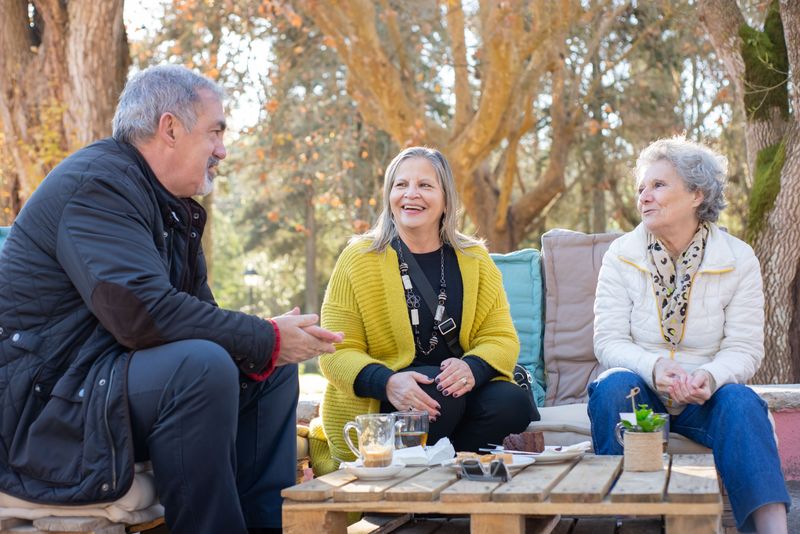
Before texting became the default, picking up the phone or showing up at someone’s door was just how people stayed connected.
Boomers still lean toward face-to-face interaction, and it turns out that habit carries real benefits.
Studies show that in-person socializing reduces feelings of loneliness far more effectively than digital communication.
Eye contact, shared laughter, and physical presence create a sense of belonging that a screen simply cannot replicate.
Many younger people report feeling lonely even while being constantly connected online.
Boomers who prioritize sitting across from a friend over texting them may be unknowingly protecting their emotional well-being.
Sometimes the old way of doing things is the better way.
3. Separating Work From Personal Time

Boomers largely grew up in an era when work stayed at the office.
When the workday ended, it ended.
There were no after-hours emails pinging on a smartphone, no Slack messages at 10 p.m., and no expectation of being always available.
That separation was not laziness.
It was a natural boundary that protected personal time and mental rest.
Psychologists today call this boundary-setting, and they strongly recommend it for avoiding burnout.
Younger workers often struggle to disconnect because technology makes it so easy to stay plugged in.
Boomers who maintained this division between work and home life may have stumbled onto something valuable long before burnout became a widespread conversation.
A clear stop time matters more than most people realize.
4. Eating Meals at the Table

Sitting down at the table for a meal used to be non-negotiable.
Boomers grew up with family dinners as a daily ritual, and many carried that habit into adulthood.
No TV trays, no scrolling through a phone, just food and conversation.
Eating at the table encourages slower eating, which helps digestion and prevents overeating.
It also creates a natural moment for connection, whether with family, a partner, or even just yourself and your thoughts.
Today, meals are often eaten in front of screens or on the go.
That shift has been linked to poorer eating habits and less family communication.
The simple act of sitting at a table might seem small, but its effects on health and happiness are surprisingly significant.
5. Maintaining Long-Term Friendships

Ask a boomer about their best friend and there is a good chance they have known that person for decades.
Long-term friendships are something this generation tends to nurture with real dedication, through life changes, distance, and the passage of time.
Deep, lasting friendships are one of the strongest predictors of happiness and longevity according to researchers at Harvard.
These relationships provide a sense of history, trust, and belonging that newer connections often lack.
In contrast, younger generations sometimes cycle through friendships more quickly, partly due to moving around and partly because of shifting digital social circles.
Boomers who have held onto their old friends through thick and thin may be sitting on one of life’s greatest treasures without even knowing it.
6. Taking Regular Walks

Long before fitness trackers and gym memberships became status symbols, boomers were simply walking.
Around the block after dinner, to the corner store, or through a local park on a Saturday morning.
It was not called exercise.
It was just life.
Walking is one of the most effective and accessible forms of physical activity available.
Regular walking improves cardiovascular health, boosts mood, sharpens memory, and helps manage weight.
Best of all, it costs nothing and requires no special equipment.
Many people today feel like exercise has to be intense or structured to count.
Boomers who never stopped their daily walks may have avoided that trap entirely.
A 20-minute stroll can do more for your well-being than a complicated workout routine you never actually stick to.
7. Doing More Tasks Without a Screen

Boomers grew up balancing checkbooks by hand, writing letters with a pen, and looking up directions on a paper map.
Many still prefer doing things manually, even when a digital shortcut exists.
That preference might be doing their brains a real favor.
Handwriting, mental math, and other non-digital tasks engage the brain differently than tapping a screen.
These activities strengthen memory, improve focus, and keep cognitive skills sharp as people age.
Relying on technology for every small task can quietly erode those abilities over time.
Boomers who still write things down, cook from memory, or navigate without GPS are exercising mental muscles that younger generations sometimes neglect.
Old-school habits and sharp minds often go hand in hand.
8. Repairing Things Instead of Replacing Them

When something broke in a boomer household, the first instinct was rarely to throw it away.
A torn shirt got sewn.
A leaky faucet got fixed.
A wobbly chair got repaired in the garage.
This fix-it mindset was simply how things worked.
Beyond saving money, repairing things builds a sense of competence and self-reliance.
Finishing a repair gives a real boost of satisfaction that buying a replacement never quite delivers.
That feeling of capability is closely tied to well-being and confidence.
Today, most products are designed to be replaced rather than fixed, and that shift has real costs, both financial and emotional.
Boomers who still reach for a screwdriver before a credit card are holding onto a habit that is both practical and genuinely rewarding.
9. Spending More Time Outdoors

Boomers did not grow up with streaming services competing for every spare moment.
When there was free time, going outside was the natural choice.
Gardening, fishing, hiking, or simply sitting on the porch were normal ways to spend an afternoon.
Spending time in nature has been shown to lower cortisol levels, reduce anxiety, and improve overall mood.
Even 20 minutes outside can shift how a person feels emotionally.
Fresh air and natural light also support better sleep patterns.
Screen-heavy lifestyles have pulled many people indoors, and research suggests that is contributing to rising rates of anxiety and depression.
Boomers who kept the outdoor habit alive may have been protecting their mental health all along without needing any scientific study to tell them so.
10. Making Time for Hobbies

Woodworking, knitting, painting, fishing, playing guitar.
Boomers are well known for having real hobbies, activities they pursue not for profit or social media likes, but simply because they enjoy them.
That distinction matters more than it might seem.
Hobbies provide a meaningful way to spend time, reduce stress, and experience what psychologists call flow, a state of focused enjoyment where time seems to disappear.
People who regularly engage in hobbies report higher levels of life satisfaction and lower rates of depression.
Younger generations sometimes struggle to pursue hobbies without turning them into side hustles or content.
Boomers who kept their hobbies purely personal, just for the joy of it, may have preserved something valuable.
Doing something simply because you love it is its own kind of freedom.
11. Keeping Social Media at a Distance

Many boomers joined social media late, use it sparingly, or skipped it altogether.
While younger generations grew up immersed in it, boomers often kept a healthy distance, checking in occasionally rather than scrolling for hours each day.
Heavy social media use has been linked to increased anxiety, lower self-esteem, and disrupted sleep.
Platforms are designed to keep users engaged as long as possible, which often means feeding them content that triggers strong emotional reactions.
Boomers who treat social media as an occasional tool rather than a constant companion may be avoiding a significant source of daily stress.
Logging off, putting the phone down, and simply being present in real life is something this generation often does naturally, and happily.
12. Finding Satisfaction in a Simpler Lifestyle

Boomers came of age before the era of constant upgrades, subscription services, and the pressure to always want more.
Many developed a genuine appreciation for simple pleasures, a good meal, a quiet evening, a well-tended garden, a favorite song on the radio.
Minimalism and intentional living are trendy topics today, but boomers often practiced this naturally without a label for it.
Contentment with what you have is one of the most consistent predictors of happiness across cultures and age groups.
The endless pursuit of more is exhausting, and research shows it rarely delivers lasting satisfaction.
Boomers who learned to find joy in everyday moments rather than chasing the next big thing may have quietly cracked the code on a life well-lived.