 MomSkoop

You might think you have a solid grasp on the English language, but some everyday words trip up even the most confident speakers.
From grocery items to calendar months, these commonly mispronounced words sneak into our conversations without us realizing we’re saying them wrong.
Test yourself with these thirteen tricky words and discover whether you’ve been making these mistakes all along.
1. Quinoa

Most people walk into a health food store and confidently order “qui-NO-ah,” but they’re missing the mark.
The correct pronunciation is actually “KEEN-wah,” which comes from the Spanish adaptation of the Quechua word kinwa.
This grain has exploded in popularity over the past decade, yet the mispronunciation persists everywhere from restaurants to cooking shows.
The confusion likely stems from how we naturally want to pronounce unfamiliar words using English phonetic rules.
Next time you’re at the grocery store or discussing your meal prep plans, remember it’s two syllables with that distinctive “keen” sound at the start.
Your foodie friends will definitely notice the difference when you get it right.
2. Realtor

Here’s a word that real estate professionals hear butchered constantly: “real-a-tor” with that extra syllable wedged in the middle.
The proper way to say it is simply “REEL-tor,” keeping it to just two syllables instead of three.
That phantom “a” sound sneaks in because our mouths naturally want to break up the “l-t” consonant combination.
It’s one of those additions that feels right but absolutely isn’t, and it drives actual realtors slightly crazy when they hear it.
Whether you’re buying your first home or just watching house-hunting shows, practice saying “REEL-tor” until it feels natural.
This small correction shows you pay attention to details, which matters in professional conversations about property and investments.
3. Sherbet

Walk into any ice cream shop and you’ll hear people ordering “sher-BERT” with confidence, completely unaware they’ve added a letter that doesn’t exist.
The word is actually spelled and pronounced “SHER-bet,” with just two syllables and no “r” sound at the end.
This mistake is so widespread that some dictionaries now list “sherbert” as an acceptable alternative, though language purists cringe at this development.
The confusion probably comes from similar-sounding words like “Herbert” that do have that second “r” sound we’re tempted to insert.
The fruity frozen dessert has been around since the Ottoman Empire, and its name comes from the Turkish and Persian word “sharbat.”
Impress your friends at the ice cream counter by ordering your “SHER-bet” correctly this summer.
4. Worcestershire
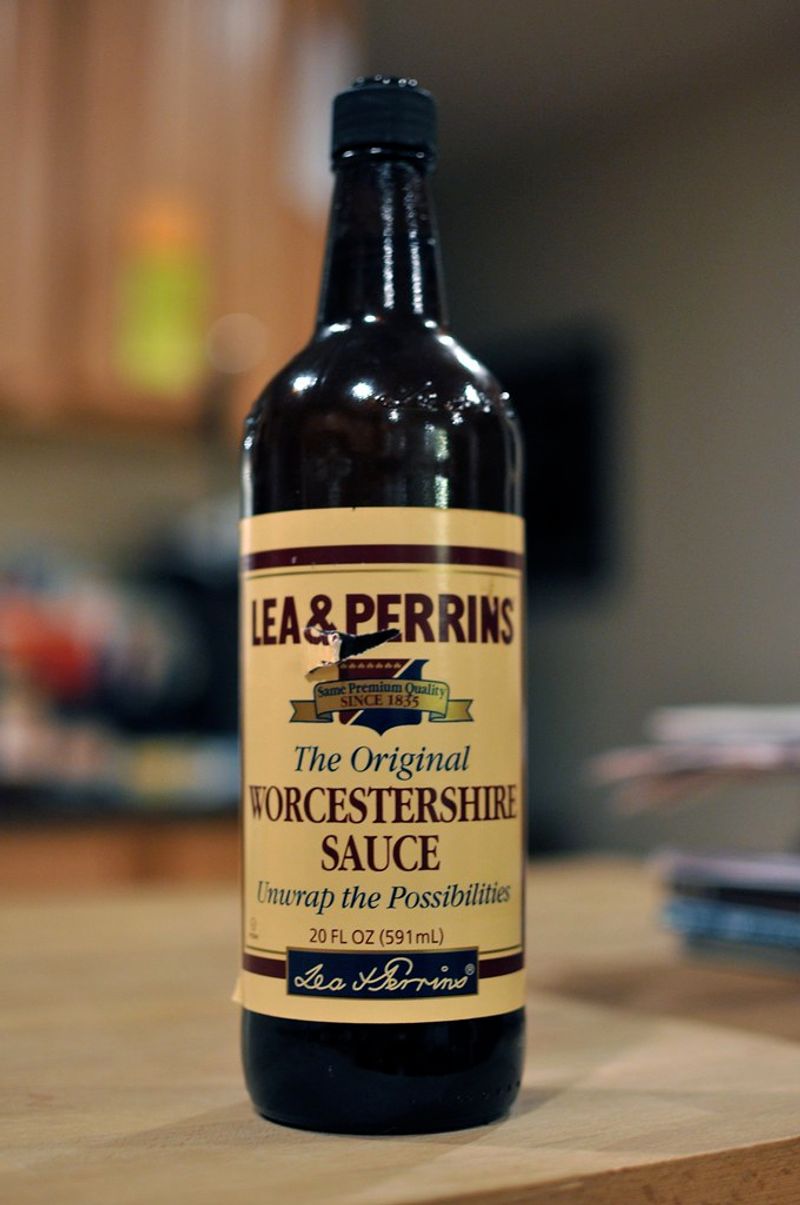
Few words strike fear into the hearts of home cooks quite like this sauce’s name.
Many people stumble through “wor-CHES-ter-shire” or give up entirely and just point at the bottle, but the actual pronunciation is much simpler: “WUU-ster-sher” or “WUU-ster-sheer.”
The trick is recognizing that English place names rarely sound like they’re spelled, especially those ending in “-cester” or “-cestershire.”
The middle syllables essentially disappear, condensing what looks like five syllables down to just three manageable sounds.
Named after Worcester, a city in England’s West Midlands, this fermented condiment has been confusing Americans since the 1800s.
Practice saying it a few times before your next barbecue, and you’ll never have to awkwardly mumble through a recipe again.
5. February

That first “r” in February causes trouble for countless people who breeze right past it, saying “FEB-yoo-air-y” instead.
Technically, the correct pronunciation includes that tricky consonant: “FEB-roo-air-y,” though even language experts acknowledge how challenging this one is to articulate clearly.
Interestingly, the “FEB-yoo-air-y” pronunciation has become so common that many dictionaries now accept it as standard.
The original Latin word “Februarius” definitely included that “r” sound, named after the Roman purification festival Februa.
Whether you’re marking Valentine’s Day on your calendar or complaining about winter weather, try slowing down and emphasizing that first “r” sound.
It might feel awkward at first, but you’ll be pronouncing this month the way it was originally intended to sound.
6. Espresso
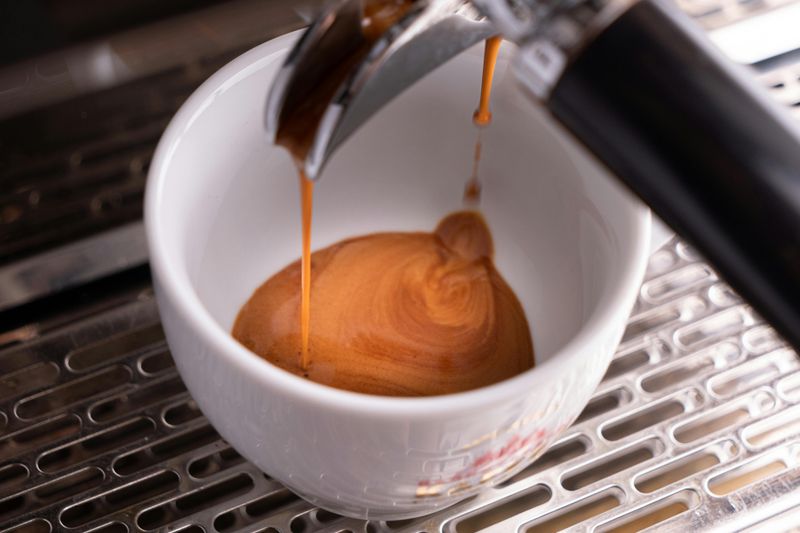
Coffee lovers everywhere commit this cardinal sin daily: ordering an “ex-PRESS-oh” when they mean “es-PRESS-oh.”
There’s no “x” anywhere in this word, yet that sound mysteriously appears when people get their caffeine fix each morning.
The mistake likely happens because “express” is a familiar English word, and our brains automatically substitute the known for the unknown.
But espresso comes from Italian, where it means “pressed out,” referring to how hot water is forced through finely ground coffee beans under pressure.
Baristas hear this mispronunciation so frequently that most don’t bother correcting customers anymore, but getting it right shows respect for coffee culture.
Next time you’re at your local cafe, confidently order your “es-PRESS-oh” and enjoy knowing you’ve said it properly while savoring every sip.
7. Mischievous

Adding an extra syllable where it doesn’t belong, people often stretch this word into “mis-CHEE-vee-us” with four syllables.
The correct pronunciation is actually “MIS-chuh-vus,” keeping it to a tidy three syllables without that phantom “vee” sound in the middle.
This error appears so consistently that it’s considered a classic example of what linguists call “epenthesis,” where speakers insert extra sounds into words.
The spelling itself might encourage the mistake, since we see those letters and want to pronounce every single one of them individually.
From describing playful pets to troublesome toddlers, this adjective gets plenty of use in everyday conversation.
Make a conscious effort to clip it short at three syllables, and you’ll immediately sound more polished and articulate when telling stories about someone’s mischievous antics.
8. Library

That first “r” disappears for many speakers who say “LIE-berry” instead of the correct “LIE-brer-y.”
This pronunciation shortcut is incredibly common, especially among children, but it persists into adulthood more often than you might expect.
The challenge comes from having two “r” sounds close together, which our mouths find awkward to navigate quickly.
Rather than carefully articulating both consonants, we unconsciously drop one to make the word easier to say, creating a pronunciation that sounds more like a fruit than a building full of books.
Whether you’re a student, teacher, or avid reader, taking the time to pronounce both “r” sounds demonstrates attention to proper speech.
Practice saying “LIE-brer-y” slowly at first, then gradually speed up until you can say it correctly in normal conversation without thinking twice about it.
9. Ask

Switching the consonants around, some speakers say “aks” instead of “ask,” reversing the “s” and “k” sounds.
This pronunciation variation, called metathesis, has deep historical roots and appears in various English dialects, though standard pronunciation maintains the “s-k” order as “ASK.”
Interestingly, “aks” was actually an accepted form in Old English and Middle English, used by Chaucer himself in his writings.
The reversal isn’t a modern invention or mistake but rather a pronunciation pattern that has survived in certain communities for hundreds of years despite standardization efforts.
In professional and formal settings, sticking with “ASK” is generally expected and considered standard American English.
Being aware of how you pronounce this simple three-letter word can make a difference in how others perceive your communication skills during interviews, presentations, or important conversations.
10. Salmon

That silent “l” trips up plenty of people who pronounce this fish as “SAL-mon,” sounding out every letter they see.
The proper pronunciation is “SAM-un,” completely dropping the “l” sound even though it’s clearly written there in the middle of the word.
English borrowed this word from Old French “saumon,” and somewhere along the way, scribes added the “l” back into the spelling to reflect its Latin root “salmo.”
Unfortunately, they never updated the pronunciation to match, leaving us with one of English’s many silent letter mysteries that confuse learners and native speakers alike.
Whether you’re ordering at a restaurant or shopping at the fish market, confidently saying “SAM-un” shows you know your way around both seafood and proper pronunciation.
This pink fish is delicious and nutritious, and now you can discuss it without linguistic embarrassment.
11. Genre

French words always seem to cause confusion in English, and this one’s no exception.
Many people anglicize it completely, saying “JEN-ray” or even “JEN-er,” but the correct pronunciation keeps some French flavor: “ZHAHN-ruh,” with that soft “zh” sound at the beginning like the “s” in “measure.”
The word literally means “kind” or “type” in French, and it entered English to describe categories of art, literature, music, and film.
While some dictionaries accept the anglicized “JAN-ruh” pronunciation, the French-influenced version sounds more sophisticated and educated, especially in artistic or academic contexts.
From discussing your favorite movie genres to browsing bookstore sections, this word comes up constantly in conversations about entertainment and culture.
Taking a moment to add that soft “zh” sound elevates your speech and shows appreciation for the word’s linguistic origins.
12. Crème Brûlée
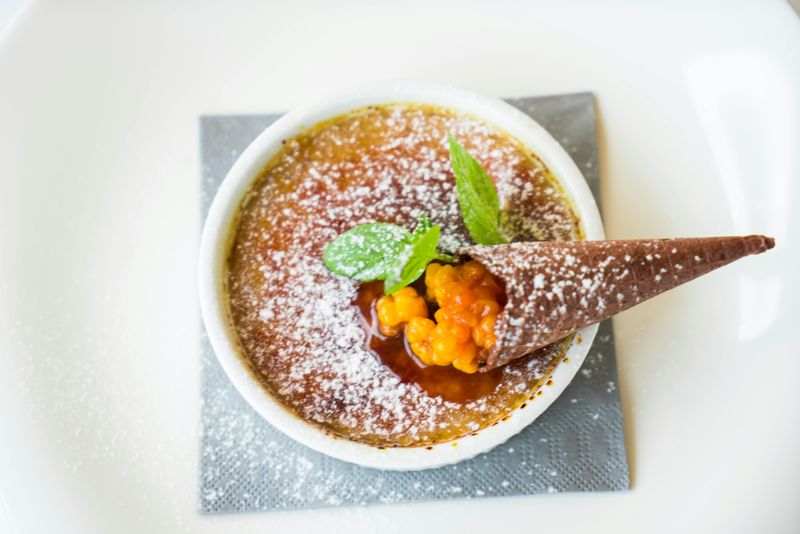
English speakers often massacre this French dessert’s name, saying something like “krem broo-LAY” or “krem BROO-lee.”
The authentic French pronunciation is closer to “krem broo-LAY,” with the emphasis on the final syllable and that distinctive French “ay” sound rather than a hard “ee.”
The name literally translates to “burnt cream,” referring to the caramelized sugar crust that’s torched right before serving.
Americans especially struggle with French vowel sounds and the rolled “r,” often defaulting to anglicized versions that make French speakers wince a little.
When you’re at a fancy restaurant trying to impress your dinner companions, taking a shot at the proper French pronunciation shows cultural awareness and sophistication.
Even if your accent isn’t perfect, making the effort demonstrates respect for culinary traditions and elevates the entire dining experience for everyone at your table.
13. Cache

Technology has made this word more common, but many people still pronounce it like “catch” or “cash-ay” instead of the correct “CASH.”
The confusion makes sense given that English spelling rules would suggest “catch,” and the French origin might tempt you toward adding extra syllables that simply aren’t there.
Originally a French word meaning “hiding place,” it entered English through fur trading terminology in North America.
Today it describes everything from hidden supplies to temporary computer storage, but the pronunciation has remained consistently French-influenced despite its widespread adoption into technical vocabulary.
Whether you’re talking about clearing your browser cache or finding a geocache during an outdoor adventure, saying “CASH” correctly prevents confusion and miscommunication.
This single-syllable pronunciation is simple once you know it, and getting it right immediately marks you as someone who pays attention to proper language usage in both casual and professional settings.