 MomSkoop
Movies have always done more than tell stories — they shape the way we see beauty. From a pixie cut that shocked the world in the 1950s to a bubblegum-pink blonde look that took over social media in 2023, film hairstyles have repeatedly walked off the screen and straight into salons everywhere.
Some of these styles sparked trends that lasted decades, while others continue to influence runway looks and everyday fashion today. Get ready to explore ten unforgettable movie hairstyles that genuinely changed the beauty world.
1. Audrey Hepburn’s Cropped Pixie — Roman Holiday (1953)
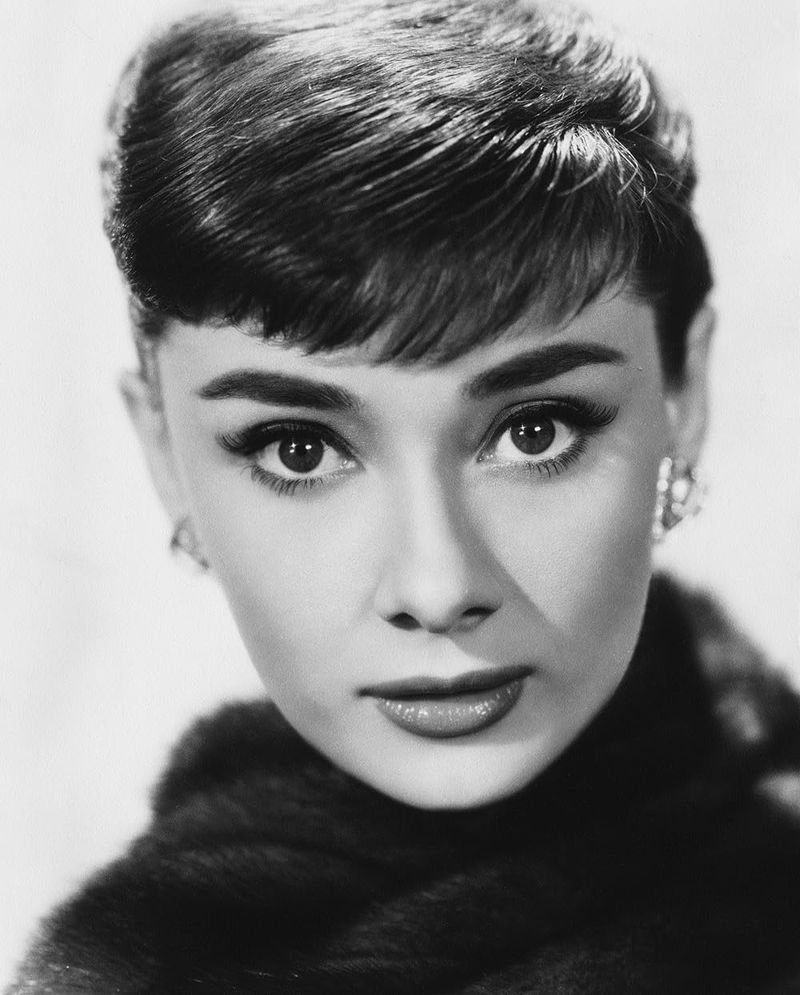
Before Audrey Hepburn sat down in that Roman barber’s chair, short hair on women was considered bold — even shocking.
Her pixie cut in Roman Holiday (1953) flipped that idea completely on its head.
Suddenly, cropped hair felt chic, modern, and deeply feminine.
Salons around the world were flooded with women clutching magazine photos of Hepburn’s gamine look.
The cut framed her cheekbones perfectly and gave her an effortless, almost sculptural elegance.
It proved that a woman didn’t need long hair to look stunning.
Even today, stylists still reference this cut when clients ask for something classic yet daring.
Hepburn’s pixie remains one of cinema’s most powerful beauty statements — timeless, clean, and absolutely iconic.
2. Brigitte Bardot’s Voluminous Beehive — And God Created Woman (1956)
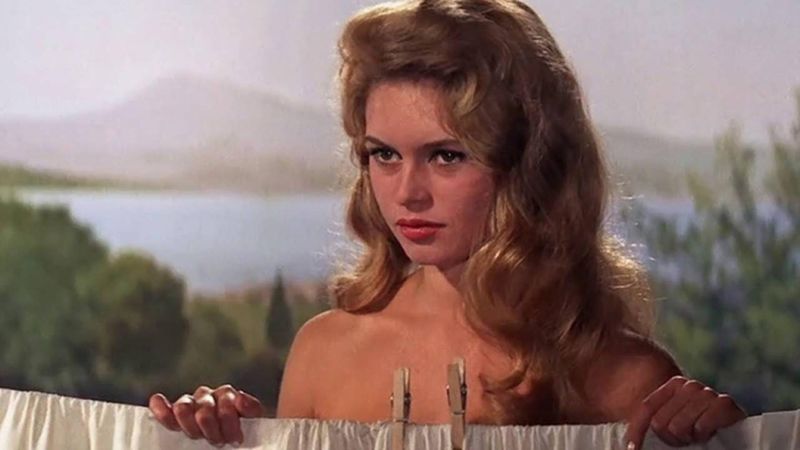
Nobody did “effortlessly messy” quite like Brigitte Bardot.
Her tousled, sky-high hair in And God Created Woman introduced the world to something new — the idea that undone could be just as seductive as polished.
It was bold, it was French, and it was irresistible.
Bardot’s teased volume helped launch the beehive as a mainstream hairstyle throughout the late 1950s and into the swinging 1960s.
Hairdressers began stocking up on extra-hold hairspray almost overnight.
The “bedhead glamour” she popularized became a defining aesthetic of an entire generation.
What makes her look so remarkable is its staying power.
Decades later, editorials still borrow from Bardot’s playbook whenever they want to capture that sultry, free-spirited energy.
3. Faye Dunaway’s Beret-Framed Bob — Bonnie and Clyde (1967)
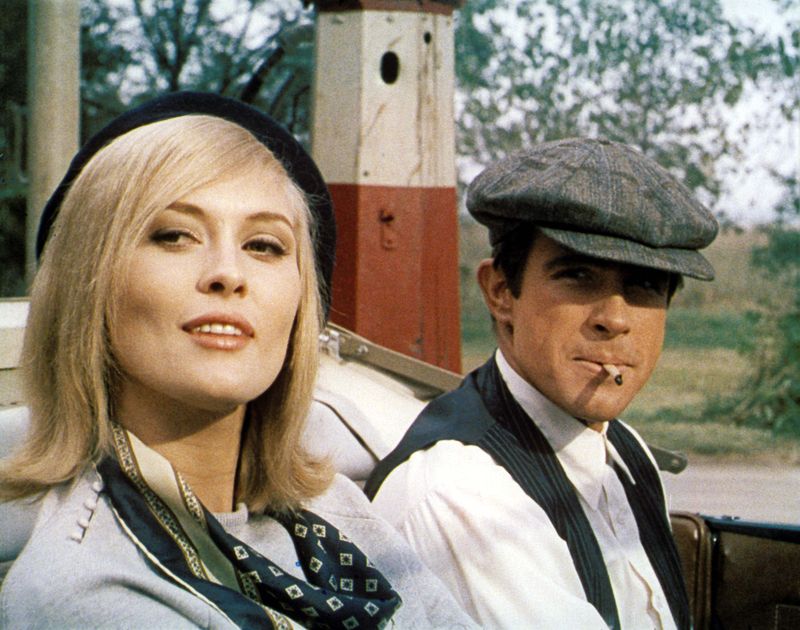
There is something undeniably cool about pairing a sleek bob with a tilted beret, and Faye Dunaway made that combination legendary in Bonnie and Clyde.
Her honey-blonde hair sat just below the jaw, with soft bangs that gave the whole look a romantic, old-Hollywood edge.
The film was set in the 1930s, but its hair and fashion influence landed squarely in 1967 — and stayed there.
Women across America and Europe rushed to replicate the look, making it one of the most requested salon styles of the late ’60s.
It was retro and modern at the same time, which is a rare trick to pull off.
Dunaway’s bob reminded everyone that structured hair can carry just as much attitude as wild, untamed styles.
4. Farrah Fawcett’s Feathered Layers — Charlie’s Angels (1976)
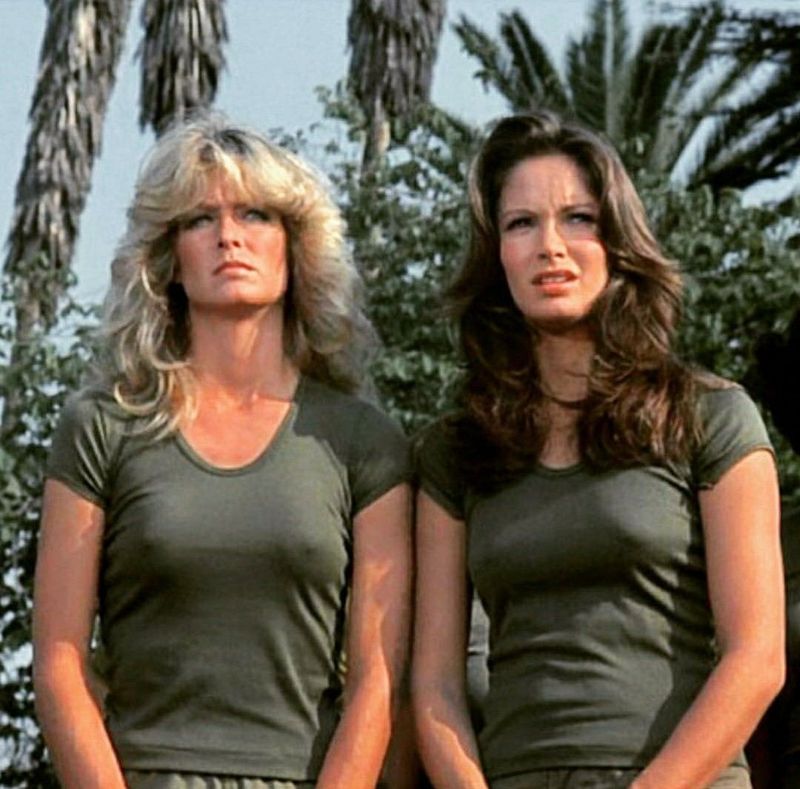
Few hairstyles have ever achieved the cultural reach of Farrah Fawcett’s feathered layers.
Technically rooted in television, the look exploded into film and fashion culture so completely that it became the defining hair trend of the late 1970s and early 1980s.
That famous poster alone sold over 12 million copies.
The style featured long, layered waves swept back from the face in dramatic “wings,” creating volume and movement that felt both athletic and glamorous.
It was a look that said confidence without trying too hard.
Girls everywhere begged their stylists for the same swooping, sun-kissed effect.
The feathered layer trend influenced countless film characters throughout the era, cementing Fawcett’s place not just in entertainment history, but in beauty history as well.
5. Olivia Newton-John’s Permed Transformation — Grease (1978)
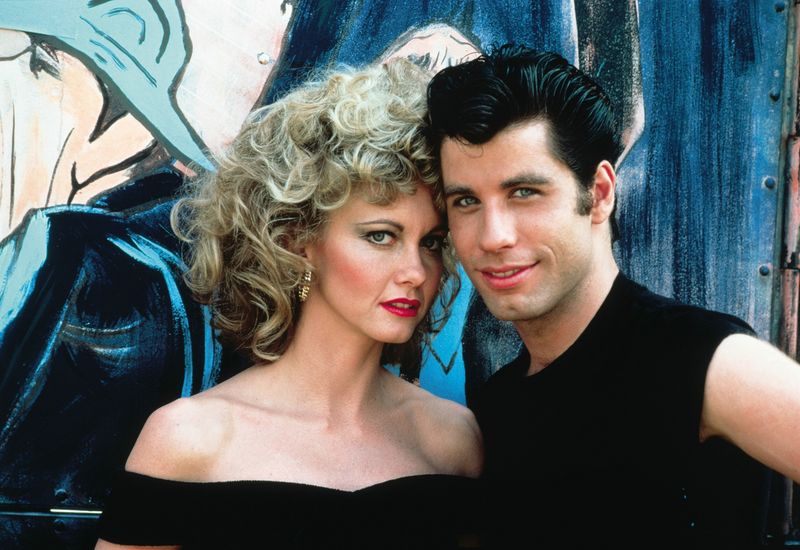
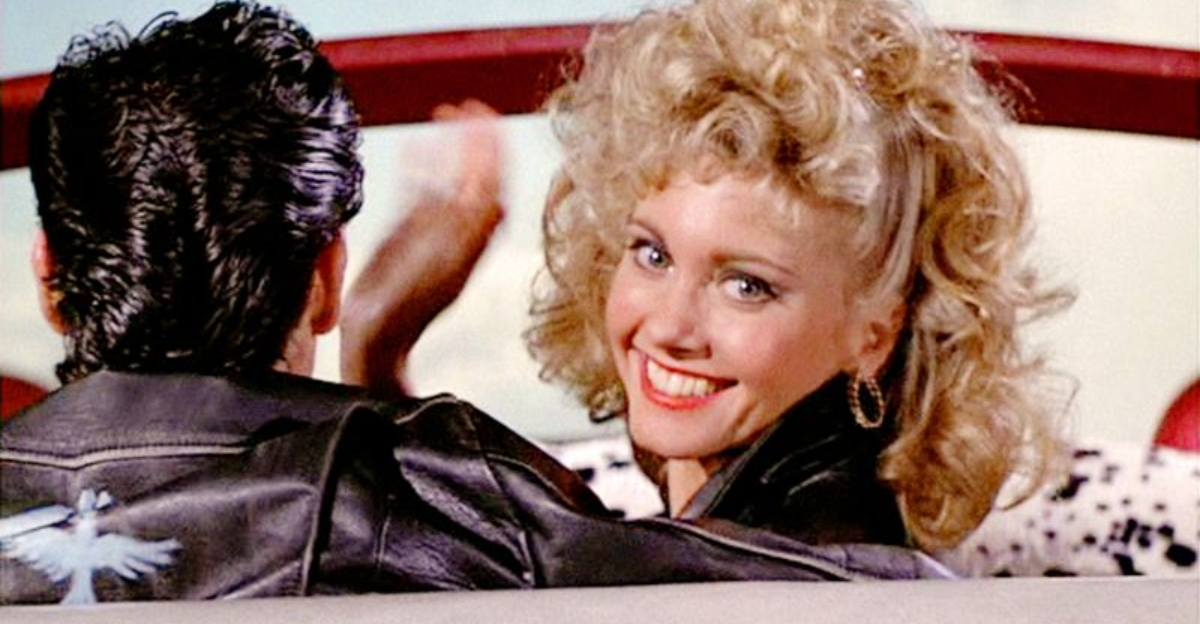
Sandy’s hair transformation at the end of Grease is one of the most memorable style moments in movie history.
Olivia Newton-John went from sweet, straight-haired girl-next-door to a curly, confident woman with a look that screamed self-reinvention.
That perm meant business.
The shift wasn’t just cosmetic — it was symbolic.
Big, bouncy curls became associated with boldness, sensuality, and owning your identity on your own terms.
Salons reported a surge in perm requests almost immediately after the film’s release.
Textured, voluminous hair suddenly felt like a statement rather than a style choice.
Even now, Grease remains a go-to reference for anyone curious about how a single hairstyle can carry emotional weight in storytelling.
Sandy’s curls changed more than just her look — they changed her whole story.
6. Molly Ringwald’s Red Layers — The Breakfast Club (1985)
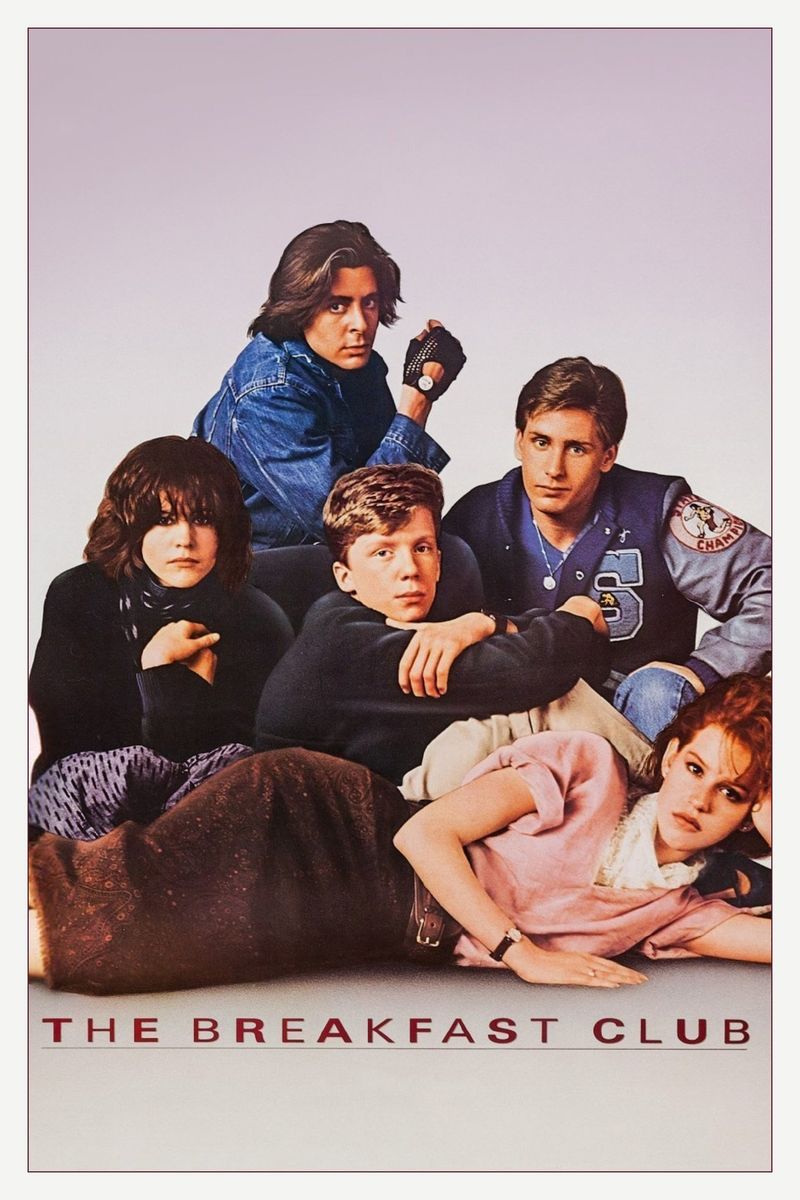
Molly Ringwald didn’t need a dramatic makeover to make an impact — her natural auburn layers did the work quietly and powerfully.
In The Breakfast Club, her hair felt real in a way that a lot of 1980s beauty didn’t.
No teased-to-the-ceiling volume, no heavy lacquer — just soft, lived-in red layers that framed her face honestly.
That authenticity resonated with a generation of teenage girls who were tired of unattainable glamour.
Ringwald’s look said: you don’t have to transform yourself to be beautiful.
It was a radical message wrapped in a very approachable haircut.
Red hair also had a cultural moment because of her visibility.
Young women who had always felt self-conscious about their natural color suddenly found a style icon who looked just like them.
7. Julia Roberts’ Wild Curls — Pretty Woman (1990)
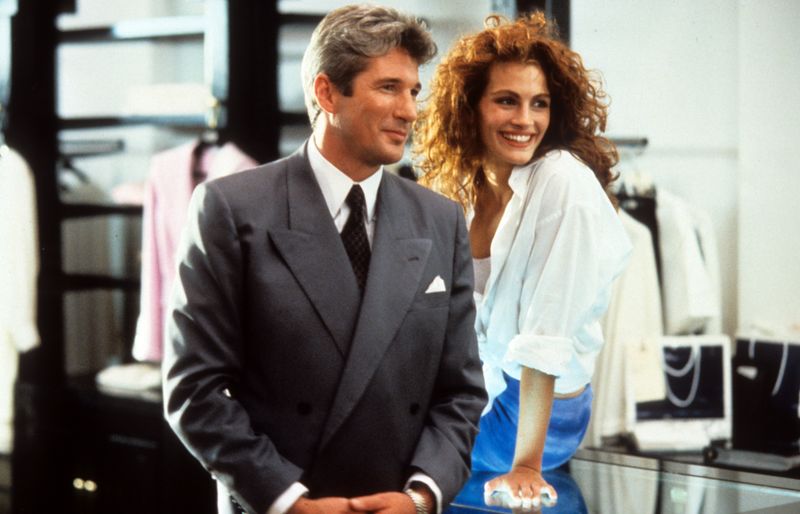
Julia Roberts walked into Pretty Woman with a head full of wild, bouncy auburn curls, and audiences fell in love with every single one of them.
Her hair wasn’t polished or perfectly controlled — it tumbled and sprang and moved with a life of its own.
That energy matched her character perfectly.
Before this film, naturally curly hair was often considered something to be tamed or straightened for a “professional” look.
Roberts flipped that narrative.
Her curls became a symbol of warmth, charisma, and effortless appeal, making texture something to celebrate rather than hide.
The film reignited conversations about embracing natural hair patterns, and it inspired a wave of women to put down the flat iron.
Roberts’ curls proved that imperfection, done right, is its own kind of perfection.
8. Jennifer Aniston’s Layered Influence — The 1990s Face-Framing Cut
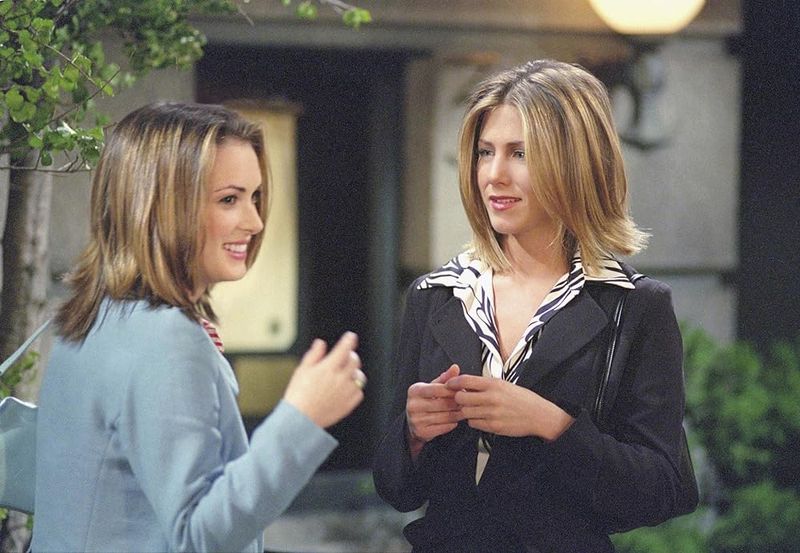
While “The Rachel” technically lived on television, the layered, face-framing haircut it represented became a defining feature of 1990s film and fashion culture as a whole.
Movies throughout the decade were filled with variations of the look — softly highlighted, bouncy layers that drew the eye toward the face with effortless precision.
Salons reported that face-framing layers became the single most requested style throughout the mid-to-late 1990s.
The cut worked on almost every face shape, which made it wildly accessible.
It felt polished but not stiff, which matched the decade’s overall aesthetic of relaxed glamour perfectly.
The legacy of this era’s layered cuts is still visible today.
Modern “curtain bangs” and soft face-framing techniques owe a genuine debt to the 1990s obsession with hair that highlights — rather than hides — natural features.
9. Uma Thurman’s Sharp Black Bob — Pulp Fiction (1994)
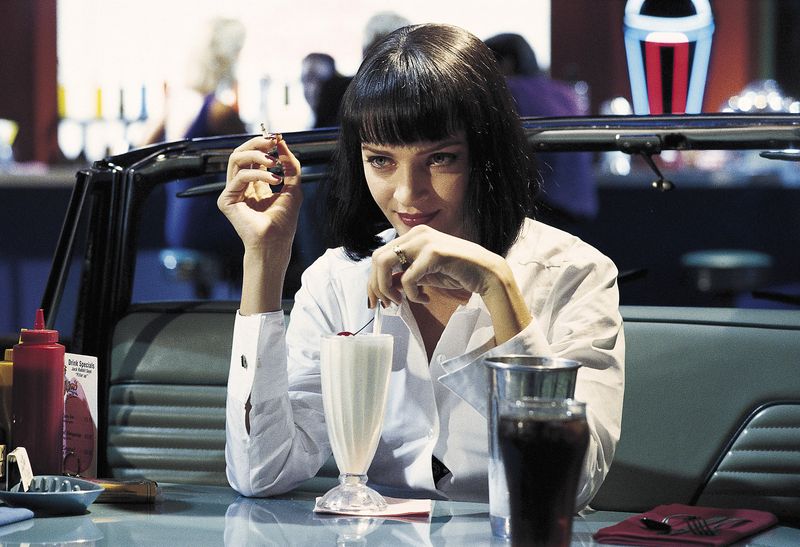
Mia Wallace didn’t say much in her first scene, but her hair said everything.
Uma Thurman’s blunt black bob with razor-straight bangs in Pulp Fiction arrived like a punctuation mark — precise, deliberate, and impossible to ignore.
It was a hairstyle with an attitude built right into its geometry.
The look drew from 1920s flapper culture and 1960s mod fashion, yet felt completely fresh for 1994.
Fashion editors immediately ran with it.
Within months, the blunt bob was appearing on runways, in music videos, and on celebrities who wanted to signal a certain kind of fearless cool.
Decades later, Mia Wallace’s bob is still one of the most referenced looks in beauty history.
It shows up in editorials, Halloween costumes, and salon consultations with remarkable regularity — proof that truly great style never really expires.
10. Margot Robbie’s Blonde Waves — Barbie (2023)
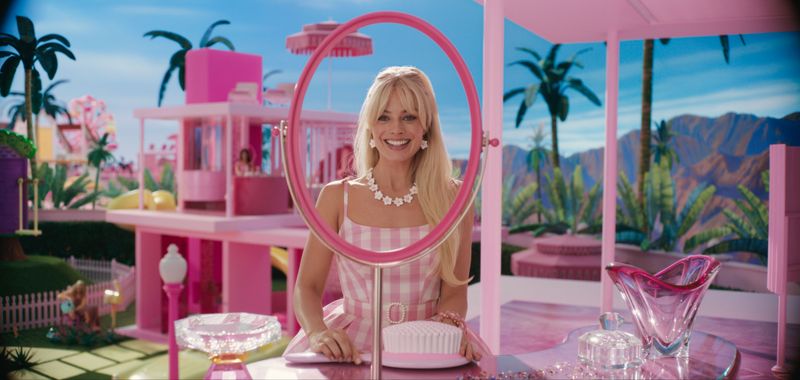
When Barbie hit theaters in the summer of 2023, it didn’t just break box office records — it broke the internet’s collective understanding of a color.
Margot Robbie’s rotating parade of blonde hairstyles, from silky blowouts to gravity-defying high ponytails, sent the beauty world into a full-on frenzy.
Pink and platinum were suddenly everywhere.
The “Barbiecore” trend that exploded around the film made hyper-feminine aesthetics feel radical and fun again.
Salons reported sharp increases in requests for blonde transformations, sleek ponytails, and voluminous blowouts almost immediately after the film’s release.
Robbie’s hair became as much a part of the cultural conversation as the movie’s script.
What’s fascinating is how the film used hair intentionally as storytelling — each style communicated something about identity, performance, and femininity.
Robbie’s blonde waves weren’t just pretty.
They were a statement.