 MomSkoop

Empathy is often described in terms of understanding others’ feelings and sharing their emotions, while empathic concern can also motivate helpful actions. That means understanding someone, feeling with them, and then actually helping are separate skills a kid can practice. The practice often starts with ordinary words at the kitchen table or in the car.
Parenting experts point to specific phrases that help kids name feelings and see other viewpoints. A few sentences repeated over years can quietly shape how a grown man listens. Some of these phrases might sound familiar from your own childhood. Others might be ones you wish you had heard, or ones you plan to start saying tomorrow.
1. You’re a Kind Kid

Praise for being smart or special is common, but praise for kindness hits a different target.
Telling a boy “You’re a kind kid” or “Thanks for being gentle” points straight at his character.
Parenting writers note that this kind of feedback helps children build a self-image rooted in caring qualities.
A boy who hears it often may start to see kindness as part of who he is, not just something adults want from him.
That matters, because people tend to act in ways that match how they see themselves.
The trick is to be specific.
Instead of a vague “good job,” try naming the exact moment, like “You let your sister go first, and that was kind.” Specific praise shows you noticed, and it teaches what kindness actually looks like in action.
You don’t need to save it for big gestures.
Holding a door, petting the dog softly, or checking on a friend who tripped all count.
Small moments add up over years.
A grown man raised on these words may not even remember hearing them.
He might just be the coworker who notices when someone looks left out and quietly pulls them into the conversation.
2. It’s More Than OK to Show Your Emotions

“Big boys don’t cry” has had a long, unfortunate run.
Historically, boys were often cheered for strength and speed while their feelings got pushed to the sidelines.
Hearing “It’s more than OK to show and share your emotions” flips that script.
The phrase validates the whole range of feelings and gives boys a safe place to express them without fear of being judged or mocked.
Why does that connect to empathy?
A person who can’t name or accept his own sadness will struggle to recognize it in someone else.
Comfort with your own inner weather makes it easier to read the forecast for others.
Parents can back up the words with actions.
Staying calm when a child cries, avoiding jokes about tears, and sharing their own feelings out loud all send the same message.
Kids pay close attention to how adults react, sometimes more than to what adults say.
The payoff can show up decades later.
A man who learned that feelings are allowed may be the friend who says “That sounds rough” instead of changing the subject.
He may also be better at telling people what he needs, which helps relationships on both sides.
3. You Seem Worried, What’s Going On?
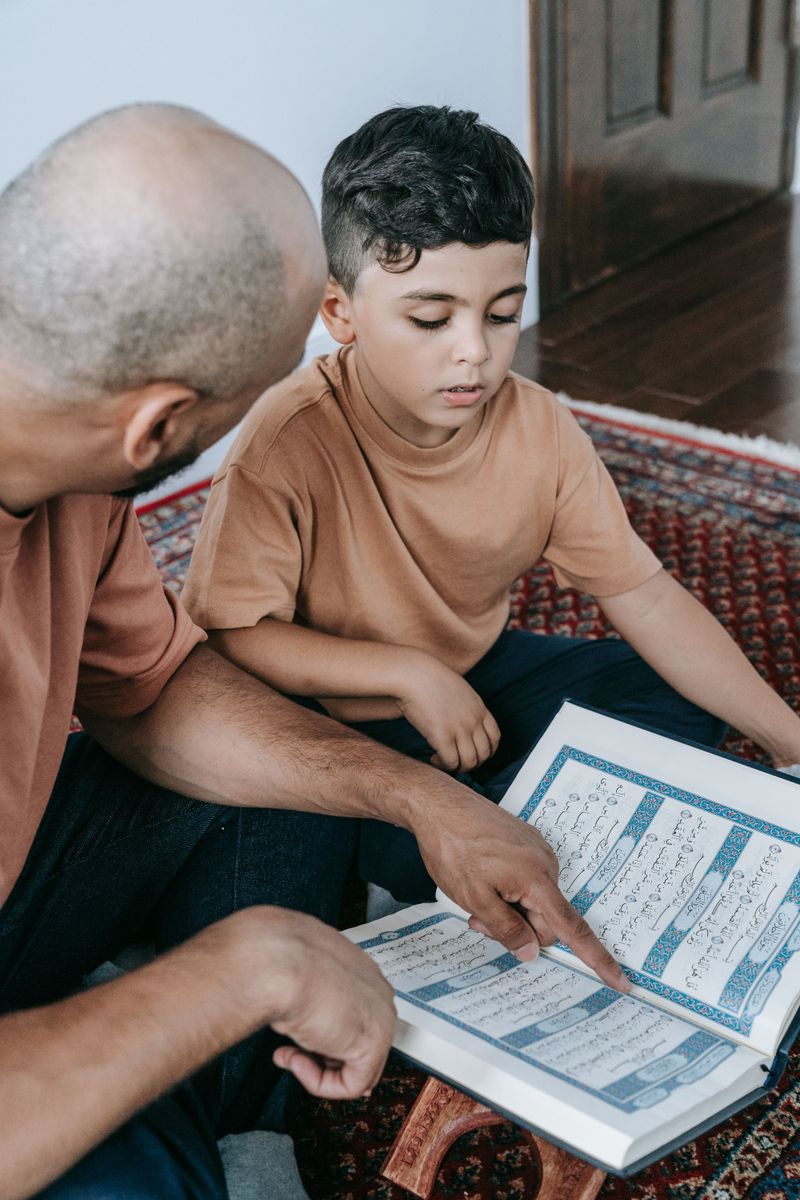
Slammed backpacks and one-word answers are classic clues.
Something is off, but the reason is a mystery.
That’s where “You seem sad, grumpy, or worried.
What’s going on?” comes in.
Parenting experts recommend it for moments when an adult senses trouble but doesn’t know the cause.
The phrase shows the child that someone noticed and cares enough to ask.
Timing matters a lot here.
Experts suggest choosing a calm moment without distractions, so put the phone down and turn off the TV.
Car rides and walks can work well, since some kids open up more when they aren’t face to face.
Body language, tone of voice, and changes in routine become information instead of background noise.
Psychologists call understanding another person’s viewpoint cognitive empathy, and noticing cues is a big part of it.
Don’t expect a full explanation on the first try.
Sometimes the answer is “Nothing,” and that’s fine.
Leaving the door open lets the child return to the conversation later.
Plenty of important talks happen at bedtime, long after the original question was asked.
4. You’re Feeling Annoyed Because…

A toppled block tower can feel like a disaster at age five.
Naming the feeling helps a kid make sense of the chaos.
Over time, kids build a vocabulary for what’s happening inside them, from happy and guilty to frustrated and jealous.
Here’s a fun bonus: guessing wrong still works.
If you say “You’re feeling sad” and your child shouts “No, I’m MAD,” congratulations.
He just named his own feeling, which is exactly the skill you were hoping to build.
This connection between events and emotions becomes a tool he can use on others.
A man who learned that feelings have causes may think, “My friend is quiet because his team lost,” instead of assuming he’s being rude.
That small shift in thinking can prevent a lot of misunderstandings.
Try it during everyday moments, not only meltdowns. “You’re excited because grandma is coming” counts too.
Labeling positive feelings keeps the habit from feeling like a lecture and makes emotions a normal topic in the house.
5. It Sounds Like You’re Feeling Hurt
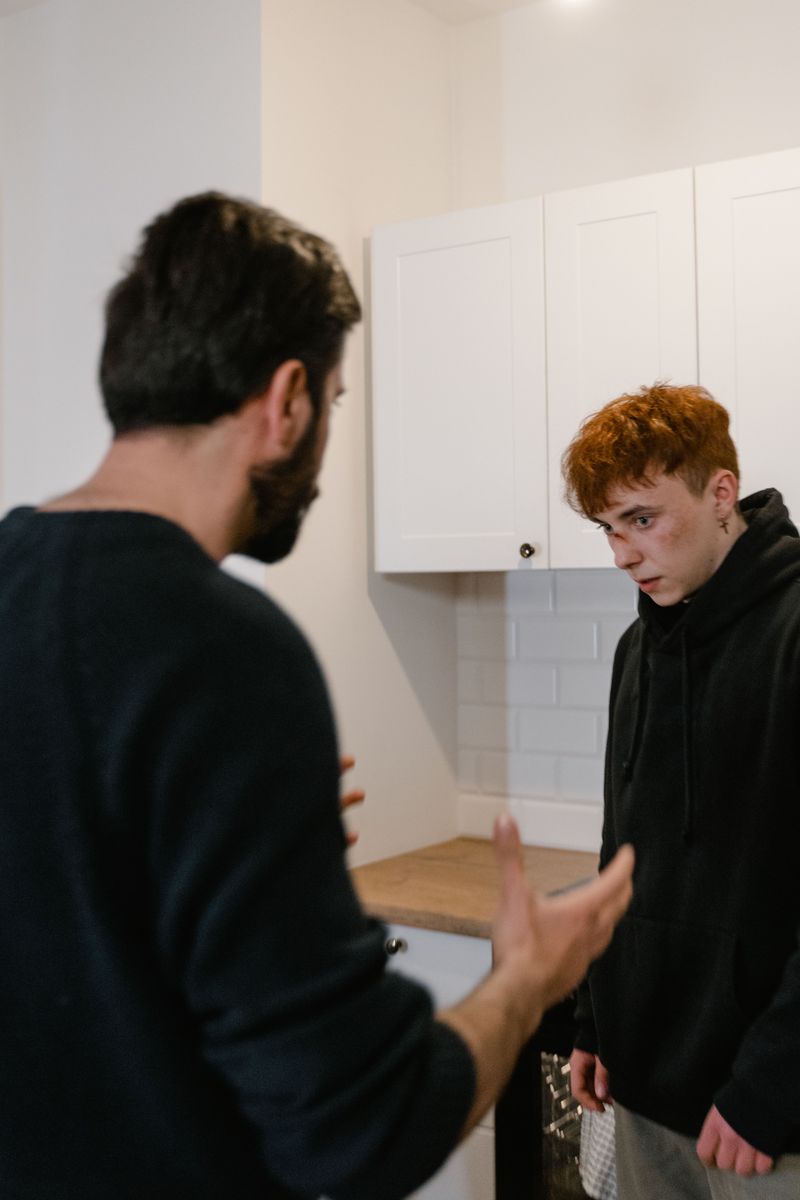
Teenagers may resist being told how they feel, especially when an adult’s interpretation doesn’t match their experience.
A little humility in phrasing can make a huge difference.
“It sounds like you’re feeling hurt about what happened at practice” is softer than a direct statement.
Parenting experts note that starters such as “It sounds like” or “It seems like” acknowledge that the child is the expert on his own emotions.
That respect builds trust.
The tentative approach also models something useful for adulthood.
Empathy isn’t mind reading, and people get it wrong sometimes.
Offering a guess while leaving room for correction is how thoughtful adults talk to friends, partners, and coworkers.
A teen who hears this regularly learns that his perspective counts.
He may feel less need to defend himself and more willing to explain what’s really going on.
Fewer slammed doors is a nice side effect, though no phrase is magic.
Later in life, he may naturally say “It sounds like your week was stressful” instead of announcing what someone else should feel.
That small wording choice tends to invite people in.
It signals curiosity rather than judgment, and most people can tell the difference right away.
6. I’ve Felt That Way Too

Kids often assume adults were born calm and confident.
Learning that Dad once bombed a spelling bee can be oddly comforting.
“I’ve felt that way too, especially when I started a new school” is a phrase experts recommend for building connection.
Sharing a relatable experience helps normalize a child’s feelings.
He realizes he isn’t alone and that his reaction makes sense.
There’s an art to it, though.
Keep the story short and bring the focus back to the child.
If a quick share turns into a twenty-minute tale about your own glory days, the moment slips away from him.
Boys who hear this learn that vulnerability isn’t weakness.
A trusted grown man admitting he felt nervous or embarrassed shows that strong people have hard feelings too.
That lesson can stick around for life.
It also teaches a practical empathy move.
As adults, these men may comfort a friend by saying, “I went through something similar,” and then actually listen.
Shared experience builds a bridge, and it often makes tough conversations feel less lonely.
Just remember that similar doesn’t mean identical, so leave space for differences in how each person experienced it.
7. What I Hear You Saying Is
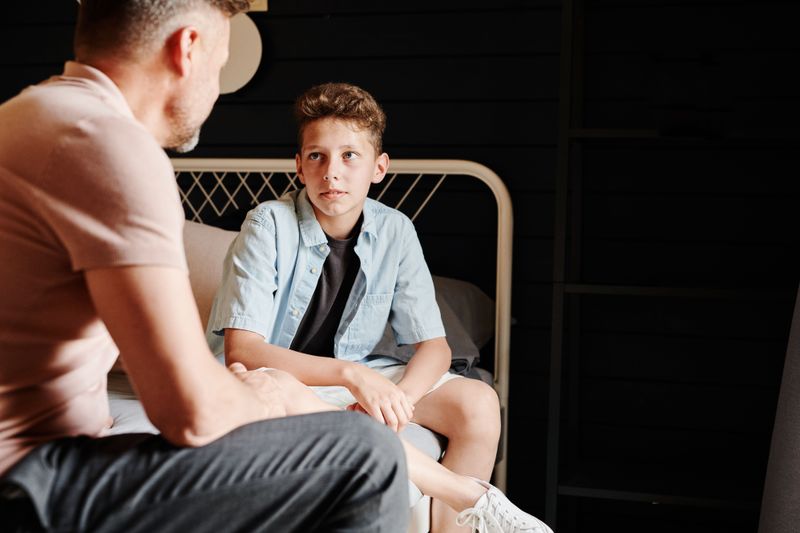
The idea is simple.
You repeat back the child’s point in your own words, such as “You’d like me to understand that you’re upset because your friend left you out.” Experts describe this as a validating statement that shows you’re actively trying to understand.
Kids notice when someone truly listens.
Being reflected back accurately makes a child feel heard and valued, and it often calms things down.
If you got it wrong, he gets a chance to clarify.
Yes, it can feel a little stiff at first.
You might even get an eye roll.
That’s okay, because the underlying habit matters more than perfect wording, and you can tweak the phrasing to sound natural in your family.
A boy who grows up with this learns to slow down in conversations.
As a man, he may summarize a partner’s concern before jumping to solutions.
That pause can turn an argument into a discussion, which is a skill worth having in any relationship, office, or group chat.
8. Is There Any Part I’m Missing
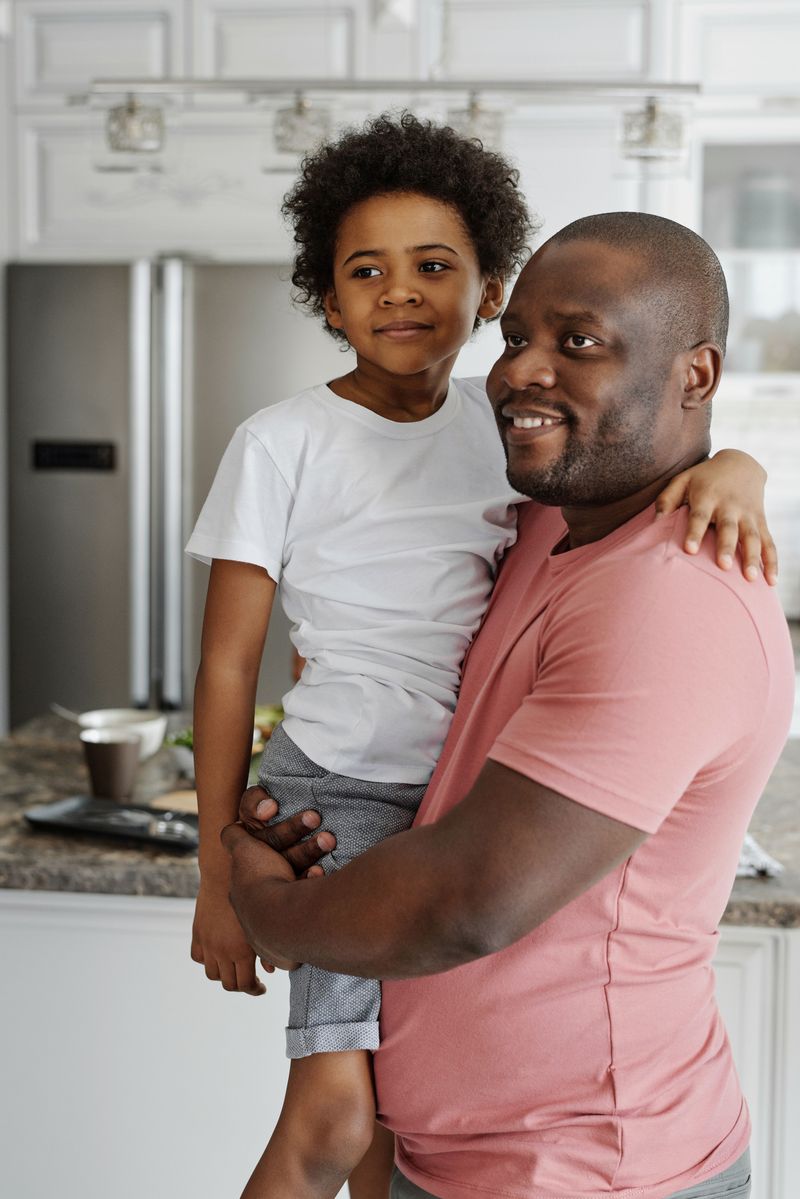
Most stories have a second layer.
The fight at recess might really be about feeling replaced by a new kid.
Asking “Is there any part that I’m missing or not understanding well enough?” invites that deeper layer to surface.
A similar option is “What else would you like to tell me about how you’re feeling?” Experts call these curiosity prompts, and they signal real interest in the full picture.
These questions tell a child that his thoughts deserve more than a quick nod.
They also give him permission to keep talking, which some kids need before the important part comes out.
Patience is key.
Silence after the question can feel awkward, but resisting the urge to fill it often pays off.
Count to five in your head if that helps.
Boys raised on these prompts may grow into men who ask a follow-up question instead of assuming they’ve got it figured out.
That’s a big deal in friendships and at work.
People tend to trust someone who wants the whole story, and asking “What else?” can reveal problems before they grow into bigger ones.
9. How Can I Support You

Understanding a problem is great.
Doing something useful about it is the third part of empathy, which psychologists sometimes call empathic action.
“How can I support you?” or “What can I do to help?” moves the conversation from feeling to doing.
Experts say offering practical support shows real concern.
It also teaches boys about responsive care.
Notice the question format.
Instead of rushing in with a fix, it lets the child decide what help looks like.
Sometimes he wants advice, sometimes a hug, and sometimes just a snack and some quiet.
That choice matters.
Kids who feel understood and calm are better able to think through solutions.
Asking first gives them a sense of control over their own situation.
Fast forward twenty years, and a man raised this way might ask a struggling friend, “Do you want ideas or do you just need to vent?” That one question can save a lot of frustration.
It respects the other person’s needs instead of guessing.
It’s a handy phrase for parents who like to jump straight to fixing things.
Asking first often makes the eventual help land better.
10. I Think I Hurt Your Feelings

Parents mess up.
Snapping after a long day or missing a big game happens in plenty of homes.
Saying “I think I hurt your feelings. Can we talk about it?” turns a mistake into a lesson.
Experts note that when adults model accountability, kids learn to recognize how their actions affect others.
A sincere apology also shows respect.
For a boy, watching a parent own up can be powerful.
It shows that strong people admit errors instead of defending themselves at all costs.
Apologizing becomes a normal part of caring for someone.
The key is keeping it real.
A quick “Sorry you feel that way” doesn’t count.
Naming what you did and asking how it affected him shows you care about his experience.
Men who grew up with this may find it easier to say “I was wrong” at home or at work.
They may also notice when they’ve upset someone and check in first.
That habit can repair friendships, calm disagreements, and build trust over time.
Saying the words can feel uncomfortable, but kids often remember these moments as a sign of respect.
11. That Makes Sense, I’d Feel That Way Too
Short and sweet, this phrase does a lot of heavy lifting.
“That makes sense. I think I’d feel that way too” tells a child his reaction is reasonable.
Experts describe it as a way to normalize emotions.
When a parent says they’d feel the same, it lines up the adult’s possible reaction with the child’s.
The message is clear: you aren’t weird or overreacting.
Validation doesn’t mean agreeing with every choice.
A kid can feel furious about a lost game and still need to shake hands afterward.
The feeling gets accepted even when the behavior gets guidance.
This distinction helps boys learn that emotions and actions are different things.
Anger is okay, while throwing the controller is not.
That separation becomes a handy skill later in life.
Men who heard this growing up may respond to others with the same easy acceptance.
Telling a friend “Yeah, I’d be frustrated too” can lower tension fast.
People often calm down once they feel understood, which makes it easier to solve the actual problem together.
It’s a tiny phrase that can make a hard moment feel a little lighter.
12. I Love You No Matter What

Some phrases work like a safety net. “I love you, no matter what” and “I am here for you, no matter what” are two of the strongest.
Experts say these statements build trust and openness by giving kids a sense of security and steady support.
When children feel secure, they’re more willing to explore and share their emotions.
Fear of losing love is a big reason kids hide things.
Research on parenting backs up the value of this foundation.
Parental empathy creates a safe base where kids can work through hard feelings and look for comfort during stress.
The phrase lands best when actions match.
Staying calm after a bad report card or a broken window shows that “no matter what” really means it.
Kids test boundaries partly to see if the promise holds.
A man who grew up with this kind of support may feel steady enough to focus on other people’s needs.
Security frees up energy for caring.
He may also pass the phrase along to his own kids, friends, or partner, keeping the cycle going for another generation.
13. Help Me Understand How You’re Feeling

Curiosity beats assumptions almost every time.
“Help me understand how you’re feeling” puts that idea into six simple words.
Experts explain that empathetic communication often leads with questions instead of conclusions.
This phrase invites open sharing and builds psychological safety.
It puts understanding ahead of control or quick fixes.
There’s something humble about asking for help understanding.
It admits the adult doesn’t have all the answers, and that the child’s inner world is worth exploring.
Kids tend to respond well when they feel like the expert.
Try pairing it with active listening.
Make eye contact, put away distractions, and summarize what you hear.
These habits show you’re fully present rather than half-listening between emails.
Reading together can help too.
Researchers have linked reading fiction with a better ability to understand other people’s thoughts and feelings, and asking how a character feels is great practice.
A boy who hears this phrase often learns that people are worth understanding.
As a man, he might ask it of a partner during a tense moment.
That kind of curiosity could be one of the most useful things a parent hands down.