 MomSkoop

Words carry a lot of weight in a relationship, and sometimes the phrases someone repeats can tell you more than their actions ever could. When a woman starts using certain expressions over and over, it might be a quiet signal that something deeper is shifting emotionally.
Recognizing these patterns early gives you a real chance to address what’s going wrong before it’s too late. Pay close attention, because the words she chooses could be the most honest thing she’s telling you right now.
1. “I’m Just Tired”

Exhaustion is real, but when “I’m just tired” becomes her answer to almost every conversation, it’s worth paying attention.
Physical tiredness goes away after rest.
Emotional tiredness, though, tends to linger and grow.
She may be using this phrase as a shield — a way to avoid talking about feelings she hasn’t figured out yet, or ones she’s already decided to keep to herself.
It’s easier to say “tired” than to explain the complicated emotional weight she’s carrying.
If this phrase shows up constantly, try creating a calm, low-pressure space where she feels safe opening up.
Sometimes people just need to feel it’s truly okay to talk.
2. “Do Whatever You Want”

There was probably a time when she had strong opinions about decisions you made together — where to eat, how to spend weekends, what to plan for the future. “Do whatever you want” signals that those opinions may have quietly packed up and left.
Indifference in a relationship is actually more concerning than conflict.
Arguing means someone still cares enough to fight.
Indifference means the emotional investment is running low.
When this phrase becomes her go-to, she may have stopped seeing your shared life as something worth shaping together.
Gently asking what she genuinely wants — and truly listening — can be a small but meaningful first step toward reconnecting.
3. “It Doesn’t Matter”

“It doesn’t matter” might sound harmless, but in a relationship, those three words can quietly signal something serious.
Things that once mattered deeply to her — plans, preferences, feelings — are now getting dismissed with a wave of her hand.
Withdrawal from caring about outcomes is one of the early signs that emotional detachment is setting in.
She’s not just letting go of small decisions; she may be slowly letting go of the relationship itself.
Pay attention to how often this phrase replaces what used to be real conversations.
Asking follow-up questions like “Are you sure?
I’d really love to know what you think” can gently invite her back into the connection.
4. “I Don’t Want to Argue”

Avoiding conflict sounds healthy on the surface, but context matters a lot here.
Healthy conflict avoidance means choosing the right time to talk.
Emotional disengagement means she’s stopped believing the conversation is worth having at all.
When “I don’t want to argue” becomes her response to serious topics — ones that genuinely need to be worked through — it can mean she no longer sees the relationship as something worth the emotional energy of working through problems.
Relationships grow through honest, respectful disagreement.
If she’s consistently shutting those moments down, consider asking her directly if she feels safe expressing her thoughts.
Her answer might reveal more than the phrase itself ever could.
5. “You Wouldn’t Understand”

Few phrases sting quite like “you wouldn’t understand.” It’s not just a sentence — it’s a closed door.
When she says this repeatedly, she’s communicating that she no longer believes you two are truly on the same team.
Real partnership is built on the belief that even when you don’t fully get each other’s experiences, you’re still willing to try.
This phrase suggests that trust in that effort has started to erode.
Rather than getting defensive, try responding with genuine curiosity: “Help me understand, then.
I really want to.” Showing up with patience and openness — even when it’s hard — can slowly start to rebuild the emotional bridge between you two.
6. “I Need Space”
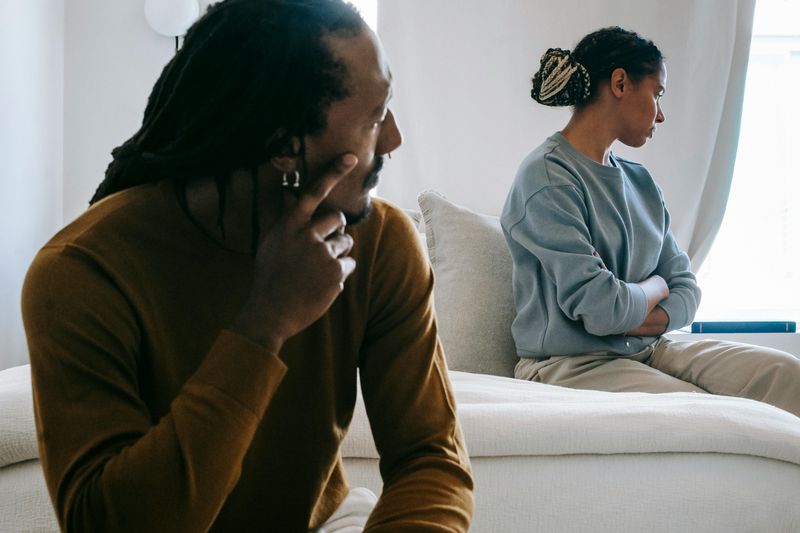
Everyone needs breathing room in a relationship — that’s completely normal and healthy.
But when “I need space” becomes a phrase she reaches for again and again, especially without explanation, it can point to something deeper going on beneath the surface.
Repeated requests for space may mean she’s creating emotional distance on purpose, whether consciously or not.
She might be testing what it feels like to be further away from you, or simply trying to figure out her own feelings.
Respecting her need for space is important, but so is gently checking in afterward.
A simple “I’m here when you’re ready” keeps the connection open without pressure — and that balance matters more than most people realize.
7. “I Can Handle It Myself”

Independence is genuinely admirable, but there’s a difference between being self-sufficient and pushing someone away.
When she consistently refuses your support — even for things that are clearly stressful — it might not be about capability at all.
Choosing to handle everything alone can be a form of emotional detachment.
She may have stopped seeing you as her safe place, the person she naturally leans on when life gets heavy.
That shift is significant.
Try not to take it personally right away.
Instead, make your support feel low-stakes and genuine — not obligatory.
Sometimes people pull away because they’re afraid of needing someone who might not stay.
Quiet, consistent presence can slowly change that.
8. “That’s Your Problem”

Early in most relationships, problems feel shared.
You face challenges as a team, and “your problem” becomes “our problem” almost automatically.
So when she starts drawing a hard line between what belongs to you and what belongs to her, something has shifted in how she sees the relationship.
“That’s your problem” reflects a mindset that’s moved away from partnership.
It can feel cold, and honestly, it is — because it signals that she may no longer feel emotionally invested in your wellbeing the way she once was.
This isn’t always the end, but it is a serious signal.
Naming the shift calmly — “I’ve noticed we’ve stopped tackling things together” — opens a door worth walking through before the distance grows wider.
9. “I’m Fine”

Two words.
Completely unconvincing, and yet incredibly common. “I’m fine” is one of the most widely used emotional shutdown phrases in relationships, and most people know it rarely means what it says.
When she uses it to end conversations that clearly need more than two words, she’s signaling that she doesn’t feel safe, seen, or willing to go deeper with you right now.
It’s a wall disguised as a sentence.
The tricky part is that pushing too hard after “I’m fine” can backfire.
A better approach is to acknowledge it softly: “Okay, I hear you.
I’m here if that changes.” That response keeps the door cracked open without forcing anything.
10. When Silence Replaces Her Words

Sometimes the most telling sign isn’t a phrase at all — it’s the absence of one.
When she used to fill silences with stories, jokes, or random thoughts, and now the quiet between you feels heavy and permanent, that change deserves your full attention.
Emotional disengagement doesn’t always announce itself loudly.
Often it sneaks in quietly, replacing conversation with scrolling, shared meals with distracted silence, and good mornings with nothing at all.
Silence in a relationship can feel louder than any argument.
If you notice it growing, don’t wait for her to break it first.
Reach out with something small and sincere — a question, a memory, a moment of genuine connection.
Small sparks can still reignite something real.