 MomSkoop

Some relationships feel impossible to leave, even when they keep causing pain.
You know something is wrong, but walking away feels scarier than staying.
This kind of attachment is more common than people realize, and it can quietly take over your thoughts, your mood, and your sense of self.
Recognizing the signs is the first step toward understanding what is really happening inside you.
1. You Crave Them Most Right After They Hurt You

Right after the argument, the tears, or the cold silence — something strange happens.
Instead of pulling away, you feel a desperate pull toward them.
You want their comfort, their voice, their reassurance, even though they caused the pain in the first place.
This pattern is one of the clearest signs of a trauma bond.
Your brain starts linking emotional relief with the very person who hurt you.
It creates a loop that feels almost impossible to break.
Recognizing this cycle is powerful — because once you see it clearly, you can start making choices that protect your heart instead of reopening the wound.
2. Intensity Gets Mistaken for Deep Connection

When a relationship swings between explosive fights and passionate make-ups, it can feel almost cinematic — like something rare and special is happening.
That emotional intensity tricks the brain into believing the connection must be meaningful.
But here is the truth: real closeness is steady, not chaotic.
Genuine love does not leave you emotionally exhausted or walking on eggshells.
What feels like depth is often just instability wearing a disguise.
The highs feel so high because the lows drag you so far down.
Learning to tell the difference between intensity and true intimacy can completely change what you look for in a relationship.
3. You Make Excuses You Would Never Accept From Others

“They were just stressed.” “It was partly my fault.” “They did not really mean it.” Sound familiar?
When you care deeply about someone, the mind works overtime to protect the relationship — even at the expense of your own feelings.
The problem is that excusing harmful behavior once becomes a habit.
Before long, you have built an entire system of explanations that keeps you stuck.
Ask yourself honestly: would you let a close friend accept this same treatment?
If the answer is no, that gap tells you everything.
You deserve the same standards of kindness you so freely offer to everyone else around you.
4. Your Whole Mood Hangs on How They Treat You That Day

One warm text and your entire day brightens.
One cold, short reply and everything feels heavy.
When your emotional state is completely controlled by another person’s behavior, that is a serious warning sign worth paying attention to.
Healthy relationships add to your life — they do not become the entire foundation of it.
When someone else holds the remote control to your mood, you lose access to your own emotional stability.
Over time, this creates a constant state of anxiety and hypervigilance.
Building back your inner emotional balance — through friendships, hobbies, and self-awareness — helps loosen the grip that one person’s reactions have over your entire sense of well-being.
5. Calm Moments Make You Feel Uneasy Instead of Safe

Peace should feel like a relief.
But if you find yourself waiting for something to go wrong the moment things quiet down, your nervous system may have adapted to living in constant chaos.
Calm starts to feel unfamiliar — even suspicious.
This is what emotional trauma does over time.
Your body gets so used to stress and unpredictability that stillness feels wrong, almost boring or unsafe.
You might even unconsciously stir things up just to return to a familiar feeling.
Recognizing this pattern is genuinely eye-opening.
Healing means slowly teaching yourself that safety is not a trap — and that peace is something you are allowed to trust and enjoy.
6. You Are Holding Onto Who They Could Be, Not Who They Are

“When things get better, they will change.” “I have seen their good side — I know who they really are.” Holding onto someone’s potential is one of the most emotionally exhausting places a person can live.
Rare good moments and unfulfilled promises become the glue keeping you attached.
You fall in love with a version of them that only shows up occasionally — and you keep waiting for that version to stay.
But people show you who they are through consistent behavior, not occasional glimpses.
Choosing to see someone clearly, not hopefully, is one of the bravest and most self-respecting decisions you will ever make for yourself.
7. Pieces of Yourself Keep Disappearing to Keep Them Happy
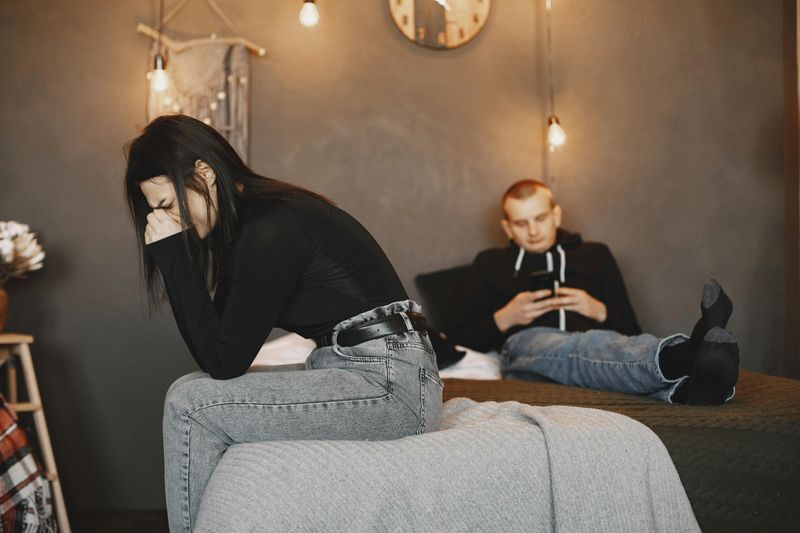
You stopped sharing your opinions because arguments followed.
You let go of friendships because it was easier.
Your needs got smaller and smaller until you barely recognized what you actually wanted anymore.
Slowly shrinking yourself to avoid conflict or abandonment is a painful sign that a relationship has become unsafe for your identity.
Healthy love makes room for who you are — it does not demand that you disappear.
Every boundary you drop, every opinion you swallow, chips away at your sense of self.
Rebuilding that self is possible, but it starts with noticing how much you have already quietly given up just to keep the peace.
8. Leaving Feels More Terrifying Than Staying in the Pain

You can see the damage clearly.
You have explained it to yourself a hundred times.
And yet, the thought of actually walking away triggers something that feels almost physical — fear, emptiness, panic, like losing something vital.
That reaction is not weakness.
It is what trauma bonding does to the brain.
Leaving a harmful attachment can feel neurologically similar to withdrawal from a substance.
Your mind has been trained to associate this person with survival-level comfort.
Understanding this removes the shame and replaces it with compassion for yourself.
Getting support — from a counselor, a trusted friend, or a community — makes the path forward feel far less impossible to walk.