 MomSkoop

Words from a parent can shape the way a child sees themselves for the rest of their life. When those words are hurtful, dismissive, or manipulative, the damage can run surprisingly deep.
Many people carry emotional wounds from childhood without fully understanding where they came from. If any of these phrases sound familiar, it may help explain some of the struggles you have faced growing up.
1. Everything Would Be Easier If You Were More Like Your Sibling
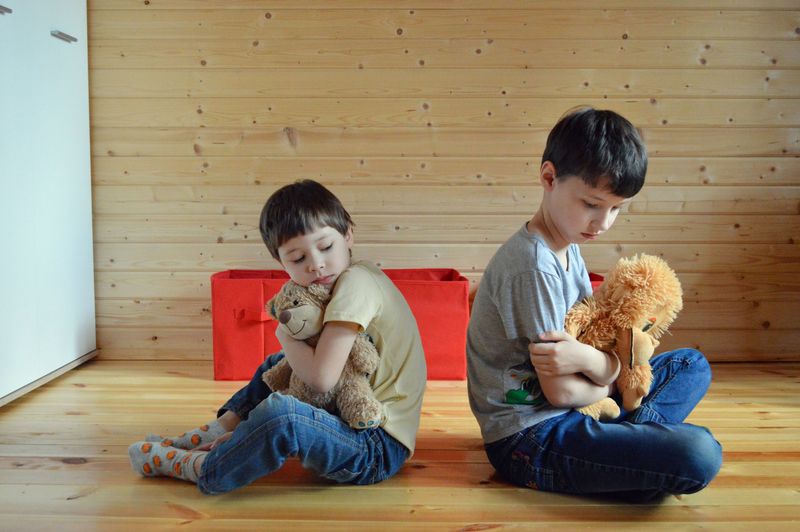
Being compared to a sibling is one of the most quietly painful experiences a child can go through.
Instead of being celebrated for who you are, you are constantly measured against someone else.
That comparison plants a seed of self-doubt that can grow for years.
Children who hear this phrase often grow up feeling like they are never enough.
They may spend their adult lives chasing approval and struggling with jealousy toward their siblings.
The relationship between brothers and sisters can be permanently damaged by this kind of comparison.
Every child deserves to be seen as an individual with their own strengths.
Healthy parenting celebrates differences rather than using them as weapons.
You were always enough, exactly as you were.
2. You Always Find a Way to Disappoint Me

Hearing that you are a constant disappointment from the person who is supposed to believe in you most is crushing.
This phrase does not correct behavior or teach a lesson.
It simply tells a child that they are fundamentally failing as a person.
Over time, children who hear this repeatedly begin to internalize it as truth.
They may grow into adults who expect failure and unconsciously sabotage their own success.
The fear of disappointing others can become paralyzing.
Constructive parenting focuses on specific behaviors, not a child’s overall worth.
Saying “I was disappointed by that choice” is very different from labeling someone a disappointment.
One targets an action; the other attacks an identity.
3. After Everything I Sacrificed, This Is How You Repay Me

Sacrifice is a real part of parenting, but using it as a guilt weapon crosses a serious line.
When a mother reminds her child of every hardship she endured, the child begins to feel like a burden rather than a blessing.
That guilt can follow them well into adulthood.
Children are not responsible for the choices their parents made.
A parent choosing to have a child is not a favor that requires repayment.
Framing it that way creates an unhealthy emotional debt that can never truly be settled.
Healthy parents share their struggles honestly without using them as leverage.
Guilt-tripping a child into obedience may work short-term, but it erodes trust and breeds resentment over time.
Love should never come with a price tag.
4. No One Else Would Put Up With You the Way I Do

This phrase is designed to make a child feel unlovable and completely dependent on their parent.
It suggests that the parent’s tolerance is a rare gift, and that the child is somehow too much for any normal person to handle.
That message is both cruel and false.
Children who absorb this belief often struggle to form healthy relationships later in life.
They may stay in toxic friendships or romantic partnerships because they genuinely believe they do not deserve better.
The idea that they are a burden becomes deeply wired into how they see themselves.
Every person deserves to be loved without conditions or threats.
Telling a child they are too difficult to love is not honesty.
It is emotional manipulation dressed up as concern.
5. Stop Being So Sensitive; You’re Making a Big Deal Out of Nothing

Emotions are not overreactions.
When a child is told their feelings are too big or too dramatic, they learn to distrust their own emotional instincts.
That kind of dismissal teaches them to silence themselves rather than seek support.
Being called “too sensitive” is one of the most common ways emotionally harmful parents shut down communication.
It shifts the focus from the child’s real pain to their supposed weakness.
Over time, the child stops sharing their feelings altogether.
Sensitivity is actually a strength.
People who feel deeply are often more empathetic, creative, and connected to others.
A parent who mocks a child’s emotions is not teaching resilience; they are teaching shame.
Feelings deserve acknowledgment, not ridicule.
6. If You Really Loved Me, You Would Do What I Ask

Love should never be used as a bargaining chip.
When a parent ties their child’s affection to obedience, they are redefining love as something conditional and transactional.
Real love does not come with a list of demands.
This phrase teaches children that love must be earned through compliance.
As adults, they may find themselves constantly people-pleasing, afraid that setting any boundary will cost them someone’s affection.
The fear of abandonment becomes a powerful driver of unhealthy behavior.
Healthy relationships, including those between parents and children, allow space for disagreement.
A child can love their parent deeply and still say no. Teaching kids that love requires total submission sets them up for years of emotional confusion and unfulfilling relationships.
7. You’re the Reason This Family Has So Many Problems

Blaming a child for a family’s dysfunction is one of the clearest signs of emotional harm.
Families are complex systems with many moving parts, and no child should bear the weight of adult problems.
Yet some parents find it easier to assign blame than to look inward.
Children who are cast as the family scapegoat often carry enormous shame.
They believe they are broken, disruptive, and responsible for everyone’s unhappiness.
That belief can take years of therapy to unpack and release.
Problems in a family are almost always rooted in adult choices and unresolved issues.
A child cannot cause a family to fall apart.
Placing that blame on young shoulders is not only unfair; it is deeply damaging to a developing sense of self-worth.
8. I Guess I’m Just a Terrible Mother, Then

This is a classic guilt-flip.
Instead of addressing the child’s concern, the parent makes the conversation about their own feelings.
Suddenly, the child who raised a problem becomes the one apologizing and comforting the adult.
The original issue disappears entirely.
Children who grow up managing their parent’s emotions learn to suppress their own needs.
They become hyperaware of how others feel and constantly monitor themselves to avoid causing upset.
This is sometimes called being emotionally parentified, and it places an unfair burden on young kids.
A parent’s job is to regulate their own emotions, not outsource that task to their child.
When a mother responds to feedback with self-pity, it teaches the child that honesty is dangerous.
Vulnerability becomes something to hide rather than share.
9. Don’t Expect Anyone to Believe Your Version of Events

Few things are more disorienting than being told your own memory cannot be trusted.
This phrase is a form of gaslighting, a manipulation tactic that makes someone question their own reality.
When it comes from a parent, the damage cuts especially deep.
Children who are repeatedly told their accounts are unbelievable often grow into adults who struggle to trust themselves.
They second-guess their own experiences and find it hard to speak up in conflicts or difficult situations.
Their inner voice becomes unreliable to them.
Everyone deserves to have their perspective heard and respected, especially by the people who raised them.
Silencing a child’s truth does not protect the family.
It simply protects the parent from accountability while leaving the child feeling invisible and unheard.
10. You’ll Never Make It Without My Help

Confidence is built when children are allowed to try, fail, and try again.
A parent who constantly reminds their child that they are incapable of succeeding alone is not being protective.
They are dismantling the very independence the child needs to thrive.
This kind of message creates a deeply rooted fear of failure.
Adults who grew up hearing this often struggle to take risks or trust their own judgment.
The parent’s voice becomes the loudest critic in their head, even decades later.
Self-reliance is one of the most valuable things a parent can nurture.
Encouraging a child to believe in themselves, even through mistakes, builds lasting confidence.
Telling them they are helpless without you is not love.
It is control wrapped in concern.
11. I Shouldn’t Have to Explain Why You’re Wrong

Curiosity is one of the most natural traits in children.
When a child questions a rule or decision, they are not being disrespectful; they are trying to understand the world.
Shutting that down with “because I said so” or refusing to explain sends a damaging message.
Children raised in environments where their questions are dismissed learn to stop asking.
They may grow into adults who accept poor treatment without question because challenging authority feels dangerous.
Critical thinking, a key life skill, gets stunted early.
Parents do not need to justify every single decision, but a willingness to explain reasoning teaches children how to think, not just what to think.
Dismissing a child’s need to understand is not discipline.
It is a refusal to respect their developing mind.
12. You’re Lucky I Care Enough to Be Hard on You

There is a difference between high standards and relentless criticism.
Framing constant harshness as a form of love is one of the most confusing things a parent can do.
It teaches children to associate love with pain and to expect cruelty from those who claim to care.
Adults raised this way often find themselves drawn to relationships that mirror this dynamic.
They may tolerate being treated poorly because deep down they believe that is what love looks like.
Breaking that pattern requires recognizing it first.
Tough love, when genuine, is balanced with warmth, encouragement, and safety.
Criticism without comfort is not strength training for the soul.
It is simply criticism.
Children need to know they are loved during their failures, not just pushed harder because of them.
13. Everyone Agrees With Me About You

Invoking an invisible jury to support criticism is a manipulation tactic that leaves a child feeling completely alone.
It suggests that the parent’s negative view is not just personal but universally shared.
That is an incredibly isolating message to send to a young person.
Children who hear this begin to feel that everyone around them sees their flaws.
Social anxiety, shame, and withdrawal are common outcomes.
The world starts to feel like a courtroom where they are always on trial and always losing.
Healthy feedback comes from a place of care, not coalition.
A parent does not need the backing of imaginary allies to make a point.
Using social pressure to reinforce criticism is a way of overwhelming a child rather than guiding them.
14. Your Feelings Are Not as Important as What This Family Needs

Family loyalty is a beautiful value, but not when it comes at the cost of a child’s emotional wellbeing.
Teaching a child that their inner world is less important than external appearances or group harmony sets up a lifetime of self-abandonment.
Their needs learn to come last.
Adults raised with this message often struggle with boundaries.
They give endlessly to others while neglecting themselves, then wonder why they feel empty and unseen.
The habit of minimizing their own needs was baked in very early.
A child’s feelings are valid and important, full stop.
A functional family makes space for each member’s emotional reality.
Asking a child to sacrifice their inner life for the family’s image is not unity.
It is emotional erasure hiding behind loyalty.
15. One Day You’ll Realize I Was Right About Everything

Certainty can be a form of control.
When a parent insists they are always right and frames any disagreement as temporary immaturity, they close the door on genuine dialogue.
The child’s perspective is not just dismissed; it is scheduled for future correction.
This phrase often comes out during arguments where the child dares to push back.
Rather than engaging with their point, the parent predicts a future where the child finally surrenders.
It teaches the child that their opinions have no current value.
Healthy parents acknowledge that they, too, make mistakes.
Modeling intellectual humility shows children that being wrong is survivable and even valuable.
A parent who claims infallibility is not teaching wisdom.
They are teaching their child to stop trusting themselves.
16. You Don’t Deserve the Opportunities You’ve Been Given

Telling a child they are undeserving strikes at the very core of how they see their own value.
It is not a motivational push; it is a wound.
Children who hear this begin to believe that good things happening to them are mistakes that will eventually be corrected.
This belief follows people into adulthood as something called impostor syndrome.
They achieve real success but live in fear of being exposed as unworthy.
The parent’s voice becomes the internal critic that no accomplishment can silence.
Every child deserves opportunities, encouragement, and the belief that they can grow into something wonderful.
Withholding that affirmation does not build character.
It builds doubt.
You always deserved every good thing that came your way, and no one had the right to tell you otherwise.