 MomSkoop

Not everyone reaches for a necklace or bracelet before heading out the door, and that’s perfectly fine. People who skip jewelry often share some surprisingly similar habits and ways of thinking.
Whether it’s a love of simplicity or a desire to stay under the radar, going jewelry-free says a lot about who you are. If you rarely or never wear jewelry, some of these behaviors might sound very familiar.
1. Comfort Always Wins Over Appearance

You probably own at least one piece of clothing purely because it feels like a second skin.
When getting dressed, your first question is never “Does this look impressive?” — it’s “Will I be comfortable in this all day?” Jewelry, for you, falls into the same category as tight shoes or scratchy tags: unnecessary discomfort.
Bracelets clank, necklaces tug, and earrings get caught on things.
Why bother?
Your style choices are guided by how your body feels, not how others might react.
That’s not laziness — it’s a clear sense of self-awareness.
People who prioritize comfort tend to be more focused and productive because they’re not constantly distracted by physical annoyances throughout the day.
2. Simplicity Is Your Default Setting
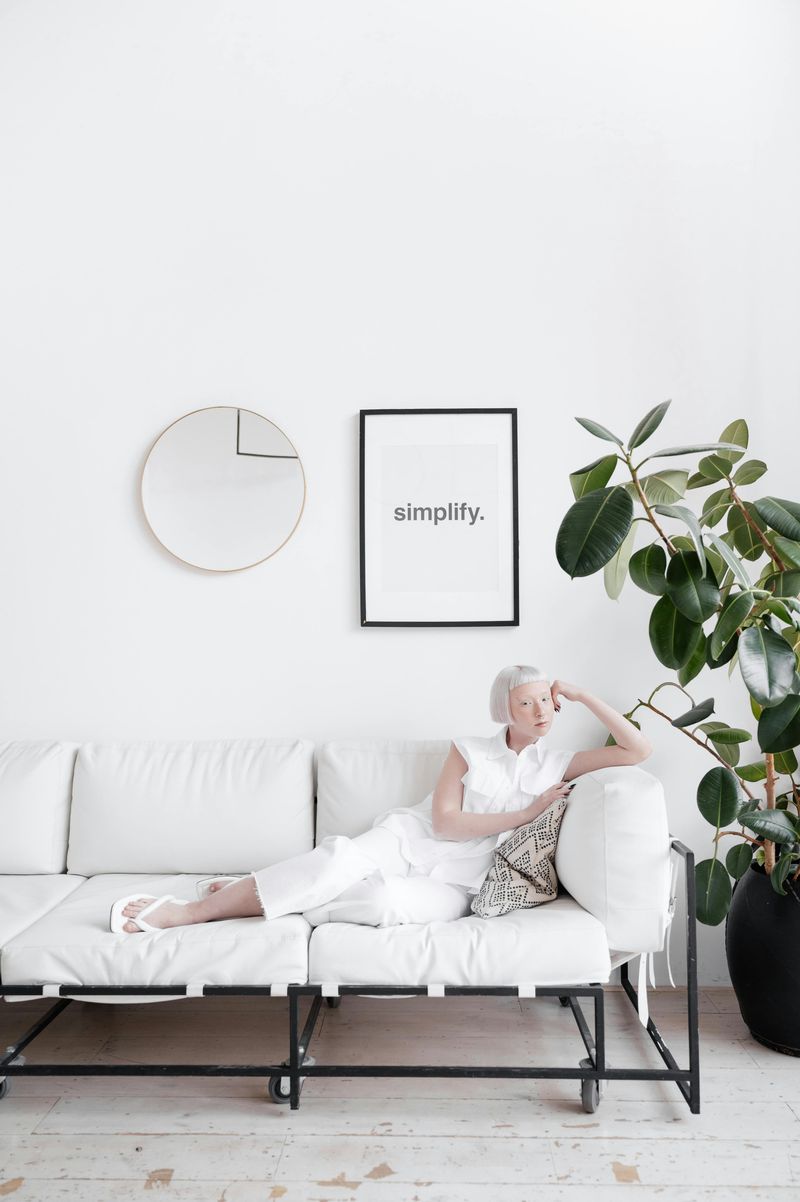
Walk into your space and you’ll notice something right away: there’s not much extra stuff.
You tend to keep surfaces clear, routines straightforward, and decisions uncomplicated.
Adding a ring or a chain just feels like one more thing to think about — and you’d rather not.
Simplicity isn’t about being boring.
For you, it’s a deliberate choice to cut through the noise and keep only what truly matters.
Jewelry, in this mindset, is just visual clutter that adds zero real value to your day.
Interestingly, studies show that people who simplify their environments and daily routines often report lower stress levels and greater mental clarity than those surrounded by excess.
3. You’d Rather Blend In Than Stand Out

Heads turning in your direction?
No thanks.
You move through the world preferring to go unnoticed, and that suits you just fine.
Jewelry has a way of drawing eyes — a sparkling necklace or a stack of bangles practically announces your arrival.
You’d rather slip in quietly.
This isn’t shyness, necessarily.
It’s more about valuing your privacy and personal space.
You don’t feel the need to signal anything to strangers through what you wear.
Your presence speaks for itself, on your own terms.
People who prefer blending in are often highly observant.
Without the energy spent on being noticed, they focus outward — noticing details and reading rooms that others completely miss.
4. Practicality Shapes Every Daily Decision

“Does this actually help me get through my day?” That question runs quietly in the background of most choices you make.
From the bag you carry to the shoes you pick, everything has to earn its place.
Jewelry rarely makes the cut because, let’s be honest, it doesn’t do anything useful.
You’re the type who finds satisfaction in efficiency.
A smooth morning routine with zero fuss beats fumbling with clasps or searching for a matching earring.
Time saved is energy gained, and you know it.
Practical thinkers are often incredibly reliable people.
They plan ahead, avoid unnecessary complications, and tend to be the calm, steady presence others lean on when things get chaotic.
5. A Minimalist Mindset Runs Deep

Minimalism for you isn’t a trend you picked up from a lifestyle blog — it’s just how your brain naturally works.
More stuff equals more decisions, more maintenance, and more mental weight.
You figured that out early, and you’ve been editing your life down ever since.
Skipping jewelry is a natural extension of this thinking.
Why add something purely decorative when your energy is better spent elsewhere?
Every item you own or wear should mean something or serve a purpose.
Fun fact: minimalism as a modern lifestyle movement gained serious traction in the 2010s, but the philosophy itself dates back centuries in various cultures, from Zen Buddhism to Stoic philosophy in ancient Rome.
6. Trends Have Very Little Pull on You

When layered necklaces or chunky rings take over social media, you barely notice.
Trends feel like noise to you — loud, temporary, and honestly a little exhausting to keep up with.
Your style has always been about what feels right to you, not what’s currently “in.”
This kind of independence is genuinely rare.
Most people feel at least a small pull toward what’s popular.
But you’ve developed a strong internal compass that filters out outside influence pretty effectively.
That’s a form of quiet confidence many people spend years trying to build.
People who resist trend pressure tend to spend less money over time and report higher satisfaction with their personal style, since their choices come from within rather than outside pressure.
7. Self-Expression Happens Beyond Material Things

You don’t need a gold chain to tell people who you are.
Your ideas, your humor, your work, your actions — that’s where your identity lives.
Material things like jewelry can feel hollow compared to the richness of actually connecting with people through conversation or creativity.
This doesn’t mean you don’t care about how you present yourself.
It means your self-expression runs deeper than surface-level accessories.
You’d rather someone remember what you said than what you wore.
Psychologists have noted that people who ground their identity in values and experiences rather than possessions tend to have stronger self-esteem and a more stable sense of who they are, especially during life’s inevitable changes.
8. Your Personal Style Is Carefully Curated

Here’s the thing about people who never wear jewelry: they’re not careless about style.
If anything, they’re more selective.
Every item in your wardrobe is there for a reason.
You’ve thought about it, tried it, and decided it belongs.
Anything that doesn’t pass the test gets cut.
Jewelry simply didn’t make it through your personal filter.
Maybe it felt performative, maybe it just never clicked with your aesthetic.
Either way, the decision was deliberate — not an oversight.
Being highly selective about personal style is actually a sign of strong self-knowledge.
You understand your own preferences clearly enough to say no to things that don’t fit, even when everyone else seems to be saying yes.