 MomSkoop

The way someone reacts to a partner’s good news has its own name: active-constructive responding. It means meeting a happy update with real questions and visible excitement instead of a distracted nod. Most of us picture support as showing up during hard times, yet the cheerful, ordinary moments count too.
People trying to become better partners often find that the biggest shifts are small and repeatable. A put-down phone, a fair split of chores, or a quiet pause before reacting can change the whole feel of a shared home. The skills below come up again and again when people decide to show up more fully for someone they love. Some may surprise you, and at least one involves doing less, which honestly feels like a pleasant twist.
1. Listening Without Rehearsing a Reply

Most people listen with one ear while drafting their comeback in their head.
Partners who want to be more supportive often start by catching that habit and gently dropping it.
Active listening means giving your full attention to what your partner says and how they say it.
Tone, posture, and facial expressions carry plenty of meaning, so put the phone face down and turn toward them.
Small signals help your partner know you’re tracking.
A nod, steady eye contact, or a simple ‘go on’ tells them the floor is still theirs.
Try reflecting back what you heard before adding your own take.
Something like ‘So the meeting felt unfair because your idea got skipped?’ gives them a chance to correct you or feel understood.
Clarifying questions work well too, as long as they come from curiosity instead of cross-examination.
Ask ‘What was the hardest part?’ rather than ‘Why didn’t you just say something?’
None of this requires perfect technique or a script.
It simply asks you to stay with your partner’s words a little longer than feels natural, which is a skill that grows with practice.
2. Reading Your Own Emotions First

Grumpy at your partner, or just hungry and tired?
Sorting that out before you speak is a surprisingly big part of being supportive.
Emotional intelligence, often shortened to EQ, covers the ability to notice, understand, and manage your own feelings.
It also includes tuning in to what your partner might be feeling, even when they haven’t said it out loud.
The self-awareness half comes first for a reason.
When you can name your own mood, you’re less likely to dump a bad day on someone who had nothing to do with it.
A quick check-in with yourself can help.
Ask, ‘What am I feeling right now, and where did it come from?’ before responding to a tense moment.
Then turn that same curiosity outward.
Maybe your partner’s short answers have more to do with a stressful week than with you, and a gentle ‘Rough day?’ can open the door.
Nobody reads emotions perfectly, and guessing wrong is part of learning.
What matters is noticing small changes in yourself and the person beside you, then responding with care instead of autopilot.
Over time, this awareness can make tricky conversations feel less like stepping on hidden rakes.
3. Celebrating Good News Out Loud

Your partner bursts through the door with news of a promotion, and you say ‘Nice’ without looking up from your laptop.
Ouch, right?
The response to good news shapes how shared that joy feels.
A reply that’s active and constructive means showing real interest, asking questions, and letting your excitement show on your face.
Compare ‘Cool’ with ‘Wait, tell me everything, how did they tell you?’ The second one invites your partner to relive the moment with you, which doubles the fun.
Watch out for a couple of sneaky traps too.
Jumping straight to worries like ‘Won’t that mean longer hours?’ or switching the topic to your own day can quietly deflate the moment.
Small wins deserve attention as well.
Finishing a tough workout, fixing a leaky faucet, or getting a kind email from a boss are worth a high five.
Celebrating doesn’t have to mean balloons or a fancy dinner.
A hug, a toast with sparkling water, or telling a friend ‘Guess what my partner did’ can send a clear message.
The goal is simple: their wins feel like team wins.
That shift turns your relationship into a place where good news gets bigger, not smaller.
4. Giving Each Other Room to Breathe

Here’s the twist promised earlier: sometimes the most supportive move is to step back.
Giving your partner space can feel odd at first, yet it often makes time together better.
Individual hobbies, friendships, and quiet hours help people keep a sense of who they are.
Without that room, even a loving relationship can start to feel cramped.
Space looks different for different couples.
For one pair, it’s a solo Saturday hike, while for another it’s an hour with headphones after work.
Talk openly about what each of you needs instead of guessing.
A simple ‘I’d love an hour to myself tonight, can we catch up after?’ prevents hurt feelings on both sides.
Space also helps during tense moments.
Taking time to cool off before responding can keep a small disagreement from snowballing into a big one.
Time apart gives you fresh stories to bring back, too.
Hearing about your partner’s pottery class or book club adds something new to dinner conversation.
Not every household has extra rooms or free evenings, and that’s fine.
Even a short walk around the block or a corner of the couch with a good book can work as breathing room.
5. Handling Disagreements Fairly

Arguing about the thermostat for the fifth time this month?
Conflict shows up in close relationships, and learning to handle it well matters more than avoiding it.
Some couples set ground rules before tempers rise.
Common ones include no yelling, no name-calling, and no dragging in old grudges from three summers ago.
Stick to one issue at a time.
If the topic is dishes, leave the forgotten anniversary out of it, or the conversation turns into an endless tangle.
Validation helps more than most people expect.
You can say ‘I see why that upset you’ without agreeing with every detail of their version.
Timeouts are allowed, and they’re often smart.
Saying ‘I need twenty minutes to calm down, then let’s finish this’ is very different from storming off.
Aim for a solution instead of a victory.
If one person wins and the other feels crushed, the relationship still loses that round.
Compromise might mean a thermostat setting in the middle, or taking turns choosing.
It might also mean admitting that one of you simply cares more about this issue and giving that person the call.
Fair fights won’t make disagreements vanish, but they can leave you both feeling respected.
6. Saying Thank You for Small Things

Taking out the trash will never win an award.
A quick thank-you for it, though, can make your partner feel noticed in a way that adds up.
Appreciation works best when it’s specific. ‘You always remember to ask about my mom’s health, and that means a lot’ lands harder than a vague ‘Thanks for everything.’
Notice the tasks that usually go unseen.
Refilling the soap, scheduling the dentist, or remembering a friend’s birthday all take effort, even if nobody claps.
Actions can carry the message as well.
Bringing home their favorite snack or handling a chore they dislike says ‘I see you’ without a single word.
Compliments count too, both in private and in front of others.
Mentioning to friends that your partner cooked an amazing dinner can give them a lift they carry for days.
Remembering important dates is another form of appreciation.
A calendar reminder isn’t cheating, it’s simply a useful tool.
Gratitude doesn’t need to be constant or over the top to matter.
A sticky note on the coffee maker or a quick text at lunch can be enough to remind your partner that their efforts don’t disappear into the void.
7. Sharing the Household Load
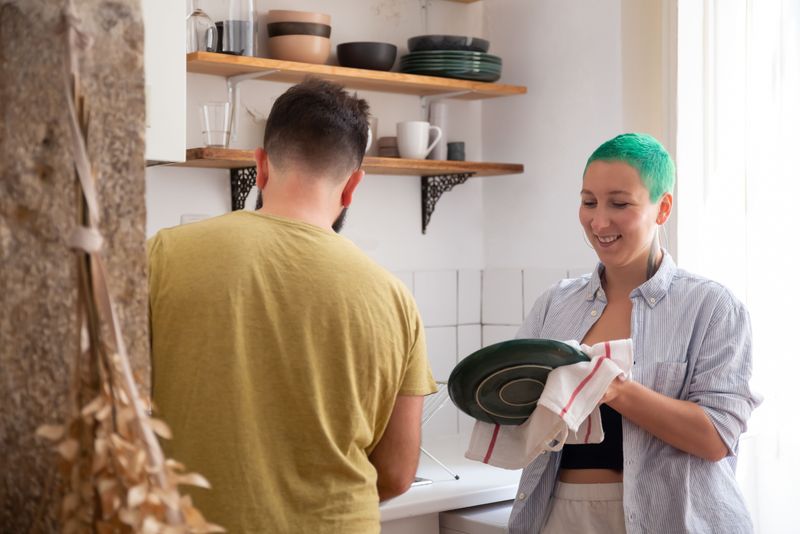
Who remembers to buy toilet paper in your house?
If the answer is always the same person, that’s worth a friendly conversation.
Sharing responsibilities fairly doesn’t have to mean an exact 50/50 split.
Work hours, health, energy, and other commitments change what’s realistic for each person.
The goal is teamwork, where both partners pitch in generously and neither feels stuck with the heavy end.
When one person handles too much, frustration tends to creep in quietly.
Start by listing the jobs, including the invisible ones.
Planning meals, tracking bills, and keeping up with school forms take real mental effort, even without a mop in hand.
Next, divide tasks by preference and skill where you can.
Maybe one of you hates laundry but doesn’t mind scrubbing the bathroom, which makes for a handy trade.
Check in every so often, because life changes.
A new job, a baby, or a busy season can shift what fair looks like, so the plan should bend too.
A shared calendar or a chore chart on the fridge might feel a bit like summer camp.
Still, it can save plenty of ‘I thought you were doing that’ moments.
8. Speaking Up With I Statements

‘You never help!’ and ‘I feel overwhelmed with the chores this week’ describe the same problem.
Only one of them is likely to start a useful conversation.
Open communication means sharing your thoughts and feelings directly, before they build into resentment.
Holding back small complaints often leads to a big blowup later.
I statements keep the focus on your experience instead of your partner’s flaws.
They tend to lower defenses, which makes it easier for the other person to hear you.
A simple formula can help: ‘I feel ___ when ___, and I’d like ___.’ For example, ‘I feel lonely when we’re on our phones at dinner, and I’d like us to put them away.’
Openness also means asking for what you need instead of expecting your partner to read your mind.
Hints are fun in board games, but they’re frustrating in relationships.
Make it safe for your partner to speak up too.
If they share something hard and you react with sarcasm, they may stay quiet next time.
Honest talk can feel awkward, especially if your family growing up didn’t model it.
Like learning a new language, the words get easier the more you practice them.
9. Building Trust Through Follow-Through

Saying you’ll pick up the dry cleaning and then actually doing it sounds boring.
Yet small promises kept are the bricks that trust is built from.
Reliability means your partner can count on you without crossing their fingers.
When your words and actions line up over time, they feel secure.
If you can’t keep a promise, say so early.
A quick ‘I’m stuck at work, can we move dinner to seven?’ protects trust far better than silence.
Honesty plays a big role as well.
Being truthful, even about small things, shows your partner they don’t need to double-check your story.
Trust also shows up in what you don’t do.
A secure partner doesn’t feel the urge to scroll through messages or demand passwords to feel safe.
Owning mistakes matters just as much.
A clear ‘I messed up, and here’s how I’ll fix it’ can repair damage faster than excuses ever could.
Trust grows slowly and can crack quickly, which makes steady habits so valuable.
Think of it like a savings account you add to with each kept promise, so there’s something to draw on when life gets bumpy.
10. Cheering On Personal Goals

Your partner wants to learn guitar at 40, run a first 5K, or go back to school.
Being their loudest fan might be one of the best gifts you can give.
Supporting growth means believing in their goals, especially on days when they doubt themselves.
A simple ‘You’ve got this, I’ve watched you work for it’ can carry real weight.
Encouragement should feel energizing, not controlling.
Nagging about practice schedules can turn a fun dream into a chore.
Make room for their goals in practical ways.
Covering bedtime so they can attend a class, or quietly tolerating beginner guitar chords, counts as support.
Honesty still has a place here.
If you have concerns about a big decision, share them kindly while making it clear you’re on their side.
Public praise can be a nice boost.
Telling friends how proud you are of your partner’s progress shows that their efforts matter to you.
Avoid guilt trips about time spent with friends or hobbies, since those often feed personal growth.
A partner who keeps learning and changing brings new energy home, and that can make your shared life more interesting for both of you.
11. Creating Small Daily Rituals

A goofy handshake at the door.
Coffee on the porch before work.
Tiny repeated habits like these can quietly hold a relationship together.
Relationship rituals are purposeful actions you repeat on a regular schedule.
They can be as simple as a real goodbye kiss instead of a shout from the other room.
Rituals help keep your partnership from getting lost in the shuffle of bills, jobs, and errands.
They send a steady signal that your partner still matters most.
Try a daily check-in that goes beyond logistics.
Instead of ‘Did you pay the electric bill?’, ask ‘What made you laugh today?’
Screens can sneak into these moments, so set some boundaries.
Phones away at dinner or during a nightly walk can make conversation flow more easily.
Rituals don’t need to be expensive or elaborate.
A Friday night movie on the couch, a Sunday pancake breakfast, or a bedtime chat can do the job.
Choose habits that fit your schedules and personalities rather than copying someone else’s.
If mornings are chaos at your house, an evening ritual makes more sense, and that’s perfectly okay.
The magic is in the repetition, not the size.
12. Knowing When to Comfort and When to Help

Your partner vents about a terrible day, and you instantly offer five solutions.
Somehow, they look even more frustrated than before.
Support usually comes in two flavors: emotional and practical.
The order often matters, because fixes tend to land better once a person feels heard.
Emotional support means staying present first.
Let them finish talking, reflect back what you heard, and acknowledge their feelings before suggesting anything.
Sitting with someone else’s stress can feel uncomfortable, especially for natural problem-solvers.
Staying calm and steady instead of rushing in is a skill in itself.
Once they feel understood, practical help can shine.
Taking a chore off their plate, running an errand, or handling dinner can lighten a heavy week.
Not sure which one they need?
Just ask, ‘Do you want me to listen, or would ideas help right now?’
That simple question saves plenty of guesswork and shows respect for how your partner handles tough moments.
Think of yourself as a teammate rather than a manager, offering help without taking over.
Getting the balance right won’t happen every time.
Still, learning to read the moment might be the most useful skill on this whole list.