 MomSkoop

Have you ever walked into a quiet house and immediately reached for the TV remote, not to watch anything in particular, but just to fill the silence?
You’re definitely not alone.
Millions of people use the TV as background noise, and it turns out this habit says a lot about who they are.
The personality traits behind this common behavior are surprisingly fascinating.
1. High Need for External Stimulation
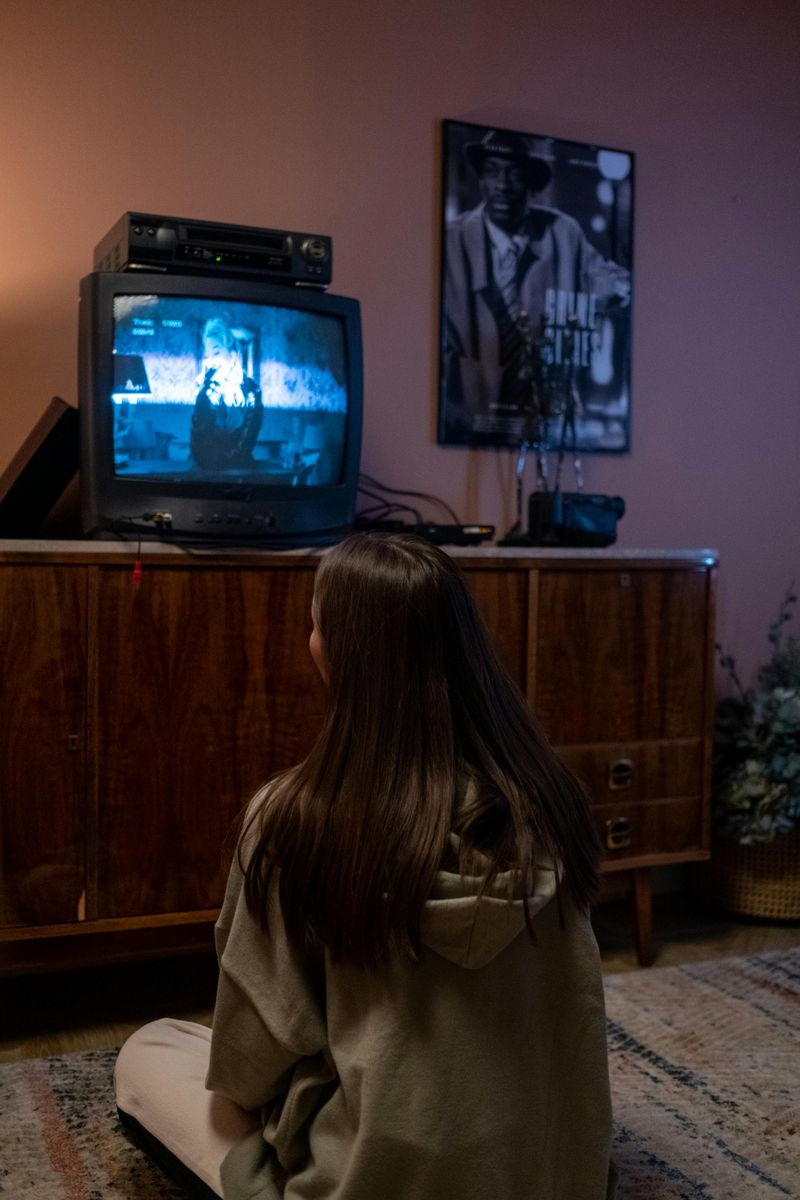
Some people’s brains are simply wired to crave more input from the world around them.
Silence doesn’t feel peaceful — it feels flat.
For these individuals, background TV provides just enough stimulation to keep the mind humming along happily.
Think of it like adding seasoning to food.
Without it, everything feels bland.
Research suggests that people with a high need for external stimulation often feel more focused and at ease when there’s some level of sensory activity in the room.
It’s not restlessness — it’s just how their brain finds its sweet spot.
2. Lower Tolerance for Silence

Silence hits differently for everyone.
For some folks, a quiet room feels like a warm hug.
For others, it feels like something is noticeably missing — like a song with the melody stripped out.
People with a lower tolerance for silence often describe empty quiet as unsettling or even a little eerie.
Turning on the TV instantly transforms that hollow feeling into something manageable and familiar.
Interestingly, this trait has roots in childhood environments.
Growing up in a lively, noisy household can shape how comfortable a person feels with silence well into adulthood.
3. Mild Sensation-Seeking Personality

Sensation-seekers don’t need to jump out of planes to get their fix.
Sometimes, a steady stream of TV chatter in the background is enough to satisfy that quiet craving for activity.
Mild sensation-seekers sit somewhere in the middle of the spectrum — they’re not thrill-chasers, but they do prefer environments with a little buzz.
The TV delivers that low-level energy without demanding full attention.
Psychologists note that sensation-seeking tendencies influence everything from career choices to daily habits.
Keeping the TV on is one of the more harmless — and honestly pretty cozy — expressions of this trait.
4. Natural Multitasking Tendency

Multitaskers have a special relationship with background noise.
They’re the people who can fold laundry, answer emails, and half-follow a cooking show all at the same time — and somehow get everything done.
For them, the TV isn’t a distraction; it’s part of the workflow.
Their brains are practiced at dividing attention without losing track of the main task.
Background media becomes a kind of comfortable companion to whatever else is happening.
Studies on multitasking show that some people genuinely thrive in split-attention environments, making TV background noise a natural and productive fit for their lifestyle.
5. Habit-Driven Behavior Patterns
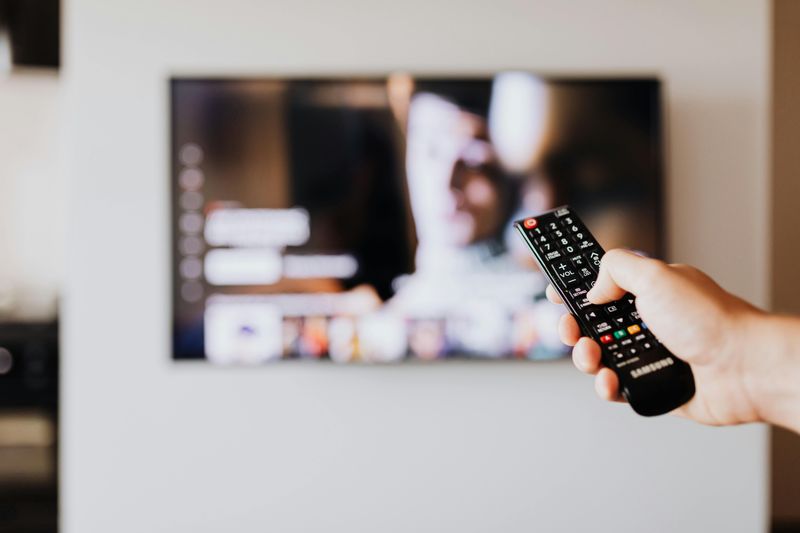
Ever notice how some people turn on the TV before they’ve even set down their keys?
That’s habit-driven behavior at its finest.
The action becomes so automatic it barely registers as a conscious choice anymore.
Habits form when a behavior gets repeated enough times in the same context.
Walking through the door becomes the trigger, and flipping on the TV becomes the automatic response.
Over time, the two become inseparable.
This kind of routine cue isn’t necessarily a bad thing.
Predictable rituals can actually help people transition mentally from one part of the day to another with ease.
6. Emotion Regulation Through Distraction

When stress creeps in or anxious thoughts start looping, the brain sometimes needs a gentle redirect.
Background TV can serve as exactly that — a soft, low-effort way to break the mental spiral.
People who use TV for emotional regulation aren’t avoiding their feelings entirely.
They’re giving their minds a small break, a momentary anchor to something outside their own head.
It’s similar to how some people take a walk or listen to music to reset.
This coping style is common and often effective.
The key is balance — using it as a tool rather than a permanent escape from difficult emotions.
7. Preference for Ambient Social Presence
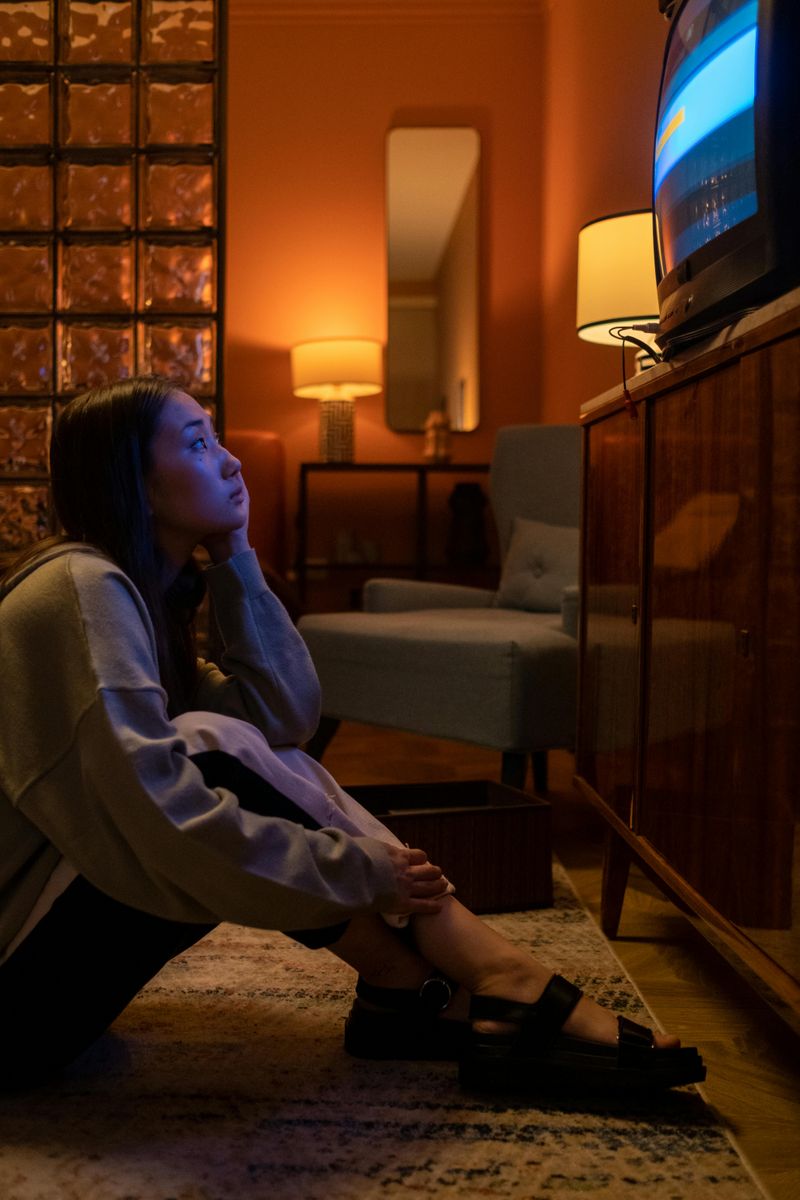
TV voices carry a kind of warmth that silence simply can’t replicate.
For people who live alone or spend a lot of time by themselves, the sound of conversation and laughter from a TV can make a space feel inhabited and alive.
This preference for ambient social presence is deeply human.
We’re social creatures, and our brains respond positively to the sounds of other people — even when we know those people are fictional or on a screen.
It’s a clever workaround for loneliness that doesn’t require scheduling a get-together.
Sometimes, just hearing voices in the background is genuinely enough to lift the mood.
8. Cognitive Offloading Tendency

Here’s a quirky brain trick: giving your mind a small, low-effort task can actually free up mental space for bigger ones.
Background TV occupies just enough of the brain’s attention to quiet the restless, wandering part that loves to overthink.
This is called cognitive offloading, and it’s a real psychological phenomenon.
By partially engaging with passive media, people can reduce mental chatter and stay more present in whatever they’re actually working on.
Not everyone experiences this benefit, but for those who do, background TV becomes less of a distraction and more of a surprisingly useful mental management tool.
9. Lower Sensitivity to Divided Attention Costs

Most people lose some efficiency when their attention gets split.
But for a certain group, divided attention barely registers as a cost at all.
They can work, think, and create with background noise humming along and feel no worse for it.
This lower sensitivity to attention-splitting may be partly personality-based and partly trained over years of media-rich environments.
For these individuals, the TV is background furniture — present, but not pulling focus.
It’s a genuinely useful trait in today’s busy world.
Being comfortable with ambient noise means fewer disruptions and a more flexible approach to getting things done in imperfect conditions.
10. Higher Susceptibility to Boredom

Boredom tolerance varies wildly from person to person.
Some people can sit quietly for an hour and feel perfectly content.
Others hit a wall within minutes and urgently need something — anything — to keep the mental engine running.
People with higher boredom susceptibility often interpret silence as under-stimulation, almost like a signal that something is wrong.
Flipping on the TV is a fast, easy fix that instantly raises the stimulation level back to a comfortable zone.
Boredom isn’t laziness — it’s often a sign of a quick, active mind that needs regular input.
Background TV is one way that mind quietly negotiates with its own restlessness.
11. Environmental Control Preference

Some people are natural environment architects.
They care deeply about how a space feels, sounds, and functions — and they actively shape their surroundings to match their inner mood.
For these folks, silence isn’t neutral; it’s just one more thing to manage.
Turning on the TV is a form of environmental design.
It sets a tone, creates atmosphere, and gives the space a particular energy.
Whether it’s a morning news show or a familiar sitcom, the choice reflects who they are.
This preference for environmental control often connects to a broader personality trait: a desire to feel grounded, settled, and in comfortable command of their personal space.
12. Comfort-Seeking Routine Orientation

There’s something deeply reassuring about the familiar.
For comfort-seekers, routine isn’t boring — it’s a foundation.
Knowing exactly what to expect from a favorite show or a trusted channel creates a predictable, safe environment that feels genuinely good.
This type of person often gravitates toward the same programs, the same volume levels, and the same TV habits day after day.
It’s not a lack of imagination; it’s a preference for emotional security through repetition.
Psychologists link comfort-seeking routines to a healthy need for predictability.
In an unpredictable world, having a familiar soundtrack playing in the background is a small but meaningful way to feel at home.