 MomSkoop

You probably know someone like this — they never post selfies, never share opinions online, yet they somehow know everything happening on social media.
These quiet observers scroll silently, absorbing information without leaving a single trace.
They watch, they analyze, and they remember.
If you have ever wondered what makes these people tick, here are twelve traits they almost always share.
1. More Observant Than Expressive

Some people are built to watch the world, not narrate it.
Silent social media users tend to notice details that most people scroll right past — a shift in someone’s tone, a pattern in what gets shared, or what is conspicuously left unsaid.
Rather than broadcasting their own thoughts, they file information away mentally.
This observational habit often makes them surprisingly sharp readers of people and situations.
Friends frequently say, “How did you even notice that?”
The answer is simple: when you stop performing, you start truly paying attention.
2. Deeply Privacy-Conscious

Leaving a digital footprint feels genuinely uncomfortable for these individuals.
They think carefully about what data they share, who can see it, and how it might be used or misinterpreted down the road.
This is not paranoia — it is a calculated awareness of how personal information travels online.
Many passive users have read enough stories about data breaches or online shaming to take privacy seriously.
They treat their personal life like a private journal, not a public bulletin board.
Protecting that boundary feels less like a choice and more like a core part of who they are.
3. Selectively Self-Disclosing

Here is something interesting: people who never post are not necessarily shy or antisocial.
Many of them are warm, funny, and deeply connected — just with a much smaller, carefully chosen circle.
Sharing feels meaningful to them only when it is intentional.
Posting a life update for hundreds of acquaintances to react to holds zero appeal.
They would much rather tell one trusted friend something important over coffee than broadcast it to a feed full of people they barely know.
For them, real connection beats public performance every single time.
4. Strong Internal Validation

Likes and comments simply do not move the needle for these folks.
Their sense of self-worth is built from the inside out — shaped by personal values, accomplishments, and relationships rather than online reactions.
This internal compass is genuinely powerful.
When the rest of the world is refreshing notifications hoping for approval, silent observers are already moving forward, unbothered.
Psychologists actually link this trait to stronger emotional resilience.
Not needing external validation does not mean they lack confidence — quite the opposite.
It means their foundation does not crack when the internet goes quiet.
5. Conscious Social Comparison
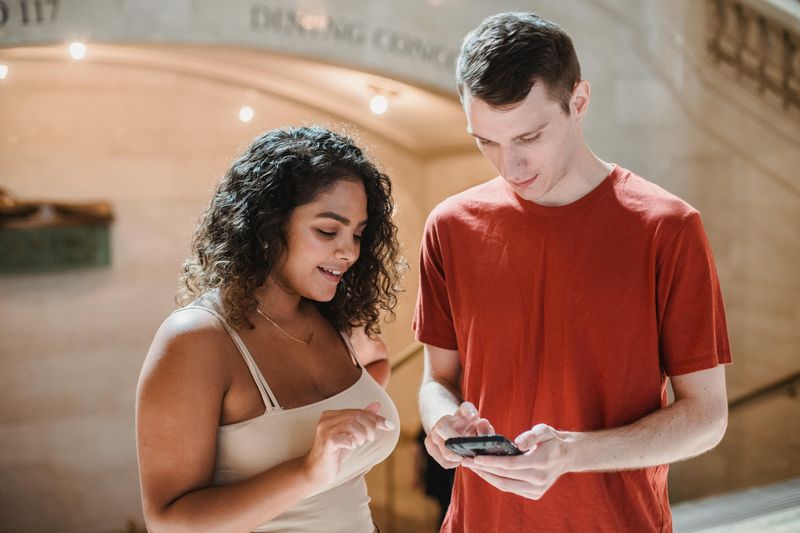
Passive scrollers compare themselves to others just like everyone else — but there is a key difference.
They tend to catch themselves doing it.
Instead of absorbing highlight reels uncritically, they pause and question what they are actually looking at.
“Is this real? Is this the whole story?”
Those mental checkpoints make social comparison feel less like a gut punch and more like a passing observation.
That said, the comparison still stings sometimes.
Awareness does not make it painless, but it does prevent that slow, quiet spiral that traps so many heavy social media users in cycles of inadequacy.
6. Low Need for Attention

Visibility is simply not a goal for these individuals.
While others craft captions and pick filters to maximize engagement, silent observers genuinely do not feel that pull.
Recognition from strangers online holds about as much value to them as a trophy for showing up.
This does not mean they are indifferent to people — many care deeply about their relationships.
They just prefer earning respect through actions rather than accumulating it through follower counts.
There is a quiet confidence in that.
They are not invisible because they are forgotten — they are invisible because they chose to be.
7. High Emotional Filtering

Before posting anything, these individuals mentally run through every possible way it could go wrong.
Will someone take it out of context?
Could it start an argument?
Might it come back to haunt them later?
That internal filter is working overtime, and most of the time, the post simply never happens.
This habit protects them from conflict and misunderstanding, but it also means authentic moments get swallowed up by overthinking.
Emotional filtering is a form of self-protection — sometimes healthy, sometimes a little too cautious.
Either way, it explains why their profiles stay eerily quiet even when life is anything but.
8. Genuinely Curious About Others

Do not mistake silence for disinterest.
People who never post are often intensely curious about other people’s lives — their travels, relationships, milestones, and daily routines.
They just prefer absorbing that information without announcing their presence.
Think of them as the world’s most attentive audience members.
They remember birthdays without Facebook reminders, notice when someone’s posts shift in tone, and pick up on life changes before most people say a word.
That curiosity fuels their passive engagement.
Watching feels satisfying enough — they get the social connection they crave without the vulnerability of stepping into the spotlight themselves.
9. Prone to Overthinking

Perfectionism and social media are a rough combination.
For overthinkers, every potential post becomes a mental essay — analyzing the wording, the timing, the audience, the possible reactions, and the long-term implications before a single word is published.
Most of the time, all that analysis leads to one conclusion: just do not bother.
It is not laziness or indifference driving this pattern — it is an overactive mind that cannot stop stress-testing every scenario.
The irony is that the posts they agonize over would probably be completely unremarkable to everyone else.
But for an overthinker, “probably fine” is never quite good enough.
10. Digital Minimalism Mindset

Social media, to these individuals, is a tool — not a lifestyle.
They use it the way someone uses a map app: get the information needed, then put the phone down.
The idea of curating an online persona feels as exhausting as it sounds.
Digital minimalists often feel crowded by notification culture.
They actively limit screen time, unfollow accounts that add noise, and treat their attention as something worth protecting.
Research consistently shows that intentional, limited social media use is linked to better mental health outcomes.
For passive observers, that is not a trend to follow — it is just common sense they figured out early.
11. Strong Boundary Between Public and Private Life

There is a firm, invisible line these individuals draw between what the world gets to see and what belongs only to them.
Vacations, relationships, family moments, personal wins — those stay offline, and that boundary is non-negotiable.
For many passive users, keeping private life private is a form of self-respect.
Sharing everything publicly feels like leaving the front door wide open.
They are not hiding anything — they are simply choosing what deserves to be protected.
That intentional separation also means their offline relationships tend to feel richer, because those moments were never diluted by the pressure to document and perform them for an audience.
12. Risk of Silent Loneliness

Here is the part nobody talks about enough.
Watching everyone else live out loud — posting celebrations, group photos, and shared milestones — while staying silent can quietly chip away at a person’s sense of belonging.
Passive social media use has been linked in multiple studies to increased feelings of loneliness and social disconnection, even when the person is technically “present” online.
Being an observer means rarely getting tagged, rarely being checked on, rarely feeling seen.
Over time, that invisibility can sting.
Silent observers are not antisocial by nature — sometimes they just need a nudge to remind them that connection requires showing up, even imperfectly.