 MomSkoop

Being teased as a kid is painful, but it does not have to define you in a negative way. In fact, psychology suggests that many people who faced teasing or social rejection in childhood actually develop some remarkably powerful traits as they grow up.
The experiences that once felt humiliating often become the very foundation of emotional strength, social intelligence, and deep empathy. If you were teased as a child, you might recognize yourself in more than a few of these traits.
1. They Become Comfortable Being an Outsider

There is something quietly powerful about a person who has learned to be okay on their own.
Kids who were teased often spent a lot of time outside the main social circle.
At first, that feels lonely.
But over time, they stop needing constant group approval to feel good about themselves.
That independence becomes a real strength in adulthood.
They are less likely to follow the crowd just to fit in, and more likely to make choices based on their own values.
Research in social psychology shows that people comfortable with solitude often display stronger self-identity.
Being the outsider, it turns out, builds a kind of confidence that popularity simply cannot.
2. They Develop a Surprisingly Thick Skin

Repeated exposure to criticism, mockery, or social rejection has an unexpected side effect: it toughens you up in the best possible way.
People who were teased as children often develop a high tolerance for discomfort.
Harsh words, setbacks, and social friction do not knock them down the way they might affect others who grew up with smoother social lives.
Psychologists call this emotional resilience, and it is one of the most valuable traits a person can carry into adulthood.
Employers notice it.
Relationships benefit from it.
The teasing that once stung actually trained them to keep moving forward when life gets uncomfortable, which it always eventually does.
3. They Learn Quickly How Different Personalities Operate

When you spend years on the edges of social groups, you become a natural observer of human behavior.
Kids who were teased often studied the people around them carefully, trying to figure out who was safe, who was not, and why people acted the way they did.
That habit of observation quietly turns into a sophisticated understanding of personality types.
By adulthood, many of them can read people remarkably fast.
They notice patterns in behavior, spot motivations others miss, and adapt their communication style to different personalities with ease.
This social intelligence is not something taught in classrooms.
It is earned through years of careful, sometimes painful, watching and learning.
4. They Recognize Subtle Toxic, Bully Energy Even When It Is Not Obvious
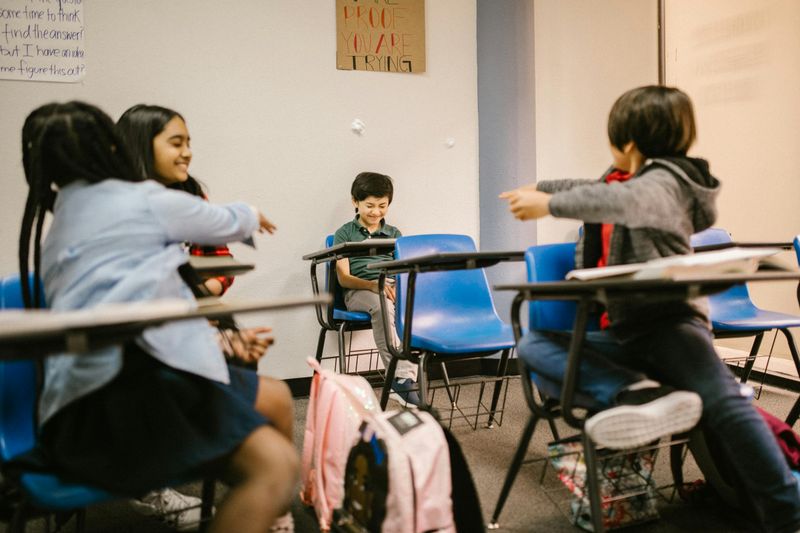
Most people miss the early warning signs of a bully or a toxic person.
Those who were teased as kids almost never do.
Because they experienced social aggression firsthand, they developed a finely tuned radar for the kind of behavior that hides behind jokes, backhanded compliments, or fake friendliness.
They know what it feels like before it escalates.
Psychology research on childhood social victimization shows that survivors often develop heightened threat detection in social environments.
This is not paranoia.
It is pattern recognition built from real experience.
In workplaces, friendships, and relationships, this ability to spot red flags early is an enormous advantage that most people only wish they had.
5. They Learn How to Stay Calm When Social Pressure Rises

Social pressure can make most people panic, shut down, or act out.
For those who were teased repeatedly as children, staying calm under that kind of pressure became a survival skill.
They had no choice but to learn how to regulate their emotions in uncomfortable social situations.
Over time, that regulation became second nature.
Psychologists describe this as emotional self-regulation, a skill closely tied to long-term mental health and success.
Adults who can stay steady when conversations get tense or situations turn awkward tend to be trusted more, lead better, and handle conflict more effectively.
What started as a coping mechanism in childhood quietly becomes one of their greatest social superpowers.
6. They Learn How to Deflect Tension with Humor

Humor, for many kids who were teased, started as a shield.
If you could make the bully laugh, sometimes the attack stopped.
If you could make the room laugh, you briefly belonged.
That survival strategy has a fascinating transformation in adulthood.
Many people who were teased develop a sharp, self-aware sense of humor that makes them magnetic in social situations.
They know how to read a tense room and drop exactly the right comment to ease the pressure.
They are rarely the ones who make things awkward, because they spent years learning how to do the opposite.
Comedians, mediators, and great leaders often share this exact skill, and it frequently traces back to early social pain.
7. They Get Very Good at Reading the Room

Ask anyone who was teased as a kid, and most will tell you they became experts at sensing the mood of a room before they even sat down.
That skill did not appear by accident.
Years of walking into classrooms wondering if today would be a bad day trained their brains to pick up on subtle social cues faster than most people ever develop.
Body language, tone shifts, eye contact patterns, group energy changes.
They notice all of it, almost automatically.
In professional settings, this translates into exceptional situational awareness.
Knowing when to speak, when to stay quiet, and when to exit a conversation gracefully is a rare and underrated social skill that these individuals carry with ease.
8. They Develop a Strong Instinct for Fairness

There is a reason so many advocates, teachers, and social workers grew up as the kids who were picked on.
When you know firsthand what it feels like to be treated unfairly, your tolerance for injustice drops sharply.
People who were teased tend to carry a deep, gut-level sense of fairness that shapes how they treat others throughout their lives.
They are often the first to notice when someone is being left out, talked over, or dismissed.
And they are frequently the ones willing to say something about it when others stay silent.
Psychology research consistently links childhood experiences of social exclusion with higher levels of moral sensitivity and prosocial behavior in adulthood.
The pain taught them something lasting.
9. They Become Highly Aware of How They Come Across to Others

Being on the receiving end of careless words has a way of making you extremely careful with your own.
People who were teased as children often grow into adults who are deeply conscious of how their tone, word choice, and body language land with others.
They think before they speak more often than most.
They notice when something they said landed wrong, and they care enough to fix it.
This heightened self-awareness is not the same as insecurity.
It is social mindfulness, and it makes them remarkably considerate communicators.
In friendships and workplaces alike, people with this trait tend to be trusted more, because others sense that they genuinely think about the impact of their words before speaking.
10. They Develop Empathy for Anyone Who Feels Left Out

You do not forget what it felt like to eat alone, to not be invited, or to laugh along with a joke that was made at your expense.
That memory, even decades later, makes people who were teased uniquely attuned to others who are going through the same thing.
They spot the quiet kid in the corner.
They notice who never gets included in plans.
And they often do something about it.
Psychologists describe this as experiential empathy, a form of compassion rooted not in imagination but in lived experience.
It tends to run deeper and feel more genuine than sympathy that has no personal roots.
Their old pain quietly becomes one of their most beautiful qualities.
11. They Are Surprisingly Good at Connecting with People One-on-One

Big social gatherings were often minefields for kids who were teased.
But one quiet conversation with the right person?
That was where they felt safe, seen, and real.
That early preference for meaningful individual connection often carries straight into adulthood.
People who were teased tend to be exceptionally good at deep, one-on-one conversations.
They ask real questions.
They actually listen.
They make people feel genuinely understood rather than just heard.
Research on attachment and social behavior suggests that people with histories of peer rejection often develop stronger dyadic bonding skills as a result.
They may not work the whole room at a party, but they will leave with one truly meaningful new connection, and that is worth far more.