 MomSkoop

Some people just can’t fake it, even when it would make life easier.
Emotionally honest people live with their hearts on their sleeves, refusing to play the social games everyone else seems to master.
Their authenticity can feel awkward or uncomfortable to watch, but it’s also refreshing in a world full of pretending.
Here are twelve slightly cringeworthy things they do that actually make them more real than the rest of us.
1. They Pause Before Answering

Most people fire back responses immediately, barely processing what was said.
But emotionally honest folks hit an invisible pause button first.
They actually absorb your words, turning them over in their minds before crafting a reply.
The silence stretches just long enough to feel slightly uncomfortable.
You might wonder if they heard you or if something’s wrong.
But nothing’s wrong—they’re just genuinely thinking about what you said instead of auto-piloting through conversation.
This habit can make small talk feel heavier than it needs to be.
Yet their delayed responses come with real consideration behind them.
When they finally speak, you know they actually mean what they’re saying.
2. They Admit “I Don’t Know” Without Cushioning It
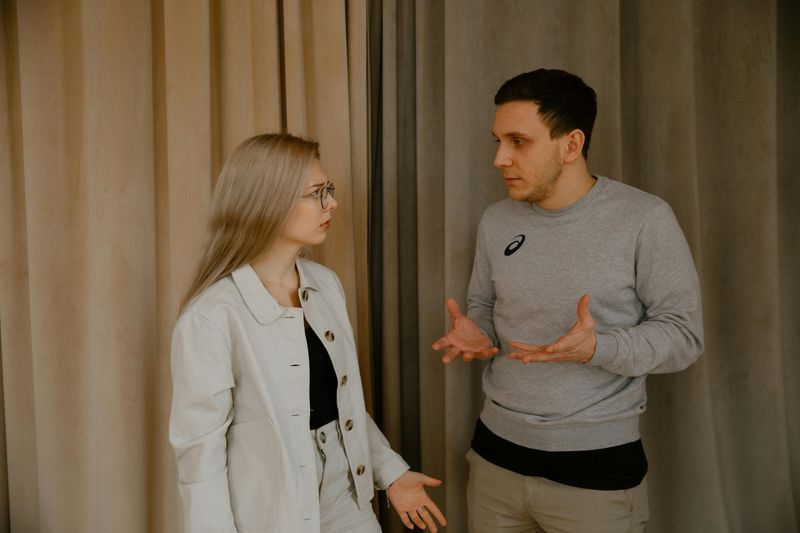
Watch them refuse to bluff their way through topics they’re unfamiliar with.
No elaborate explanations or vague redirections—just three simple words: “I don’t know.” They deliver it plainly, without softening the admission with excuses or qualifiers.
Most of us would rather dance around our ignorance than admit it outright.
We’ll say things like “I’m not entirely sure, but maybe…” to save face.
Emotionally honest people skip that performance entirely.
Their straightforwardness can feel jarring in conversations where everyone else is posturing.
But there’s something oddly brave about owning the gaps in your knowledge.
It makes their actual opinions worth listening to since you know they’re not just making things up.
3. They Overshare a Little When They’re Comfortable

Give them a safe space and suddenly you’re hearing about their childhood fears or recent therapy breakthroughs.
They don’t overshare for attention or sympathy.
They simply lose track of where the “appropriate sharing” line is drawn because shallow conversation exhausts them.
While others are discussing weekend plans, they’re explaining why they’ve been thinking about mortality lately.
The mismatch between their depth and the situation’s lightness creates that signature cringe factor.
You can see them realize mid-sentence they’ve gone too far, but they finish anyway.
Surface-level small talk feels like wearing shoes that don’t fit.
They can manage it briefly, but eventually they kick them off.
Their vulnerability might make you squirm, but it also makes real connection possible.
4. They Don’t Laugh at Jokes They Don’t Find Funny

Everyone else erupts in polite laughter, and they just… don’t.
Their face stays neutral, maybe offering a small smile at best.
They’re not trying to be rude—they genuinely can’t manufacture fake amusement.
This creates painfully obvious moments where their silence stands out.
The joke-teller notices.
Everyone notices.
But emotionally honest people can’t bring themselves to perform enjoyment they don’t feel, even to smooth over social awkwardness.
When they do laugh, though, you know it’s real.
Their amusement is earned, not given away freely to make others comfortable.
It’s uncomfortable to witness their restraint, but it also means their genuine reactions carry actual weight and authenticity.
5. Their Facial Expressions Give Them Away

Their face is basically a billboard advertising their inner thoughts.
Confusion, disagreement, excitement—it all shows up immediately, often before they’ve said a word.
Social masking simply isn’t in their toolkit.
You can watch their opinion form in real-time across their features.
They might be nodding politely, but their eyebrows are doing something entirely different.
This transparency makes them terrible at poker and even worse at pretending to enjoy boring meetings.
Most people learn to control their expressions to navigate social situations smoothly.
These folks either never learned or decided it wasn’t worth the energy.
Their readable faces can betray them constantly, but at least you always know where you stand.
6. They Struggle With Small Talk

“How about this weather?” might as well be a foreign language to them.
They’ll answer dutifully, but you can see the life draining from their eyes.
Generic chitchat feels like walking through mud—possible, but exhausting.
Ask them what changed them in the last year, though, and suddenly they’re animated.
Their eyes light up.
They lean forward.
Deep, meaningful questions flip a switch that surface-level conversation never touches.
This makes them awkward at parties and networking events where small talk is the currency.
They can’t fake interest in topics that don’t genuinely engage them.
Their discomfort is visible and slightly painful to watch, but it’s honest discomfort at least.
7. They Correct Themselves Mid-Sentence

Listen to them talk and you’ll hear constant mid-course corrections.
They’ll start a sentence, realize it’s not quite accurate, and adjust it immediately. “She was angry—actually, no, frustrated is more accurate.” Precision matters to them more than smooth delivery.
Most people would let the original statement stand rather than interrupt their own flow.
But emotionally honest individuals can’t let inaccuracies slide, even their own.
If something feels unfair or imprecise, they’ll fix it on the spot.
This habit makes their speech less polished and occasionally choppy.
It can sound like they don’t know what they’re trying to say.
But really, they’re just committed to saying exactly what they mean, even if it requires real-time editing.
8. They Ask Unexpectedly Deep Questions

“What are you afraid of?” drops into conversation about lunch plans.
They’re not interrogating you or trying to be intense—they genuinely want to understand who you are beneath the surface.
Shallow questions bore them, so they skip straight to the meaningful stuff.
Their curiosity about your inner world can feel invasive if you’re not ready for it.
You came prepared for weather talk, and suddenly you’re discussing your childhood.
The depth mismatch creates that characteristic awkwardness.
But there’s something beautiful about someone who actually wants to know you, not just chat at you.
Their questions might catch you off guard, but they’re asked with real interest.
They’re not collecting information—they’re seeking genuine connection and understanding.
9. They Don’t Immediately Agree to Keep the Peace

When everyone’s nodding along to maintain harmony, they’re the one voice saying “Actually, I see it differently.” Even when disagreement creates tension, they’d rather be honest than agreeable.
Keeping the peace by faking agreement feels like betraying themselves.
This makes group decisions more complicated and sometimes uncomfortable.
Others might shoot them looks, hoping they’ll just go along.
But they can’t make themselves endorse things they don’t actually support, even for social smoothness.
Their dissent isn’t about being difficult—it’s about being genuine.
They respect others enough to offer their real perspective rather than empty agreement.
It might make moments tense, but it also means their agreement, when given, actually means something substantial.
10. They’re Visibly Uncomfortable With Insincerity

Watch their face during forced enthusiasm or fake hype—they look physically pained.
Insincerity in any form makes them visibly squirm.
Gossip, performative excitement, insincere compliments—it all registers as discomfort written clearly across their features.
They can’t hide their reaction to phoniness, even when it would be smarter to play along.
While others are enthusiastically agreeing with someone’s obviously exaggerated story, they’re standing there looking like they swallowed something sour.
Their body language screams discomfort.
This inability to mask their feelings about inauthenticity can make them seem judgmental or superior.
They’re not—they’re just genuinely bothered by pretense.
Their discomfort is involuntary and transparent, another reminder that they can’t fake what they don’t feel.
11. They Apologize Directly and Specifically

“I was wrong about X” replaces the vague “sorry if you felt that way.” Their apologies name the specific mistake without deflection or qualification.
They don’t soften the admission with excuses or shift responsibility onto your interpretation.
Most apologies come wrapped in protective language that maintains plausible deniability.
But emotionally honest people strip away that cushioning.
They own their mistakes plainly and directly, which can feel almost too vulnerable to witness.
This directness makes their apologies more uncomfortable but infinitely more meaningful.
There’s no wiggle room, no ambiguity.
They said what they did wrong and they meant it.
It’s awkwardly sincere in a world of carefully crafted non-apologies.
12. They’d Rather Be Slightly Awkward Than Slightly Fake

Given the choice between smooth social performance and authentic awkwardness, they pick awkward every single time.
Being real matters more to them than being polished.
They’ve made peace with the discomfort their honesty creates because the alternative—pretending—feels worse.
This commitment to authenticity over ease sets them apart in obvious ways.
They’re the ones creating slightly uncomfortable moments by refusing to play along with social scripts everyone else follows automatically.
Their realness disrupts the usual flow.
It’s not that they enjoy being awkward—they just can’t stomach being fake.
Even a little bit of pretense feels like too much compromise.
So they accept the cringe, the weird pauses, the visible discomfort, because at least it’s honest.