 MomSkoop

You don’t need a wardrobe makeover or a new haircut to seem more attractive — sometimes, all it takes is how you carry yourself. Body language speaks louder than words, and people pick up on these silent signals without even realizing it.
Small changes in the way you stand, move, and interact can completely change how others see you. Master these 11 body language habits and watch how quickly your presence transforms.
1. Stand Tall with Good Posture

There’s something magnetic about a person who walks into a room standing tall.
Good posture isn’t just about looking confident — it actually makes you feel more confident too.
When your spine is straight and your shoulders are pulled back, your whole presence shifts.
Slouching, on the other hand, can make you appear tired, uninterested, or insecure.
People subconsciously associate upright posture with strength and self-assurance.
Try imagining a string gently pulling the top of your head toward the ceiling.
Practice this throughout your day — while sitting, walking, or standing in line.
Over time, it becomes second nature.
Good posture is one of the simplest and most powerful upgrades you can make to your overall appearance.
2. Make Natural Eye Contact

Eye contact is one of the most powerful tools in human connection.
Holding someone’s gaze for just a few seconds at a time signals that you’re present, interested, and self-assured.
It’s a quiet way of saying, “I see you, and I’m fully here.”
Staring too long can feel intense or uncomfortable, so aim for a natural rhythm — look, connect, glance away briefly, then return.
Think of it like a conversation your eyes are having alongside your words.
People who struggle with eye contact often come across as shy or distracted, even when they’re not.
A little practice goes a long way.
Start with low-pressure situations, like talking to a cashier or a friend, and build from there.
3. Smile Genuinely

A real smile is one of the most universally attractive things a person can do.
Scientists call it a Duchenne smile — the kind where your cheeks lift and the corners of your eyes crinkle.
That’s the smile people trust, and it’s almost impossible to fake convincingly.
Forced smiles tend to look stiff or awkward, and people can sense the difference without knowing why.
The key is finding something genuinely amusing or joyful in the moment before you smile.
Smiling also has a ripple effect — when you smile at someone, they almost always smile back.
It creates instant warmth and makes you far more approachable.
Fun fact: smiling can actually boost your own mood too, thanks to the brain chemicals it triggers.
4. Keep Your Body Language Open

Crossing your arms might feel comfortable, but to everyone around you, it can send a very different message.
Closed-off body language — turned shoulders, folded arms, angled body — signals defensiveness or disinterest, even when that’s not your intention.
Open body language means facing the person you’re talking to, keeping your arms relaxed at your sides, and not creating physical barriers between yourself and others.
It communicates that you’re approachable, friendly, and engaged.
Try this at your next social event: unclench your hands, drop your shoulders, and face people directly.
You’ll likely notice that conversations flow more naturally and people respond to you more warmly.
Openness is contagious — and incredibly attractive in social settings.
5. Use Relaxed, Purposeful Hand Gestures

Your hands say a lot about your inner state.
Fidgety, erratic hand movements can make you appear nervous or scattered, while controlled, fluid gestures add emphasis and energy to your words.
The sweet spot is somewhere in between — natural, relaxed, and intentional.
Think about how great storytellers use their hands to paint pictures in the air.
Their gestures match the rhythm of their speech without overwhelming it.
That kind of physical expressiveness draws people in and makes communication feel alive.
Avoid constantly touching your face, playing with your phone, or drumming your fingers — these habits broadcast anxiety.
Instead, let your hands rest comfortably when you’re not gesturing.
Small shifts in how you use your hands can dramatically change how polished and confident you appear.
6. Lean In Slightly During Conversations

Picture two people talking — one leaning back with arms crossed, the other tilted slightly forward with genuine interest.
Which one would you rather keep talking to?
A subtle forward lean during conversation signals that you care about what the other person is saying.
You don’t need to hover or crowd someone’s space.
Even a small tilt of your upper body toward the speaker communicates engagement and warmth.
It’s one of those tiny details people feel without consciously noticing.
Be mindful of personal space, though — every person has a different comfort zone.
A few inches of lean is all you need to convey attentiveness.
Pair it with eye contact and nodding, and you’ll come across as one of the most engaging people in any room.
7. Move with Calm Confidence

Ever notice how some people seem to own the space they walk through?
It’s not about speed or swagger — it’s about moving with purpose.
Calm, steady movement projects self-assurance in a way that rushed or hesitant steps simply can’t match.
When you rush around frantically, it can signal stress or lack of control.
When you shuffle slowly without direction, it reads as low energy or uncertainty.
The goal is a relaxed, even pace that says you know exactly where you’re going and you’re comfortable getting there.
Try slowing down your walk by just 10 percent.
Relax your jaw, let your arms swing naturally, and keep your gaze forward.
You’ll be surprised how differently people respond when your movement radiates quiet confidence.
8. Nod While Listening
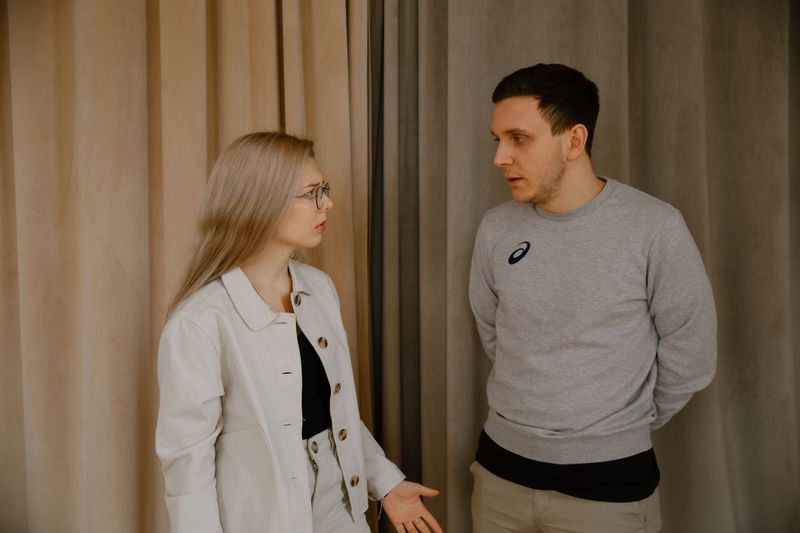
Nodding might seem like a small thing, but it sends a powerful message: “I hear you, and what you’re saying matters.” In a world full of distractions, being a great listener is genuinely rare — and incredibly attractive.
Occasional, natural nods encourage the speaker to continue and signal that you’re following along.
They create a rhythm in conversation that feels comfortable and affirming.
Just be careful not to nod robotically or non-stop, which can come across as impatient or insincere.
Pair your nods with small verbal affirmations like “yeah” or “mmm” to make the interaction feel even more connected.
People tend to walk away from conversations feeling great about someone who made them feel truly heard.
That’s a quality worth developing.
9. Ditch Nervous Habits

We all have them — tapping feet, twirling hair, biting nails, or constantly glancing at our phones.
These nervous habits feel harmless in the moment, but they broadcast anxiety and restlessness to everyone around you.
When you fidget during a conversation, the other person often starts to feel uneasy too, even if they can’t pinpoint why.
It disrupts the natural flow of interaction and makes it harder for people to feel relaxed in your presence.
Stillness, on the other hand, communicates control and ease.
Start by identifying your go-to nervous habits — awareness is the first step.
Then practice consciously keeping your hands still and your body calm during social situations.
The more you practice stillness, the more naturally composed and attractive you’ll appear to others.
10. Mirror the Other Person Subtly

Mirroring is one of the most fascinating psychological tools in human connection.
When you subtly match someone’s posture, gestures, or even speaking pace, it creates an unconscious sense of familiarity and trust.
People feel more comfortable around those who seem similar to them.
The key word here is “subtly.” Blatant copying feels creepy and awkward.
Instead, let it happen organically — if they lean back, you might ease back too after a moment.
If they speak slowly, soften your own pace to match.
Research in social psychology shows that people who mirror others are often rated as more likable and attractive.
It’s not manipulation — it’s empathy in motion.
When done naturally, mirroring makes the other person feel deeply understood without either of you saying a word about it.
11. Hold Your Head Level with Chin Up

Looking down at the floor while you walk or talk can unintentionally make you seem withdrawn, insecure, or uninterested.
Keeping your head level — with your chin just slightly raised — completely transforms how you present yourself to the world.
When your head is upright, your face is visible and accessible.
People can read your expressions, make eye contact, and feel invited into conversation with you.
It’s a simple adjustment that immediately makes you look more confident and approachable.
Think of it this way: when your chin is tucked down, you’re hiding.
When it’s slightly lifted, you’re saying, “I’m here, and I’m comfortable in my own skin.” That quiet self-assurance is one of the most attractive qualities a person can carry — no special outfit required.