 MomSkoop

Every relationship goes through a natural shift after the honeymoon phase fades and daily life takes over. Routines can feel comfortable and safe, but they also quietly change the way partners connect with each other.
Some of these changes sneak up on you without any warning. Knowing what to expect can help you and your partner stay close even as life gets more predictable.
1. Conversations Become More Practical

Remember when you and your partner could talk for hours about dreams, funny stories, and random thoughts?
Over time, many couples notice their daily conversations shifting toward logistics. “Who is picking up groceries?” and “Did you pay the electric bill?” start replacing deeper chats.
This is completely normal.
Life gets busy, and practical talk keeps things running smoothly.
The key is to not let it take over completely.
Try setting aside even ten minutes each day to talk about something that has nothing to do with chores or schedules.
Sharing a funny memory or asking about each other’s day in a meaningful way can keep your emotional connection strong and remind you both why you fell for each other.
2. Date Nights Happen Less Often

Early in a relationship, date nights feel exciting and almost automatic.
As time goes on, busy schedules, tiredness, and comfort at home can push those special outings further apart.
Before you know it, weeks or even months have passed since your last real date.
Skipping date nights does not mean the love is gone.
It usually just means life got louder.
But regular one-on-one time matters more than most people realize.
It helps couples reconnect outside of their everyday environment.
You do not need a fancy restaurant to make it count.
A walk in the park, cooking a new recipe together, or even playing a board game can bring back that feeling of choosing each other on purpose, every single week.
3. Affection Becomes More Predictable

Affection in a new relationship feels electric and spontaneous.
A surprise hug from behind, a random kiss on the cheek, a sweet text for no reason at all.
When a relationship settles into a routine, these moments tend to follow a more familiar schedule without either partner really planning it that way.
A goodnight kiss, a morning hug, a quick peck before leaving for work.
These are still loving gestures, and they matter.
But when affection becomes too predictable, it can start to feel more like a habit than a heartfelt choice.
Mixing things up, even in small ways, can reignite that spark.
Try reaching out with affection at an unexpected moment.
A random “I love you” text in the middle of the afternoon can go a long way.
4. Partners Spend More Time Doing Separate Activities

There is something healthy about two people in a relationship keeping their own hobbies and interests.
But when routine sets in, separate activities can quietly become the default instead of a balance.
One partner zones out with a show while the other scrolls through their phone, and the evening slips by without real connection.
Having personal space in a relationship is important.
The trouble comes when solo time consistently replaces shared time.
Couples who thrive long-term tend to find a rhythm that includes both independence and togetherness.
Try scheduling at least one shared activity each week that you both genuinely enjoy.
Whether it is hiking, cooking, or even watching a series together, doing things side by side builds closeness and gives you shared memories to look back on.
5. Daily Check-ins Become Shorter

“How was your day?” used to be a question that sparked a real conversation.
Now it gets a quick “fine” or a thumbs-up emoji.
Sound familiar?
As relationships grow more comfortable, the daily check-in often shrinks from a meaningful exchange into a brief formality.
This does not mean partners care less.
Familiarity can make it feel like there is nothing new to share.
But tuning out of these small moments adds up over time and can create emotional distance without anyone noticing right away.
One way to fix this is to ask more specific questions.
Instead of “How was your day?”, try “What was the best part of your afternoon?” or “Did anything surprise you today?” Specific questions invite real answers and keep conversations from going on autopilot.
6. Household Responsibilities Take Up More Attention

Laundry, dishes, groceries, bills, and repairs.
Once a couple shares a living space, the list of responsibilities grows fast.
Managing a home together takes real effort, and it is easy for those tasks to crowd out the more enjoyable parts of being a couple.
Many partners find themselves talking more about what needs to get done than about how they are actually feeling.
When chores dominate the relationship’s energy, both people can start to feel more like roommates than romantic partners.
Creating a clear system for dividing tasks can reduce stress and free up more mental space for connection.
When neither partner feels stuck carrying the whole load, resentment stays low and there is more room for laughter, relaxation, and genuine quality time together.
7. Spontaneous Plans Become Less Common

Early on, “let’s just go” was practically a relationship motto.
A random road trip, a last-minute concert, or an unplanned picnic felt natural and exciting.
Once a routine takes hold, spontaneity often gives way to scheduled plans and predictable weekends.
Routine brings comfort, but too much of it can make life feel a little flat.
Couples who lose their sense of adventure together can start to feel like they are just going through the motions, even if everything looks fine on the surface.
You do not need to overhaul your whole life to bring back some fun.
Even small surprises, like planning a mystery outing without telling your partner where you are going, can shake up the routine in the best possible way and remind you both that life together can still be an adventure.
8. Small Habits Become More Noticeable
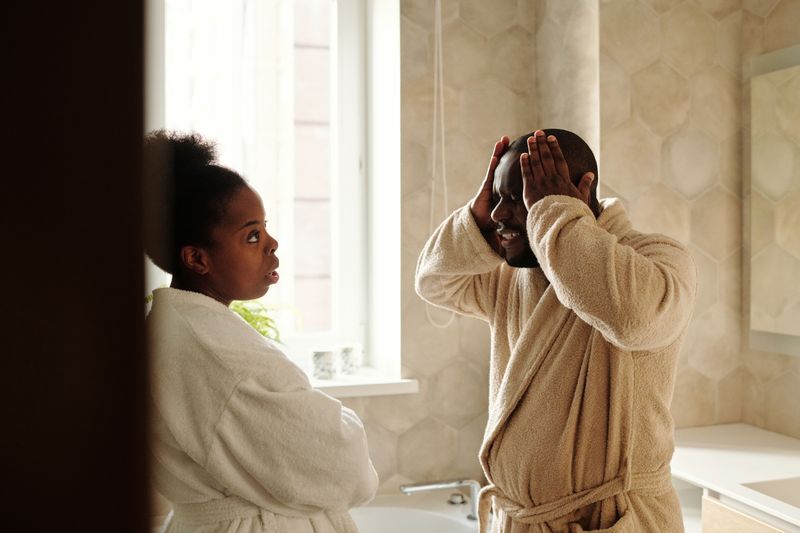
When you first start spending time with someone, little quirks seem cute or easy to overlook.
But once you share a space and a schedule, those small habits can become much harder to ignore.
Leaving cabinet doors open, forgetting to replace the toilet paper roll, or chewing too loudly can suddenly feel like a big deal.
This shift is less about the habits themselves and more about the fact that familiarity removes the filter that once softened everything.
You see your partner more clearly now, which includes the less glamorous parts.
The trick is to pick your battles wisely.
Not every habit needs a conversation.
Practicing patience and humor goes a long way.
Laughing together about quirks, rather than letting them build into frustration, can actually bring couples closer instead of pulling them apart.
9. Quality Time Requires More Intentional Planning

Quality time used to happen naturally.
Now it needs to go on the calendar or it simply does not happen.
Many couples in long-term relationships discover that meaningful togetherness does not just appear on its own anymore.
Life fills up, and connection gets pushed to the bottom of the to-do list.
Intentional planning is not a sign that the relationship is struggling.
It is actually a sign of maturity and commitment.
Choosing to prioritize each other even when life is busy shows a level of dedication that spontaneous early-relationship moments do not always reflect.
Think of scheduled quality time the same way you think of a workout or a doctor’s appointment.
It is something you plan because it matters.
Protecting that time, and actually showing up for it, keeps the relationship strong through all of life’s busy seasons.
10. Compliments and Verbal Appreciation Happen Less Frequently

“You look amazing.” “That meal was incredible.” “I really appreciate everything you do.” Early in a relationship, these words flow easily.
But comfort and familiarity can quietly reduce how often partners express appreciation out loud.
The feelings are still there, but the words get left unsaid.
When verbal appreciation fades, partners can start to feel undervalued or taken for granted, even if that is not the intention at all.
Over time, that quiet feeling can chip away at overall relationship satisfaction in ways that are hard to pinpoint.
Making a habit of saying thank you and offering genuine compliments costs nothing but can change the entire tone of a relationship.
Try telling your partner one specific thing you appreciate about them each day.
Small, consistent words of affirmation add up to a big emotional impact over time.
11. Physical Intimacy Follows a More Familiar Pattern

Physical closeness in a new relationship tends to feel charged with excitement and newness.
As the relationship matures, intimacy often settles into a more comfortable and familiar rhythm.
This is not necessarily a bad thing.
Feeling safe and relaxed with your partner is a real sign of trust and security.
The challenge is making sure that comfort does not slide into indifference.
When physical intimacy becomes purely routine, it can start to feel disconnected from genuine emotion, which can leave both partners feeling a little hollow over time.
Keeping things fresh does not require dramatic changes.
Something as simple as trying a new activity together, having an honest conversation about what you both enjoy, or making more intentional eye contact can breathe new life into your physical connection and deepen your emotional bond at the same time.
12. Partners May Start Taking Certain Gestures for Granted

When someone always makes the coffee, always remembers to lock the door, or always plans the weekend, those efforts can start to blend into the background.
Routine has a way of making even the most thoughtful gestures feel invisible.
The person doing them may eventually wonder if any of it is even noticed.
Taking things for granted is rarely intentional.
It is a natural side effect of comfort and repetition.
But left unchecked, it can quietly breed resentment and emotional disconnection between two people who genuinely love each other.
Breaking this pattern starts with awareness.
Pause and notice what your partner does for you every day, including the small stuff.
Saying “thank you for always doing that” can feel simple, but it sends a powerful message: I see you, I notice you, and I do not take you for granted.