 MomSkoop
Some movie performances are so good that they still feel just as powerful decades later. Even if the films themselves look and sound different from what we’re used to today, the emotions behind them are easy to recognize. A great actor can make you laugh, break your heart, or leave you thinking about a character long after the credits roll. That’s something audiences have always connected with, no matter when a movie was made.
Hollywood’s Golden Age gave us plenty of unforgettable performances, and some have aged remarkably well. From heartbreaking dramatic roles to charming comedic turns, these actors brought something special to the screen that still holds up today. Their performances remind us that great acting doesn’t depend on modern effects or big budgets.
1. Judy Garland, The Wizard of Oz
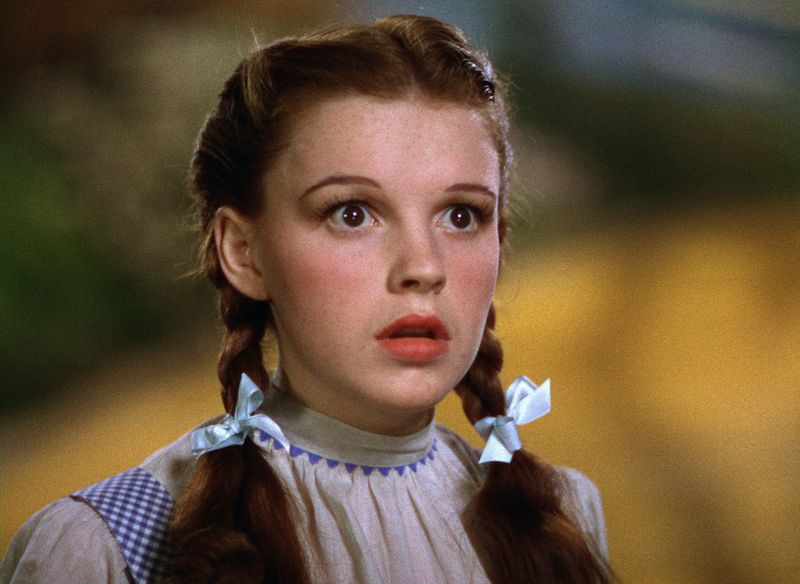
Sixteen is a tough age for anyone, and Judy Garland spent part of hers skipping down a yellow brick road for MGM.
Her Dorothy Gale, from the 1939 film based on L.
Frank Baum’s 1900 book, became the role people still connect with her name.
The big moment arrives early.
Standing in a sepia Kansas barnyard, Dorothy sings “Over the Rainbow,” and Garland delivers it like a real kid daydreaming instead of a polished star showing off.
That song won the Academy Award for Best Original Song.
Garland also received a special Academy Juvenile Award for her 1939 film work, a miniature statuette honoring young performers.
So why does it still land today?
Dorothy is homesick, curious, brave, and a little scared, which is a pretty accurate description of growing up in any decade.
The song has also carried special meaning for the LGBTQ+ community for generations.
Many fans see themselves in Dorothy’s journey to a colorful world where unusual friends become family.
If you rewatch it, pay attention to Garland’s reactions to her costars.
She listens to the Scarecrow, Tin Man, and Lion like they truly matter, and that sincerity keeps the fantasy grounded.
2. Humphrey Bogart, Casablanca
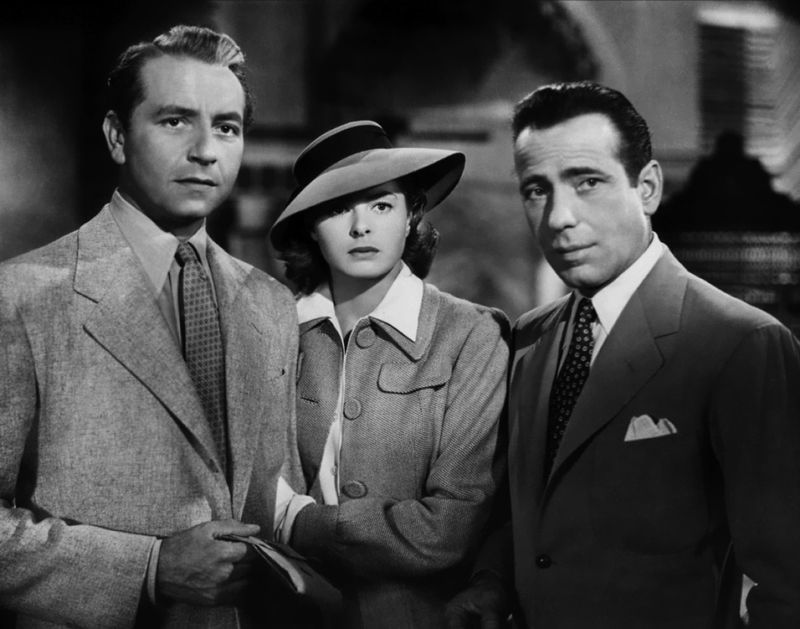
“I stick my neck out for nobody,” says Rick Blaine, and of course the whole movie proves him wrong.
Humphrey Bogart plays the owner of Rick’s Café Américain as a man who has decided caring is too expensive.
Released in 1942, Casablanca went on to win the Academy Award for Best Picture.
Bogart earned a Best Actor nomination, and the role became the one most people picture when they hear his name.
His toughness is only half the appeal.
Bogart lets small cracks of sadness show through, especially when an old flame walks into his café and his cool act starts wobbling.
Watch his face during the scene where the café crowd sings “La Marseillaise” to drown out a group of Nazi officers.
Rick barely moves, yet you can tell something inside him is changing.
Modern audiences still respond to that slow shift from shrugging bystander to someone willing to take a stand.
It feels relevant whenever the news makes staying neutral seem tempting.
Fun detail: Michael Curtiz directed it, and a trio of writers, Julius J.
Epstein, Philip G.
Epstein, and Howard Koch, shaped the script.
Their lines still get quoted constantly, decades later.
3. Ingrid Bergman, Casablanca
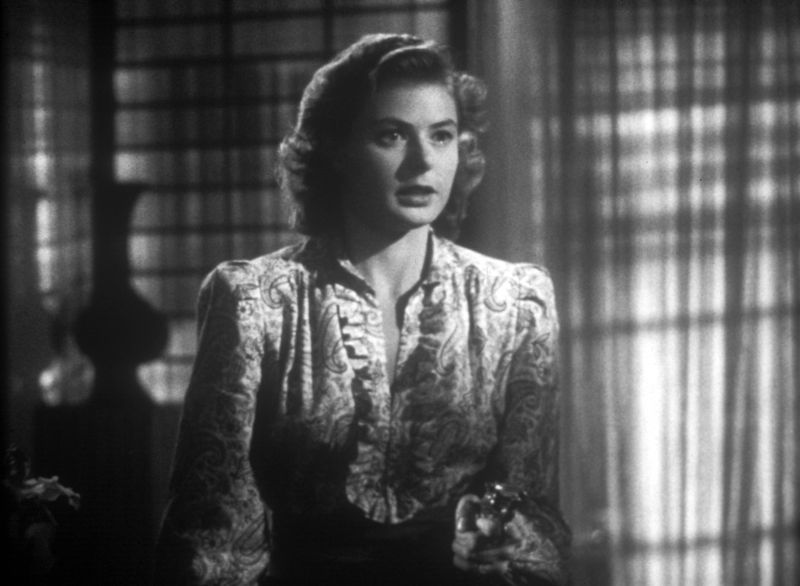
Ilsa Lund walks into a café, hears a familiar song, and suddenly an entire war feels personal.
Ingrid Bergman plays her with a glow and a sadness that make that moment one of the most famous entrances in film.
Here is a wild detail.
The Casablanca script was still being rewritten during production, so Bergman worked without knowing exactly where Ilsa’s heart would land.
That uncertainty shows up on screen in a fascinating way.
Ilsa seems torn between Rick, the man she loved in Paris, and her husband Victor Laszlo, a resistance leader she deeply respects.
In my view, that mix of longing and loyalty is why viewers keep debating her choices.
She isn’t a prize for the hero to win, and Bergman makes sure you feel her own stake in the outcome.
Close-ups do a lot of heavy lifting here.
Her eyes often say more than the dialogue, especially in the foggy final scenes at the airport.
If you’re new to the film, notice how rarely she raises her voice.
Bergman holds back, and that restraint makes the emotional moments feel bigger, which is a neat trick for any storyteller to borrow.
4. James Stewart, It’s a Wonderful Life
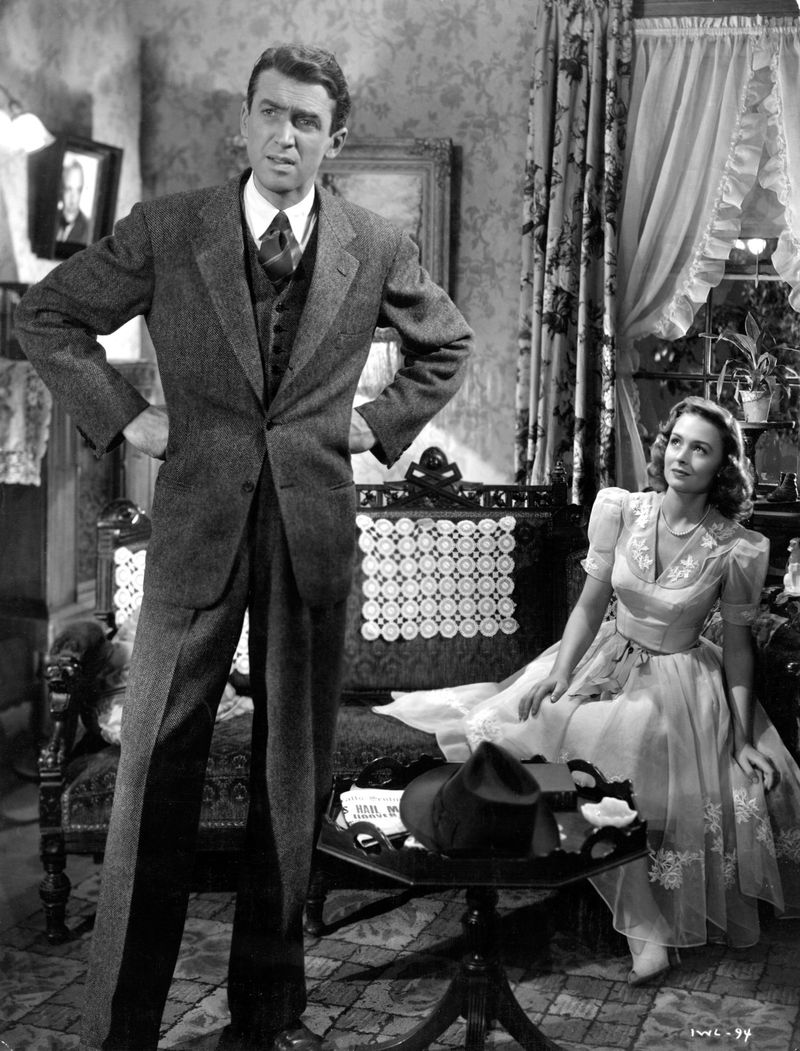
Box office flops rarely become holiday traditions, but George Bailey pulled it off.
It’s a Wonderful Life opened in 1946 to mixed reviews and disappointing ticket sales, then slowly turned into a December staple.
James Stewart carries the whole thing.
George keeps giving up his travel dreams to help the people of Bedford Falls, and Stewart makes each sacrifice sting a little more.
The performance covers a huge emotional range.
You get goofy romance on a moonlit walk, quiet pride at the family business, and later, raw panic when money goes missing.
One standout is the scene at Martini’s bar, where George prays with shaking hands and a cracking voice.
It feels startlingly honest for a movie made in the studio era.
Stewart earned an Academy Award nomination for Best Actor, and the American Film Institute has ranked the film among its most inspiring American movies.
Frank Capra directed, with Donna Reed playing Mary and Lionel Barrymore as the stingy Mr. Potter.
The takeaway still works today.
Small kindnesses add up, even when you can’t see the results, and that idea hits differently every year you rewatch it.
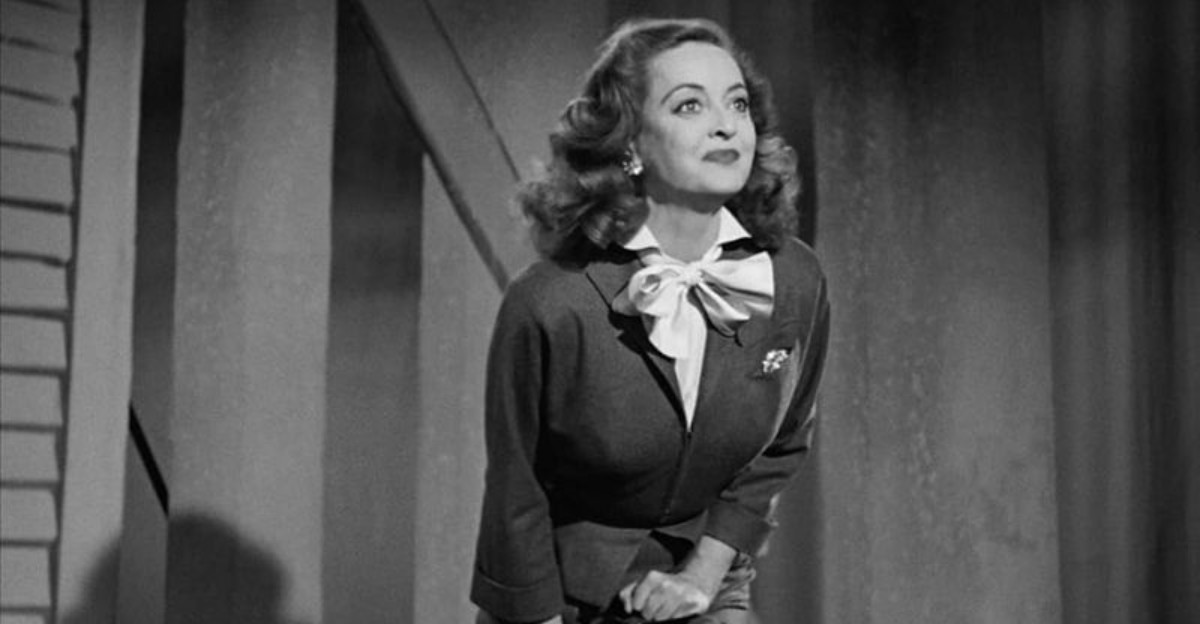
5. Bette Davis, All About Eve
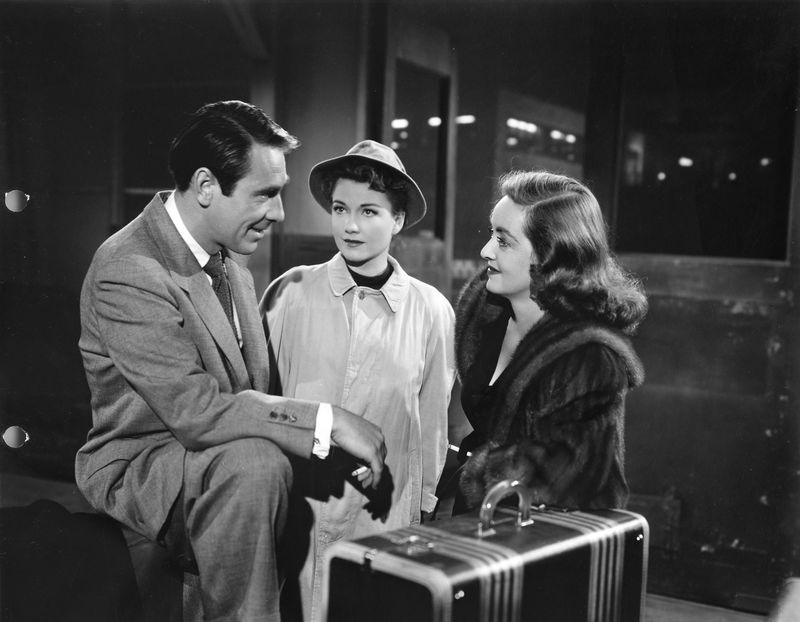
“Fasten your seatbelts, it’s going to be a bumpy night.” Bette Davis tosses off that line as Margo Channing, and it has followed party hosts and group chats ever since.
Margo is a Broadway star who suddenly feels the spotlight sliding toward a younger admirer named Eve Harrington, played by Anne Baxter.
Davis plays her as sharp-tongued, funny, insecure, and fiercely smart, sometimes within a single scene.
The 1950 film was a giant awards event.
All About Eve set a record with 14 Academy Award nominations and won six, including Best Picture, while Davis received a Best Actress nomination.
Writer and director Joseph L.
Mankiewicz packed the script with zingers.
Davis delivers them with perfect timing, often letting a pause or a glance land the joke before the words do.
Many viewers today connect with Margo’s worries about aging in an industry that rewards youth.
That conversation is still happening in Hollywood, which keeps the film feeling surprisingly current.
Bonus for trivia lovers: a young Marilyn Monroe pops up in a small role.
Keep an eye out during the party scene, because spotting her is half the fun.
6. Marlon Brando, A Streetcar Named Desire
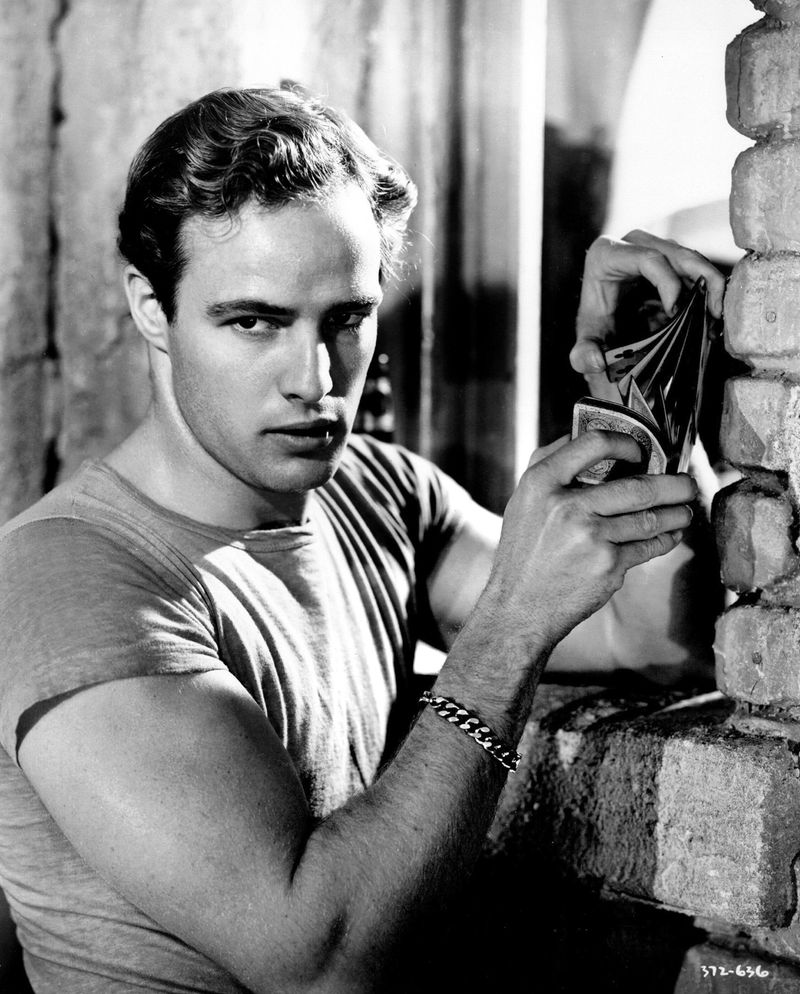
A torn white T-shirt became a piece of film history thanks to Marlon Brando.
His Stanley Kowalski in the 1951 film A Streetcar Named Desire changed how a lot of people thought movie acting could look and sound.
Before Brando, screen acting often leaned polished and theatrical.
He mumbled, slouched, exploded, and went quiet again, making Stanley feel unpredictable in a way audiences hadn’t seen much.
Brando had already played the role on Broadway under director Elia Kazan, who also directed the film.
Tennessee Williams adapted his own play for the screen, with Vivien Leigh as Blanche DuBois and Kim Hunter as Stella.
Stanley is not a nice guy, and the movie doesn’t pretend he is.
What keeps viewers watching is the raw energy Brando brings, the sense that anything could happen next.
He received an Academy Award nomination for Best Actor.
Leigh, Hunter, and Karl Malden all won acting Oscars, so the ensemble was clearly firing on every cylinder.
If you’re curious about acting, watch Brando’s small physical choices.
He fidgets, eats, and leans on furniture like he actually lives there, and that everyday realism is still copied today.
7. Cary Grant, North by Northwest
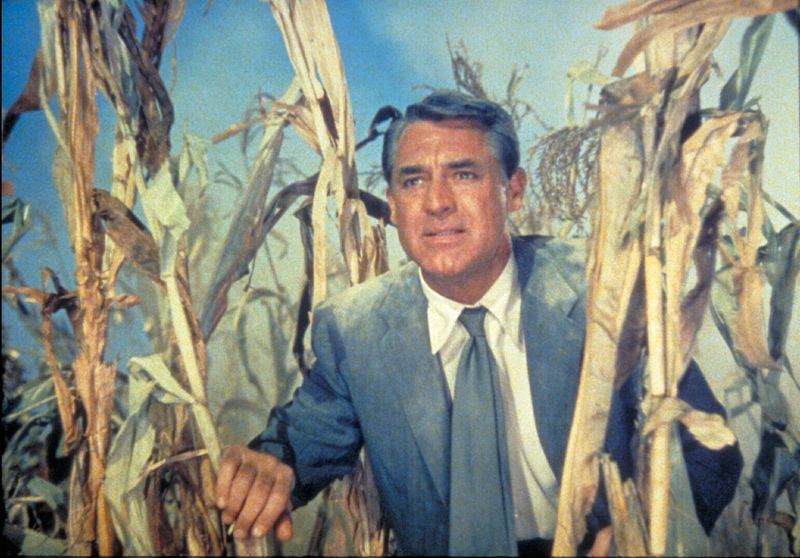
Few people can sprint from a crop-dusting plane while wearing a perfectly tailored gray suit.
Cary Grant does it in North by Northwest, and somehow the suit still looks great.
Released in 1959 and directed by Alfred Hitchcock, the film follows Roger O.
Thornhill, a New York advertising man mistaken for a spy.
Before he knows it, he’s on the run across the country with nobody believing his story.
Grant’s trick is balance.
He plays Roger as smooth and witty, yet obviously rattled, so you laugh at his quips while also worrying about him.
That mix makes the wild set pieces feel believable.
The crop-duster chase and the climb across Mount Rushmore are pure spectacle, but Grant’s reactions keep them human.
Ernest Lehman wrote the clever script, with Eva Marie Saint as the mysterious Eve Kendall and James Mason as the calm villain.
The banter between Grant and Saint on a train is still a highlight for first-time viewers.
Modern action heroes owe plenty to this performance.
Next time a movie star cracks a joke mid-chase, you’ll know where that playbook got a big early boost.
8. Sidney Poitier, Lilies of the Field
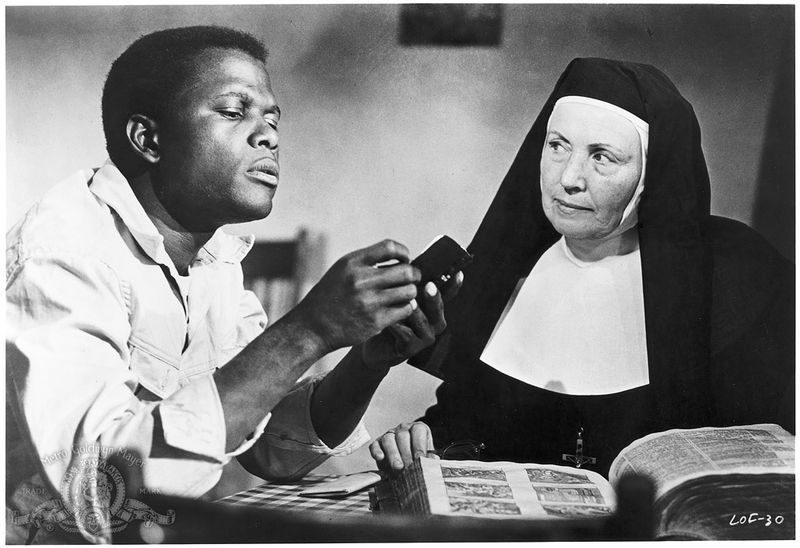
History got made in a story about building a little desert chapel.
Sidney Poitier won the Academy Award for Best Actor for Lilies of the Field, becoming the first Black actor to win that leading role Oscar.
In the 1963 film, he plays Homer Smith, a traveling handyman who stops at a farm in the Arizona desert.
A group of nuns from Eastern Europe decide he has been sent to build them a chapel, and Homer isn’t so sure.
Poitier gives Homer charm, pride, and a playful stubborn streak.
Watching him haggle and tease the strict Mother Maria, played by Lilia Skala, is a real treat.
Many of the sisters speak little English, so Homer teaches them through song.
His call-and-response version of “Amen” is a joyful scene that people still share and sing along with.
Ralph Nelson directed and produced the film from a screenplay by James Poe.
It’s gentle and funny, without a big villain or flashy twist.
The appeal today is simple.
Two very different groups find common ground through hard work and respect, and Poitier makes that feel earned rather than preachy.
9. Frank Sinatra, From Here to Eternity
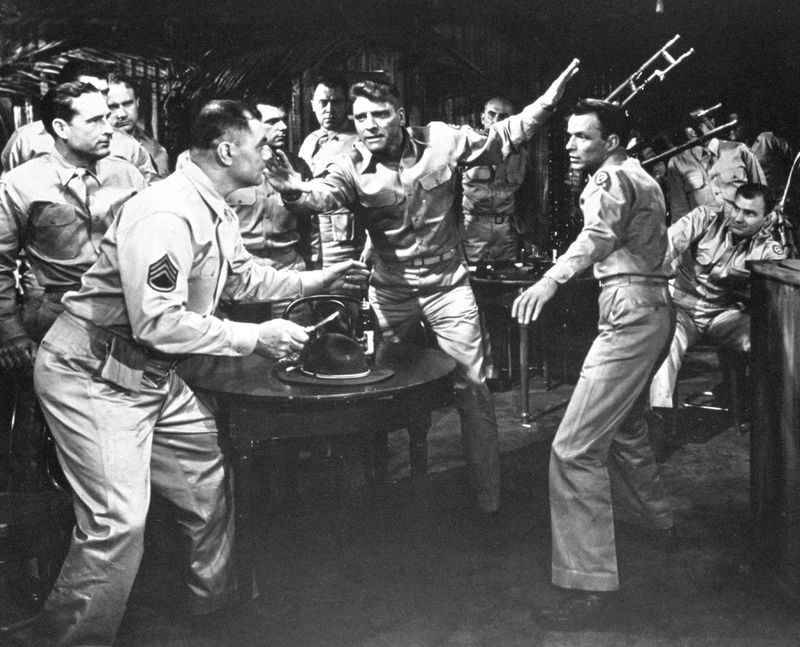
Comebacks make great stories, and Frank Sinatra lived one through a single supporting role.
In 1953, his career had cooled off, and playing Private Angelo Maggio in From Here to Eternity helped turn it around.
Sinatra was mainly known as a singer and musical star.
As Maggio, a scrappy, loyal soldier stationed in Hawaii before the attack on Pearl Harbor, he showed audiences a grittier side.
Maggio is loud, funny, and quick to pick a fight with anyone who pushes him around.
Sinatra makes him lovable even when he’s being a hothead, which makes his rough treatment later in the story hit hard.
The gamble paid off.
Sinatra won the Academy Award for Best Supporting Actor, and the film took home eight Oscars total, including Best Picture.
Fred Zinnemann directed a strong cast that included Burt Lancaster, Montgomery Clift, Deborah Kerr, and Donna Reed.
The Library of Congress added the film to the National Film Registry in 2002.
For modern viewers, Sinatra’s turn is a nice reminder that people can surprise you.
Getting labeled as one thing doesn’t mean you can’t show the world something new.
10. Audrey Hepburn, Breakfast at Tiffany’s
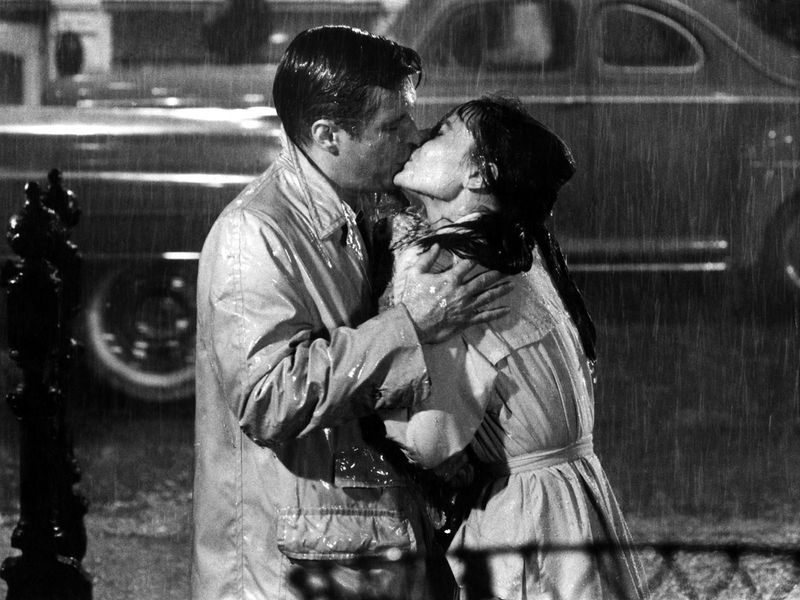
A little black dress, big sunglasses, and a pastry outside a Fifth Avenue window.
That opening image from the 1961 film is still copied in fashion shoots and Halloween costumes.
Audrey Hepburn plays Holly Golightly, a party-loving New Yorker who seems carefree but keeps a lot hidden.
Hepburn shows both sides, so Holly’s sparkle feels like armor rather than pure fun.
Her quietest scene might be the most memorable.
Sitting on a fire escape with a guitar, she sings “Moon River” softly, almost to herself.
Henry Mancini composed the music, and Johnny Mercer wrote the lyrics. “Moon River” won the Oscar for Best Original Song, and Mancini also won for the score, while Hepburn earned a Best Actress nomination.
Blake Edwards directed, working from George Axelrod’s adaptation of Truman Capote’s novella.
George Peppard costars as the writer who moves into Holly’s building.
One fair note for modern viewers: Mickey Rooney’s role as a Japanese neighbor is widely criticized as an offensive caricature.
Many people still enjoy Hepburn’s performance while recognizing that part of the film has aged badly, which feels like an honest way to watch.
11. Grace Kelly, Rear Window
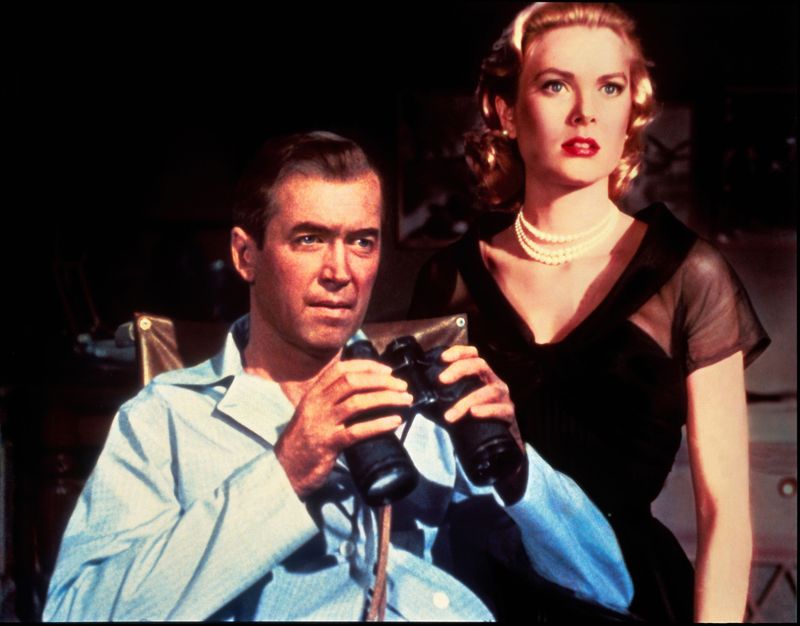
Grace Kelly’s first close-up in Rear Window is so dreamy it almost feels like a magic trick.
She leans toward James Stewart’s sleeping character, and Hitchcock films it in a slow, glowing shot.
In the 1954 film, Kelly plays Lisa Carol Fremont, a stylish New York fashion professional.
Her boyfriend, photographer L.B.
Jeffries, is stuck in a wheelchair with a broken leg and starts spying on his neighbors.
Lisa could have been just a pretty girlfriend.
Instead, she becomes an active part of the mystery, and at one point she climbs into a suspect’s apartment herself.
Costume designer Edith Head dressed her in outfits that still inspire fashion fans.
The full-skirted black and white gown in her entrance scene gets referenced constantly.
Kelly also nails the comedy.
Her playful arguments with Stewart about their future feel like a modern couple debating whether their lifestyles fit together.
John Michael Hayes wrote the screenplay from a Cornell Woolrich story.
If you enjoy true crime podcasts or nosy neighbor apps, this movie will feel oddly familiar, just with much better clothes.
12. Paul Newman, Cat on a Hot Tin Roof
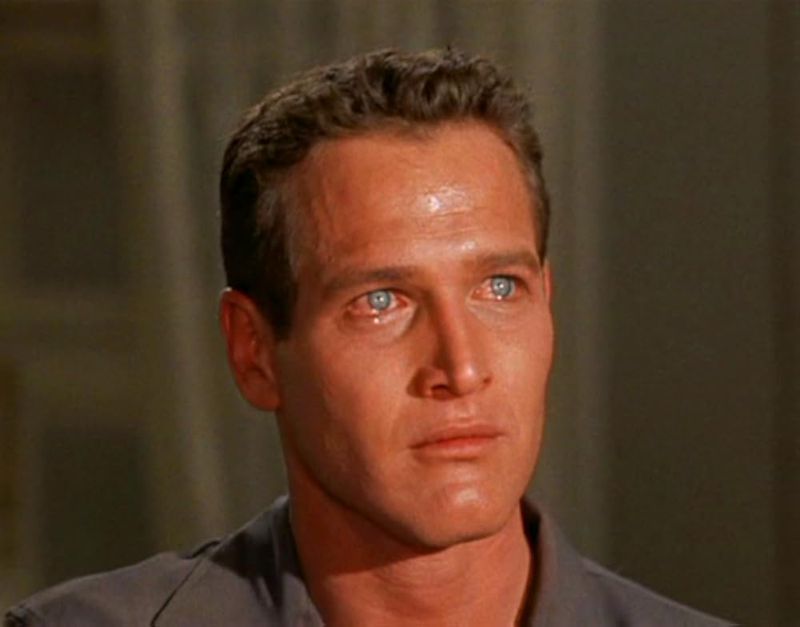
Crutches and silk pajamas aren’t the usual outfit for a movie heartthrob.
Paul Newman wears both as Brick Pollitt in the 1958 film Cat on a Hot Tin Roof and still holds the screen.
Brick is a former athlete who has checked out of his life and his marriage.
He’s grieving his best friend, avoiding his wife Maggie, and trying to tune out his loud, wealthy family in Mississippi.
Newman plays most of the movie in a low, quiet register.
That stillness is the point, because Brick’s silence says more than a speech could.
Things crack open in his confrontations with his father, Big Daddy, played by Burl Ives.
Their scenes about honesty and family pressure are the beating heart of the film.
Richard Brooks directed and cowrote the script with James Poe, adapting Tennessee Williams’s Pulitzer Prize-winning play.
The film toned down some of the play’s themes because of censorship rules of the time.
Newman earned his first Academy Award nomination for Best Actor here.
Anyone who has felt stuck while everyone around them demands answers will probably find Brick weirdly relatable.
13. Elizabeth Taylor, Cat on a Hot Tin Roof
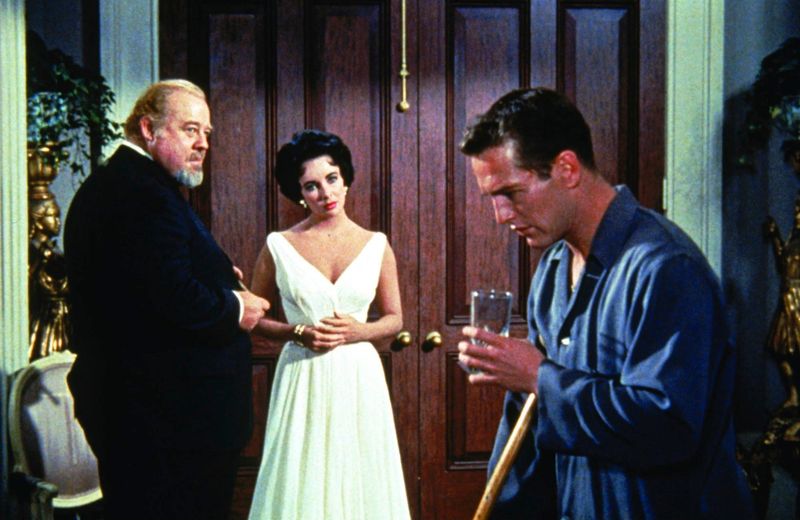
Maggie the Cat talks fast, fights hard, and refuses to let her marriage slip away quietly.
Elizabeth Taylor plays her with so much fire that the screen practically heats up.
In the 1958 film, Maggie is married to Brick, played by Paul Newman, who barely looks at her.
Meanwhile, his relatives are scheming over the family fortune, and Maggie is determined not to lose out.
Taylor finds humor, anger, intelligence, and loneliness in the role.
One moment she’s cracking a joke, and the next her voice breaks with frustration.
Her life offscreen was difficult during production.
Her husband, producer Mike Todd, was lost in a plane crash in March 1958, and Taylor returned to finish the film weeks later.
She earned an Academy Award nomination for Best Actress, and many viewers count this among her strongest work.
Burl Ives and Judith Anderson round out the cast as Brick’s parents.
The character still lands because she refuses to be ignored.
Maggie wants honesty, partnership, and respect, which are pretty reasonable requests in any decade, even if she asks for them at full volume.
14. Henry Fonda, 12 Angry Men
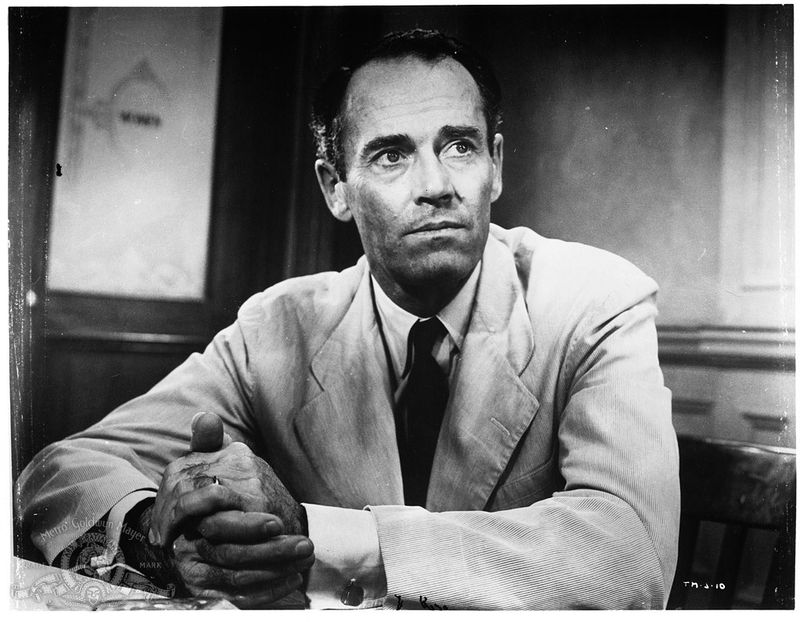
Eleven votes say guilty, and one man raises his hand to say he isn’t sure.
That quiet moment kicks off 12 Angry Men, and Henry Fonda makes it feel like the bravest thing in the world.
Fonda plays Juror 8 in the 1957 film directed by Sidney Lumet, his first feature.
A teenager’s future depends on the jury, and Juror 8 simply wants the group to talk it through before deciding.
Fonda never shouts to win.
He asks questions, pokes at weak evidence, and stays calm while hot-tempered jurors, especially Lee J.
Cobb’s Juror 3, push back.
Nearly the whole movie happens in one sweaty room.
That limited setting puts the spotlight on faces and voices, and Fonda’s steady presence anchors the ensemble.
He also coproduced the film, which Reginald Rose adapted from his own 1954 TV play.
It earned an Oscar nomination for Best Picture and joined the National Film Registry in 2007.
Teachers still show it in classrooms, and it’s easy to see why.
Speaking up thoughtfully, even when you’re outnumbered, is a lesson that never stops being useful at school, work, or the dinner table.