 MomSkoop
A 1950 Japanese film about one forest crime gave the world a phrase still used in courtrooms and classrooms: the Rashomon effect. It describes how different witnesses can tell the same event in completely different ways. Some films do that by bending time, while others shrink down to a single dinner party or a quiet conversation with a computer voice.
The stories in this list come from different decades, countries, and budgets, but they share one sneaky habit. They give you puzzles, then trust you to work on them long after the screen goes dark. That makes them great picks for movie nights with friends who enjoy a good debate afterward. Fair warning, though, because a few of them might have you pausing, rewinding, and arguing about the ending over breakfast.
1. The Matrix
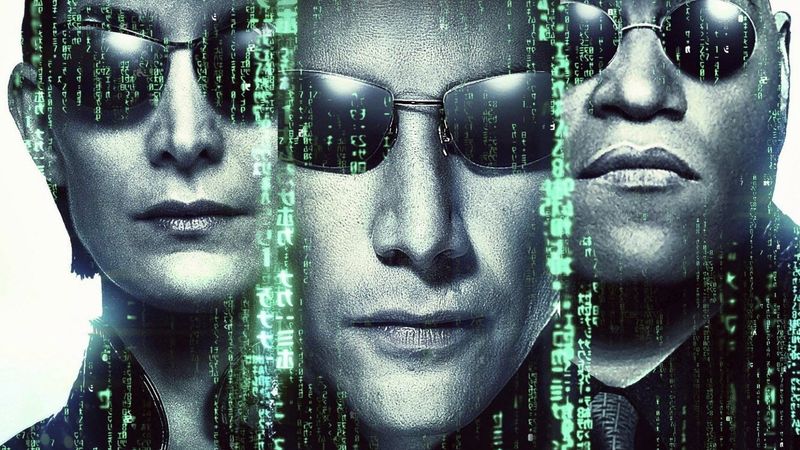
One pill is red, and one pill is blue.
That simple choice turned a 1999 action movie into a conversation starter that people still reference today.
Written and directed by the Wachowskis, The Matrix stars Keanu Reeves as Neo, a computer hacker who learns that the world around him is a simulation.
Laurence Fishburne plays Morpheus, Carrie-Anne Moss plays Trinity, and Hugo Weaving plays the chilly Agent Smith.
The famous bullet time scenes, where the camera seems to swing around frozen action, changed how many action movies looked afterward.
Still, the bigger lasting effect might be the questions the story raises.
How would you know if your senses were fooling you?
Would you choose a hard truth over a comfortable lie?
Those questions go back to old philosophy, but the movie wraps them in leather coats and kung fu.
Try this after watching: list three things you believe are real, then explain how you know.
You might find the answers trickier than expected.
The film is rated R for sci-fi violence, so it works better for older teens and adults.
Bring snacks, and maybe skip the spoon-bending attempts at the dinner table.
2. Blade Runner
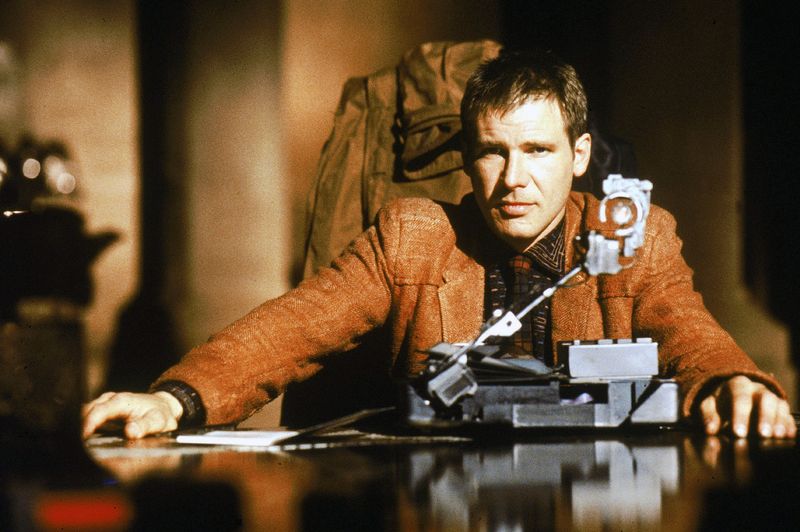
Rain, neon, and flying cars fill the Los Angeles of 2019, at least as Ridley Scott imagined it back in 1982.
The real 2019 looked a lot less dramatic, but the questions in Blade Runner still feel fresh.
Harrison Ford plays Rick Deckard, a blade runner hired to track down replicants.
Those are human-made beings who look and act like people.
Rutger Hauer, Sean Young, and Edward James Olmos round out the memorable cast.
The story comes from Philip K. Dick’s 1968 novel Do Androids Dream of Electric Sheep?
Reading the book afterward can be fun, since the two versions focus on different ideas.
So what makes someone human?
Is it memories, feelings, or the ability to care about others?
The movie never hands you a neat answer, and that’s the point.
Pay close attention to how the replicants act compared to the humans.
You may notice some surprising differences in who shows more emotion.
Several cuts of the film exist, including the 2007 Final Cut.
Watching two versions and comparing them is a sneaky way to practice spotting how small editing choices can change a story’s meaning.
3. Eternal Sunshine of the Spotless Mind
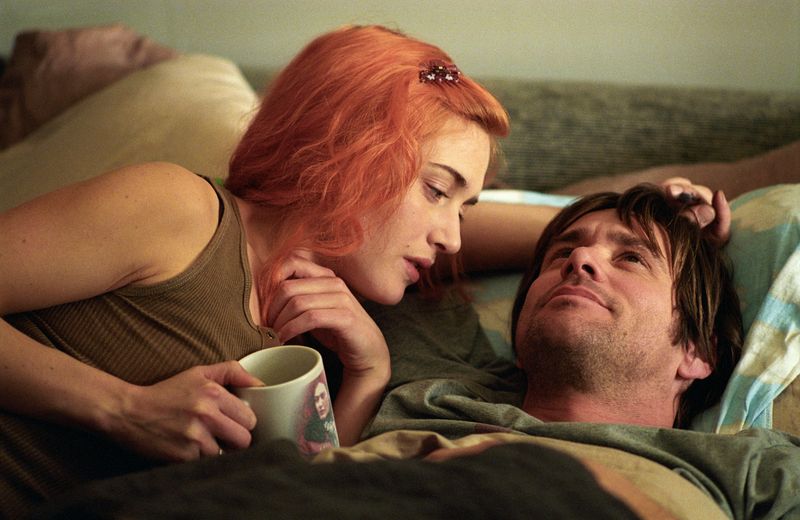
Breakups hurt, so what if a doctor could simply erase the person from your memory?
That odd idea powers this 2004 film directed by Michel Gondry and written by Charlie Kaufman.
Jim Carrey plays Joel, a quiet man, and Kate Winslet plays Clementine, a bold woman with ever-changing hair colors.
After their relationship ends, they each go through a procedure to wipe out memories of the other.
The story jumps around in time, and scenes melt into one another like real memories do.
Rooms shrink, faces blur, and places vanish as Joel’s mind is cleaned out.
Kaufman won the Academy Award for Best Original Screenplay alongside Gondry and Pierre Bismuth.
That honor makes sense, because the script asks big questions with a small, personal story.
Would you erase a painful memory if you could?
Keep in mind that those same memories helped shape who you are today.
Talking about that with a friend can lead to surprisingly thoughtful answers.
Here’s a fun habit to try afterward: write down one tough memory that taught you something useful.
You might decide some hard moments are worth keeping around.
4. Inception
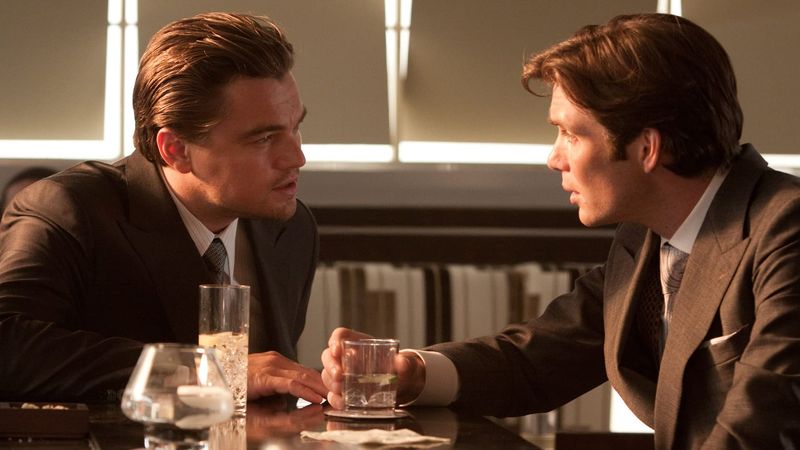
A spinning top on a table might be the most argued-about prop of 2010.
Christopher Nolan’s Inception ends with it, and viewers have been debating ever since.
Leonardo DiCaprio plays Dom Cobb, a thief who sneaks into people’s dreams to steal secrets.
His new job flips the script, because he has to plant an idea instead of taking one.
The movie stacks dreams inside dreams, and time moves slower on each level.
Keeping track of who is where becomes a mental workout, which is half the fun.
Joseph Gordon-Levitt, Elliot Page, Tom Hardy, and Marion Cotillard join the cast.
The rotating hallway fight scene used a real spinning set, which makes it even more impressive to watch.
Inception also raises a sneaky question about ideas themselves.
Where did your strongest beliefs come from, and did someone else plant them?
Advertising, friends, and social media all shape thinking in quieter ways.
For a fun challenge, try drawing a simple chart of the dream levels while you watch.
It helps you follow the plot and practice organizing tricky information, a skill that comes in handy for school projects too.
5. The Truman Show
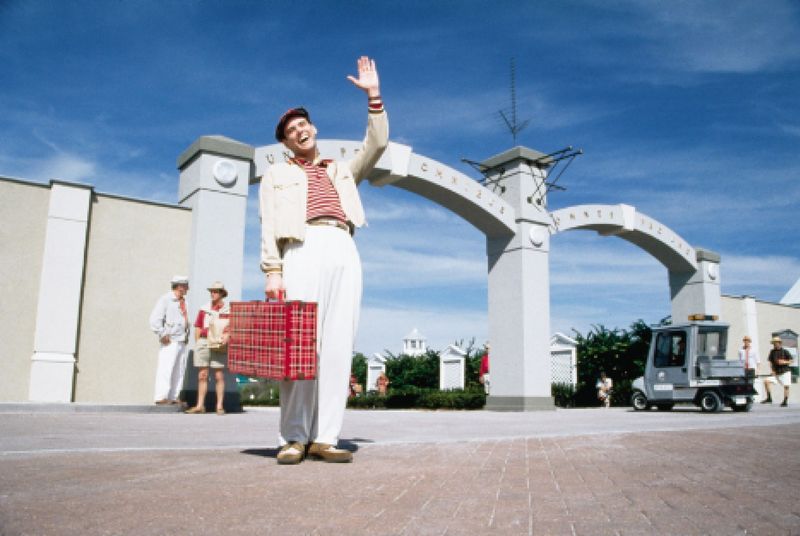
Good morning, and in case I don’t see ya, good afternoon, good evening, and good night!
Truman Burbank says that cheerful line daily, never knowing millions of people are watching him.
Released in 1998, The Truman Show was directed by Peter Weir and written by Andrew Niccol.
Jim Carrey stars as Truman, whose whole life is a TV show filmed inside a giant dome.
His wife, best friend, and neighbors are actors.
Products get sneaked into conversations as ads, and the weather is controlled by the show’s crew.
Ed Harris plays Christof, the show’s creator, who runs it from high above.
The film arrived before reality TV became a huge part of television.
Watching it now feels a bit like reading a forecast that came true in surprising ways.
It’s a smart pick for thinking about media.
How much of what you see online is staged, edited, or selling something?
Try spotting product placement in your favorite videos after watching, and you may start noticing it everywhere.
Truman’s slow realization also shows how curiosity works.
Small clues, like a falling stage light, push him to question his routine and look closer.
6. Arrival
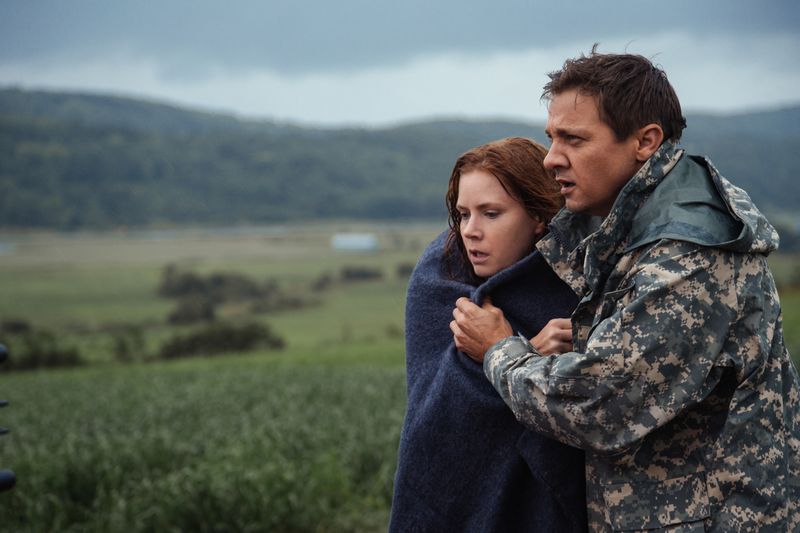
Forget laser battles, because the hero here wins with grammar.
In this 2016 science fiction drama, a language expert becomes the most important person on the planet.
Amy Adams plays Louise Banks, a linguist asked to talk with visitors from space after twelve mysterious ships appear around the world.
Jeremy Renner plays Ian, a scientist who works beside her.
Denis Villeneuve directed the film, and Eric Heisserer wrote it based on Ted Chiang’s story Story of Your Life.
The aliens write in circles, and each symbol can hold a whole complex thought.
The movie explores an interesting idea: the language you speak might shape the way you think.
It also plays with time in a way that makes the ending hit harder on a second viewing.
Arrival is a good reminder that patience and careful listening can solve big problems.
Louise starts with simple words, like human, and builds slowly from there.
Want a fun follow-up?
Learn to say hello in a new language, or invent a simple symbol alphabet with a friend.
It’s a playful way to see how tricky clear communication can be, even between two humans.
7. Primer
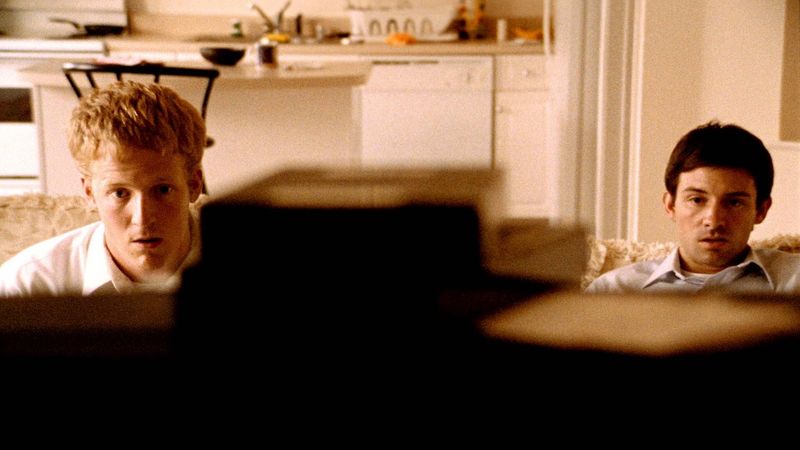
A garage, a weird metal box, and two engineers in ties.
That’s the humble setup for one of the most puzzling time travel movies ever made.
Shane Carruth wrote, directed, produced, edited, scored, and starred in this 2004 indie film.
He worked with a very small budget, and the movie still won the Grand Jury Prize at the Sundance Film Festival.
Carruth and David Sullivan play Aaron and Abe, friends who build a machine and slowly realize it can send them back in time.
Things quickly get tangled as copies of themselves pile up.
The dialogue is packed with technical talk, and the movie barely explains itself.
Fans have made detailed timeline charts online just to follow what happens, which tells you how much brainpower it demands.
This is the kind of film you might watch twice, the second time with a notebook.
Treat it like a mystery and collect clues as you go.
Beyond the puzzle, Primer asks what happens to trust when friends gain huge power.
That question feels just as interesting as the science.
Grab a patient friend, hit play, and prepare for a lively argument afterward.
8. Memento
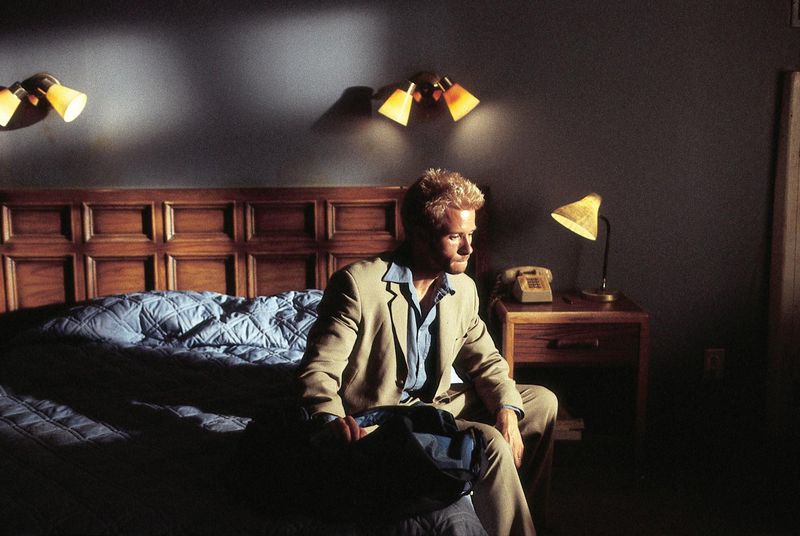
Sticky notes have nothing on Leonard Shelby.
He keeps track of his life using instant photos, handwritten notes, and tattoos covering his body.
Christopher Nolan made this 2000 thriller based on a short story by his brother, Jonathan Nolan.
Guy Pearce stars as Leonard, a man who can’t form new long-term memories.
Here’s the clever part: the color scenes play backward in time, while black-and-white scenes move forward.
You start at the end and work toward the beginning, so you feel just as lost as Leonard does.
That structure turns watching into detective work.
You keep asking which clues are true and who might be lying to Leonard.
The movie also shows how easy it is to trust a note simply because it’s written down.
Leonard believes his own records completely, even when he may have reasons to bend them.
That idea is useful in daily life.
Notes, posts, and screenshots can all be missing context, so it’s smart to double-check before believing them.
Memento is rated R, so it’s best for older viewers.
Once you finish, you’ll probably want to rewatch it in your head backward.
9. Rashomon
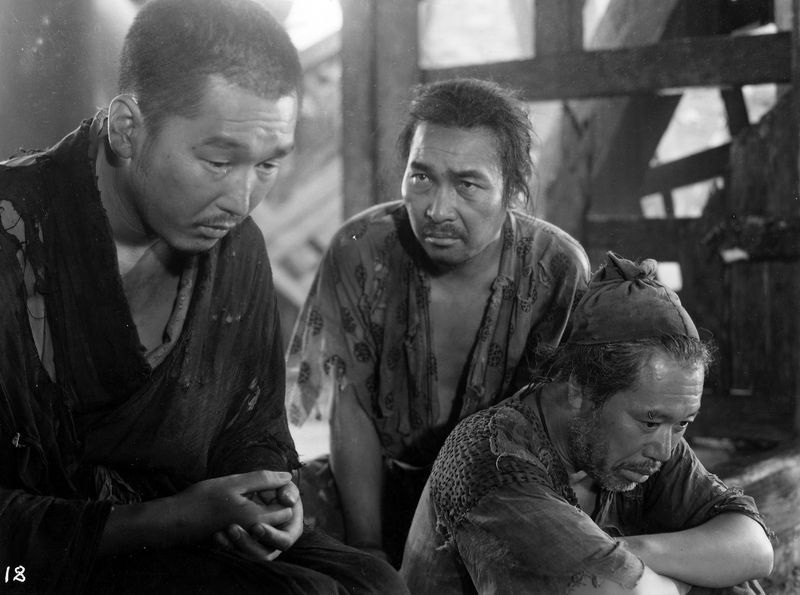
Four people saw the same crime, and four people tell four different stories.
Akira Kurosawa built his entire 1950 film around that unsettling problem.
Rashomon takes place in old Japan, with men waiting out a rainstorm under a ruined city gate.
They talk about a trial involving a bandit, a samurai, and the samurai’s wife.
Toshiro Mifune plays the wild bandit, while Machiko Kyo, Masayuki Mori, and Takashi Shimura fill other key roles.
Each version of events makes the teller look a little better.
The film won the Golden Lion at the Venice Film Festival in 1951 and received an honorary Academy Award.
It helped introduce Japanese cinema to audiences around the world.
Its title even became a term.
The Rashomon effect describes how people remember the same event differently, often in ways that protect their pride.
You’ve probably seen this happen after a sibling argument or a sports game.
Everyone swears their version is correct.
The film is in black and white with subtitles, and it runs under 90 minutes.
After watching, try telling a recent story from someone else’s point of view.
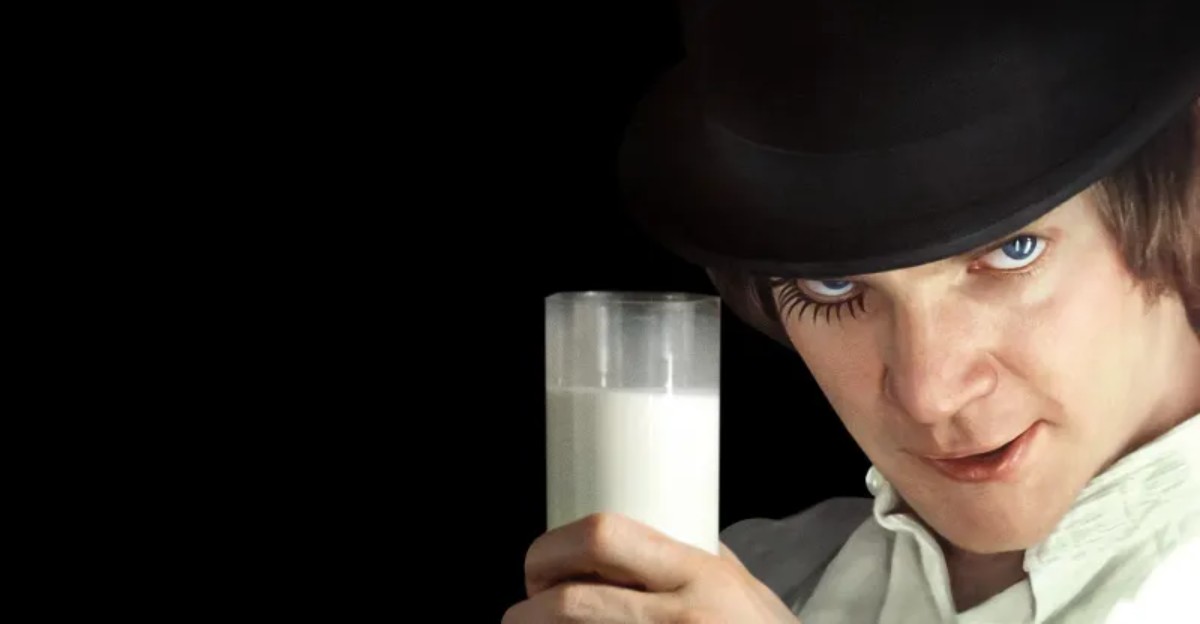
10. A Clockwork Orange
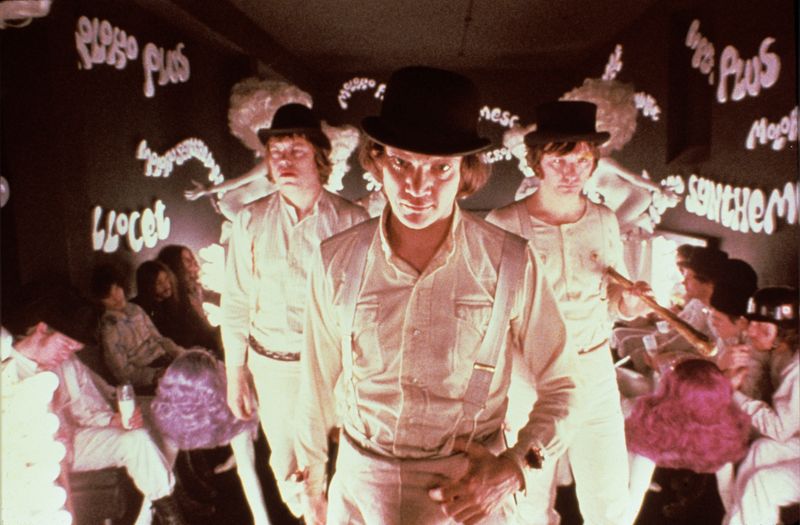
Can a person be good if they’re forced to be good?
Stanley Kubrick’s 1971 film pushes that uncomfortable question right into the spotlight.
Based on Anthony Burgess’s 1962 novel, the movie stars Malcolm McDowell as Alex, a young troublemaker in a bleak future Britain.
After he’s caught, the government tests a treatment that makes him physically sick at the thought of violence.
The big debate begins there.
Alex stops behaving badly, but only because he has no choice.
Is that real goodness, or just control?
Kubrick’s film is famous for its strange slang, bold sets, and classical music, especially Beethoven.
The characters speak Nadsat, a made-up language Burgess built partly from Russian words.
Fair warning: this movie is rated R and contains disturbing violence.
It’s meant for adults, and some viewers may decide to read about it instead of watching.
Even so, the central question is a great one for discussion.
Think about rules at school or home, and why people follow them.
Do they obey out of fear, habit, or because they believe in them?
Your honest answer may reveal more than you expect.
11. Stalker
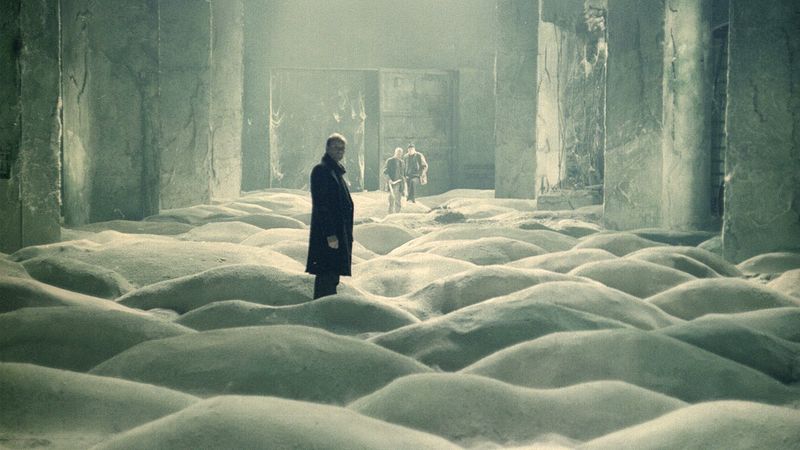
Slow movies get a bad reputation, but Stalker proves patience can pay off.
Andrei Tarkovsky’s 1979 Soviet film moves at a crawl, and that’s exactly why it sticks.
A guide called the Stalker leads two men, known only as the Writer and the Professor, into a forbidden area called the Zone.
Somewhere inside sits a room said to grant a person’s deepest wish.
Alexander Kaidanovsky plays the Stalker.
The screenplay came from brothers Arkady and Boris Strugatsky, loosely based on their novel Roadside Picnic.
The movie starts in sepia tones and shifts to color once the men reach the Zone.
It’s a simple trick, yet it makes the strange place feel alive.
Along the way, the travelers argue about faith, art, science, and what people truly want.
The scariest idea may be that your deepest wish isn’t what you think it is.
That’s a fun question to ask yourself honestly.
What would you wish for, and why?
Stalker runs over two and a half hours, so plan a relaxed evening.
Watch it like a long walk, not a race.
12. Donnie Darko
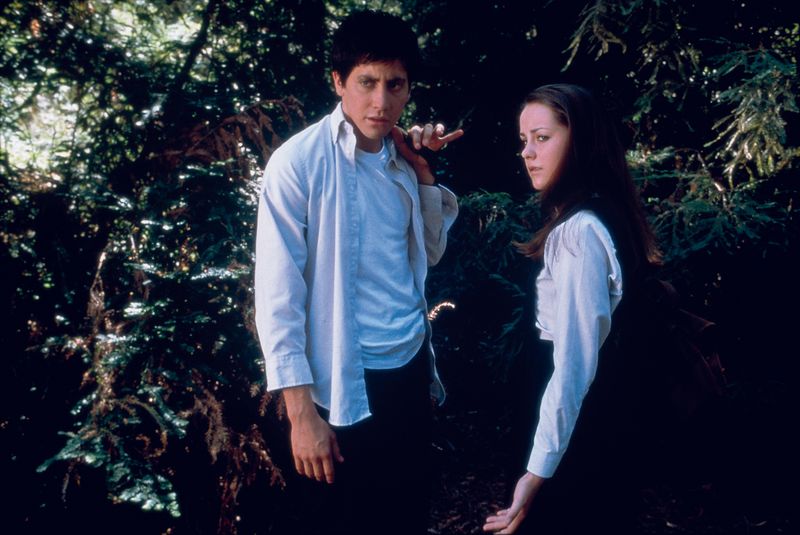
A giant spooky rabbit named Frank tells a teenager the world will end in 28 days.
Not exactly the usual high school drama.
Richard Kelly wrote and directed this 2001 film, starring Jake Gyllenhaal as Donnie, a troubled teen in a 1988 suburb.
Jake’s real-life sister, Maggie Gyllenhaal, plays Donnie’s sister, which is a fun bit of casting.
After a jet engine mysteriously crashes into his bedroom, Donnie starts seeing Frank and following strange instructions.
The story mixes school life, time travel, and big questions about fate.
Does Donnie have free will, or is everything already planned?
The movie leaves many answers open, so viewers often walk away with completely different theories.
Kelly later released a director’s cut in 2004 with extra scenes.
Some fans think it explains too much, while others like the added clues.
This film works well for practicing how to back up an opinion.
Pick a theory about the ending, then find scenes that support it.
Rated R, it’s best for older teens and adults.
And yes, you may never look at bunny costumes the same way again.
13. Her
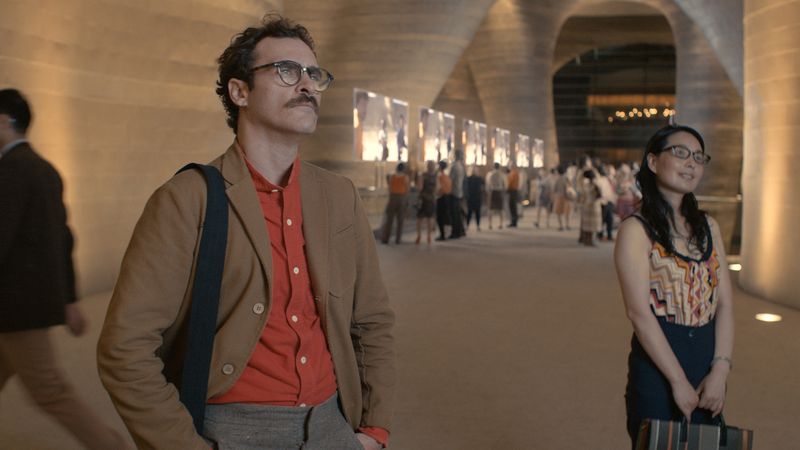
Long before chatting with AI became an everyday thing, Spike Jonze imagined a man falling for his computer’s operating system.
His 2013 film Her feels more relevant every year.
Joaquin Phoenix plays Theodore Twombly, a lonely writer whose job is composing heartfelt letters for other people.
Scarlett Johansson voices Samantha, an AI system who is funny, curious, and always learning.
Johansson never appears on screen, and her voice replaced another actress’s performance after filming.
That’s a pretty impressive amount of character to deliver through sound alone.
Jonze won the Academy Award for Best Original Screenplay for the film.
The future it shows looks soft and pastel, with high-waisted pants and quiet, crowded cities.
Her asks gentle but big questions.
What makes a relationship real?
Can a machine truly understand people, or does it only seem that way?
Those questions matter as AI tools pop up in phones, homework apps, and games.
After watching, notice how you talk to voice assistants and chatbots.
Then think about what you get from human friends that a program can’t offer.
The answer might nudge you to call someone.
14. Coherence
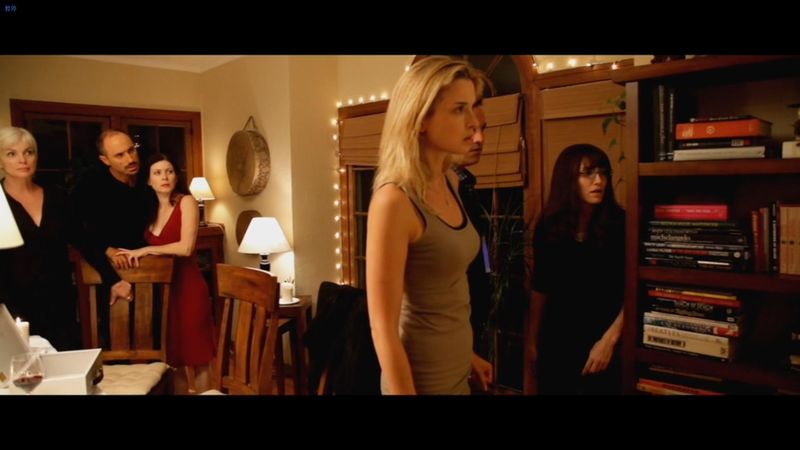
Dinner parties can get weird, but this one hits a whole new level.
When a comet passes overhead, the power goes out and reality starts splitting apart.
James Ward Byrkit wrote and directed this 2013 thriller with a tiny budget.
Most of it was filmed over a few nights, largely inside his own house.
Here’s a fun detail: the actors didn’t receive a full script.
Each day they got notes about their characters, then improvised much of the conversation.
That helps explain why the reactions feel so natural.
Emily Baldoni, credited at the time as Emily Foxler, leads the cast as Em.
As strange things happen, the friends wonder if other versions of themselves exist next door.
The movie plays with the idea of parallel worlds, where every choice creates a slightly different reality.
It’s a mind-bender that never needs fancy effects.
Coherence also shows how teamwork falls apart when people get scared.
Watch how quickly the group stops listening to each other.
For extra fun, view it with friends and pause halfway.
Have everyone predict the ending, then see who reasoned closest.
15. Shutter Island
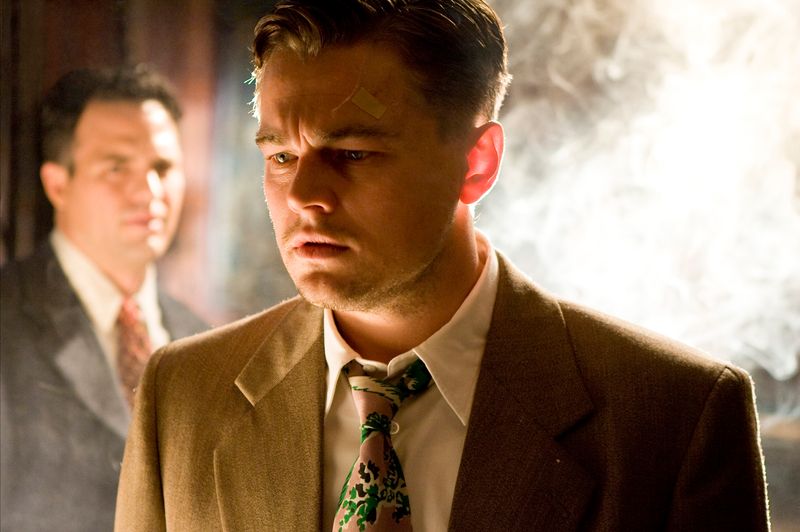
Storm clouds, a lonely island, and a missing patient set the stage for Martin Scorsese’s 2010 mystery.
Every clue seems helpful until you start doubting it.
Leonardo DiCaprio stars as Teddy Daniels, a U.S. Marshal investigating a hospital for the criminally insane in 1954.
Mark Ruffalo plays his partner, Chuck, and Ben Kingsley plays the hospital’s lead doctor.
The story comes from Dennis Lehane’s 2003 novel, adapted by screenwriter Laeta Kalogridis.
Lehane also wrote the books behind Mystic River and Gone Baby Gone.
Without spoiling anything, the film plays tricks with what you think you know.
Small details, like a glass of water or a doctor’s odd reaction, take on new meaning later.
That makes it great practice for spotting an unreliable narrator.
Ask yourself whose eyes you’re seeing through, and whether that person sees clearly.
A second viewing feels like a totally different movie.
You’ll catch hints that zip right past the first time.
The film is rated R for disturbing content and violence.
Older viewers who enjoy a puzzle should keep a sharp eye out from the opening ferry ride onward.