 MomSkoop

True class and integrity aren’t defined by appearance, wealth, or social status. They reveal themselves through everyday actions, the way a woman treats others, and the values she stands by when no one is watching.
Women who carry themselves with genuine grace and strong character often display subtle behaviors that speak louder than words. From how they handle difficult situations to the respect they show those around them, these 16 behaviors can reflect a woman’s integrity, inner strength, and timeless class.
1. Telling the Truth When It’s Inconvenient

A cashier hands you a ten instead of a five, and nobody would ever find out.
That tiny moment says more about character than any speech about honesty ever could.
Integrity means your inside and outside line up.
What you believe, what you say, and what you do all point in the same direction, even when it costs you a little.
Honesty also covers the bigger stuff.
It means not fudging details at work, not inventing excuses to skip plans, and not letting a small fib grow into a tangled mess you have to manage later.
Of course, truthful does not mean blunt to the point of rude.
You can tell a friend her presentation needs work while still pointing out what she did well, and she will probably trust your praise more because of it.
Open communication helps too.
When something bothers you, saying it calmly and early usually works better than letting it simmer for weeks until it boils over at the worst possible time.
A simple test is asking whether you would act the same way if your choice showed up on a billboard.
If the answer makes you squirm, that is useful information worth listening to.
2. Keeping Your Word

Saying yes is easy on a Tuesday when Saturday feels far away.
The real test comes when Saturday arrives, it is raining, and you promised to help a friend move a couch up three flights of stairs.
A woman who keeps her word is wonderfully predictable in the best way.
Her yes means yes, her no means no, and people around her never have to guess which version of her will show up.
That kind of reliability builds trust faster than flashy gestures.
Friends, coworkers, and family members relax when they know a promise from you is basically a done deal.
The secret often lies in promising less.
Before agreeing to something, check your calendar, your energy, and your budget, then answer honestly instead of saying yes just to dodge an awkward moment.
Life still happens, and sometimes a commitment truly cannot be kept.
In those cases, give people a heads-up as early as possible, apologize simply, and offer another option if you can.
Small promises count as much as big ones.
Calling back when you said you would, returning a borrowed book, or showing up for a kid’s recital all quietly prove that your word carries real weight.
3. Owning Mistakes Without Drama

Nobody enjoys saying the words I was wrong out loud.
Still, those three words can calm a tense room faster than an hour of careful explaining.
Accountability means owning a mistake directly, without a long backstory or a list of people who also messed up.
A short admission paired with a plan to fix things tends to land much better than a dramatic apology tour.
Think of it as a two-step move.
First, name what happened clearly, such as I forgot to send the report and that delayed your work, then say exactly what you will do to make it right.
Skipping the theatrics matters here.
Excessive self-criticism can accidentally shift attention to your feelings, leaving the other person comforting you when they were the one inconvenienced in the first place.
People usually relax when they hear a clean admission.
It signals that you can be trusted with responsibility, because problems will not get buried or blamed on the printer.
This habit works at home, at work, and in friendships alike.
Kids especially notice when a parent admits a mistake, and that lesson about grace and responsibility tends to stick with them for years.
4. Being Fair With Money and Belongings

Money has a funny habit of revealing who people really are.
A delivery arrives with two sweaters instead of one, and suddenly a small ethical choice is sitting right there on your porch.
Fairness with money and belongings shows up in plenty of everyday ways.
Paying back a friend promptly, splitting a check honestly, and returning extra items that were not yours all fall under this umbrella.
Tipping fairly is part of it too.
Servers, delivery drivers, and hairstylists often rely on tips, so treating that payment as part of the real cost shows respect for their work.
The small stuff counts as well.
Taking office supplies home, keeping a lost wallet’s cash, or pocketing a pen from the bank may seem minor, but they chip away at the habit of fairness.
Debts deserve special attention.
If you borrowed money, set a clear plan to repay it and communicate if that plan changes, because silence tends to strain relationships more than the debt itself.
Budgets differ a lot from person to person, and fairness does not require being wealthy.
It simply means treating other people’s money, time, and property with the same care you would want for your own.
5. Skipping the Gossip

Juicy news about a coworker can feel like free entertainment on a slow afternoon.
The trouble is that whoever shares gossip with you will probably share gossip about you too.
Classy women tend to treat other people’s private lives as private.
They skip passing along rumors, and they pause before reposting a dramatic story that might not even be true.
Changing the subject does not have to be awkward.
A simple line like I’d rather hear about your weekend usually steers things somewhere friendlier without lecturing anyone at the table.
Privacy works in both directions.
Many women with quiet class also keep their own relationships and struggles off public display, not out of secrecy, but because some things belong with trusted people only.
Online habits matter here as well.
Screenshots of private messages, posts about a friend’s breakup, or vague comments aimed at someone can spread fast and hurt real people long after you scroll past.
A handy filter asks three things before speaking: is it true, is it kind, and is it necessary to share.
If a story fails two of those, letting it end with you is a pretty graceful choice.
6. Listening More Than Talking

Most of us are secretly planning our next sentence while someone else is still talking.
Great listeners break that habit, and people love being around them because of it.
Active listening means giving the speaker your full attention.
Put the phone face down, make eye contact, and let the other person finish before jumping in with your own story.
Thoughtful replies come next.
Asking a follow-up question, such as what happened after that, shows you actually absorbed what was said instead of simply waiting your turn.
Disagreements are where mindful communication really shines.
Sticking to the issue at hand, without name-calling, mockery, or digging up private details to score points, keeps an argument from turning into a battle.
Polite language helps more than people expect.
Phrases like I see your point or help me understand can lower the temperature of a heated conversation within seconds.
Speaking well of people who are not in the room belongs here too.
When someone criticizes an absent friend, a calm word in that friend’s defense shows loyalty, and others quietly note that you would do the same for them.
7. Showing Up On Time

Ten minutes late may not feel like a big deal to the person running behind.
For the person waiting alone at the restaurant table, those ten minutes can feel like an hour.
Punctuality is a simple way to show respect for someone else’s time.
It tells people you value their schedule as much as your own, and that they can count on you.
Being on time often starts the night before.
Laying out clothes, packing a bag, and checking traffic or transit times can save you from that frantic search for missing keys.
Building in a small buffer helps a lot.
Aiming to arrive ten minutes early means a red light or a slow elevator will not ruin your arrival or your mood.
Life does not always cooperate, especially for parents, caregivers, and anyone relying on public transportation.
When delays happen, a quick text with a realistic arrival time is a courteous move that keeps others from wondering.
Punctuality also applies to deadlines, replies, and returning calls.
Answering an invitation on time or finishing a task when promised sends the same message as walking through the door right on schedule.
8. Thinking Ahead for Others

Some of the most memorable kindness looks almost boring from the outside.
Holding a door, bringing an extra umbrella, or remembering that a friend had a doctor’s appointment rarely makes headlines.
Consideration often means thinking one step ahead.
A thoughtful woman notices that a coworker looks overwhelmed and offers to help before being asked.
Checking in on people counts too.
A quick message saying how did the interview go shows you remembered something important to them, which can mean more than a fancy gift.
Group settings offer plenty of chances to practice this.
If one person has barely said a word at dinner, asking for their opinion invites them into the conversation without putting them on the spot.
Small details add up in shared spaces as well.
Wiping down the gym machine, keeping your voice low on a train, and refilling the office coffee pot keep life smoother for strangers.
None of this requires much money or extra time.
It mainly takes attention, so try picking one small act of consideration each day and see how naturally it becomes part of your routine.
9. Staying Calm Under Pressure

Flights get canceled, ovens burn dinners, and meetings go sideways.
The way a woman handles those messy moments often leaves a stronger impression than how she handles the easy days.
Grace under pressure does not mean feeling nothing.
It means taking a breath before reacting, so frustration does not spill onto the gate agent, the server, or the kids in the back seat.
A slower response is a quiet superpower.
Saying let me think about that for a second gives your brain time to catch up with your emotions.
Disagreements are another testing ground.
Staying steady when someone challenges your idea, instead of getting defensive, keeps the focus on solving the problem rather than winning the moment.
Practical tools can help.
Some people count to five, others step outside for a minute, and plenty jot down their thoughts before replying to a frustrating email.
Calm is also contagious in a good way.
When one person stays level during a crisis, others tend to follow their lead, which turns chaos into something more manageable and much less exhausting for everyone involved.
10. Setting Kind but Firm Boundaries

No is a complete sentence, but it can still come with a smile.
Women with integrity often master the art of saying it kindly and meaning it.
Clear boundaries teach people how to treat you.
Telling a friend you cannot take calls after nine at night, or telling a boss you need a realistic deadline, sets expectations before resentment creeps in.
Firm does not have to mean harsh.
Calm, simple language like that doesn’t work for me, but here’s what I can do keeps the relationship intact while still protecting your time and energy.
Knowing your limits is part of the process.
Paying attention to what drains you and what you can handle comfortably makes it easier to decide which requests deserve a yes.
Respecting other people’s boundaries matters just as much.
If a coworker declines lunch plans or a relative prefers not to discuss a topic, accepting that gracefully shows maturity.
Boundaries can look different depending on family culture, job demands, and personal needs.
There is no single right version, so start small with one area that feels stretched and practice holding that line consistently.
11. Carrying Quiet Confidence

The loudest person in the room is not always the most confident one.
Sometimes the woman who speaks last, calmly and clearly, ends up shaping the whole conversation.
Quiet confidence feels grounded rather than flashy.
It does not chase approval, collect compliments, or need designer logos to announce itself.
Body language gives it away.
Steady eye contact, a relaxed speaking pace, and comfortable pauses suggest someone who is not rushing to prove a point.
This kind of self-assurance usually comes from knowing your values and strengths.
When you understand who you are, you spend less energy trying to convince others to see you a certain way.
Quiet confidence also allows room for humility.
Saying I don’t know, but I’ll find out, or asking someone with more experience for advice, shows security rather than weakness.
Building it takes practice and patience.
Try noticing when you over-explain or apologize for things that are not mistakes, then experiment with shorter, clearer statements and see how differently people respond to you.
12. Dressing for the Occasion

Clothes cannot create character, but they can send a message before you say a word.
Showing up in sweatpants to a friend’s wedding sends a very different signal than a tidy dress or pressed shirt.
Dressing for the occasion is mostly about consideration.
Matching the tone of an event, whether it is a funeral, job interview, or backyard barbecue, shows respect for the hosts and other guests.
Fit matters more than price.
A simple outfit that fits well and is clean and pressed often looks more polished than an expensive piece that pulls, sags, or wrinkles.
Many women with a classic style lean toward versatile basics.
A tailored blazer, dark jeans, a plain knit top, and comfortable flats can be mixed for countless situations without much stress.
Personal taste still deserves room.
Bold colors, prints, or playful accessories can absolutely look classy when they feel like you and suit the setting.
Style also depends on budget, culture, and body comfort, so there is no single correct wardrobe.
The main idea is choosing outfits that respect the event and let you focus on people instead of tugging at your clothes.
13. Minding Everyday Manners

Please and thank you might sound like lessons from kindergarten.
Yet those tiny words still carry surprising power in a world full of rushed emails and quick texts.
Good etiquette works like social glue.
It helps strangers, coworkers, and families interact smoothly, even when people do not know each other well.
Table manners are a classic example.
Chewing with your mouth closed, waiting until others are served, and passing dishes without reaching across someone’s plate show care for the people sharing the meal.
Phones deserve their own mention.
Keeping your phone off the table during dinner signals that the people in front of you matter more than your notifications.
Invitations come with manners too.
Replying to an RSVP promptly helps hosts plan food, seating, and costs, and a short thank-you note afterward is always remembered.
Etiquette rules can vary between cultures and families, so flexibility matters.
The goal is not perfection or stiffness, just making people around you feel comfortable, respected, and glad they spent time with you.
14. Treating Everyone With the Same Respect

A quick way to read someone’s character is to watch how they treat a waiter.
Charm toward the boss means little if the barista gets eye rolls.
Respect that does not depend on status says a lot about a person.
A classy woman greets the janitor, the CEO, and the new intern with the same courtesy.
Kindness tends to show up in ordinary moments.
Learning the name of a regular cashier, thanking the bus driver, or being patient with a nervous trainee all count.
Empathy adds depth to that respect.
Trying to understand how someone else feels, especially when they are stressed or struggling, helps relationships grow stronger and more trusting.
Background and circumstances should not change basic dignity.
Treating people fairly regardless of their job, income, accent, or appearance reflects a steady set of values rather than a performance.
A fun challenge is to notice people who usually go unseen, like the person restocking shelves or cleaning the restroom.
A sincere thank-you costs nothing and might be the nicest thing they hear all shift.
15. Moving With Poise
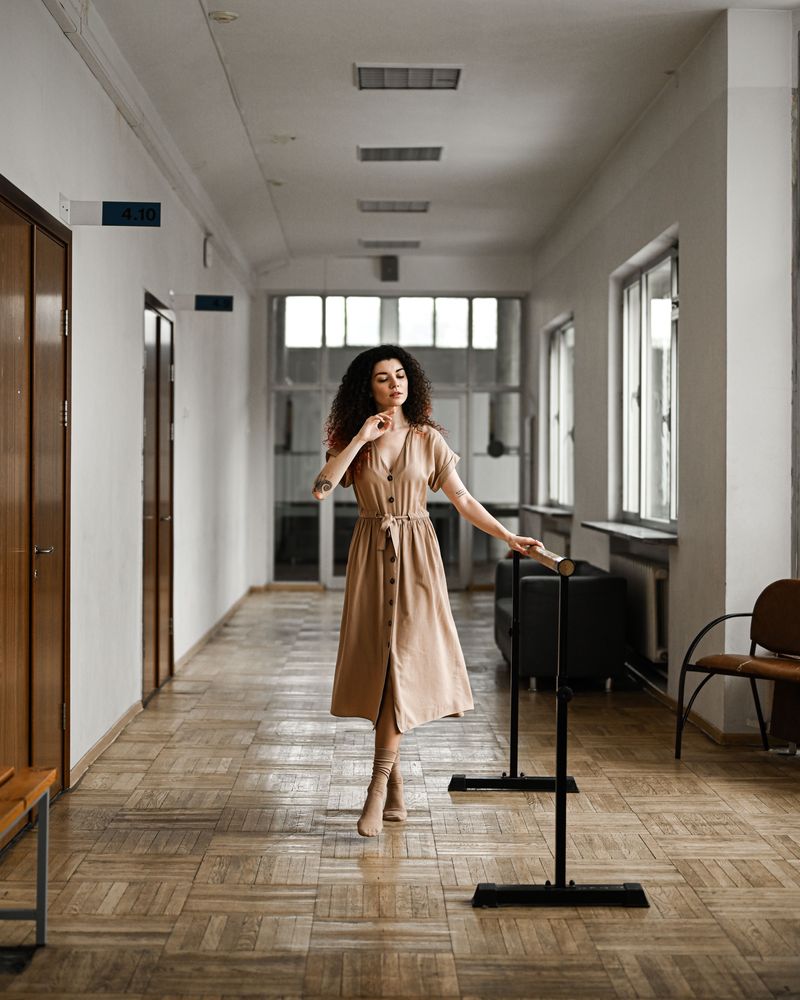
Ballet dancers and news anchors share a secret weapon, and it is not a fancy wardrobe.
It is posture, the steady way they hold their bodies while working.
Poise starts with how you stand and move.
Shoulders relaxed and back, head level, and feet planted give an impression of calm presence without saying anything.
Entering a room can be a small moment of grace.
Slowing down a bit, making eye contact, and offering a smile looks more inviting than rushing in while staring at a phone.
Smooth movement helps too.
Sitting down without collapsing into a chair and setting items down gently rather than dropping them create a sense of ease around you.
Posture looks different for different bodies, and comfort always comes first.
People with injuries, disabilities, or chronic pain may move in their own way, and poise has more to do with calm intention than a rigid ideal shape.
Small practice moments add up.
Checking your posture while waiting in line or walking to your car can turn a graceful stance into a natural habit over a few weeks.
16. Cheering for Other Women

A friend lands the job you wanted, and that little pang of envy shows up uninvited.
Congratulating her sincerely anyway is one of the classiest moves around.
Supporting other women means celebrating their wins without keeping score.
Feeling a flash of jealousy is human, but choosing kindness over competition is a decision you can make again and again.
Encouragement can be simple.
Asking about a friend’s business plans, sharing her art online, or showing up to her first 5K race tells her that her goals matter to you.
Support also happens when she is not in the room.
If someone belittles a coworker or mocks a friend’s choices, speaking up calmly shows loyalty and sets a higher standard for the conversation.
Mentoring is another strong option.
Passing along advice, recommending someone for an opportunity, or introducing two women who could help each other can change the direction of someone’s career.
Integrity and class often look like this in the end: making room for others to shine.
A rising tide lifts plenty of boats, and the women who cheer loudest tend to have the best crews around them.