 MomSkoop

Sometimes the scariest changes in a relationship happen so quietly you almost miss them.
It’s not always a big fight or a dramatic goodbye — sometimes it’s a series of small, easy-to-overlook moments that signal something deeper is shifting.
If you’ve been wondering whether he’s pulling away emotionally, the clues are often hiding in plain sight.
These 13 subtle signs can help you understand what’s really going on beneath the surface.
1. He Feels Consistently Misunderstood
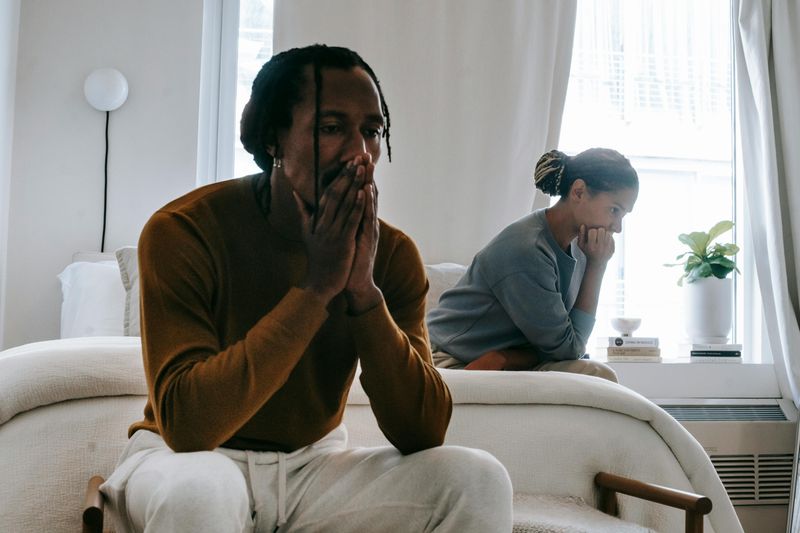
Picture trying to explain yourself over and over, only to have your words twisted into something you never meant.
That’s exactly what it feels like when someone constantly misreads your intentions.
It’s exhausting, and over time, it makes a person stop trying to explain at all.
When he feels like his motives are always assumed to be wrong, he starts to believe the relationship is a place where he can’t be himself.
That quiet withdrawal isn’t coldness — it’s self-protection.
Recognizing this pattern early can open the door to real, honest conversation before the distance becomes too wide to bridge.
2. Conversations Keep Turning Into Corrections

There’s a big difference between a healthy debate and a relationship where every sentence gets picked apart.
When he shares a thought and it’s immediately adjusted, challenged, or improved upon, something subtle but serious starts to happen — he stops feeling safe speaking freely.
Over time, he may go quiet during conversations, give shorter answers, or avoid bringing up certain topics altogether.
It’s not that he has nothing to say.
He just doesn’t want to spend energy defending every word he chooses.
Safe conversation is a foundation of closeness, and without it, emotional connection slowly crumbles.
3. Appreciation Quietly Fades Out

Effort that goes unnoticed long enough starts to feel pointless.
When he cooks dinner, handles a stressful task, or goes out of his way for the relationship, and it’s met with silence or treated like it was just expected — that stings more than most people realize.
Appreciation isn’t just about saying “thank you.” It’s about making someone feel seen for what they contribute.
When that recognition fades, his motivation to keep showing up in big and small ways starts to fade with it.
Small, consistent acknowledgment can be the difference between a thriving relationship and one that slowly loses its spark.
4. He Feels Like He Can’t Win Anymore

Few things drain a person faster than always landing wrong no matter what they do.
He tries to be helpful — it’s too much.
He gives space — he’s being distant.
He speaks up — he’s overreacting.
He stays quiet — he doesn’t care.
The exhaustion of that loop is real.
When nothing ever seems to be enough, a man starts to disengage not out of laziness but out of emotional survival.
He’s not giving up on you — he’s giving up on the cycle.
Noticing this pattern and openly discussing what’s working and what isn’t can completely change the dynamic.
5. Emotional Space Disappears
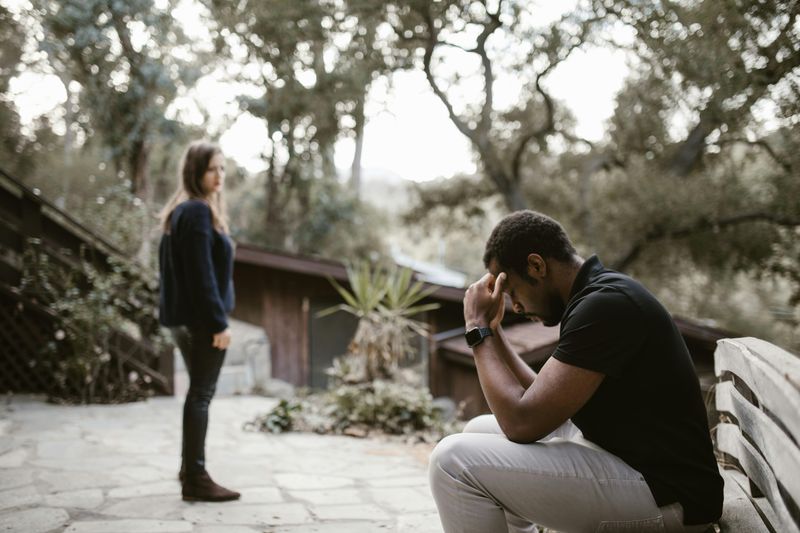
Everyone needs a little room to breathe, especially after something hard.
But when he tries to take a moment to process his thoughts and is immediately pressured to explain, fix, or talk it through right now — that space vanishes, and so does his sense of emotional safety.
Processing emotions isn’t the same as avoiding them.
Some people need time before they can articulate what they’re feeling, and that’s completely healthy.
When that need is treated as a problem, he learns to suppress rather than share.
Giving someone room to come to you, rather than pulling them toward you, often works far better in the long run.
6. Respect Erodes in Subtle Ways

Respect doesn’t always leave with a bang.
Sometimes it slips away through small things — a sarcastic comment here, an eye roll there, a tone that carries just a little too much edge.
These moments can seem minor on their own, but they add up fast.
When sarcasm and dismissiveness start replacing warmth and regard, the emotional temperature of the relationship drops.
He may not bring it up directly, but he feels it every time.
Mutual respect is what keeps people feeling valued, not just tolerated.
Once that erodes, even positive interactions can start to feel hollow or uncertain.
7. He Stops Feeling Chosen

Being chosen isn’t about grand gestures or dramatic declarations of love.
It shows up in the small, daily stuff — whether he’s the first person you want to share news with, whether you make time for him even when life gets busy, whether he feels like a priority or an afterthought.
When those little signals fade, a quiet but powerful message gets sent: you’re not at the top of my list anymore.
That feeling is hard to shake and even harder to talk about.
Most men won’t say “I don’t feel chosen” out loud — but they’ll start acting like someone who’s slowly letting go.
8. Conflict Becomes Repetitive Without Resolving

Every couple argues — that part is normal.
What’s not healthy is when the same fight keeps coming back, word for word, like a song stuck on repeat.
Nothing changes, nothing gets resolved, and both people walk away more drained than before.
Recurring conflict without real closure tells him that his concerns aren’t actually being heard or addressed.
After enough rounds of the same loop, he may stop bringing things up entirely — not because things are fine, but because he’s learned that bringing it up doesn’t help.
Breaking that cycle requires both people to genuinely listen, not just wait for their turn to respond.
9. He Feels More Like a Role Than a Person

Provider.
Fixer.
Problem-solver.
These are real and valuable things — but they’re not the whole picture of who someone is.
When a man feels like he’s only valued for what he does rather than who he is, something important starts to hollow out inside him.
He wants to be known, not just needed.
There’s a difference between being appreciated for handling things and being truly seen as a full human being with emotions, quirks, and depth.
When the relationship starts to feel transactional, emotional connection follows right behind it out the door.
Seeing him as a person first makes all the difference.
10. Peace at Home Turns Into Tension

Home is supposed to be where you exhale.
But when the relationship starts to feel more like a place to manage than a place to recharge, something has shifted in a serious way.
He may start staying at work longer, making plans with friends more often, or just finding reasons to be anywhere else.
That’s not him being avoidant for no reason.
He’s seeking out the peace that used to exist at home.
When the atmosphere in a relationship consistently carries tension, anxiety, or unpredictability, it stops feeling like a safe place — and safe places are exactly what people need most from their closest relationships.
11. Small Bids for Connection Go Ignored

Relationship researchers call them “bids” — those small, everyday moments when someone reaches out for connection.
A funny comment, a light touch on the shoulder, a look that says “did you catch that?” They seem tiny, but they’re actually the building blocks of emotional closeness.
When those bids consistently go unanswered — when the joke lands in silence, when the touch isn’t returned, when the comment gets no reaction — the person reaching out starts to pull back.
He won’t always announce that he’s doing it.
But bit by bit, he stops trying.
Responding to small moments of connection is one of the most powerful things you can do for a relationship.
12. He Feels Emotionally Unsafe Being Vulnerable

Opening up takes courage, especially for men who’ve been taught to keep emotions under wraps.
So when he finally shares something real — a fear, a doubt, a moment of softness — and it gets criticized, dismissed, or worse, brought up later during an argument, the door to vulnerability slams shut.
That kind of emotional betrayal doesn’t heal quickly.
He learns that being open leads to being hurt, so he stops being open.
The relationship loses depth, and he may start to seem distant or guarded without any clear explanation.
Creating a space where honesty is met with empathy, not ammunition, changes everything.
13. He Disconnects Internally Before He Ever Leaves

By the time someone physically walks away from a relationship, they’ve usually been emotionally gone for quite a while.
The departure people see coming is rarely the real beginning of the end — it’s just the moment the internal exit finally became visible on the outside.
He may still be present in the same room, still going through the motions, but something behind his eyes has gone quiet.
Reconnecting at this stage takes more than just effort — it takes honesty, real change, and a willingness to address what pushed him inward in the first place.
The good news is that internal disconnection can be reversed, but only when both people are truly ready to do the work.