 MomSkoop

Most parents lie awake at night wondering if they did enough, said the right things, or somehow left invisible damage.
The truth is, the very fact that you worry about it says something important about you.
Good parenting rarely looks like perfection — it looks like showing up, adjusting, and trying again.
If any of these signs feel familiar, you probably got a lot more right than you think.
1. Your Kids Felt Safe Bringing You the Hard Stuff

Some kids rehearse conversations for days before telling a parent something difficult.
If your child skipped that fear and came to you with mistakes, embarrassing questions, or quiet worries — that is not a small thing.
It means they trusted you with their vulnerability.
That kind of safety does not happen by accident.
It grows when a child learns, over and over, that honesty will not cost them your love.
You built that.
Every time you listened without overreacting, you made the next hard conversation easier for them to start.
2. You Circled Back After Conflict

Nobody parents perfectly in the heat of the moment.
Voices get raised, words come out wrong, and doors sometimes get slammed.
What separates connected families from disconnected ones is not the absence of conflict — it is what happens after.
Going back to your child and saying, “I handled that badly, I am sorry” teaches them something no classroom ever could.
It models accountability, shows that relationships can survive rupture, and proves that love is bigger than any argument.
Repair is not a sign of weakness — it is one of the most powerful things a parent can do.
3. Love Was Never Tied to Performance

Picture a child who just bombed a test or struck out at the final game.
Now picture their parent hugging them anyway, without a speech about trying harder or doing better next time.
That moment — uncomplicated, unconditional warmth — is what secure attachment is built from.
Children who grow up knowing their worth is not tied to grades, trophies, or good behavior develop a steadier sense of self.
They take healthy risks because failure does not threaten the relationship.
If your child knew they were loved on bad days just as fiercely as on good ones, you gave them something rare.
4. You Set Boundaries Even When It Made You Unpopular

There is a version of parenting that chases a child’s approval at every turn.
It feels kind in the moment, but it quietly removes the structure kids actually need to feel safe.
Real security does not come from endless yeses — it comes from a parent who holds the line with warmth.
If your child was ever furious at a boundary you set, and you held it anyway without cruelty, you were doing the job.
Children often push hardest against the limits that protect them most.
Years later, many adults look back and realize the rules they resented were the ones that shaped them best.
5. You Let Them Be Their Own Person

Not every kid is going to love what their parent loves.
Some children arrive in families as complete surprises — quieter, louder, more sensitive, or more stubborn than anyone expected.
A child who feels seen for who they actually are, rather than who their parent hoped they would be, grows up with a much healthier sense of identity.
Letting go of the blueprint you had in your head and embracing the real kid in front of you takes genuine courage.
If you cheered for interests that confused you or respected a personality that differed from your own, you gave your child the gift of being truly known.
6. You Got Curious Before You Corrected

“Why did you do that?” asked with genuine curiosity hits completely differently than the same words asked in frustration.
When a parent pauses to understand the feeling or need underneath a behavior before jumping to correction, the child feels seen rather than just managed.
Most misbehavior is communication in disguise.
A child who acts out at dinner might be exhausted or anxious.
A kid who snaps at a sibling might be carrying something they do not have words for yet.
Parents who ask questions first and lecture second raise children who learn to understand their own inner world — a skill that lasts a lifetime.
7. They Watched You Manage Your Own Emotions

Kids do not learn emotional regulation from being told to calm down.
They learn it by watching someone they love actually do it.
Every time you caught yourself mid-frustration and chose to breathe, step back, or name what you were feeling, you were teaching without saying a single word.
You did not have to be flawless.
In fact, the moments when you stumbled and then recovered were some of the most valuable lessons of all.
Seeing a parent get overwhelmed and then find their way back to steady tells a child that big feelings are survivable — and that self-control is something you practice, not something you just have.
8. Your Home Had Its Own Kind of Lightness

Childhood memory is strange and selective.
Kids often remember not the big vacations or the expensive gifts, but the Tuesday night silliness — the weird voices, the running jokes, the rituals that belonged only to your family.
That kind of lightness is emotional glue.
Shared laughter tells a child that home is a place where they can relax and be ridiculous without judgment.
It builds belonging in a way that serious conversations alone cannot.
If your home had its own soundtrack of inside jokes and small traditions, even imperfect ones, you created something your children will carry warmly into their adult lives.
9. Discipline Never Came With Humiliation
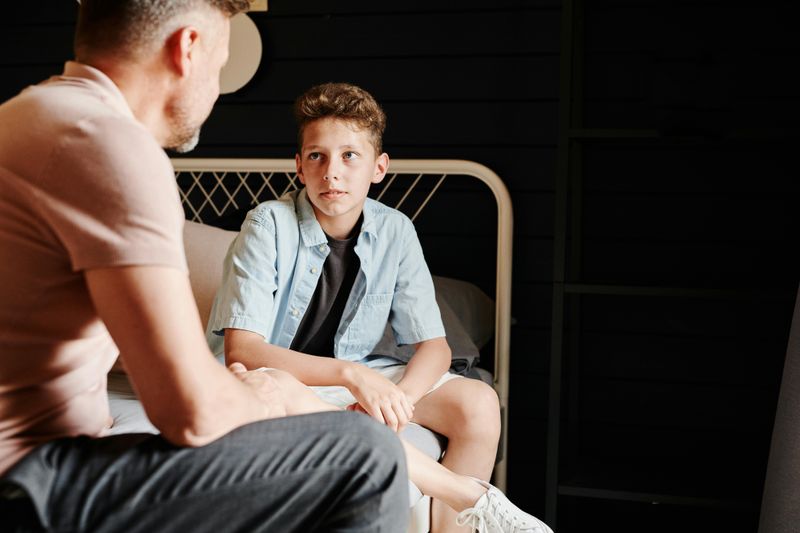
There is a big difference between correcting a behavior and attacking a child’s sense of self.
One teaches.
The other wounds.
A parent who can say “that choice was wrong” without adding “what is wrong with you” understands something fundamental about how children build their identity.
Dignity-preserving discipline is not soft — it can be firm, serious, and have real consequences.
But it targets the action, never the person.
Children raised this way learn that mistakes are things you make, not things you are.
That distinction quietly shapes how they talk to themselves for the rest of their lives, long after childhood ends.
10. You Shifted Your Role as They Grew

A parenting style that works beautifully for a five-year-old can feel suffocating to a fifteen-year-old.
The parents who navigate this transition well are the ones who recognize that their job description changes over time — from hands-on manager to thoughtful guide to trusted advisor.
Giving a growing child more voice, more choice, and more room to make their own decisions is not giving up authority — it is using it wisely.
If you loosened the reins gradually and trusted your teenager with increasing responsibility, you were preparing them for independence rather than just delaying it.
That kind of intentional letting go is one of the harder and more loving things a parent does.
11. They Could Disagree With You Without Losing You

Some households run on emotional compliance — children learn that keeping the peace means agreeing with the parent, even when they do not.
Over time, those kids stop sharing what they actually think because it feels too risky.
That is a quiet kind of loneliness.
If your child felt free to push back, question your reasoning, or hold a different opinion without it threatening their standing in your eyes, you gave them something powerful.
Disagreement handled with respect teaches kids that their perspective has value.
It also keeps the relationship honest.
A teenager who can argue with you safely is far less likely to silently drift away from you.
12. Your Voice Became Their Inner Encouragement

Here is one of the quietest and most meaningful signs that you got parenting right: when your child faces something hard as an adult, the voice in their head is steady and kind.
Not critical.
Not fearful.
Encouraging.
That inner voice came from somewhere — it came from you.
Every time you said “you can figure this out” or “I believe in you” or simply stayed calm beside them in a storm, you were recording something.
Children internalize the emotional tone of their home.
Years from now, when life gets difficult, your grown child will reach for that voice without even realizing it — and it will hold them up.