 MomSkoop

Misogyny doesn’t always show up as obvious insults or outright cruelty — sometimes it hides in everyday moments that feel almost normal.
When you’re close to someone, it’s easy to excuse small behaviors or brush them off as personality quirks.
But patterns matter, and recognizing them early can protect your well-being.
Here are 13 subtle signs of misogyny you might be overlooking in your relationship.
1. He Respects Women Selectively

Pay attention to who he treats well — and who he doesn’t.
If he’s warm and respectful toward women he finds attractive or useful, but cold and dismissive toward others, that’s not just a personality quirk.
That’s a pattern rooted in how he values women based on what they offer him.
Selective respect means he doesn’t actually respect women as people — he respects what they represent to him.
Over time, you may notice you’re only treated well when you meet his expectations.
That shift can feel confusing and hurtful, and it’s a red flag worth taking seriously.
2. Jokes That Always Punch Down at Women

Humor can reveal a lot about what someone truly believes.
When his jokes consistently target women — their intelligence, emotions, or bodies — and he deflects every complaint with “it’s just a joke,” that’s worth examining closely.
Comedy shouldn’t need a victim to land.
The “just kidding” defense is one of the oldest ways people avoid accountability.
If you’ve felt uncomfortable with his humor but talked yourself out of saying something, trust that instinct.
Repeated jokes that mock or belittle women reflect real attitudes, even when they’re wrapped in laughter.
Patterns in humor rarely lie.
3. He Interrupts or Talks Over You Constantly

Everyone gets interrupted sometimes — that’s just life.
But when it happens to you far more than it happens to the men in the room, especially when you’re sharing opinions or expertise, that’s a different story.
Being talked over repeatedly sends a quiet message: your voice matters less.
Studies have actually shown that women are interrupted more often in mixed-gender conversations, and partners who do this consistently may not even realize it.
Point it out once and watch the reaction.
Does he acknowledge it and try to change, or does he minimize it?
That response tells you everything.
4. He Explains Things You Already Know

Mansplaining gets a lot of eye-rolls, but when it happens regularly in your relationship, it stops being funny.
If he constantly explains things you’re already an expert in — and brushes off your corrections — he’s not being helpful.
He’s signaling that he assumes you need his guidance regardless of what you actually know.
The especially telling part is what happens when you correct him.
Does he update his view, or does he double down?
Someone who truly respects your intelligence will adjust.
Someone who doesn’t will find a way to keep the upper hand, even when the facts don’t support it.
5. He Downplays Your Achievements

You got the promotion, aced the presentation, or finished something you worked incredibly hard on — and his response was lukewarm at best.
When your wins are consistently chalked up to luck, easy circumstances, or just “not that big a deal,” that’s not modesty on his part.
It’s minimization.
Compare how he talks about your achievements versus his own or other men’s.
Is there a noticeable difference in enthusiasm or credit given?
Downplaying a partner’s success is a quiet way of keeping the balance of power tipped in one direction.
You deserve someone who genuinely cheers you on.
6. He Has Rigid Ideas About How Women Are

“Women are too emotional.”
“All women are dramatic.”
“That’s just how women think.”
Sound familiar?
Sweeping generalizations about women aren’t harmless observations — they’re a way of flattening half the population into a stereotype, which makes it easier to dismiss individual women when they don’t fit the script.
When someone treats these generalizations as facts, they stop seeing the actual person in front of them.
You become a category, not an individual.
If he regularly predicts your reactions based on “how women are” rather than who you actually are, that’s a sign he’s not fully seeing or respecting you.
7. He’s Uncomfortable With Female Authority

Notice how he talks about women in positions of power — female bosses, politicians, experts, or coaches.
Does he hold them to a stricter standard than men in the same roles?
Does competence somehow feel less convincing when it comes from a woman?
That discomfort has a name.
This pattern often shows up in small comments: “She’s too aggressive,” or “I just don’t trust her leadership style.”
Meanwhile, men with the same traits get called decisive or confident.
If the criticism consistently targets the gender rather than the actual behavior, you’re watching bias in real time — and it affects how he sees you, too.
8. He Expects You to Handle All the Emotional Labor

Emotional labor is the invisible work of managing feelings, keeping track of social obligations, smoothing over conflicts, and making sure everyone is okay.
In healthy relationships, both partners share this load.
But when it always falls on you — without reciprocity — resentment builds quietly over time.
Ask yourself: Who remembers the birthdays?
Who notices when something feels off?
Who apologizes first, even when it wasn’t their fault?
If the answer is always you, that imbalance didn’t happen by accident.
Expecting women to handle emotional maintenance by default is a deeply ingrained form of misogyny that often goes unnoticed until you’re completely drained.
9. He Frames Equality as a Personal Threat
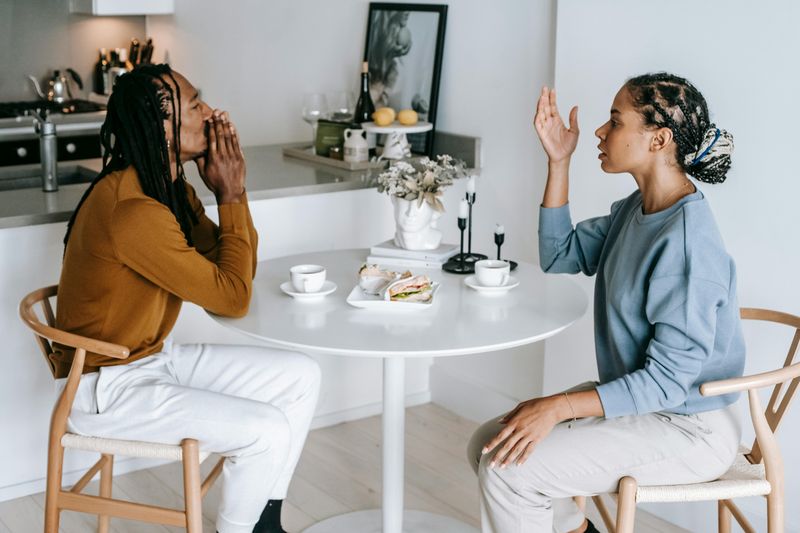
There’s a big difference between questioning specific policies and reacting to women’s equality as if it personally attacks men.
When conversations about equal pay, reproductive rights, or representation are met with “what about men?” or “feminism has gone too far,” pay close attention to the emotion behind those words.
Feeling threatened by equality is a telling sign.
It suggests he sees gender dynamics as a competition rather than a shared pursuit of fairness.
A secure, respectful partner can discuss women’s issues without making it about himself.
If every step forward for women feels like a loss to him, that worldview will eventually affect how he treats you.
10. He Judges Women’s Looks More Than Men’s Character

Watch how he evaluates people.
When a woman comes up in conversation, does he immediately comment on her appearance — positively or negatively?
And when a man comes up, does he talk about what he’s accomplished or what kind of person he is?
That double standard reflects something deeper than just personal taste.
Reducing women to their looks while judging men by their achievements sends a clear message about who gets to be taken seriously.
Over time, this habit can creep into how he sees you too — valuing your appearance over your intellect, ambition, or character.
That’s not a small thing.
11. He Minimizes Sexism or Dismisses Your Experiences

“That doesn’t happen anymore.”
“You’re overreacting.”
“Not everything is about gender.”
If you’ve heard these responses when sharing experiences of sexism or discomfort, you know how isolating they feel.
Being dismissed when you’re trying to explain something real is a form of gaslighting — whether he intends it or not.
A partner who genuinely respects you will try to understand your experience, even if it’s outside his own.
He doesn’t have to have lived it to believe it.
Consistent dismissal of your reality — especially around gender — is a sign that your perspective is being ranked below his comfort.
That matters enormously in a relationship.
12. He Treats Your Boundaries as Negotiable

Boundaries aren’t starting points for a negotiation — they’re statements of what you need.
When he pushes past your “no” repeatedly, reframes your limits as overreactions, or acts wounded when you hold your ground, something important is happening.
Your autonomy is being treated as an inconvenience rather than a right.
This can show up in small ways: pressuring you to stay later, dismissing your comfort in social situations, or nudging you past what you’ve said you’re comfortable with.
Each instance might feel minor on its own.
But a consistent pattern of treating your boundaries as flexible is one of the clearest signs of disrespect in any relationship.
13. He Uncritically Admires Hyper-Masculine Influencers

The content someone consumes shapes how they see the world — especially when they consume it without any critical thinking.
If he regularly watches or repeats talking points from influencers who frame women as inferior, manipulative, or purely transactional, those ideas don’t stay on the screen.
They seep into his attitudes and eventually his behavior.
It’s worth having an honest conversation about the content he engages with.
Does he push back on harmful ideas, or does he nod along?
Someone who truly values women won’t find entertainment in content that degrades them.
What he laughs at, shares, and defends reflects what he actually believes about gender and respect.