 MomSkoop

Growing up, most kids assume their home life is normal, even when something feels deeply off. For children raised by narcissistic parents, certain painful patterns become so routine that they seem like just “the way things are.”
Recognizing these patterns as an adult can be a powerful first step toward healing. If any of the following feel uncomfortably familiar, you are far from alone.
1. Love Felt Conditional

Affection should never come with a price tag, but for some kids, it always did.
If you grew up feeling loved only when you performed well, behaved perfectly, or met impossible expectations, that was not normal parenting.
That was conditional love.
Children raised this way often become adults who feel they must constantly earn affection in every relationship.
They tie their self-worth to achievement and panic when they fall short.
Recognizing this pattern is the first step toward understanding that real love does not have conditions, and you deserve it freely, not as a reward for good behavior.
2. Your Emotions Were Dismissed or Mocked

“Stop being so dramatic.”
“You are way too sensitive.”
Sound familiar?
When a parent regularly mocks or ignores a child’s feelings, it sends a damaging message: your emotions do not matter.
Over time, kids in this situation learn to suppress how they feel entirely.
They become adults who apologize for crying, feel ashamed of anxiety, or bottle everything up until it overflows.
Emotions are healthy and human.
If yours were treated like an inconvenience or a joke, that was emotional invalidation, and it leaves real scars.
Healing starts with finally giving yourself permission to feel things fully.
3. You Were Expected to Meet Adult Emotional Needs

Most parents comfort their children.
But in some homes, the roles are quietly reversed.
If you spent your childhood managing your parent’s moods, listening to their problems, or making them feel better, you were placed in a role no child should ever carry.
This dynamic is called parentification, and it robs kids of their childhood.
You become hyper-aware of everyone’s emotions and forget to check in on your own.
Many adults who experienced this struggle with setting limits in relationships because caretaking feels like their default setting.
You were a child, not a therapist, and that responsibility was never yours to hold.
4. Criticism Outweighed Praise

Bringing home a good grade only to hear about the one question you missed.
Winning a game but being reminded of the mistakes you made.
For some kids, no achievement was ever quite good enough.
Constant criticism without meaningful praise slowly chips away at a child’s confidence.
Adults who grew up this way often struggle with perfectionism, fear of failure, and an inner critic that never goes quiet.
Here is something worth holding onto: your worth was never measured by your performance.
A parent’s inability to celebrate you was their limitation, not a reflection of your actual value or potential.
5. Boundaries Were Never Respected

Privacy is not a luxury for kids.
It is a basic need.
If a parent regularly read your journal, walked into your room without knocking, dismissed your opinions, or treated your personal space as their own, that was a boundary violation.
Children who grow up without respected limits often have trouble setting them as adults.
They may feel guilty saying no, allow others to overstep, or not even recognize when someone crosses a line.
Learning that your space, thoughts, and opinions deserve protection is genuinely life-changing.
Boundaries are not walls meant to push people away.
They are fences with gates you control.
6. You Felt Responsible for Keeping the Peace

Walking on eggshells is exhausting, especially when you have been doing it your whole life.
If you spent childhood constantly scanning the room, adjusting your tone, or shrinking yourself to prevent a parent’s emotional outburst, that hypervigilance became your normal.
Kids who grow up this way become adults who are overly attuned to other people’s moods and deeply conflict-averse.
You might apologize constantly, avoid hard conversations, or feel physically tense in any situation that could turn tense.
That survival skill once protected you, but it may now be holding you back.
Peace in a home should never be a child’s job to maintain.
7. Your Identity Was Controlled or Shaped for Them
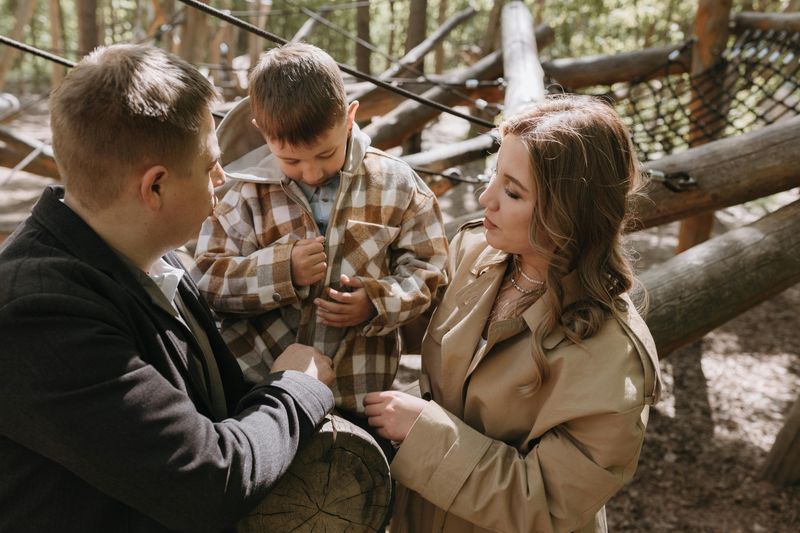
Did you ever feel like your life was less about who you were and more about how you made your parent look?
Narcissistic parents often treat children as extensions of themselves rather than as separate individuals with their own dreams.
Friendships were vetted, hobbies were chosen, and career paths were steered, all to reflect well on the parent.
Growing up this way makes it genuinely hard to know what you actually want.
Your preferences were so often overridden that your own voice became a stranger.
Reclaiming your identity as an adult, one small authentic choice at a time, is a quiet and powerful act of freedom.
8. Gaslighting or Reality Distortion Occurred
“That never happened.”
“You are making things up.”
“You are too sensitive to remember it right.”
If these phrases were common in your childhood, you likely experienced gaslighting, one of the most disorienting tools of a narcissistic parent.
Being repeatedly told your memories or perceptions are wrong makes you distrust your own mind.
Many adults who grew up this way struggle with self-doubt, second-guess their instincts constantly, and find it hard to trust their gut in relationships.
Your memories are valid.
Your experiences were real.
Learning to trust yourself again after years of having your reality questioned takes time, but it absolutely can happen.
9. Comparison and Competition Were Common

“Why can’t you be more like your sister?”
Comparisons like that might seem small, but repeated often enough, they plant seeds of deep inadequacy.
Narcissistic parents frequently use comparison as a tool, pitting siblings against each other or holding up other kids as impossible standards to chase.
This dynamic creates rivalry where there should be closeness and breeds a constant sense of never measuring up.
Adults shaped by this pattern often feel quietly competitive, struggle with jealousy, or feel like they are always falling short next to others.
You were never in a race.
You were a child who simply needed to be seen as enough.
10. Your Successes Were Claimed or Overshadowed
You worked hard, you won, and somehow it still ended up being about them.
Narcissistic parents have a habit of hijacking their children’s accomplishments, either by taking direct credit or by steering every conversation back to themselves.
Getting good at something becomes complicated when your wins are never fully yours.
Over time, some kids stop trying altogether to avoid the sting of having their pride taken away.
Others achieve relentlessly, hoping one day it will finally feel like enough.
Your successes belong to you alone.
No one who truly loves you would stand in the spotlight you earned.
Owning your achievements is not arrogance.
It is simply the truth.