 MomSkoop
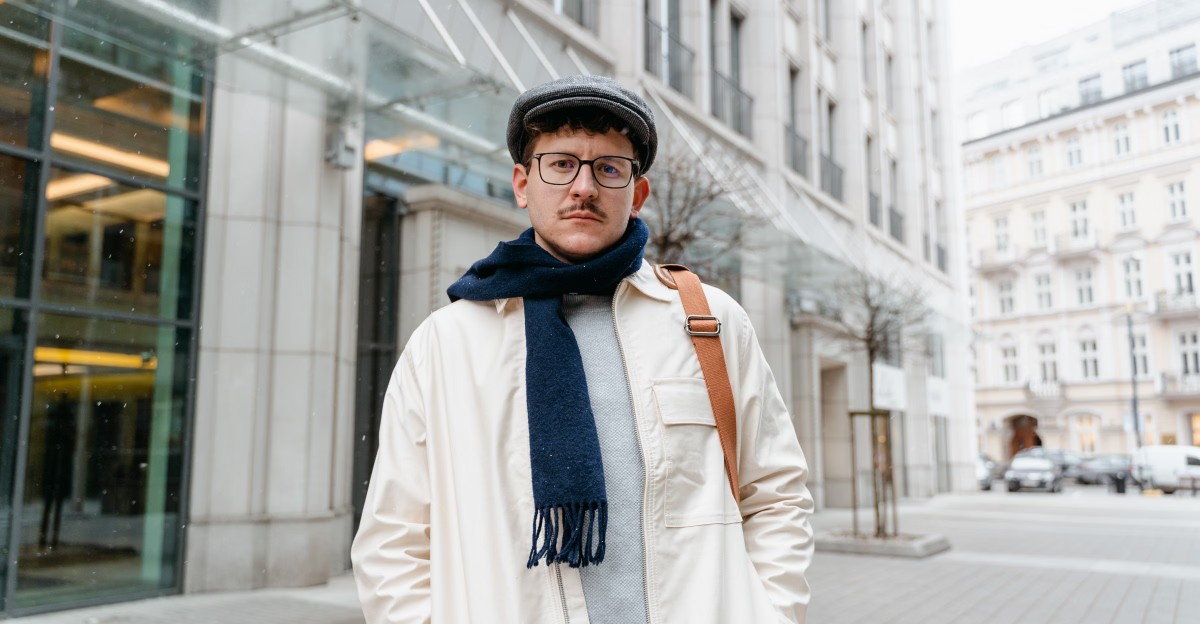
Folding a scarf in half and pulling the ends through the loop takes about five seconds, yet that one move has picked up at least three names. Some call it the Parisian Knot, others say European Loop, and plenty of people just say French Knot. That naming confusion tells me scarf knots are passed around casually, like recipes between friends.
Men’s scarves also carry real history, since soldiers and pilots once wore them for warmth and a bit of distinction long before they became a style choice. What interests me most is how small the effort is compared to the payoff. A plain coat, a gray sweater, or a navy blazer can look more finished with one extra layer near your face. The knots below range from lazy to slightly fancy, and each one fits a different kind of day.
1. The Simple Drape

Lazy days deserve a scarf style too, and the drape is basically the couch of scarf techniques.
You hang the scarf around your neck and let both ends fall evenly down your front.
That’s the whole tutorial, and nobody will grade you on it.
Because it barely wraps your neck, this style offers more looks than warmth.
It works best in mild weather, like a breezy spring morning or a cool office with aggressive air conditioning.
Save it for days when a heavy coat would feel silly.
Where the drape really shines is over a blazer or sports coat.
The two hanging ends create long vertical lines that make your upper half look neat and streamlined.
A patterned silk or thin cotton scarf can add color to a plain navy or gray jacket without stealing the show.
Try matching one color in the scarf to your shirt or pocket square for a subtle link.
If your outfit is mostly neutral, a scarf with a bold print gives people something interesting to notice.
Keep both ends roughly the same length, since uneven ends can look accidental instead of relaxed.
Honestly, it’s the easiest way to test whether you like scarves at all before learning fancier knots.
2. The Once-Around Wrap

Fall mornings have a sneaky habit of starting cold and turning mild by lunch.
The once-around wrap handles that mood swing nicely, giving you warmth without making you feel bundled up like a winter mascot.
Start by hanging the scarf around your neck with one end noticeably longer than the other.
Take the long end and wrap it once around your neck.
Both ends will then hang in front, usually at slightly different lengths, which is part of the relaxed charm.
The loop adds a bit of soft bulk around your collar.
That extra fabric blocks chilly air and gives your outfit more shape than a flat drape.
It looks especially good with a crewneck sweater, a chore coat, or a casual wool jacket.
Thicker knits make this wrap feel sturdier and more casual.
Thinner wool or cashmere blends look tidier under a dress coat.
Pick based on where you’re headed, since a chunky scarf at a dinner meeting might feel like you came straight from a hike.
One small tip helps a lot.
Tug the loop slightly loose so it sits comfortably instead of hugging your throat, and you’ll look calm rather than strangled by your own accessory.
3. The Parisian Knot
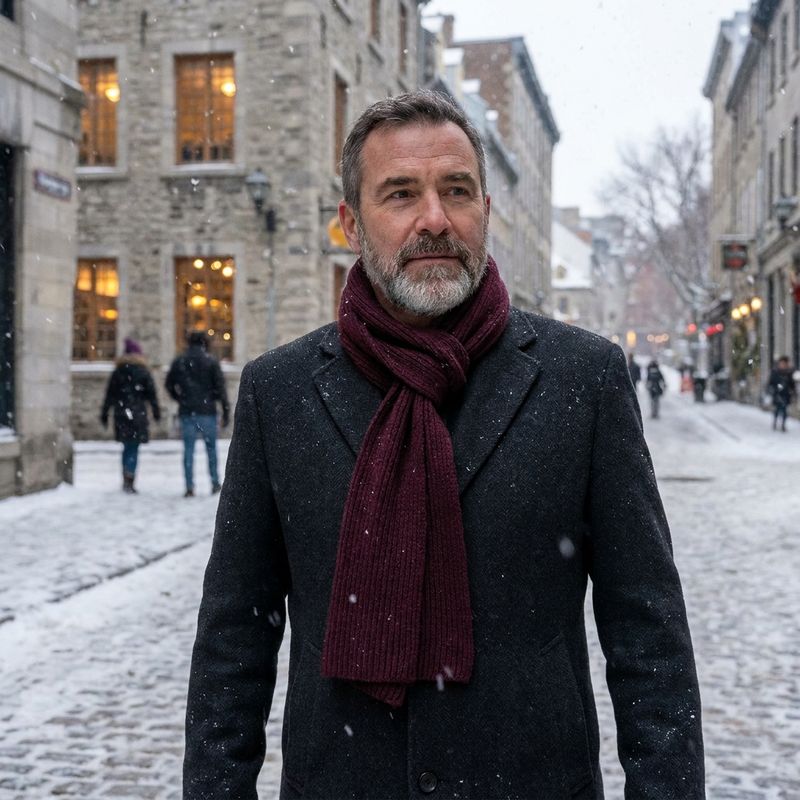
Three names, one knot.
Some people call it the Parisian Knot, while others say European Loop or French Knot, and they all mean the same tidy fold.
Whatever you call it, this is probably the most popular way men tie scarves in cold weather.
Fold your scarf in half lengthwise so you have a loop at one end and two loose tails at the other.
Drape it around your neck with the loop on one side.
Then pull both tails through the loop and slide the knot up to a comfortable spot.
The result sits snug and compact against your neck.
Very little cold air sneaks through, which makes it a smart pick for windy days and long walks.
It also looks neat and balanced, adding a clean focal point right below your face.
You can wear the ends outside your coat for a bit of flair.
Tucking them inside gives a sleeker, more formal look that pairs nicely with a structured overcoat.
Both options work, so choose based on your mood.
Medium-length scarves handle this best.
If your scarf is very short, the fold may leave stubby tails that won’t reach through the loop gracefully.
4. The Overhand Knot

Anyone who has tied a shoelace already knows half of this one.
The overhand knot borrows the most basic tying move there is and turns it into a scarf style that looks more thoughtful than it really is.
Drape the scarf around your neck, leaving one end longer than the other.
Cross the long end over the short end.
Bring it under and up through the opening near your neck, forming a simple half knot.
Pull both ends gently to adjust the tightness and position.
The knot usually sits a little looser than the Parisian, which gives it a relaxed but intentional look.
It still covers your neck well enough for a chilly afternoon.
Longer scarves work best here because the knot uses up some length.
With a short scarf, you might end up with awkward little tails poking out.
A scarf around six feet long gives you room to play.
This knot plays nicely with both casual and dressier outfits.
Over a suede jacket or field coat, it adds a polished detail.
Over a wool overcoat, it brings a hint of personality without shouting.
Not bad for a move you learned in kindergarten, right?
5. The Reverse Drape Tuck
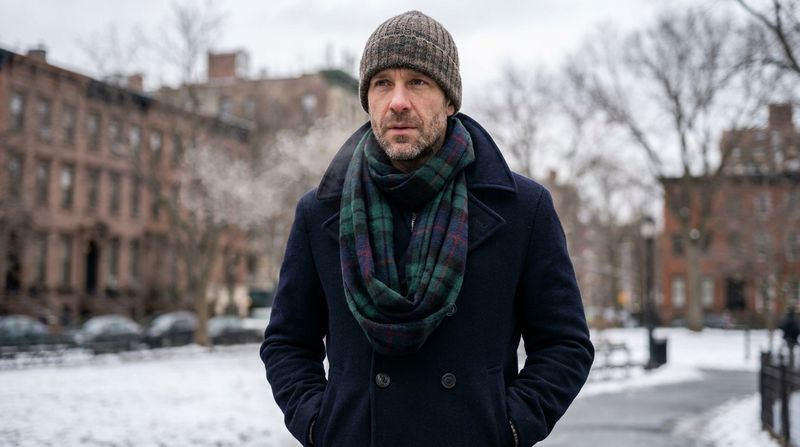
Few people wear this knot, which is exactly why it catches the eye.
The reverse drape tuck looks layered and clever, yet it takes only a few steps once you get the order right.
Begin by draping the scarf with one end much longer than the other.
Wrap that long end once around your neck to form a loop.
Then tuck the same long end through the loop you just made.
Here’s the final move.
Grab the other end of the scarf and tuck it through that same loop too.
Give everything a little adjustment so the layers sit flat and even.
The finished look covers your neck thoroughly, so it’s a solid choice for bitter wind.
It also creates a crossed, woven effect that makes a plain coat look more interesting.
A peacoat or simple wool topcoat makes a great backdrop.
You’ll need a long scarf for this one, since two tucks eat up plenty of fabric.
Plaids and stripes look especially good here because the folds show off the pattern from different angles.
Practice it once in front of a mirror before heading out.
After that, it becomes muscle memory, and you’ll have a knot most people around you probably won’t recognize.
6. The Four-in-Hand Scarf Knot
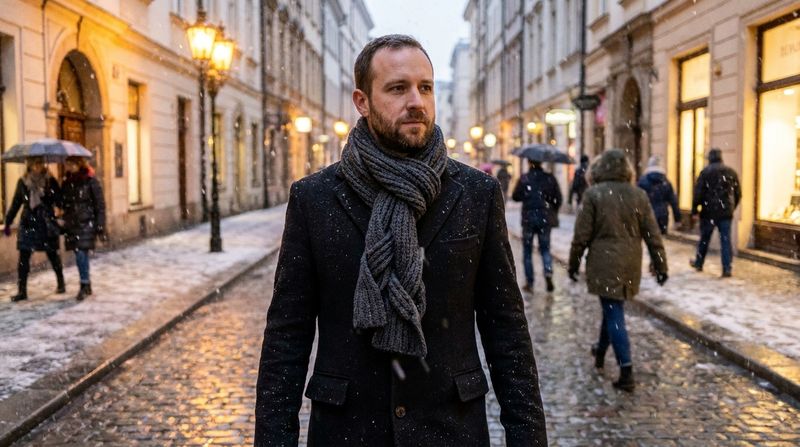
Freezing weather calls for serious fabric, and this knot piles it on.
The four-in-hand scarf knot uses so many folds that your neck basically gets its own winter fortress.
Start by folding your scarf in half lengthwise, then in half again across its width.
Drape it around your neck so a loop sits on one side.
Pull one loose end through that loop.
Now twist the loop to create a second opening.
Pull the other loose end through the twisted loop.
Adjust until the knot sits neatly and feels secure.
Because of all that doubling, this style traps a lot of warmth.
It also builds a rich, layered texture that looks more complex than standard knots.
People might assume you spent ages on it, and you don’t have to correct them.
Thin to medium scarves handle the folding best.
A super chunky knit may turn into a bulky lump after all those layers.
Smooth wool or a soft cashmere blend keeps the twist looking crisp.
Pair it with a dark overcoat so the knot becomes the clear centerpiece.
Keep the rest of your outfit simple, letting the scarf handle the detail work.
It’s proof that a little extra effort can pay off on the coldest days.
7. The Chest Warmer
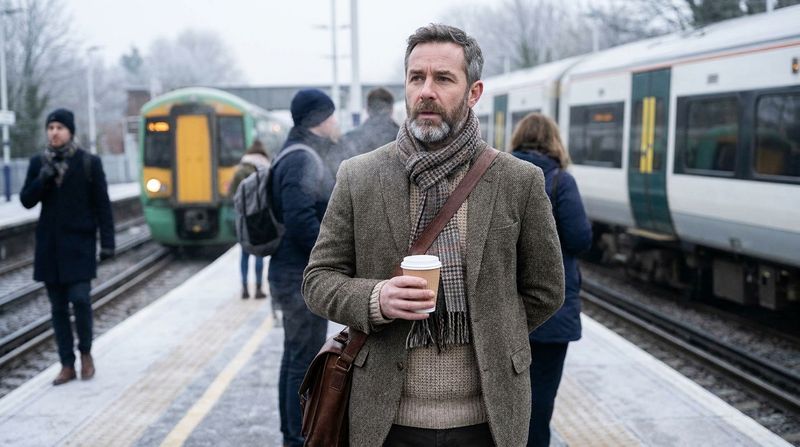
Sometimes the chilliest spot isn’t your neck at all.
When cold air sneaks down the front of an open coat, the chest warmer, also called the stomach warmer, steps up to block it.
Drape a long scarf around your neck so both ends hang in front.
Cross the ends over your chest in an X shape.
Then pass them around your sides and tie them together behind your back.
Since the ends stay hidden, the front looks very clean and organized.
It works under an overcoat or even a sport coat, giving a layered look similar to a vest.
No flapping tails, no tangles in your bag strap.
A long but fairly thin scarf works best.
A bulky knit will make the crossed section look puffy and create a lump behind you.
Fine wool or a lightweight blend lies flatter and moves with you.
This style is especially handy for bikers, walkers, or anyone who hates readjusting a scarf every block.
Once it’s tied, it stays put for hours.
Pick a scarf color that contrasts slightly with your coat lining.
When your jacket swings open, that crossed pattern shows up as a neat little surprise.
8. The Fake Knot

Calling it fake might sound shady, but this knot is completely honest about looking great.
It just takes a shortcut to get there, and the shortcut is a big part of its appeal.
Drape the scarf around your neck with one end longer than the other.
On the longer end, tie a loose overhand knot about a quarter of the way down.
Leave it roomy, since you’ll need space for the next step.
Take the other end and thread it through that loose knot.
Now gently pull each side while sliding the knot up toward your neck.
Stop when it sits where you like it.
What you get is a braided, tied look without the bulk of wrapping.
It frames your face nicely and gives your coat a clear focal point.
It suits casual jackets and dressy overcoats equally well.
Striped scarves look especially sharp with this method.
The knot shifts the stripes in different directions, creating a little visual twist right at your collar.
If the knot slips, tighten the original loop slightly before sliding it up.
With a bit of practice, it takes under a minute, which feels like cheating in the best possible way.
9. The Hoxton Knot

Named after a neighborhood in East London known for its creative crowd, the Hoxton knot has a slightly artsy, city feel.
It’s a fun pick when you want something a step beyond basic wrapping.
Lay the scarf around your neck so one half crosses over the other.
That move creates a loop on one side.
Then take the ends from the opposite side and pull them through the loop.
The finished knot sits close to your neck and feels secure.
It looks a bit more involved than a once-around wrap, with a twisted, pulled-through shape.
Wind has a harder time unraveling it, too.
This knot pairs well with casual layers.
Think denim jackets, bombers, or a hoodie under a parka.
It brings some polish to laid-back outfits without making them feel stiff.
Bright colors like mustard, rust, or forest green show off the shape nicely.
A solid scarf highlights the knot itself, while a busy print can hide its structure.
Give the ends a final tug so they hang at slightly different lengths.
That small imbalance keeps it relaxed and stops it from looking overly arranged.
Consider it the scarf equivalent of nicely messy hair.
10. The Over-the-Shoulder Toss
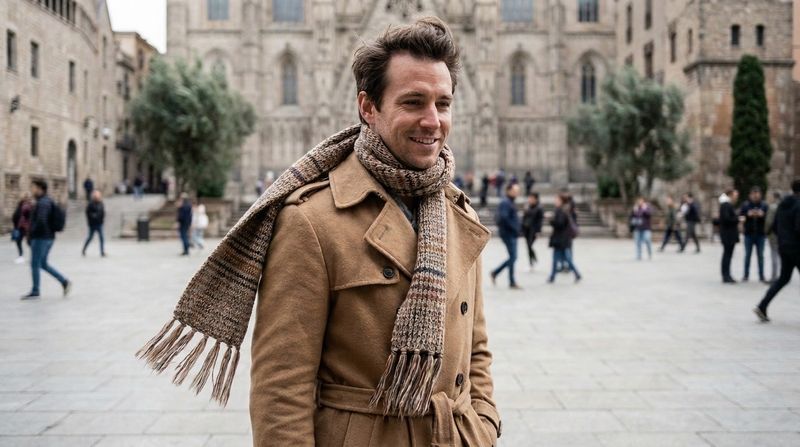
Old movies loved this look, with heroes striding along as a long scarf trailed behind them.
You can borrow that same flair on a regular Tuesday without any dramatic music.
Place the scarf around your neck so one end hangs much longer than the other.
Grab the long end and toss it over your opposite shoulder.
Let it fall down your back, and you’re finished.
The toss wraps the front of your neck while leaving a relaxed, open shape.
It creates a diagonal line across your body, which adds movement to an otherwise straight outfit.
Trench coats and casual blazers pair especially well with it.
This style makes fringe and patterns stand out.
A scarf with tassels or a bold weave gets full attention as it hangs down your back.
One fair warning, though.
Strong wind can flip the tail right back into your face, which looks less heroic.
On blustery days, choose a knot that stays locked in place.
For mild, calm weather, this is a confident and easy option.
Just double-check revolving doors and bike chains before you breeze through, since long tails love to get caught.
11. The Knotted Once-Around

Mixing two good ideas often makes a better one.
The knotted once-around blends the comfort of a wrap with the tidy detail of a knot, and it works hard on cold commutes.
Wrap the scarf once around your neck, leaving both ends hanging in front.
On one end, tie a loose overhand knot, leaving about 12 to 18 inches of fabric past the knot.
Then slip the other end straight through that loose loop.
Adjust until the knot sits comfortably near your collar.
The wrap keeps your neck covered, while the knot holds everything together so it won’t slide loose.
You get warmth and structure in one move.
Medium and long scarves both work here.
The knot adds a planned look that feels more put-together than a plain wrap, yet it doesn’t come across as stiff.
It’s a solid match for quilted jackets, waxed coats, and wool car coats.
Solid colors or small patterns keep this style looking clean.
Very loud prints can make the knot hard to see.
Since it barely shifts during the day, it’s handy if you hop between buses, trains, and offices.
Fewer readjustments mean more time for coffee.
12. The Loop Tie

Picky dressers who hate loose ends will appreciate this one.
The loop tie keeps things neat and contained, so your scarf won’t flap around like a flag on a windy corner.
Fold your scarf in half lengthwise and drape it around your neck.
Instead of pulling both ends through the loop, like the Parisian knot, pull just one.
Then tuck the remaining end under the loop.
For extra warmth, you can wrap that second end around your neck before tucking it in.
That version looks a bit more layered and keeps cold air out better.
Either way, the shape stays slim and tidy.
This knot keeps attention on your coat or jacket instead of the scarf.
That makes it a great match for a sharp overcoat you want people to notice.
Light gray, navy, or camel scarves blend in smoothly and support the outfit quietly.
It also fits nicely under a buttoned collar.
Since nothing dangles, you can wear a backpack or messenger bag without tangling the strap in fabric.
Sometimes the best accessory is the one that simply behaves.
The loop tie proves a scarf can be useful, polished, and drama-free all at once.