 MomSkoop
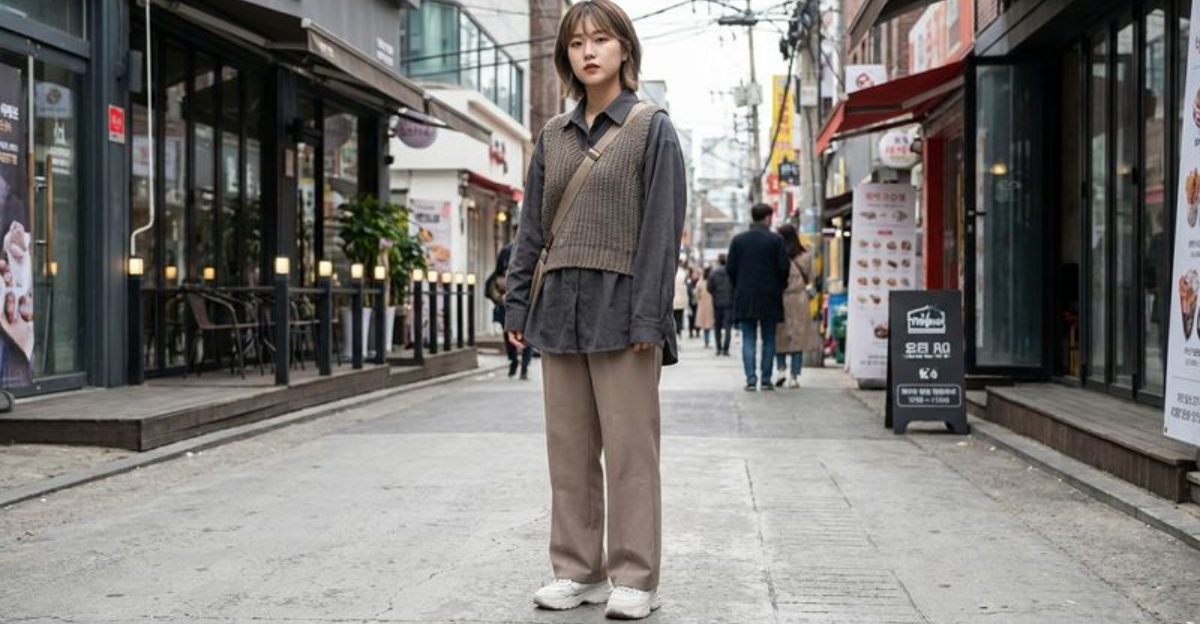
Korean culture has taken over the world, and it’s not just about music and dramas anymore.
From Seoul’s bustling streets to your local mall, K-beauty and K-fashion are reshaping how people think about style and skincare. Whether you’re scrolling through social media or walking through your school hallways, these trends are impossible to miss—and they’re here to stay.
1. Glass Skin 2.0
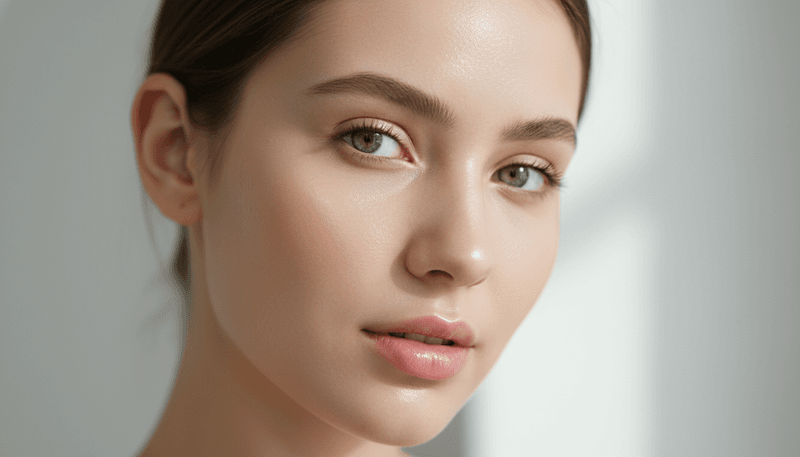
Forget the super-shiny look from before.
Glass Skin has evolved into something more natural and wearable for everyday life.
Instead of looking like you’ve dunked your face in oil, this updated version focuses on genuine skin health that radiates from within.
Lightweight layers are the secret here.
You’re building up hydration with essences, serums, and moisturizers that sink into your skin rather than sitting on top.
Think of it like watering a plant—you want the moisture to feed your skin barrier, not just coat the surface.
Skin barrier care has become the real star.
When your skin’s protective layer is happy and healthy, that glow happens naturally without needing tons of highlighter or shimmer products.
2. Skinimalism Makeup
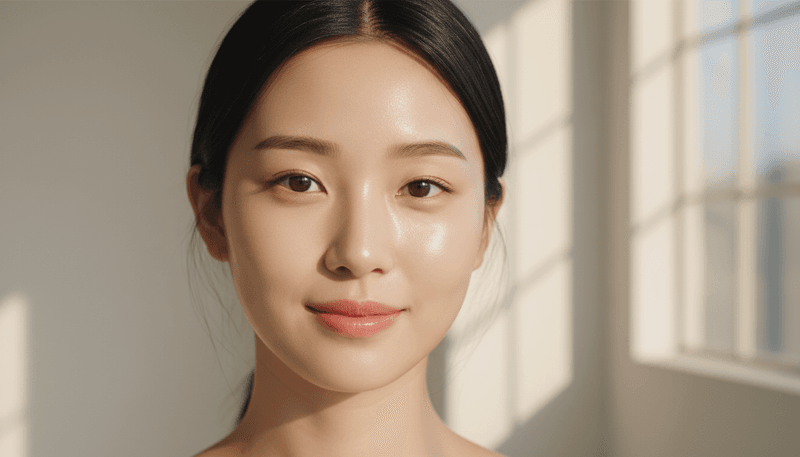
Less is genuinely more with this makeup philosophy that’s sweeping across beauty counters.
Skinimalism celebrates your actual skin texture instead of covering it up with heavy foundation and layers of product.
Your freckles, natural flush, and real skin get to shine through.
Sheer coverage cushions have replaced full-coverage foundations for many people.
These lightweight formulas even out your tone without masking what makes your face uniquely yours.
Soft contouring adds dimension without looking like you’ve drawn lines on your face.
Color takes a backseat to skin quality.
Rather than bright eyeshadows or bold lips, the focus stays on creating a fresh, healthy base that looks like you just woke up with perfect skin.
3. Blurred and Gradient Lips
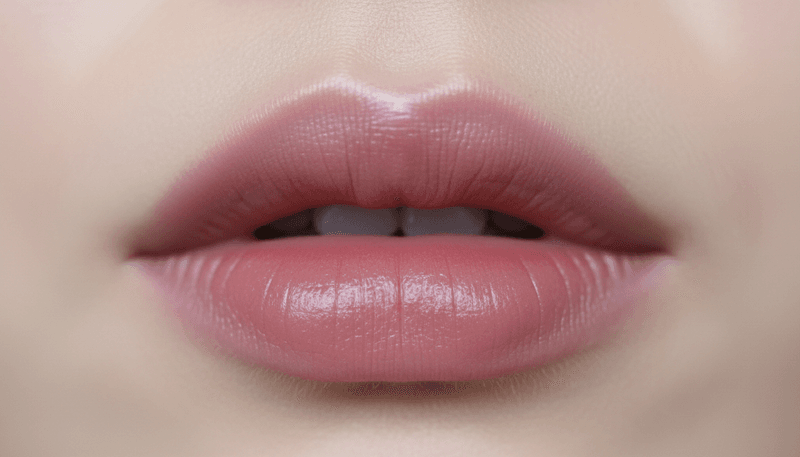
Sharp lip lines have officially left the chat.
Gradient lips create a soft, natural effect that looks like you’ve been gently biting your lips—in the prettiest way possible.
This technique brings all the attention to the center of your mouth while fading outward.
Muted pinks, browns, and rose tones dominate this trend.
These aren’t your grandma’s bright lipsticks; they’re sophisticated, subtle shades that work with any outfit or occasion.
The blurred edges make everything feel relaxed and effortless rather than perfectly painted.
Application matters more than the product itself.
You’ll dab color onto the center of your lips and blend outward with your finger, creating that lived-in look that seems almost accidental but is totally intentional.
4. Clean Girl K-Beauty Aesthetic
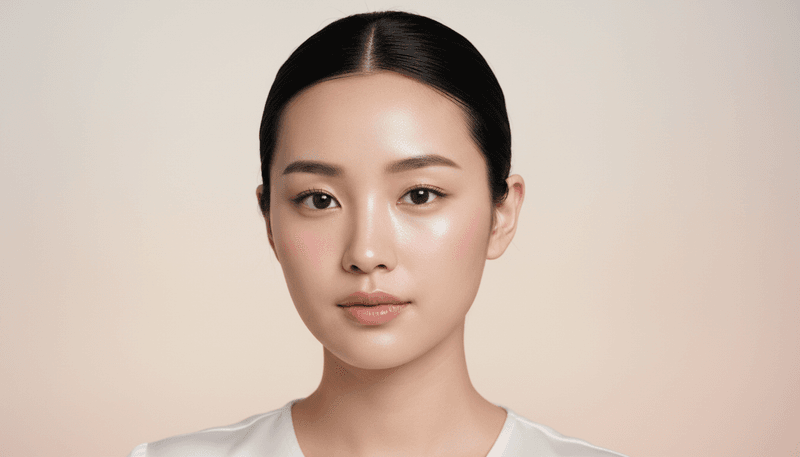
Effortless polish defines this aesthetic that’s taken over every beauty feed.
Clean Girl K-Beauty combines slicked-back hairstyles with dewy, healthy-looking skin and just enough makeup to look put-together without trying too hard.
It’s the visual equivalent of having your life together.
Dewy skin forms the foundation of this look.
You want that fresh-from-the-shower glow paired with subtle blush that makes you look naturally flushed.
Neutral tones keep everything cohesive and wearable for school, work, or weekend hangouts.
The beauty lies in its simplicity.
Hair gets smoothed back into a bun or ponytail, skin looks naturally radiant, and makeup stays minimal.
You look polished enough for any situation while maintaining an approachable, down-to-earth vibe.
5. Matcha, Milk, and Neutral Tones
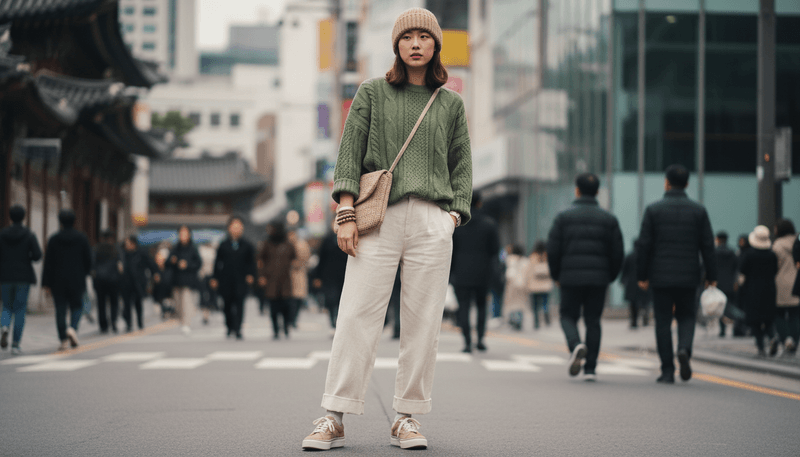
Color palettes have gone soft and earthy across Korean fashion.
Matcha greens, creamy whites, beige, and muted browns create outfits that feel calm and sophisticated without being boring.
These shades work together like ingredients in a perfectly balanced recipe.
Streetwear and luxury fashion both embrace these tones.
You’ll spot them on oversized hoodies, tailored coats, flowing dresses, and everything in between.
The neutrality makes mixing and matching incredibly easy—almost everything coordinates naturally.
This trend proves that colorful doesn’t always mean bright.
Earthy greens and warm browns add visual interest while maintaining that peaceful, put-together aesthetic that Korean fashion does so well.
Your wardrobe becomes more versatile when built around these foundational shades.
6. Balletcore with a Korean Twist
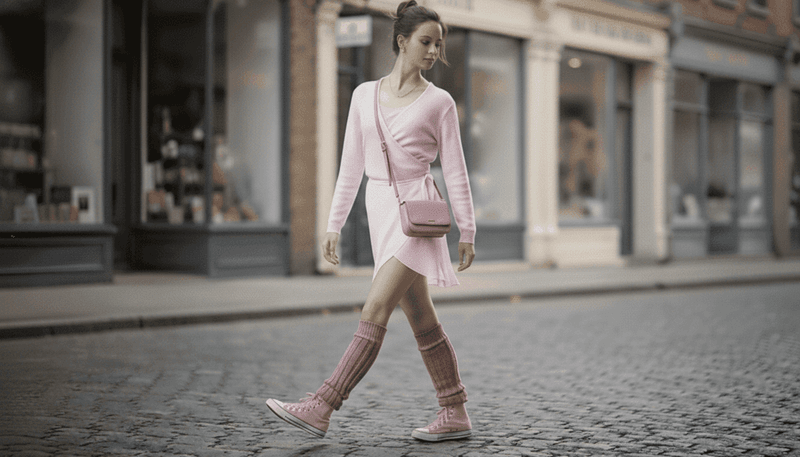
Ballet has stepped off the stage and into everyday wardrobes, Korean-style.
This isn’t about tutus and tights—it’s about incorporating dance-inspired pieces into wearable, practical outfits that anyone can pull off.
Wrap skirts, leg warmers, and ribbon details add feminine touches without looking costume-y.
Soft knits and comfortable flats keep the aesthetic grounded.
Rather than going full ballerina, Korean fashion takes individual elements and styles them with casual pieces like oversized sweaters or simple tees.
The result feels romantic but totally accessible for real life.
Ribbons have become the signature detail.
They show up on shoes, in hair, on bags, and as clothing accents.
These small touches reference ballet’s delicate beauty while keeping outfits modern and street-ready.
7. Oversized Tailoring
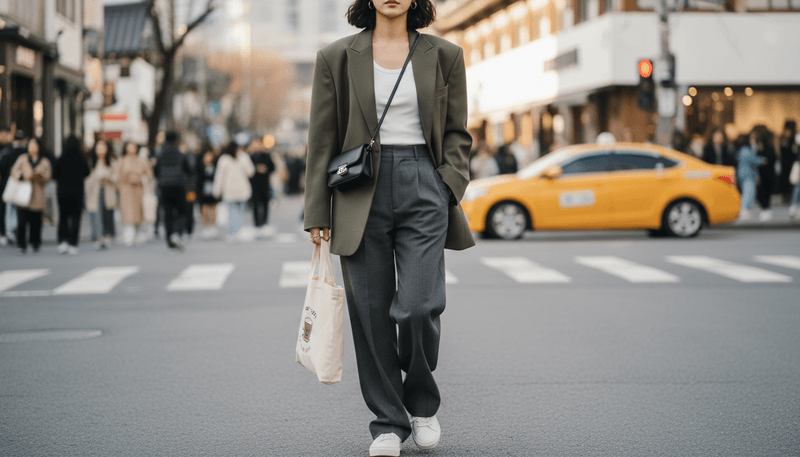
Structured clothing has gotten comfortable.
Oversized tailoring takes pieces that traditionally fit close to the body—like blazers and trousers—and sizes them up for a relaxed, contemporary silhouette.
Boxy blazers hang loosely on shoulders, and wide-leg pants flow rather than cling.
Casual basics balance the formality.
Pairing a structured blazer with a simple tank top and sneakers creates an interesting contrast between polished and laid-back.
This mixing keeps outfits from looking too serious or business-like for everyday wear.
Comfort meets sophistication in this trend.
You get the sharp, put-together look of tailored clothing without feeling restricted or uncomfortable.
It’s perfect for people who want to look stylish without sacrificing the ability to move freely through their day.
8. Y2K Soft Revival
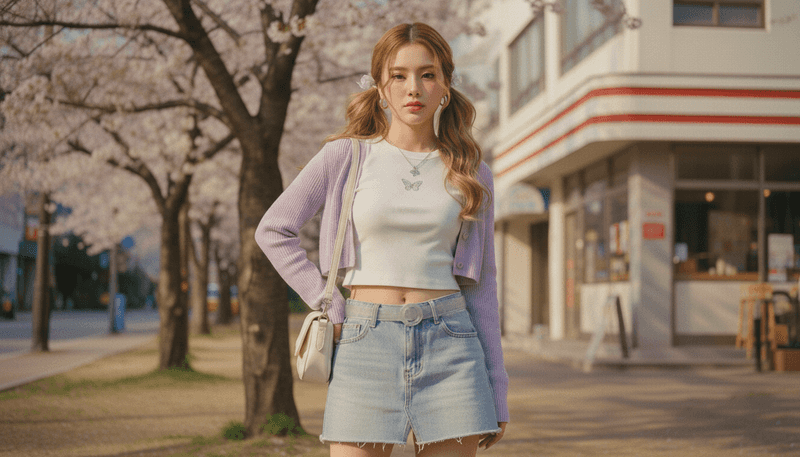
Early 2000s fashion has returned, but with a Korean makeover.
This softer take on Y2K keeps some iconic elements—low-rise silhouettes, baby tees, mini skirts—while dialing back the flashy, over-the-top aspects that defined the original era.
Think less Paris Hilton, more understated Seoul street style.
Clean styling makes all the difference.
Instead of layering on rhinestones, butterflies, and bright colors, this revival focuses on simpler versions of Y2K staples.
The shapes stay recognizable, but the execution feels more refined and wearable for today’s fashion landscape.
Nostalgia meets modern sensibility here.
You get to enjoy the fun of 2000s trends without looking like you raided a time capsule.
It’s familiar enough to feel retro but fresh enough to wear right now.
9. Statement Hair Accessories
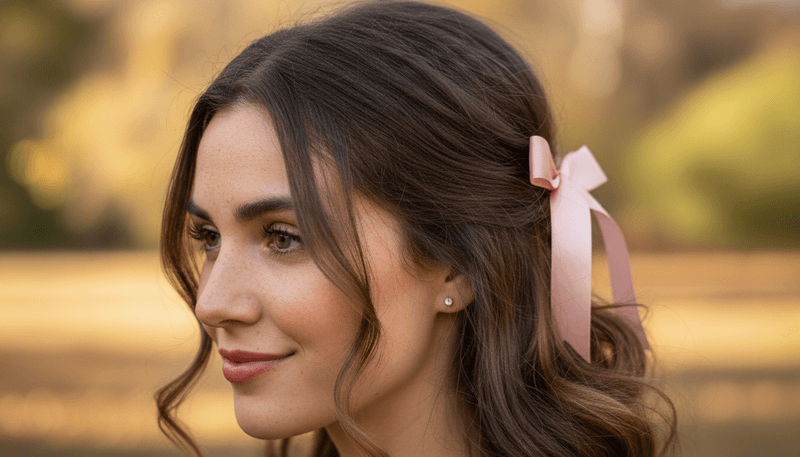
Hair accessories have graduated from functional to fashionable.
Ribbons, claw clips, headbands, and bows aren’t just holding your hair back anymore—they’re key outfit components that complete your entire look.
These details add personality and polish to even the simplest hairstyles.
Everyday styling has become more creative.
Instead of defaulting to plain ponytails or messy buns, people are incorporating decorative elements that make basic hairstyles feel intentional and put-together.
A simple bow can transform your whole vibe instantly.
The variety keeps things interesting.
Some days call for oversized claw clips, others for delicate ribbons woven through braids.
Headbands can be preppy or edgy depending on styling.
These accessories let you switch up your look without changing your actual outfit.
10. Functional Fashion (Gorpcore Lite)
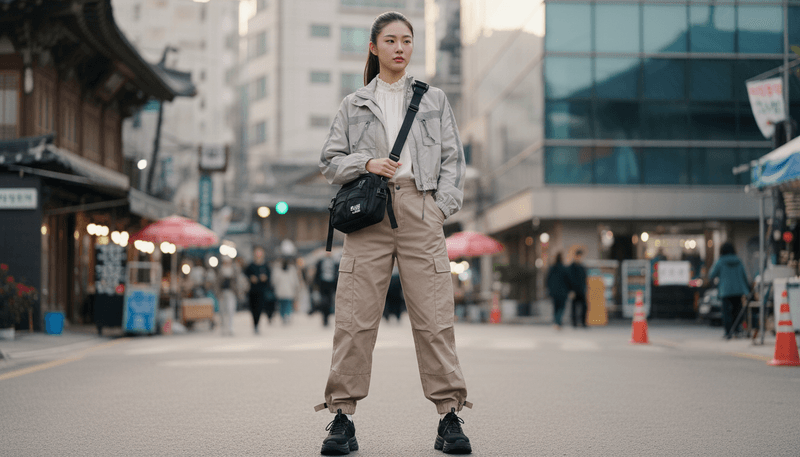
Outdoor gear has infiltrated everyday fashion in the most practical way.
Gorpcore Lite brings functional pieces like cargo pants, windbreakers, and nylon bags into regular rotation, but styles them with feminine or minimal pieces rather than going full hiking-trail aesthetic.
Utility meets urban living.
Cargo pants have become surprisingly versatile.
Paired with a delicate blouse or fitted top, they create an interesting contrast between rugged and refined.
Multiple pockets aren’t just practical—they’ve become a design feature that adds visual interest to outfits.
Nylon materials dominate accessories.
Crossbody bags, backpacks, and pouches in lightweight nylon feel sporty and modern while being incredibly practical for carrying your daily essentials.
Functionality has never looked this good or been this trendy.
11. Gender-Fluid Styling
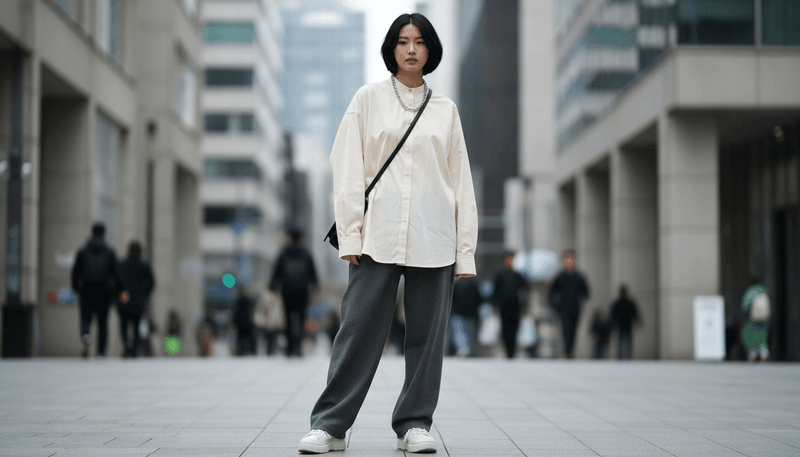
Fashion boundaries are dissolving in Korean style.
Gender-fluid styling embraces neutral cuts, unisex silhouettes, and shared wardrobe pieces that anyone can wear regardless of gender identity.
Traditional fashion rules about what’s masculine or feminine have become irrelevant and outdated.
Neutral cuts work for every body type.
Straight-leg pants, boxy shirts, and oversized outerwear don’t conform to gendered expectations—they’re just good design that happens to look great on everyone.
This approach makes shopping and styling simpler and more inclusive.
Shared wardrobes are becoming normal.
Partners, friends, and siblings can swap clothes freely when pieces aren’t designed with specific genders in mind.
This trend represents a bigger cultural shift toward acceptance and self-expression through fashion that feels authentic to each individual.