 MomSkoop

Old jeans pile up in closets everywhere, too worn to wear but too sturdy to throw away.
Instead of tossing them, people are transforming denim into stylish home goods, fashion pieces, and practical organizers that look store-bought.
These clever projects prove that yesterday’s favorite pair can become tomorrow’s must-have creation.
1. Structured Denim Tote with Interior Pockets
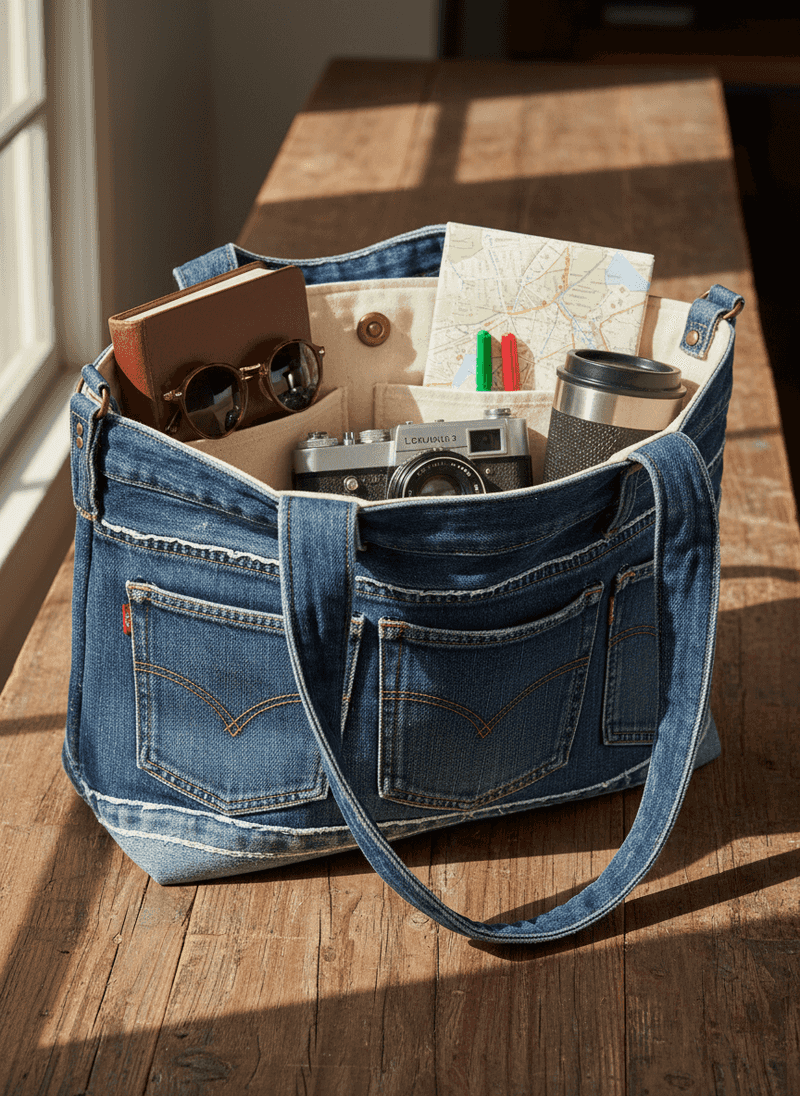
Your worn jeans already come with perfectly functional back pockets, so why not put them to work inside a brand-new bag?
The pant legs provide tough fabric for the body, while those original pockets become instant organizers for keys, phones, and lip balm.
Cut the legs to your preferred tote height and stitch them together with reinforced seams.
Attach sturdy straps from the waistband or use canvas webbing for extra strength.
The result is a one-of-a-kind carryall that gets better with every outing.
No two bags turn out identical since every pair of jeans fades differently over time.
2. Patchwork Statement Jacket Panels
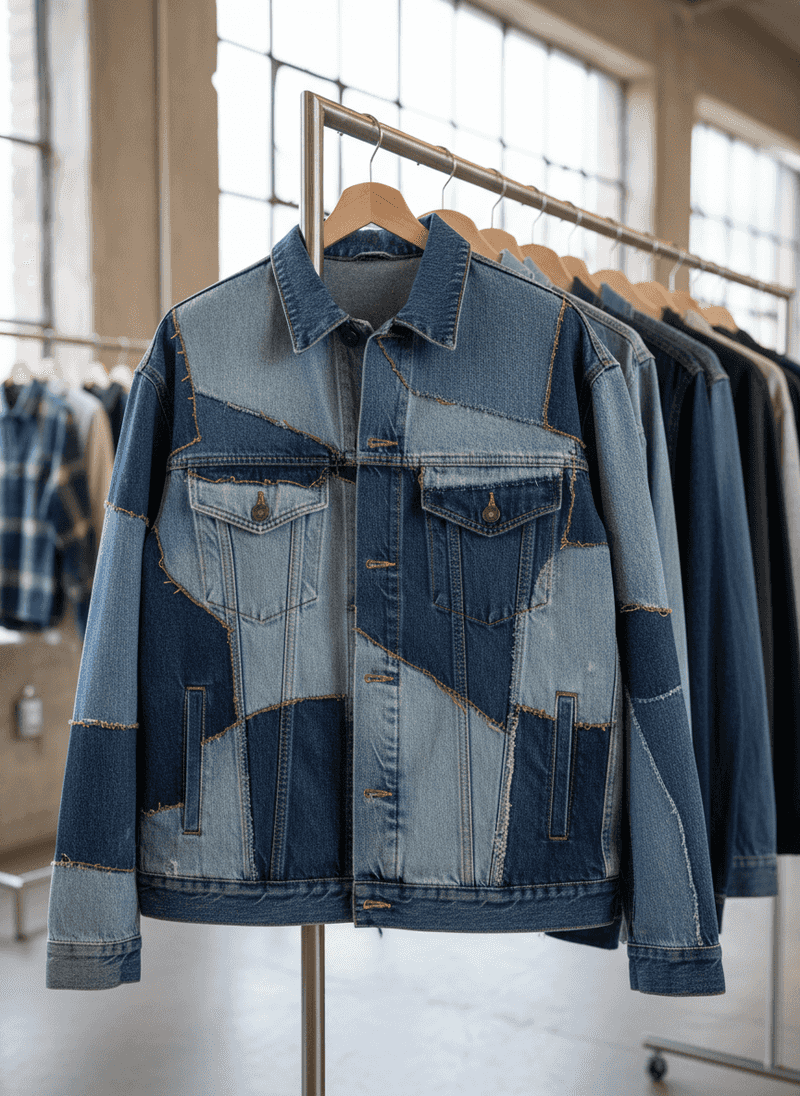
Fashion designers charge hundreds for patchwork denim, but you can create the same look at home with jeans in different shades.
Light wash, dark indigo, and black denim create striking geometric patterns when pieced together on a plain jacket or hoodie.
Map out your design first using paper templates, then cut precise panels from various jeans.
Topstitch them onto your base garment with contrasting thread to emphasize the patchwork effect.
The mix of textures and tones gives instant streetwear credibility.
Wear your custom piece knowing nobody else owns anything quite like it.
3. Denim Storage Bins with Reinforced Base
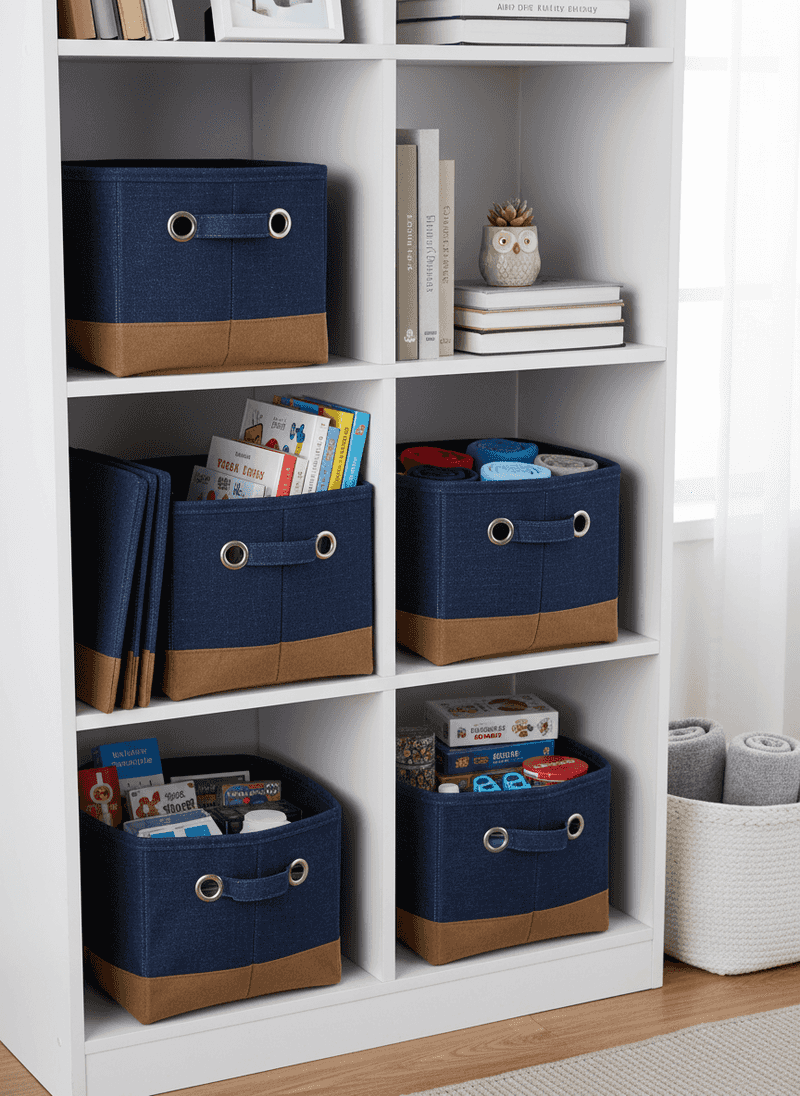
Fabric storage bins cost a fortune at home stores, yet you probably have the materials sitting in your donation pile right now.
Denim naturally holds its shape better than most fabrics, especially when you add canvas or interfacing to the bottom and sides.
Cut rectangular panels from the flattest parts of your jeans and sew them into box shapes.
Line the interior with stiff interfacing so the bins stand upright even when empty.
Fold down the top edge for a finished cuff.
These organizers handle everything from craft supplies to kids’ toys without losing their structure over months of use.
4. Frayed-Edge Table Runner
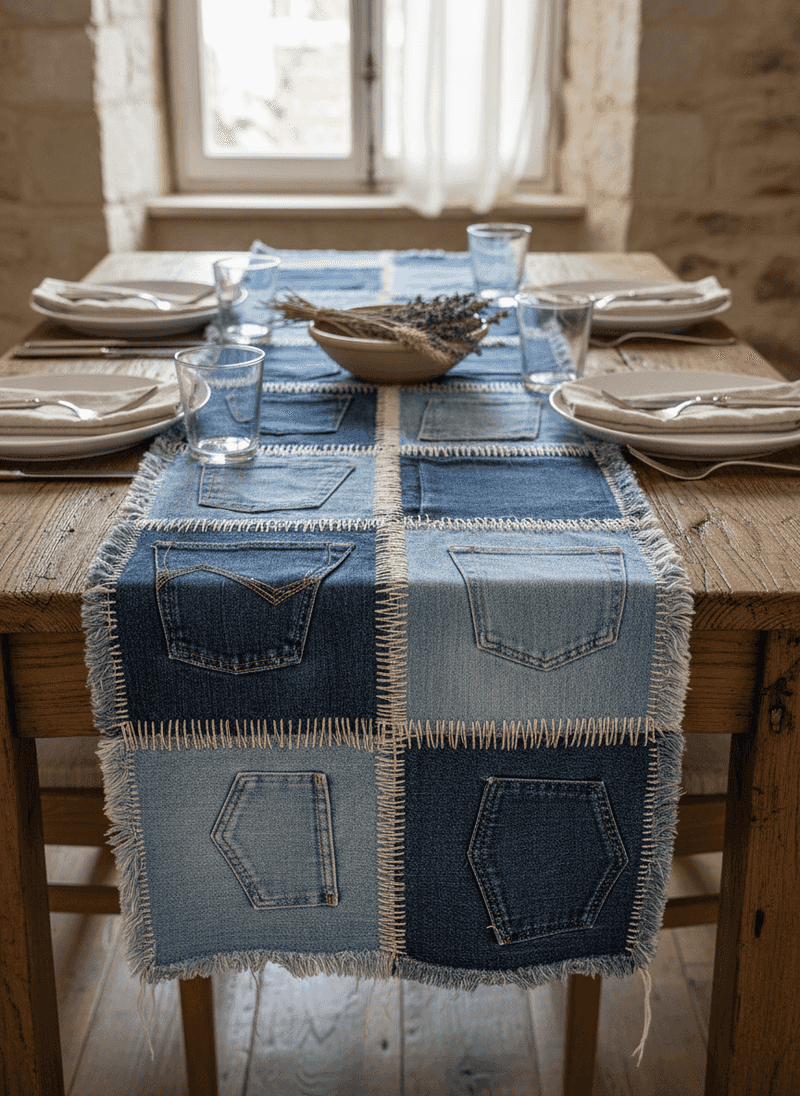
Raw, frayed seams have become a signature look in modern farmhouse decor, and denim delivers that aesthetic perfectly.
Multiple pant leg sections stitched lengthwise create a substantial table runner that protects surfaces while adding casual style.
Don’t hide the seams—flip them to the outside and let the edges fray naturally for texture.
The different denim shades create subtle stripes down the length of your table.
A simple zigzag stitch prevents excessive unraveling while keeping that lived-in vibe.
Toss it in the wash whenever needed since denim actually improves with repeated laundering.
5. Tech Sleeve with Built-In Pocket
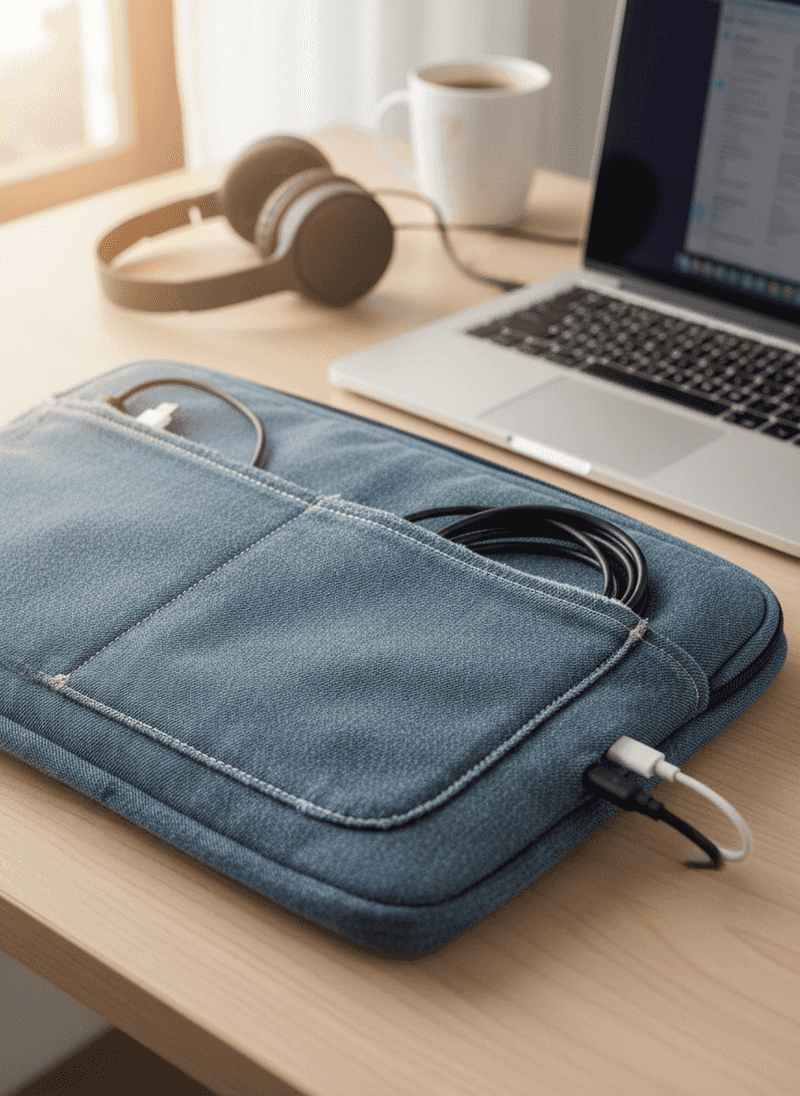
Laptops and tablets need protection, and a single pant leg provides exactly the right amount of fabric for a custom-fit sleeve.
The existing pocket becomes the perfect spot for charging cables, earbuds, or a wireless mouse.
Measure your device and cut the leg slightly larger to accommodate padding.
Add a layer of quilt batting or foam between two denim pieces for cushioning.
Sew around three sides, leaving the top open, and add a button or Velcro closure.
That exterior pocket saves you from digging through your bag every time you need an accessory.
6. Zero-Waste Quilted Blanket
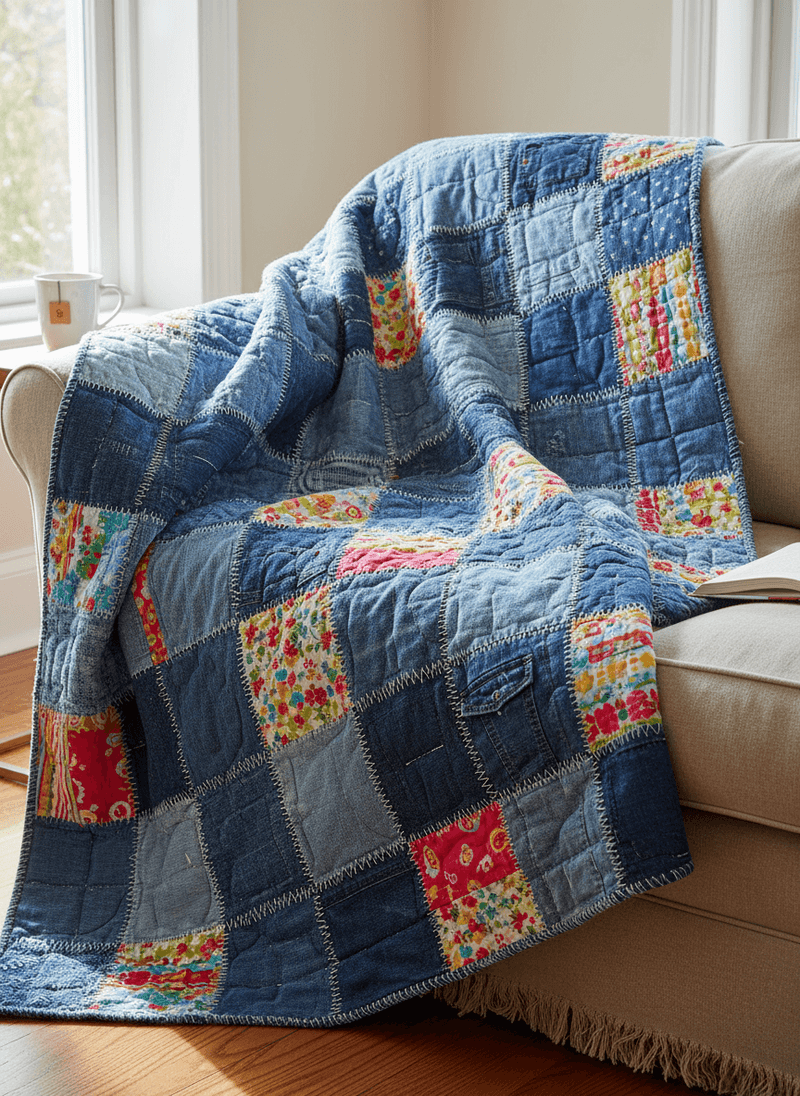
Quilters have discovered that denim scraps create surprisingly cozy blankets that actually gain character as they age.
Mixing light and dark denim with cotton prints produces a weighted throw that feels substantial without being stiff.
Cut squares or rectangles from every usable section of multiple pairs of jeans.
Alternate denim pieces with cotton scraps in a pattern that pleases your eye.
Layer with batting and backing fabric, then quilt through all layers.
The weight comes from the denim itself, creating a naturally heavy blanket perfect for cold evenings without added fill.
7. Convertible Apron with Tool Loops

Aprons take serious abuse in kitchens and workshops, so denim’s durability makes perfect sense for the job.
The waistband becomes your neck strap, complete with the original button closure for easy adjustments.
Keep those belt loops intact because they transform into holders for wooden spoons, whisks, or screwdrivers depending on your needs.
Add large pockets from other jeans across the front for even more storage.
Attach ties from scrap fabric or use the original belt loops with ribbon threaded through.
This apron handles hot pans, paint splatters, and garden dirt without showing wear.
8. Braided Denim Rug
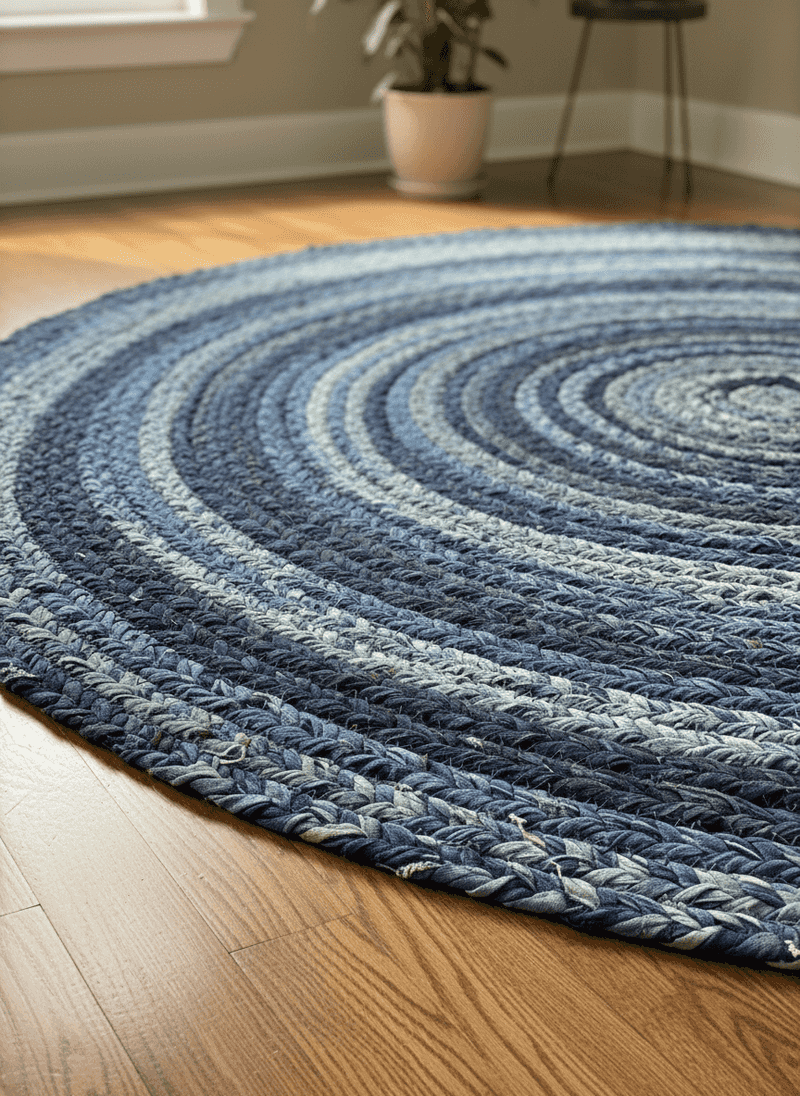
Cutting jeans into strips might seem tedious, but the payoff is a heavy-duty floor covering that withstands foot traffic better than most store-bought rugs.
Tight braiding creates a dense, textured surface that adds visual interest to any room.
Slice your jeans into one-inch strips and braid three strips together, adding new pieces as you go.
Coil the braid in a spiral, stitching each round to the previous one with strong thread.
Different denim shades create natural color variation throughout.
The finished rug stays put without a pad and cleans up easily in the washing machine.
9. Plant Pot Covers with Structured Cuffs
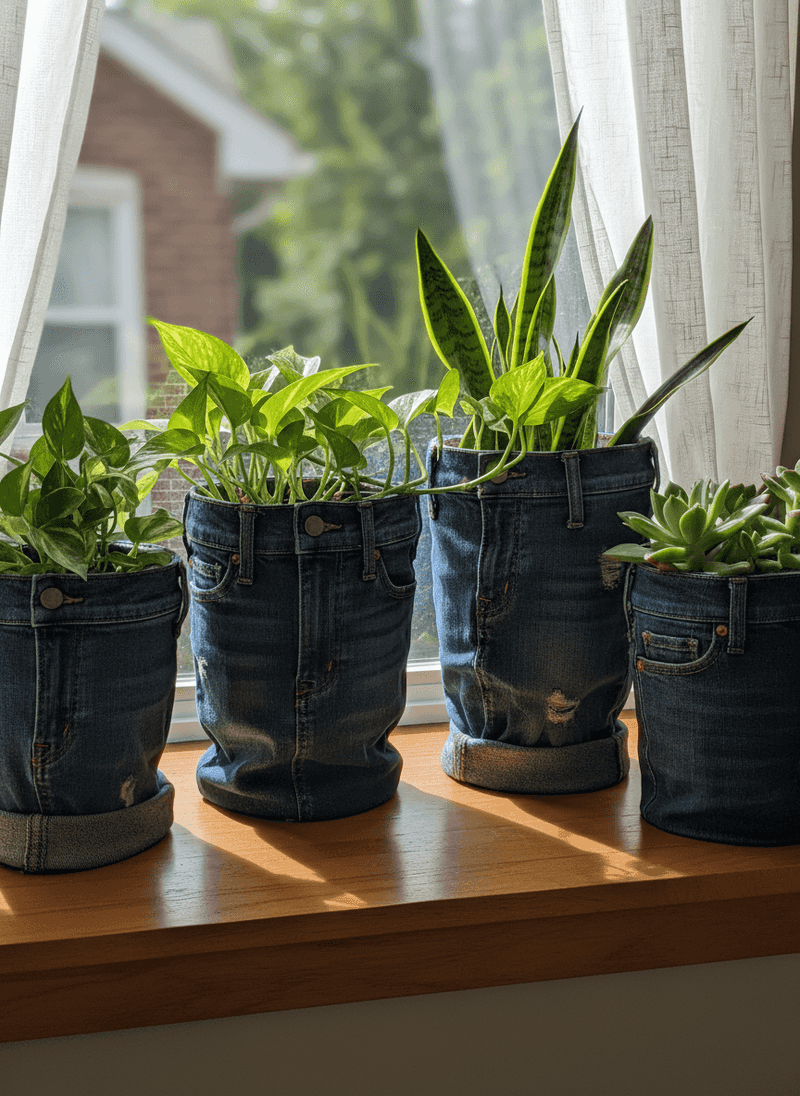
Those perfectly hemmed jean cuffs become instant finished edges when you repurpose pant legs as planter covers.
No additional sewing required for the rim, and the heavy fabric hides plain plastic pots beautifully.
Measure your pots and cut the legs to size, leaving the bottom hem intact as your top edge.
Sew a bottom seam or leave it open for drainage if using outdoors.
Slip the cover over your pot and roll or fold the cuff for different looks.
Washable denim handles water splashes and soil much better than decorative pots that stain permanently.
10. Denim Wine Bottle Gift Wrap
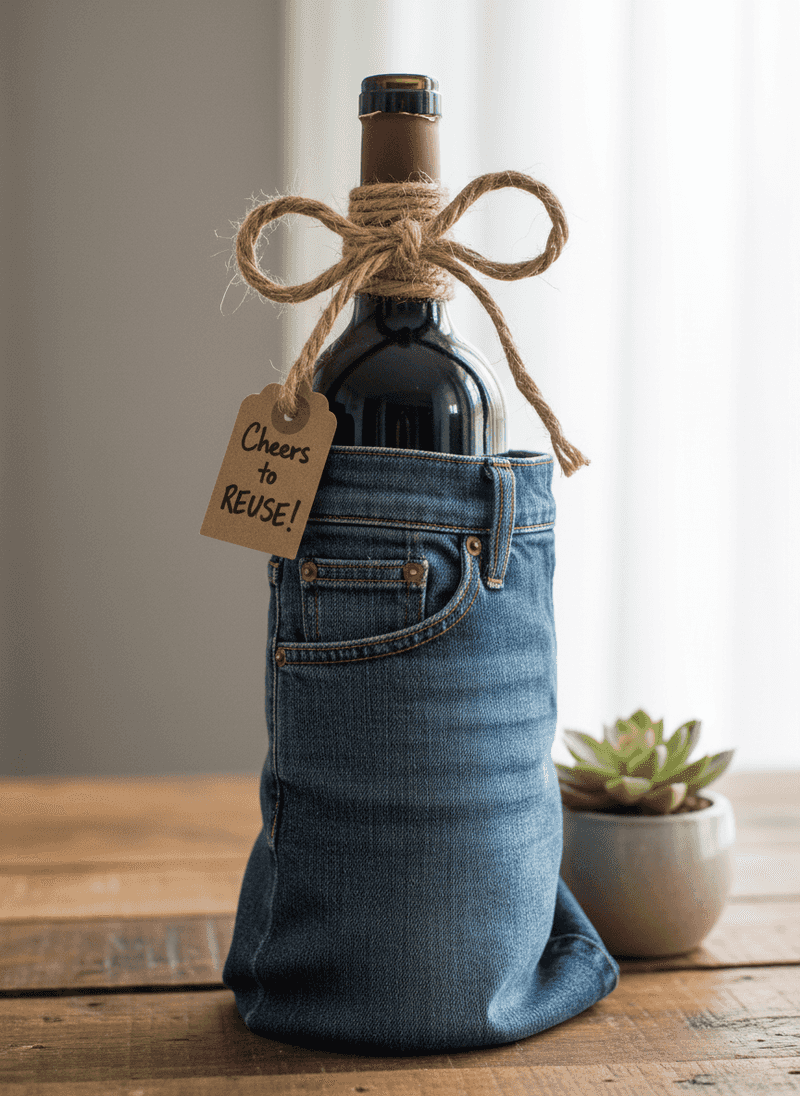
Gift bags and wrapping paper end up in landfills within minutes, but a denim bottle sleeve becomes a reusable present in itself.
One pant leg perfectly accommodates a standard wine bottle with room to cinch the top closed.
Trim the leg to about fourteen inches long and hem the cut edge if desired.
Slide the bottle inside and gather the fabric at the neck.
Thread rustic twine through an existing belt loop or punch holes for ribbon.
Add a gift tag and you’re done.
Recipients appreciate both the wine and the clever wrapper they can use again for storage or their own gift-giving.