Jennifer Aniston has said the most famous haircut of the 1990s, the one named after her Friends character, was one she personally disliked. If the woman wearing it wasn’t a fan, the rest of us can probably admit a few things about our old hair photos too. That decade gave us crimping irons, gel strong enough to hold a spike through a windstorm, and plastic clips by the dozen. Salons were busy, bathroom counters were crowded, and hairspray cans emptied fast.
I love looking back at these styles because they show how much effort people poured into looking casual. Some details have come back in softer forms, but the originals still shout their birth year. So grab that old yearbook and brace yourself a little. Which of these did you wear, and which ones do you still secretly miss?
1. All-Over Crimped Hair
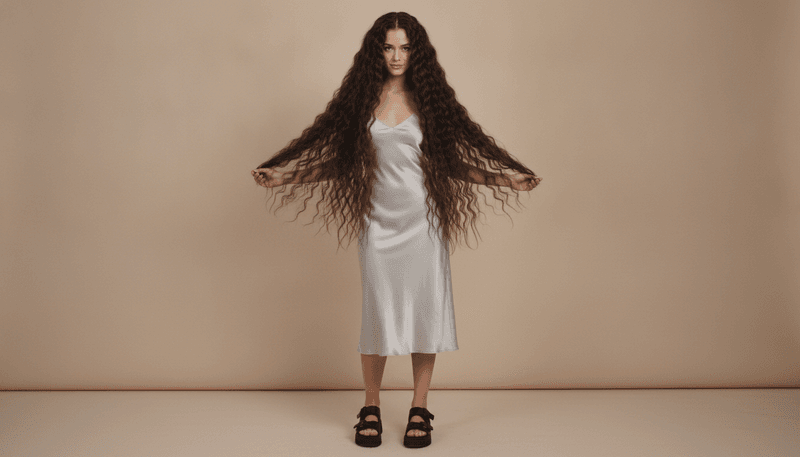
Few tools announced a sleepover quite like the hot plates of a crimping iron.
The device pressed hair into tight, sawtooth zigzags that added instant volume and a lot of texture.
Crimping grew out of the late 1980s and kept going strong into the 1990s.
Some people skipped the iron and slept on wet braids, then woke up to a bumpy, wavy pattern that was close enough.
The look stood out because it was so obviously done on purpose.
Long hair crimped from root to tip turned into a fuzzy, triangle-shaped cloud that could double the width of your head.
Today, that full-head zigzag pattern reads as pure throwback.
Current waves tend to be looser, shinier, and smoother, so the tight crimp looks more like a costume than an everyday choice.
Still curious about the texture?
Try crimping just a few hidden sections underneath, then brushing them lightly for soft volume that doesn’t scream 1996.
Keep a heat protectant handy and use the lowest setting that works for your hair.
Your ends will thank you, and nobody will ask whether you’ve been digging through a basement box of old styling tools.
2. The Rachel
One sitcom character managed to fill salon chairs across the country.
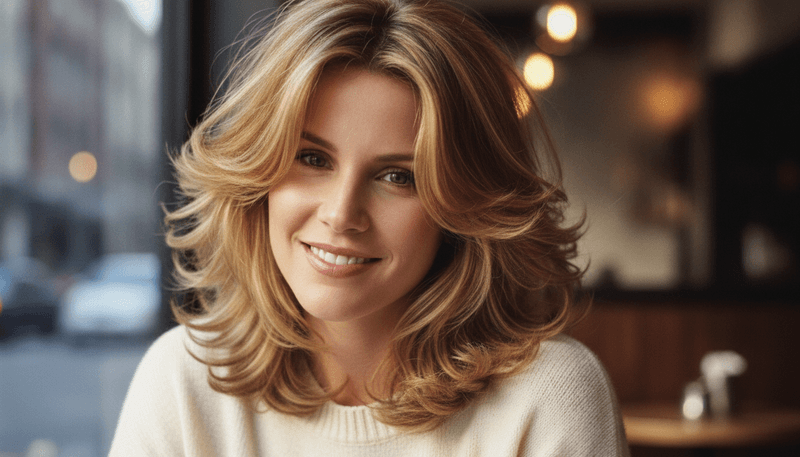
Jennifer Aniston wore the shag-like cut as Rachel Green on Friends in 1995, and soon people were walking in with magazine photos of it.
Hairstylist Chris McMillan created the look.
It featured shoulder-length hair with lots of choppy layers around the face, blown out with a round brush so the pieces bounced and flipped.
Aniston later said publicly that she disliked the cut and found it hard to style on her own.
Plenty of fans who copied it discovered the same problem the morning after their salon visit.
That’s part of why it looks dated now.
The layers were so precise and so puffed out that the whole style seemed to need a professional blow-dry before you could leave the house.
Modern layered cuts keep the face-framing idea but blend the pieces more softly.
They also let hair fall flatter and move more freely, without the stacked, rounded shape of the original.
If you love the spirit of it, ask for longer, fewer layers.
You’ll get the movement without needing a round brush and twenty extra minutes every single morning.
3. Chunky Highlights
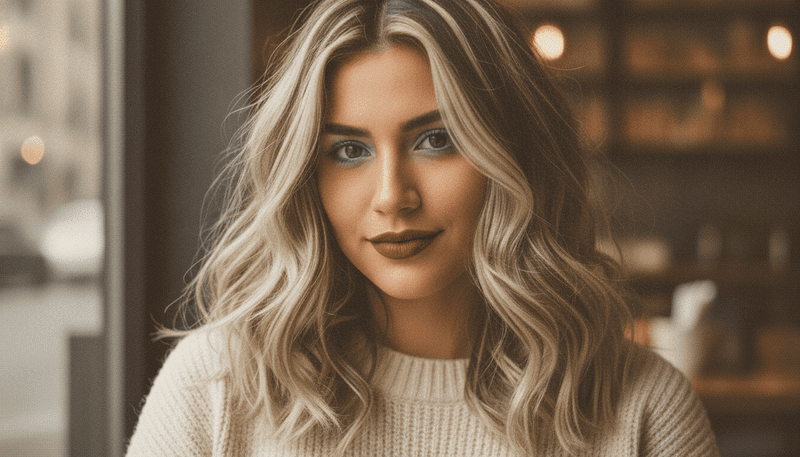
Subtle was not the goal when thick blonde stripes started showing up on dark hair.
Chunky highlights placed wide, obvious bands of light color against a much deeper base shade.
The contrast was the whole point.
When the difference was extreme, like near-black with bright blonde, people jokingly called it skunk hair, and the nickname stuck around.
Pop stars of the late 1990s and early 2000s helped spread the look.
Christina Aguilera and Kelly Clarkson are two names often linked to bold, striped color from that period.
The trouble today is how stiff those stripes appear.
Current coloring methods, such as balayage and fine babylights, focus on gradual, blended shifts that mimic how sunlight lightens hair naturally.
Against that softer backdrop, wide panels of blonde look a bit like paint swatches.
They also grow out with sharp lines, which made upkeep a regular commitment back then too.
Want some brightness without the throwback stripes?
Ask your colorist about thinner pieces placed near your face, sometimes called a money piece, or a blended gloss.
You’ll still get contrast, just with smoother edges and fewer awkward questions about your old school pictures.
4. High Ponytail With Two Tendrils
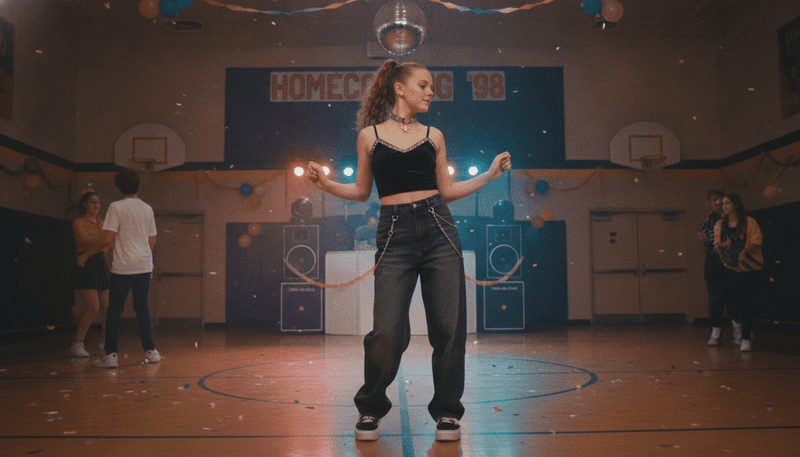
Two curly strands, one at each temple, could turn a basic ponytail into prom-ready hair in the 1990s.
The rest of the hair was pulled up tight and high on the head.
Those two face-framing tendrils were the signature move.
People often wrapped them around a curling iron so they hung in neat little spirals beside each cheek.
It was easy, cheap, and looked polished in photos.
You could do it in minutes, which made it a favorite for school dances, weddings, and family pictures.
What dates it now is the symmetry.
Two matching ringlets, perfectly placed and often crunchy with spray, look more planned than relaxed by current standards.
Face-framing pieces haven’t gone anywhere, though.
Today they’re usually wider, softer, and pulled loosely forward, sometimes as a curtain of bangs rather than two separate strands.
For a modern version, gather your ponytail slightly lower and leave a few uneven pieces out around your face.
Bend them with a flat iron instead of curling them tightly, then brush through with your fingers.
The result keeps the sweetness of the original but loses the frozen spiral effect that marks it as a throwback.
5. Hard Gel Spikes
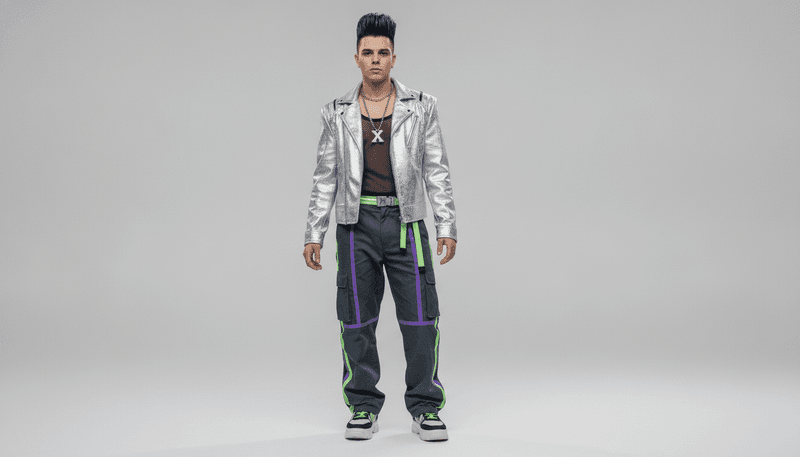
Touching a guy’s hair in 1998 could feel a bit like patting a cactus.
Short hair, a big scoop of gel, and some upward pinching created rows of stiff, shiny spikes.
The style showed up all over boy band posters and teen magazines.
It was neat, sharp, and stayed exactly where you put it, even through a long school day.
Strong-hold gels made the look easy to copy at home.
Many guys applied it to damp hair, then let it dry into a hard shell that didn’t move at all.
Here’s why it hasn’t aged well.
The wet shine and rigid points look heavily styled next to today’s matte pastes and clays, which leave hair soft enough to move.
Current short cuts often focus on natural texture.
Think tousled crops, loose fringes, and slight lift at the front rather than separate peaks standing at attention.
If you like some height, try a small amount of matte product rubbed between your palms first.
Push hair up loosely with your fingers instead of pinching individual spikes.
You’ll still get shape, and your pillowcase won’t end up with a glossy, crunchy surprise.
6. A Head Full of Butterfly Clips
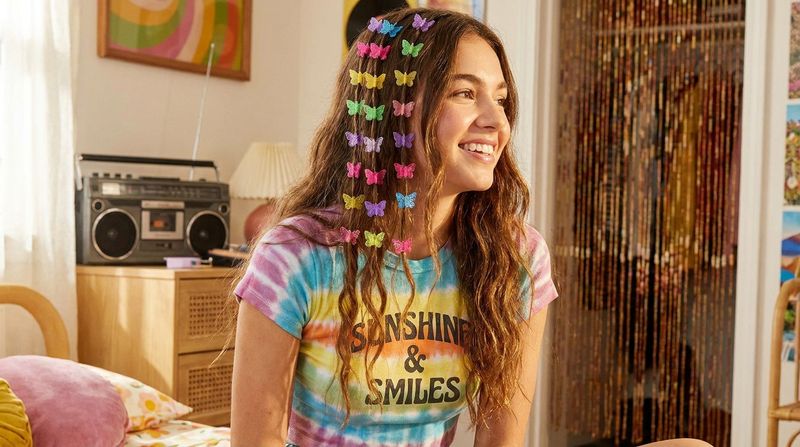
Tiny plastic butterflies came in multipacks, and many kids used the whole pack at once.
The clips landed in rows across the scalp, around twisted sections, or tucked near the bangs.
Butterfly clips peaked in the late 1990s and stuck around into the early 2000s.
They were cheap, colorful, and sold at mall kiosks, drugstores, and accessory shops.
Part of the fun was the variety.
Some had glitter, some had tiny springs that made the wings wobble, and some came in pastel shades that matched lip gloss.
Lately, a few clips have popped back up as a nostalgic accent.
The dated part is the overload, when ten or fifteen butterflies cover the head like a garden fence.
Current hair accessories usually lean toward fewer, larger pieces.
Claw clips, simple barrettes, and bows tend to show up alone or in pairs rather than as a crowd.
Want the playful feel without going full time machine?
Pick two clips in a single color and pin back one side above your ear.
That small touch nods to the era while letting the rest of your hair stay clean and easy.
7. The Bowl Cut
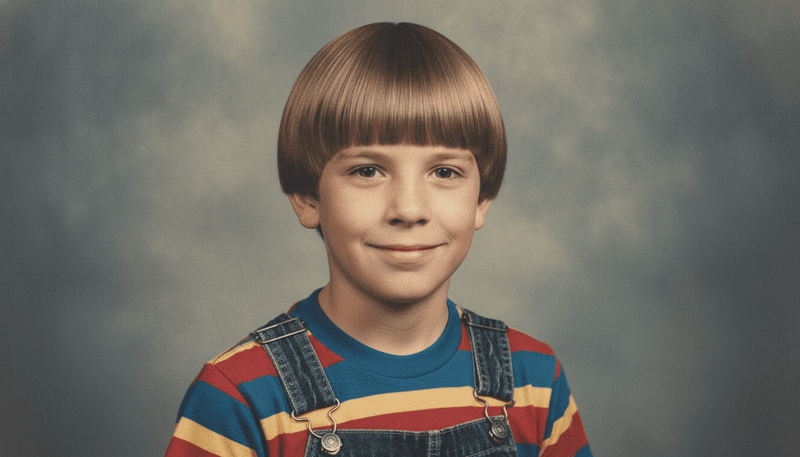
Some 1990s school photos look like the kitchen scissors had a busy weekend.
The bowl cut trimmed hair to one even length around the head, with blunt bangs straight across the forehead.
It was especially common on young boys.
Parents liked it because it was simple to cut at home and easy to keep tidy between trims.
Jim Carrey’s character Lloyd Christmas in Dumb and Dumber, released in 1994, wore an exaggerated version.
That big-screen moment helped make the cut a punchline as much as a hairstyle.
Today, the classic bowl reads as dated because of its hard, round outline.
The sharp edge and lack of layers can make the shape look like a helmet more than a haircut.
Modern takes do exist, and they look quite different.
Barbers often add texture with thinning shears, cut the sides shorter, or leave the fringe uneven so it moves.
If your kid begs for that mushroom shape, ask for a textured crop instead.
You’ll get a similar fringe and easy care, but with softer edges.
Future school photos might earn fewer laughs at family gatherings, which seems like a fair trade.
8. Towering Hairsprayed Bangs
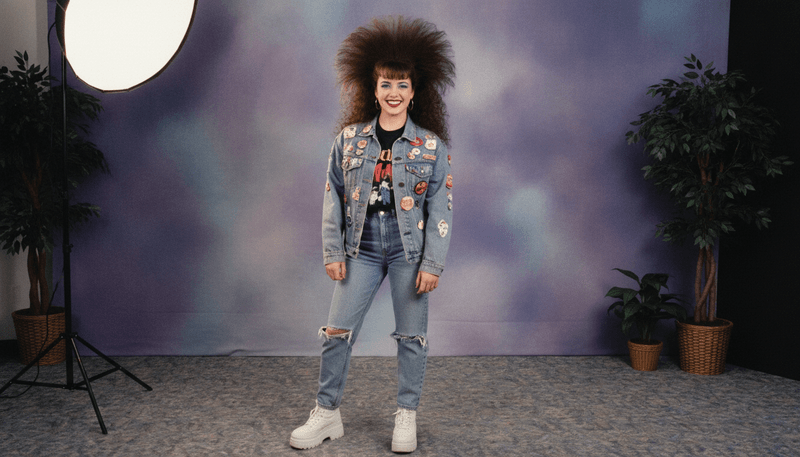
Early in the decade, bangs were still trying to reach the ceiling.
The big, sprayed fringe of the 1980s didn’t vanish on New Year’s Day 1990, and plenty of people kept the look going.
Getting the height took effort.
Hair was curled, teased with a comb, then blasted with strong hairspray such as Aqua Net until it held firm.
The result could stand inches off the forehead.
A good hold meant wind, rain, and gym class barely moved it, which was considered a success.
Times have clearly shifted.
Today’s bangs tend to fall loose, part slightly, or sweep to the side, and they usually look like you could run a hand through them.
A stiff fringe also tends to catch the light in a shiny, lacquered way.
In photos, it almost appears as one solid piece instead of separate strands of hair.
If you miss some lift, a round brush and a few minutes with a blow dryer can add gentle height.
Finish with a light, flexible spray.
You’ll get bounce at the roots without building a fringe that could survive a hurricane.
9. Perfectly Flipped Ends
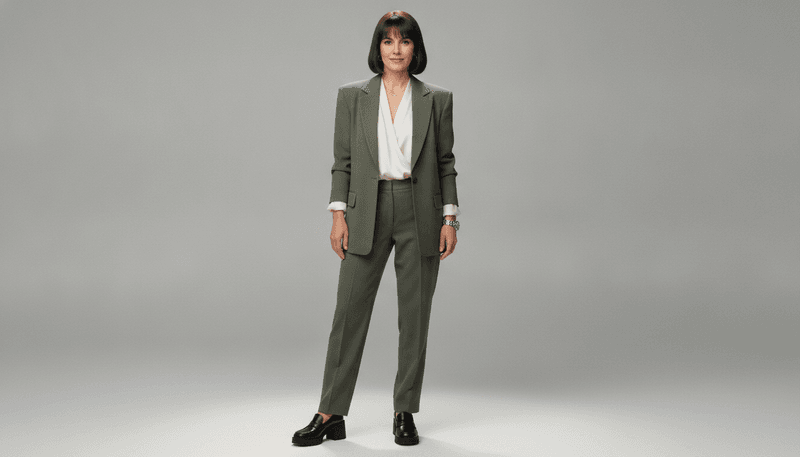
Sleek, straight hair with a sudden outward kick at the bottom gave the 1990s a little 1960s flair.
The flip worked on bobs and shoulder-length cuts alike.
A round brush and blow dryer did most of the work.
Some people used a flat iron later in the decade, twisting the wrist at the ends to curve them out.
When done well, the flip looked polished and bright.
It suited office outfits and evening events, and it photographed cleanly under flash.
The catch is how uniform it was.
Each section curled out at the same spot, creating a hard, even ledge of hair around the shoulders.
Current blowouts aim for movement that looks less measured.
Ends may bend slightly, but the shape usually varies, with some pieces curving in and others falling straight.
That doesn’t mean flips are banned forever.
A soft, uneven outward bend can look fresh, especially on a short bob paired with a simple sweater.
The key is to skip the strong spray and let the curve relax a bit.
A slightly imperfect flip looks chosen on purpose rather than locked into a decades-old routine.
10. Skinny Front Braids With Beads
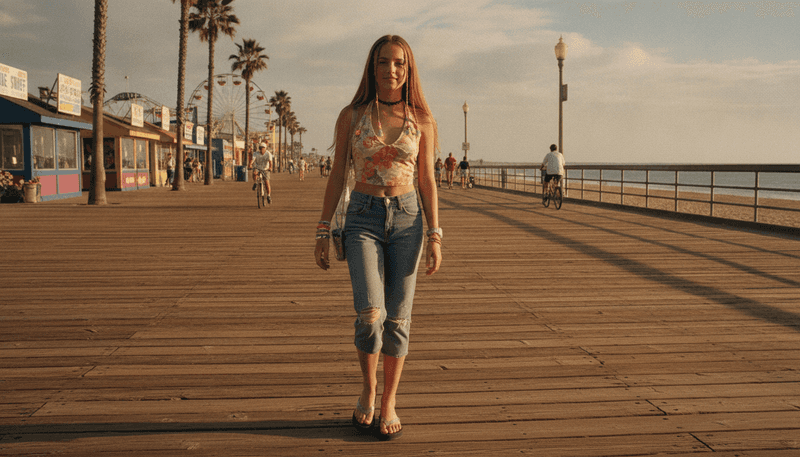
A trip to the beach boardwalk often ended with a few skinny braids hanging beside your face.
Thin plaits near the front were a fun, low-cost way to change up loose hair.
Many people added small plastic beads to the ends.
The beads clicked together when you moved, and that sound was half the charm for younger wearers.
The style reached its height among kids and teens in the late 1990s and early 2000s.
It paired well with butterfly clips, tinted lip gloss, and spaghetti-strap tops.
Thin, isolated braids on otherwise straight hair now look pretty specific to that moment.
The beads, especially in bright plastic colors, push the style even further into nostalgia.
Braids themselves are as popular as ever, of course.
Today’s versions often show up as larger braided accents, half-up styles, or protective styles worn with real cultural roots and history.
If you’d like a nod to the old look, try one loose braid tucked behind your ear.
Skip the beads or swap in a small metal cuff.
It keeps the playful idea while fitting easily with whatever else you’re wearing this week.
11. The Overly Planned Messy Bun
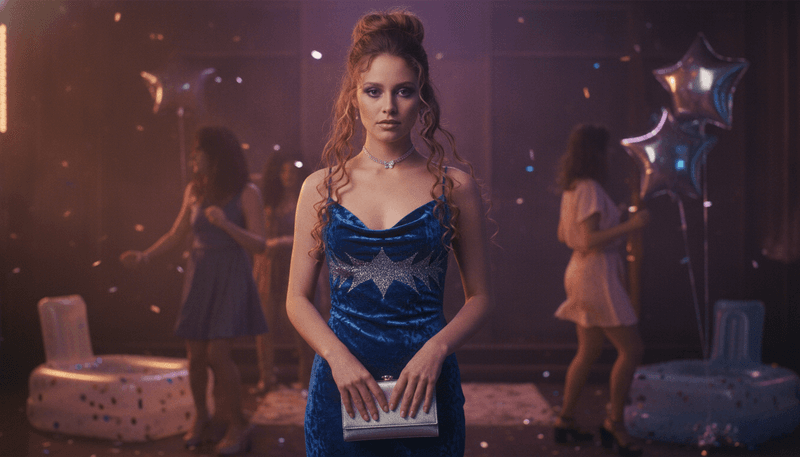
Funny thing about the 1990s messy bun: it often took longer than a neat one.
Hair was twisted up high, then many strands were pulled loose around the face, temples, and neck.
Those loose pieces rarely stayed casual.
People curled them into tight ringlets, so the bun looked surrounded by springs.
The goal was relaxed glamour.
Celebrities wore versions on red carpets, and the style became a party favorite for its romantic, slightly undone feel.
Looking back, the sheer number of curled strands gives it away.
When fifteen identical ringlets hang from a tidy bun, the effect seems carefully staged rather than tossed together.
Messy buns are still a go-to today.
The difference is in the details, with softer twists, a slightly lower position, and only a few uneven pieces left out.
For a current version, wrap your hair loosely and secure it with a claw clip or a couple of pins.
Pull out two or three strands and leave them uncurled, or give them a quick bend.
You’ll spend less time styling, which feels fitting for a hairstyle that’s supposed to look easy.
12. Frosted Tips
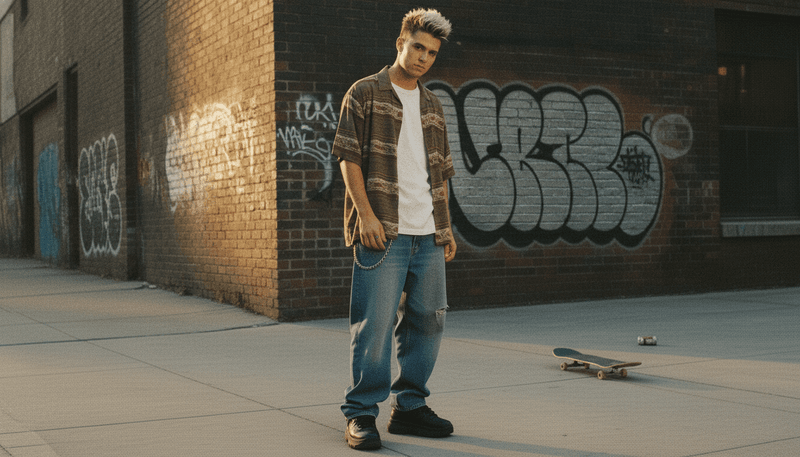
Dark roots, bright blonde points, and enough gel to hold it together made frosted tips easy to spot from across a mall.
Only the ends of short, spiky hair were bleached.
The trend took off in the late 1990s and rolled straight into the early 2000s.
Boy band members and pop-rock singers of the era helped turn it into a recognizable look.
Getting the effect usually meant spiking the hair first, then dabbing lightener onto the tips.
Home kits made it possible to try in the bathroom, sometimes with uneven, brassy results.
Today, the sharp two-tone contrast feels firmly tied to its era.
Current men’s color, when people choose it, usually blends gradually or covers the whole head in one shade.
The heavy gel adds to the time stamp too.
Stiff, glossy spikes paired with icy points look styled for a music video set rather than a regular afternoon.
Curious about lightening your hair anyway?
A few soft highlights through textured hair can brighten things without the striped effect.
And if you still have photos of your own frosted phase, consider them proof that you were brave enough to try something bold.