 MomSkoop
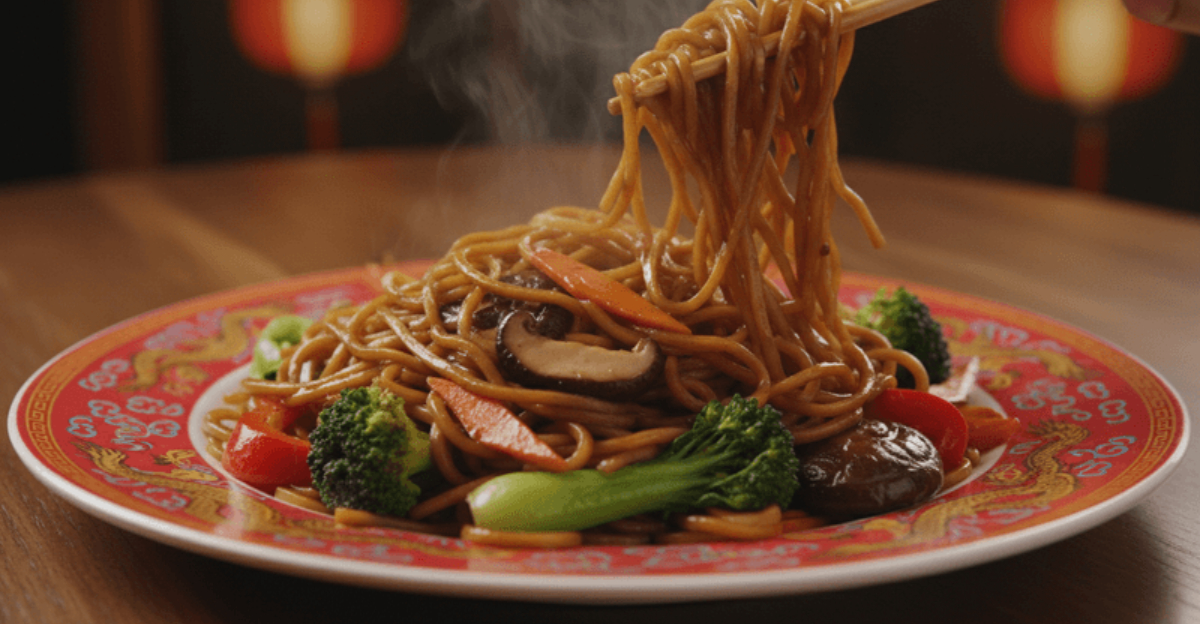
Chinese New Year celebrations wouldn’t be complete without a steaming bowl of lucky noodles on the table.
Long noodles symbolize longevity and good fortune, making them an essential part of the festive feast.
From silky lo mein to spicy Sichuan specialties, these noodle dishes bring incredible flavors and meaningful traditions to your celebration, ensuring the year ahead is filled with prosperity and delicious meals.
1. Longevity Noodles (Yi Mein / E-Fu Noodles)
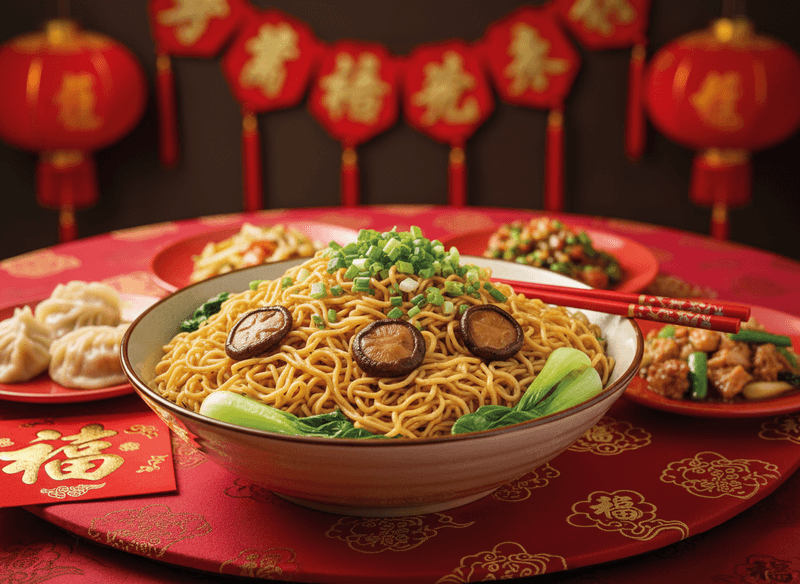
Yi mein noodles are the ultimate symbol of long life during Chinese New Year festivities.
These wheat-based strands are never cut or broken during cooking, representing the wish for extended years and continued health.
Their slightly chewy texture and golden hue make them instantly recognizable at any celebration table.
Traditionally made with alkaline water, these noodles have a unique springy bite that holds up beautifully in both braised and stir-fried preparations.
Families often serve them in rich broths with mushrooms and vegetables.
The superstition around keeping them unbroken is taken seriously—some cooks won’t even allow scissors near the pot!
Their versatility means you can dress them up fancy or keep things simple with just soy sauce and sesame oil.
2. Soy Sauce Pan-Fried Longevity Noodles
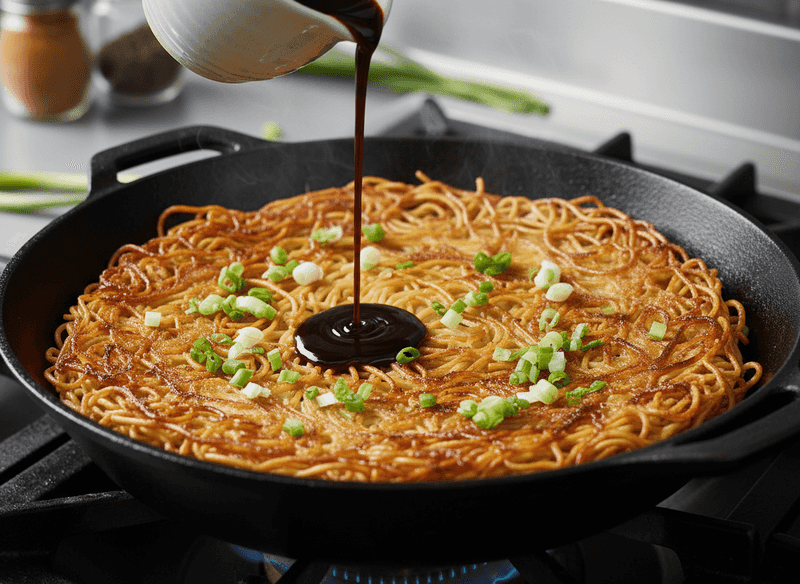
Crispy on the bottom, tender on top—that’s the magic of pan-fried longevity noodles.
This cooking method creates an irresistible contrast of textures that keeps everyone coming back for seconds.
The dark soy sauce adds a deep, savory sweetness that coats every strand perfectly.
Getting that golden crust requires patience and a hot wok, but the payoff is absolutely worth it.
You’ll want to resist the urge to stir too much, letting the noodles develop that signature crunch.
Some families add a splash of oyster sauce for extra umami depth.
Kids especially love picking at the crispy bits from the edges.
Serve this dish as a centerpiece, and watch it disappear faster than you can say “Happy New Year!”
3. Seafood Longevity Noodles with Shrimp and Scallops
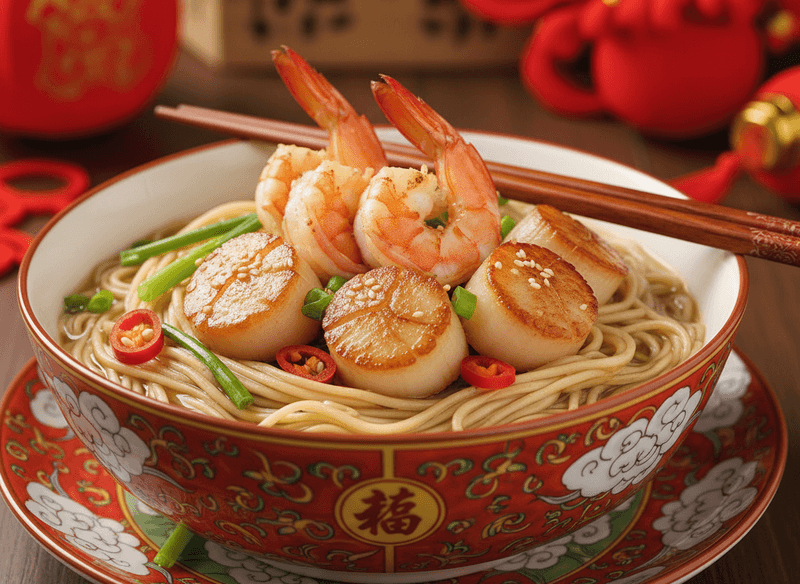
Pairing longevity noodles with premium seafood transforms this traditional dish into something truly special.
Plump shrimp and tender scallops bring oceanic sweetness that complements the noodles’ earthy flavor beautifully.
This combination also symbolizes abundance and prosperity for the coming year.
The key is not overcooking the seafood—just a quick sear keeps everything juicy and flavorful.
A light sauce made with ginger, garlic, and Shaoxing wine ties all the elements together without overwhelming the delicate seafood.
Fresh snow peas or bok choy add vibrant color and crisp texture.
This elevated version impresses guests while maintaining the lucky symbolism that makes longevity noodles so meaningful during celebrations.
4. Chicken and Shiitake Braised Yi Mein
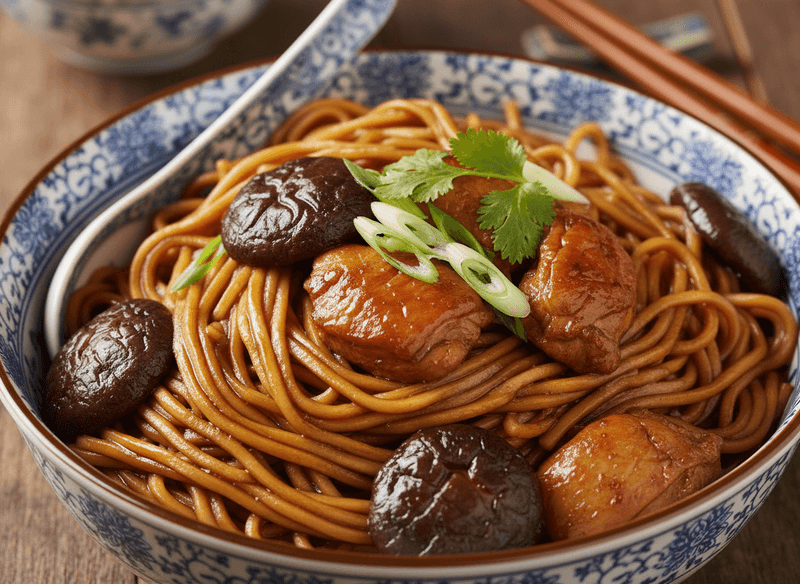
Braising yi mein in a savory chicken and mushroom sauce creates comfort food that warms both body and soul.
The noodles absorb all those rich flavors while maintaining their signature chewiness.
Shiitake mushrooms add an earthy depth that makes this dish feel luxurious without being complicated.
Dark meat chicken works best here because it stays moist during the braising process.
The sauce typically includes oyster sauce, dark soy, and a touch of sugar for balance.
Some cooks add dried lily buds or wood ear mushrooms for extra texture and traditional flair.
This one-pot wonder is perfect for feeding a crowd during holiday gatherings.
Everyone appreciates how the flavors deepen as the dish sits, making it ideal for potlucks.
5. Stir-Fried Egg Noodles with Chives and Bean Sprouts
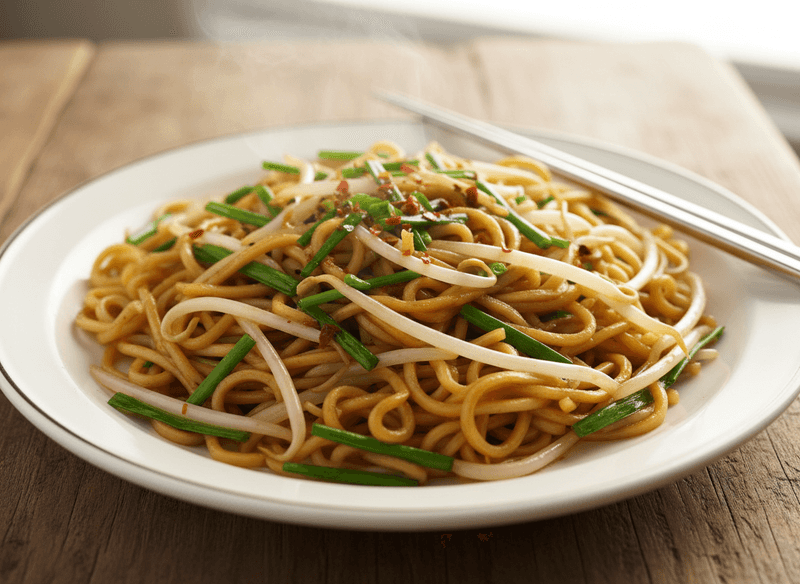
Sometimes simplicity delivers the most satisfaction, and these stir-fried egg noodles prove that point deliciously.
Fresh chives bring a mild onion flavor that’s not too overpowering, while crunchy bean sprouts add textural interest.
The combination feels light yet satisfying, perfect after heavier holiday dishes.
Egg noodles cook quickly and pick up wok heat beautifully, developing those coveted slightly charred edges.
A minimal seasoning of light soy sauce and white pepper lets the fresh ingredients shine.
The trick is keeping your wok smoking hot and working fast to maintain that restaurant-quality texture.
Bean sprouts should stay crisp, not soggy, so add them at the very end.
This dish comes together in under ten minutes once prep is done.
6. Cantonese Soy Sauce Chow Mein
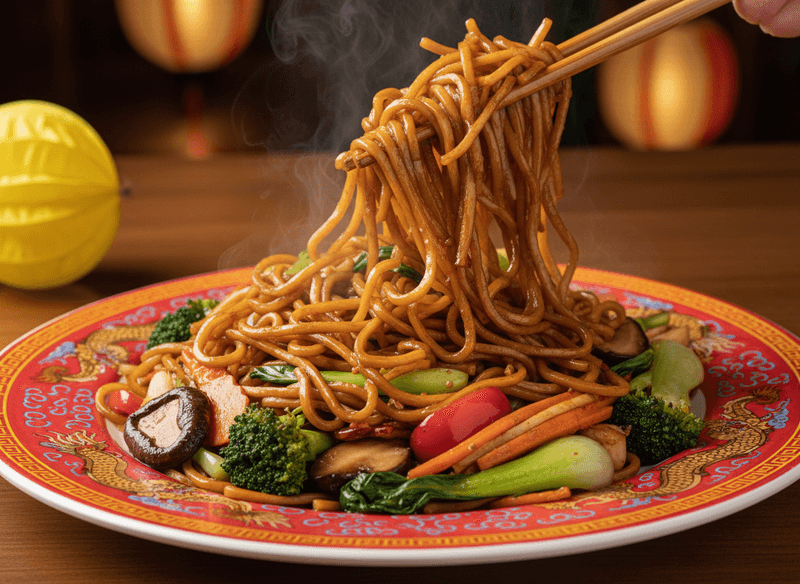
Cantonese-style chow mein showcases the art of perfectly balanced seasoning.
The noodles get tossed in a blend of light and dark soy sauces, creating that characteristic glossy appearance and complex flavor.
Unlike heavily sauced versions, this preparation lets you taste each individual ingredient clearly.
The noodles should be slightly firm, never mushy, with just enough sauce to coat them without pooling at the bottom.
Vegetables like bok choy, carrots, and onions add color and nutrition without stealing the spotlight.
Many Cantonese families consider this their go-to noodle dish for any celebration.
What makes it special is the restraint—knowing when to stop adding ingredients so the dish stays elegant and refined rather than cluttered.
7. Shanghai Scallion Oil Noodles (Cong You Ban Mian)
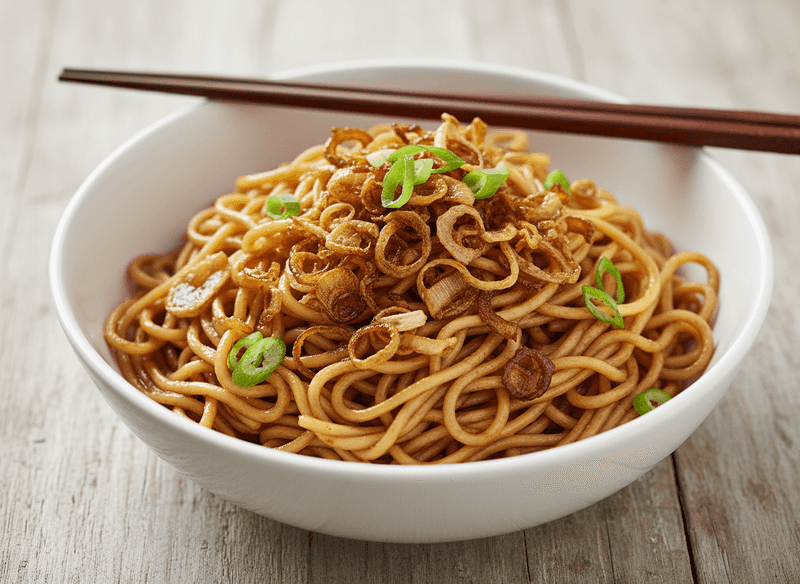
Nothing captures the essence of Shanghai home cooking quite like scallion oil noodles.
This deceptively simple dish relies on just a handful of ingredients but delivers incredible aromatic punch.
The magic happens when you slowly fry scallions in oil until they turn dark and crispy, infusing the oil with intense flavor.
Thick wheat noodles work best because they can handle the rich, concentrated oil without becoming greasy.
A splash of dark soy sauce adds color and depth, while the crispy scallion bits provide textural contrast.
Some versions include a touch of sugar to balance the savory notes.
This dish proves that you don’t need fancy ingredients to create something memorable and delicious for your New Year feast.
8. Sesame Peanut Noodles with Shredded Cucumber
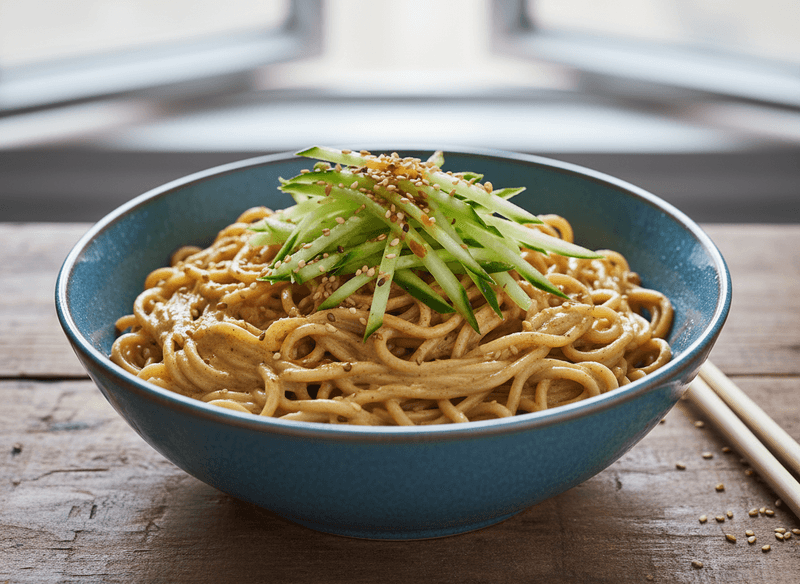
Cool, creamy, and utterly addictive—sesame peanut noodles offer a refreshing contrast to heavier hot dishes.
The sauce combines ground sesame paste with peanut butter, creating a nutty richness that clings to every strand.
Shredded cucumber adds a crisp, hydrating element that cuts through the richness perfectly.
This dish can be served cold or at room temperature, making it incredibly practical for buffet-style celebrations.
A hint of rice vinegar and chili oil in the sauce provides tang and gentle heat.
Some cooks add julienned carrots or bell peppers for extra color and crunch.
Kids and adults both gravitate toward these noodles, making them a smart choice when feeding multiple generations.
The leftovers taste even better the next day.
9. Spicy Sichuan Dan Dan Noodles
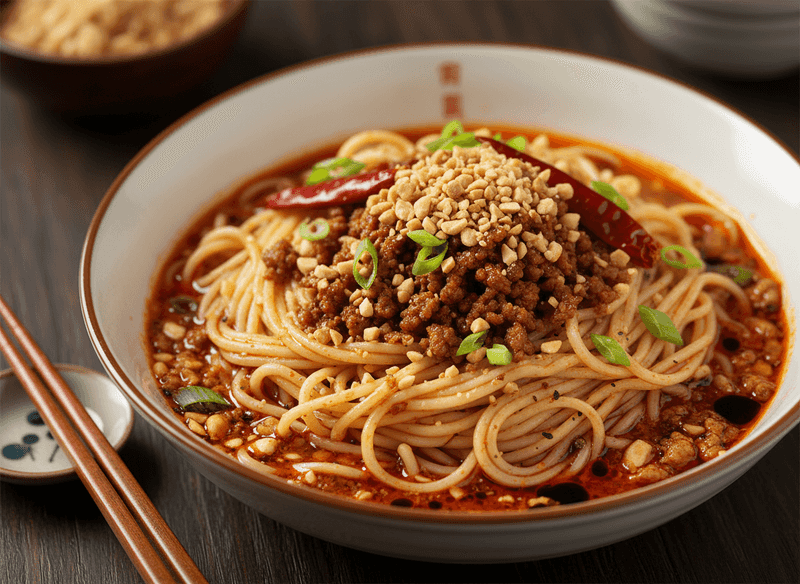
For those who crave heat, dan dan noodles deliver bold Sichuan flavors that wake up your taste buds.
The sauce combines chili oil, Sichuan peppercorns, and sesame paste for a complex blend of spicy, numbing, and nutty notes.
Ground pork adds savory richness, while preserved vegetables contribute a salty, tangy punch.
The numbing sensation from Sichuan peppercorns is what makes this dish truly distinctive—it’s not just about heat.
Thin wheat noodles are traditional, allowing the sauce to coat them thoroughly.
Crushed peanuts or sesame seeds on top provide a welcome textural element.
Adjust the spice level to your preference, but don’t skip the peppercorns entirely or you’ll miss the authentic experience.
This dish represents celebration with attitude.
10. Beef and Broccoli Lo Mein
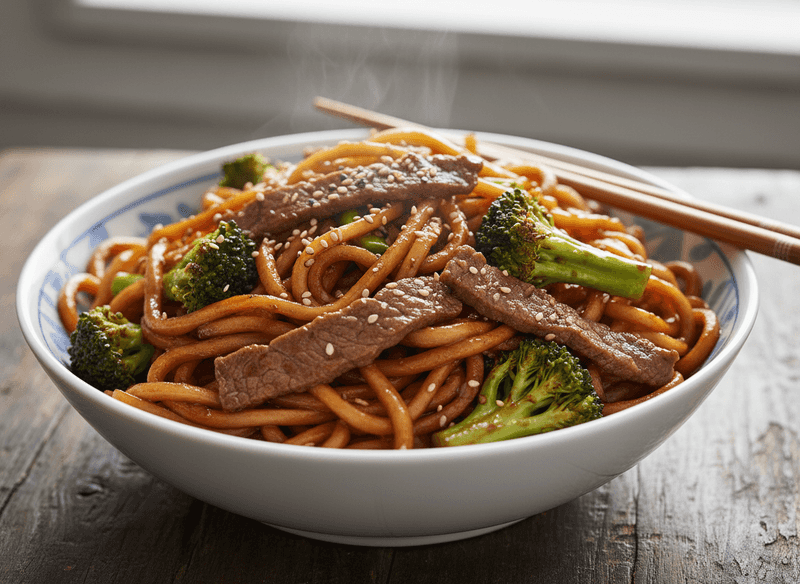
Tender beef and crisp broccoli make this lo mein a protein-packed option that satisfies hearty appetites.
The beef gets marinated in soy sauce and cornstarch, ensuring it stays juicy even after high-heat cooking.
Broccoli florets add nutritional value and a vibrant pop of color to the dish.
Lo mein noodles are thicker and chewier than chow mein, perfect for soaking up the savory sauce without falling apart.
The sauce typically includes oyster sauce, which gives it that restaurant-quality depth of flavor.
Quick cooking over high heat keeps everything tender-crisp rather than mushy.
This combination has become a takeout favorite, but homemade versions taste fresher and let you control the quality of ingredients.
It’s substantial enough to serve as a main course.
11. Vegetable Lo Mein with Napa Cabbage and Carrots
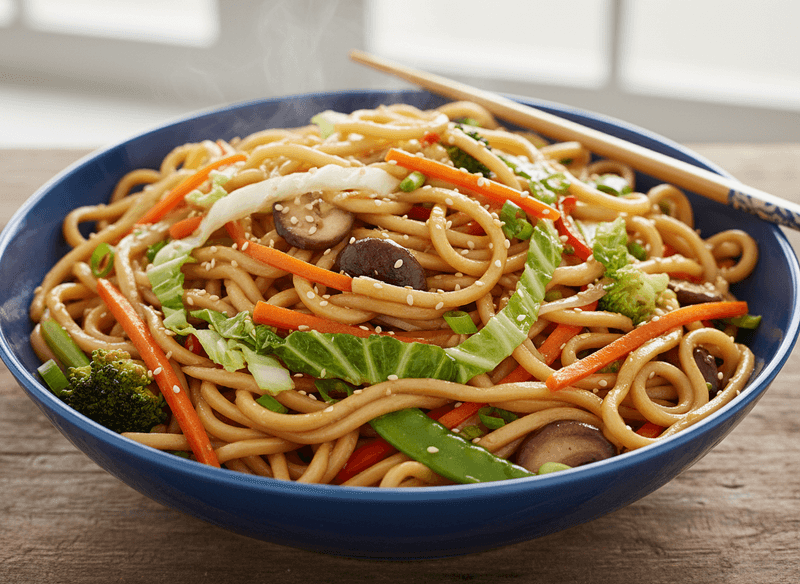
Vegetable-forward lo mein proves that meatless dishes can be just as satisfying and flavorful.
Napa cabbage brings a mild sweetness and tender texture when cooked, while carrots add crunch and vibrant orange color.
This combination creates visual appeal and balanced nutrition on your celebration table.
The beauty of vegetable lo mein lies in its versatility—you can add whatever vegetables you have on hand.
Snow peas, bell peppers, mushrooms, and baby corn all work wonderfully.
A light sauce made with vegetable broth and soy sauce keeps things from getting too heavy.
This dish appeals to vegetarian guests and anyone looking for lighter options among richer holiday fare.
It’s also budget-friendly while still feeling festive and special.
12. Fujian Hokkien-Style Braised Noodles
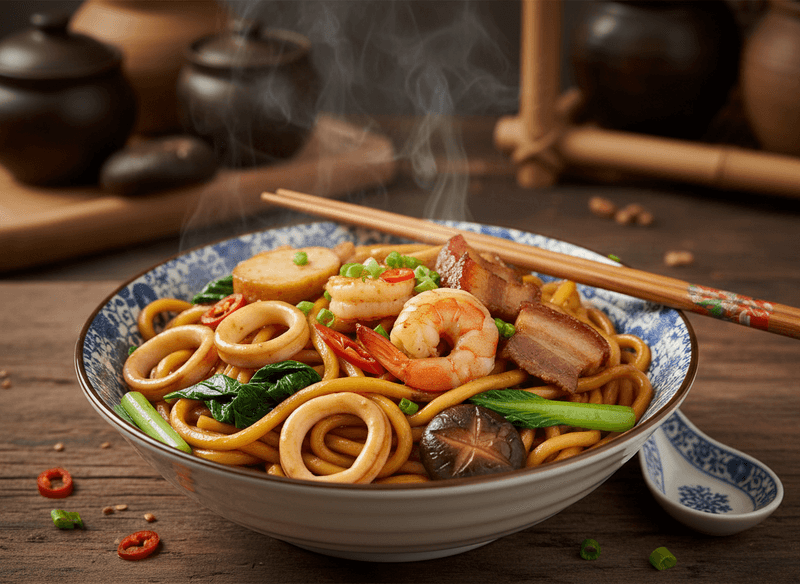
Hokkien-style braised noodles represent the coastal cuisine of Fujian province with their seafood-forward profile.
These thick yellow noodles get simmered in a rich stock made from pork bones and dried seafood, absorbing incredible depth of flavor.
The result is a hearty, soul-warming dish that feels like a complete meal in one bowl.
Traditional versions include a mix of proteins—shrimp, squid, pork belly, and sometimes fish cake.
Cabbage and garlic chives add freshness to balance the richness.
The braising liquid reduces into a thick, glossy sauce that clings to every strand.
This regional specialty might not be as well-known as other noodle dishes, but it deserves a spot on your New Year menu for its complex flavors and comforting qualities.
13. Singapore-Style Curry Vermicelli (Xingzhou Mi Fen)
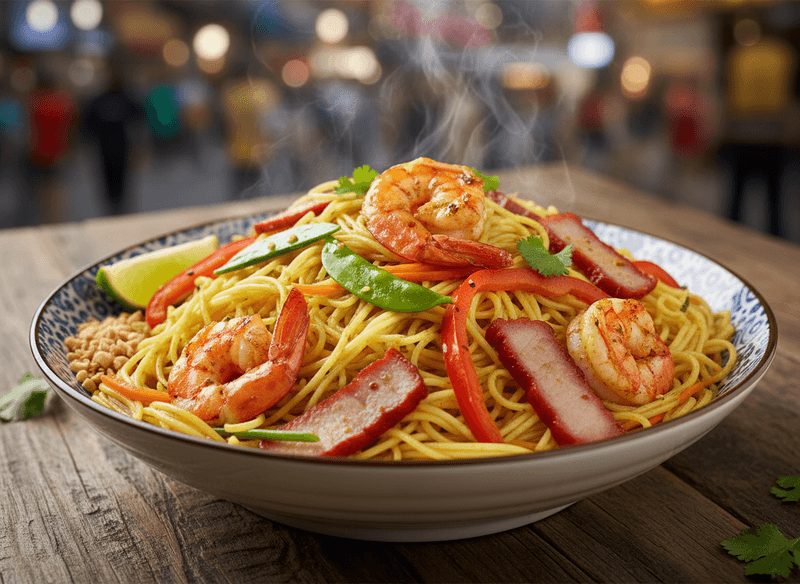
Despite its name, Singapore noodles actually originated in Hong Kong, but they’ve become beloved across Asia and beyond.
These thin rice vermicelli get stir-fried with curry powder, creating that distinctive yellow color and aromatic spice blend.
The curry flavor is mild and approachable, not overwhelmingly hot.
Typical additions include shrimp, char siu pork, bell peppers, and bean sprouts for a rainbow of colors and textures.
The noodles are delicate, so they require a gentle touch during cooking to prevent breaking.
A squeeze of fresh lime juice at the end brightens all the flavors beautifully.
This dish brings Southeast Asian flair to your Chinese New Year spread, showing how food traditions blend and evolve across cultures and borders.
14. Cold Sesame Wheat Noodles with Garlic and Chili Oil
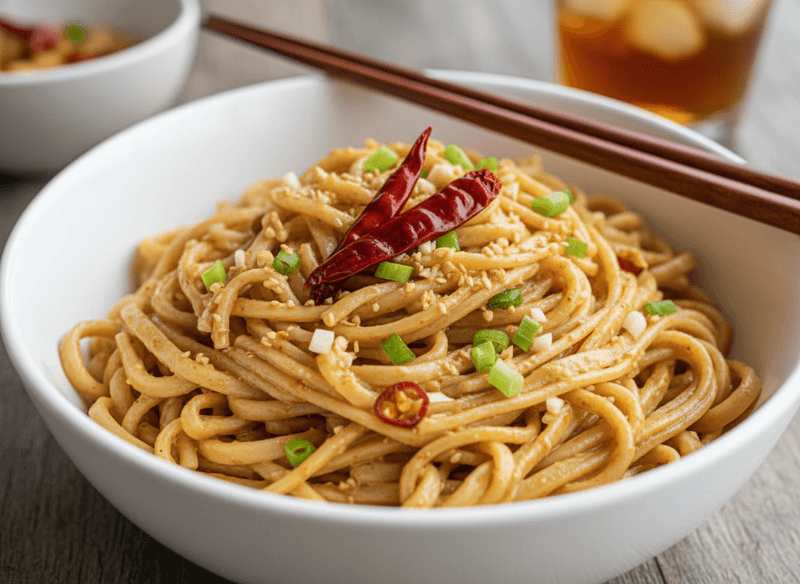
Cold noodles might seem unusual for a winter celebration, but they provide welcome contrast to heavier hot dishes.
These chewy wheat noodles get dressed in a garlicky sesame sauce spiked with chili oil for gentle heat.
The combination of cool temperature and warm spices creates an interesting sensory experience.
The noodles are cooked, then rinsed under cold water to stop the cooking and give them that characteristic slippery texture.
Generous amounts of minced garlic and scallions add pungent aromatics that complement the nutty sesame.
Some versions include julienned cucumber or blanched bean sprouts for extra crunch.
This dish is incredibly practical for parties since it’s served cold and can be made hours ahead.
The flavors actually improve as they meld together.
15. Glass Noodle Stir-Fry (Ants Climbing a Tree – Ma Yi Shang Shu)
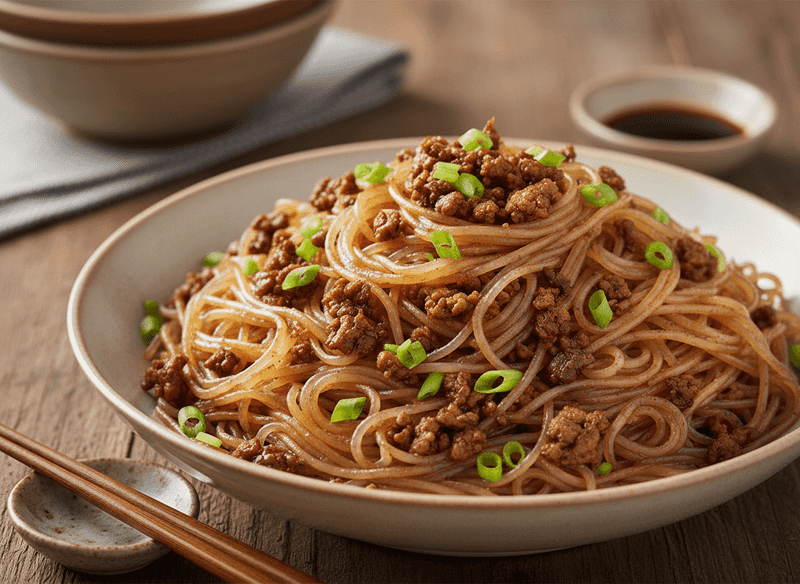
The whimsical name comes from how the bits of ground pork cling to the translucent noodles, supposedly resembling ants on tree branches.
Glass noodles, made from mung bean starch, become wonderfully slippery and absorb flavors like little sponges.
They’re light yet satisfying, offering a different texture than wheat-based options.
The dish typically features ground pork seasoned with doubanjiang (spicy bean paste) for a savory, slightly spicy kick.
Garlic, ginger, and scallions provide aromatic depth, while a splash of soy sauce adds color to the otherwise clear noodles.
The cooking process is quick—the noodles soften rapidly once liquid is added.
This Sichuan classic brings playful energy to your celebration table with its memorable name and delicious execution.