 MomSkoop
Aqua Net hairspray came in a can so tall it could pass for a small fire extinguisher, and plenty of ’80s teens went through it fast. That tells you a lot about how much effort went into hair before first period. Bangs were teased toward the ceiling, and curling irons stayed plugged in at home.
Mall food courts and yearbook photos turned into showcases for some seriously ambitious styling. I love that these looks were loud on purpose, and nobody pretended otherwise. Many of them are showing up again in old photo albums, retro parties, and modern salons with fresh twists. Grab a comb and maybe a scrunchie, because the hair only gets bigger from here.
1. The Perm
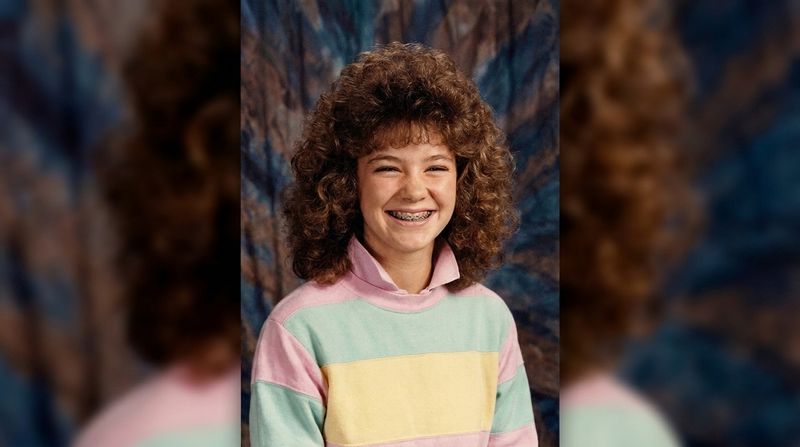
Hours in a salon chair with your head covered in tiny plastic rods sounds like a strange way to spend a Saturday.
For lots of ’80s teens, though, it was a rite of passage.
The reward was a head full of bouncy curls that lasted for months.
A perm is a chemical treatment that changes how hair grows out in texture.
Stylists rolled sections onto rods, applied a solution, and then set the new curl in place.
Results ranged from tight spirals to loose, wind-tossed waves, depending on rod size.
Straight-haired teens chased curls, while wavy-haired teens often went tighter.
Mousse and hairspray did the rest, pumping up volume and keeping the shape crisp.
Whitney Houston wore big curls, and Julia Roberts showed off a famous mane in Mystic Pizza.
Boys joined in too, with some going for a beachy, surfer-style perm.
Flip through any yearbook from the decade and you’ll spot curls in almost every row.
Curious about trying the modern version?
Today’s stylists often use larger rods for softer, looser waves that look less crunchy.
Ask about aftercare before booking, since chemically treated hair usually needs gentler washing and plenty of conditioner to stay soft.
2. Crimped Hair
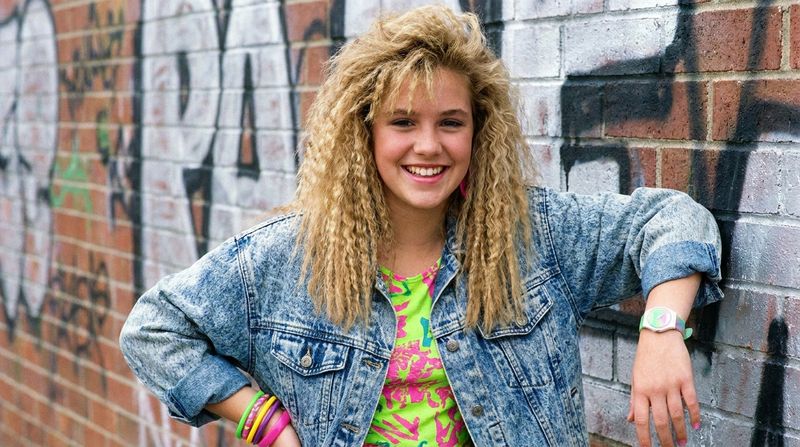
Zig, zag, repeat.
That was the soundtrack of many ’80s bedrooms, where a crimping iron sat warming up on the dresser.
Once crimpers became widely available, middle schoolers everywhere wanted one.
The tool worked like a waffle maker for hair.
You clamped small sections between ridged plates, moved down the strand, and kept going until your whole head had that crinkly texture.
The finished look added instant volume, even to fine or flat hair.
Pop stars helped push the trend forward.
Cyndi Lauper and Madonna both wore crimped styles, and the look fit right in with lace gloves and loud jewelry.
In the 1987 teen comedy Can’t Buy Me Love, Cindy Mancini’s hair gave plenty of viewers serious hair envy.
No crimper?
Teens had a sneaky workaround.
Braiding damp hair into lots of small braids and sleeping on them created a softer wave by morning.
Today, crimping still pops up at retro parties and on festival hair.
Use a heat protectant first and keep the iron moving, since holding it too long can leave hair dry.
A few crimped pieces mixed into straight hair gives a lighter nod to the trend.
3. Sky-High Mall Bangs
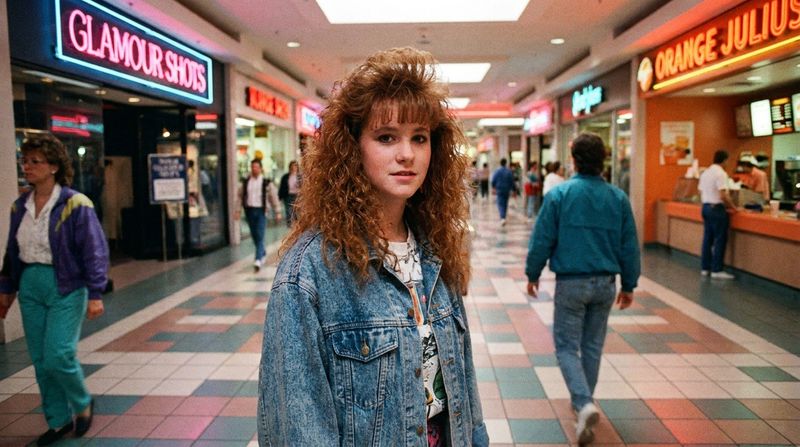
Gravity had a rough decade.
Across American malls, teenage girls built bangs so tall they looked ready to receive radio signals.
Getting that altitude took work.
Teens backcombed sections toward the scalp, curled them with an iron, and then smoothed the top layer over the tangled base.
Finally came the hairspray, often Aqua Net, applied until the bangs could survive a windy parking lot.
Some styles rose in a single curled wave, while others fanned out like a stiff claw.
Yearbook photos from the era show teens in what looks like a quiet contest for the tallest bangs in class.
Pop singer Tiffany, famous for performing in malls, wore a version that fit the scene perfectly.
The name says a lot about where the look lived.
Shopping malls were a major teen hangout, so bangs got their spotlight between the arcade and the food court.
Want to try a tamer version now?
A round brush and a blow-dryer can lift bangs without heavy teasing.
Go easy on backcombing, because yanking knots out later can lead to breakage.
Brush gently from the ends first when taking the style down at night.
4. Side Ponytail With a Scrunchie
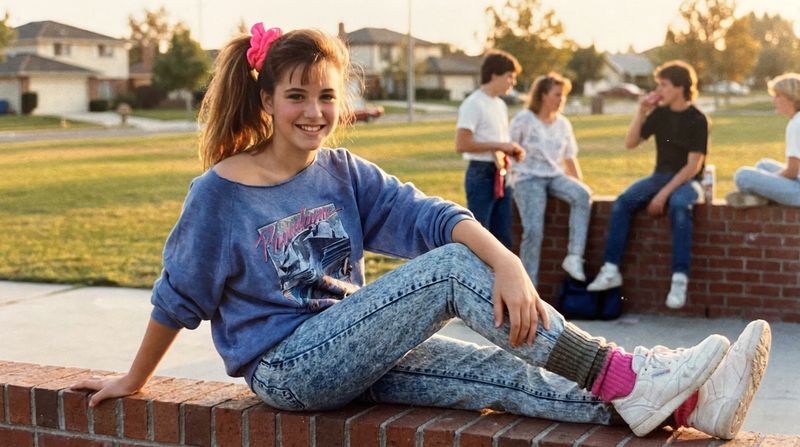
Symmetry?
Not in this hallway.
The side ponytail swung proudly off one side of the head, usually wrapped in a puffy fabric scrunchie.
Making one was refreshingly simple.
Gather your hair high on one side, secure it with an elastic, and then add the scrunchie for color.
Some girls wrapped a thin strand of hair around the base to hide the band underneath.
Scrunchies came in neon, velvet, leopard print, and plenty of other loud patterns.
That variety meant teens could match hair to leg warmers, sweatshirts, or even sneakers.
Many wore extras on their wrists, ready for a quick hair change or for lending to a friend.
For ’80s girls, a scrunchie collection worked a little like trading cards.
The style read as playful and casual, great for weekends, sleepovers, and roller rinks.
Bringing it back today is easy and cheap.
Fabric scrunchies tend to grip with less tugging than tight rubber bands, which some people prefer for daily wear.
Try a lower, looser side pony for a softer version, or go high and bold if you want full retro flair.
Pair it with an oversized sweatshirt and you’ve basically time-traveled.
5. The Mullet
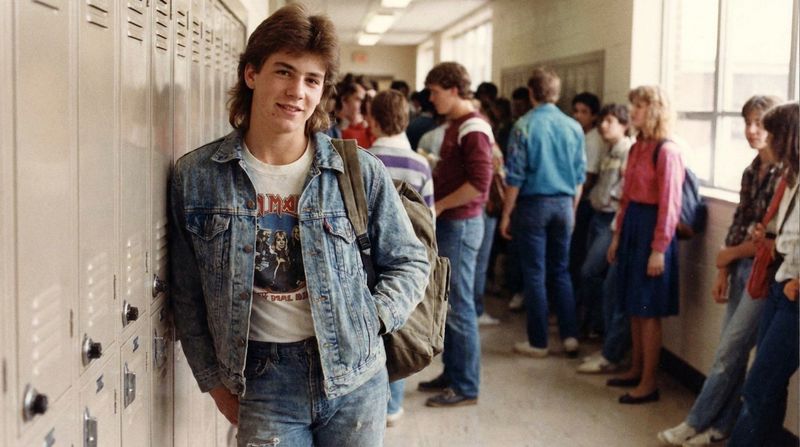
Business in the front, party in the back.
Few haircuts have a motto, but the mullet earned one and never let it go.
The cut keeps the top and sides shorter while leaving length at the back.
Stylists layer it carefully so the shift from short to long looks deliberate.
Many ’80s versions also had a fluffy or feathered top for extra lift.
Hollywood helped a lot.
Patrick Swayze, Mel Gibson, and John Stamos all wore versions of the cut during the decade.
The look landed somewhere between neat and rebellious, which probably explains part of its appeal for teenagers.
High school yearbooks prove this wasn’t only a celebrity thing.
Boys in junior high and high school wore mullets in big numbers, and girls rocked their own takes too.
Canada embraced the cut with special enthusiasm.
Thinking about one now?
Modern mullets often blend the sides more softly and keep the top textured instead of stiff.
Bring a reference photo to your barber, since the word mullet covers a lot of ground.
A good cut grows out more gracefully than you might expect, though trims every few weeks keep the shape sharp.
6. Feathered Layers
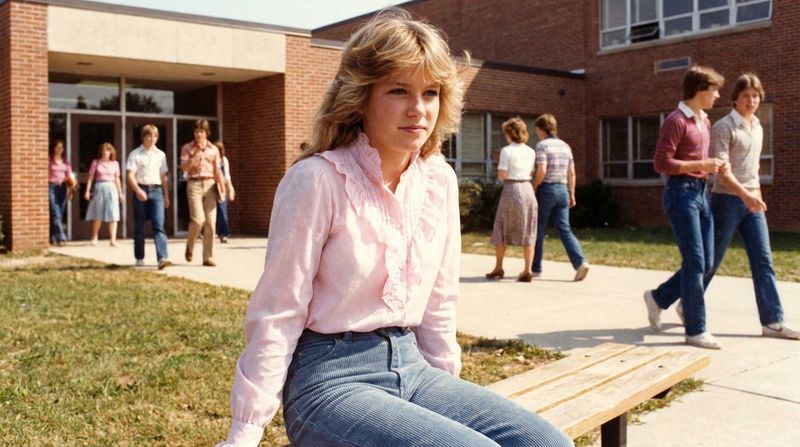
Some trends refuse to leave the party on time.
Feathered hair rolled in from the 1970s and stuck around for the early ’80s, still flipping and bouncing.
The secret was in the cut.
Stylists added many fine, wispy layers, especially around the face.
Teens then brushed those pieces back and away, creating wings that looked a bit like soft feathers.
A blow-dryer and round brush did most of the heavy lifting.
The goal was movement, so hair could swing when you turned your head in the hallway.
Heather Locklear and Goldie Hawn both wore feathered styles that teens copied.
Guys wore it too.
For boys who wanted bigger hair without a perm, feathering offered lift and shape with a little blow-drying.
Modern curtain bangs and shaggy layers owe this look a quiet thank-you.
Ask your stylist for face-framing layers if you want the feel without full ’70s-to-’80s drama.
Style damp hair by brushing away from your face as you dry.
Finish with a light spray rather than a heavy one, since feathered hair looks best when it can actually move.
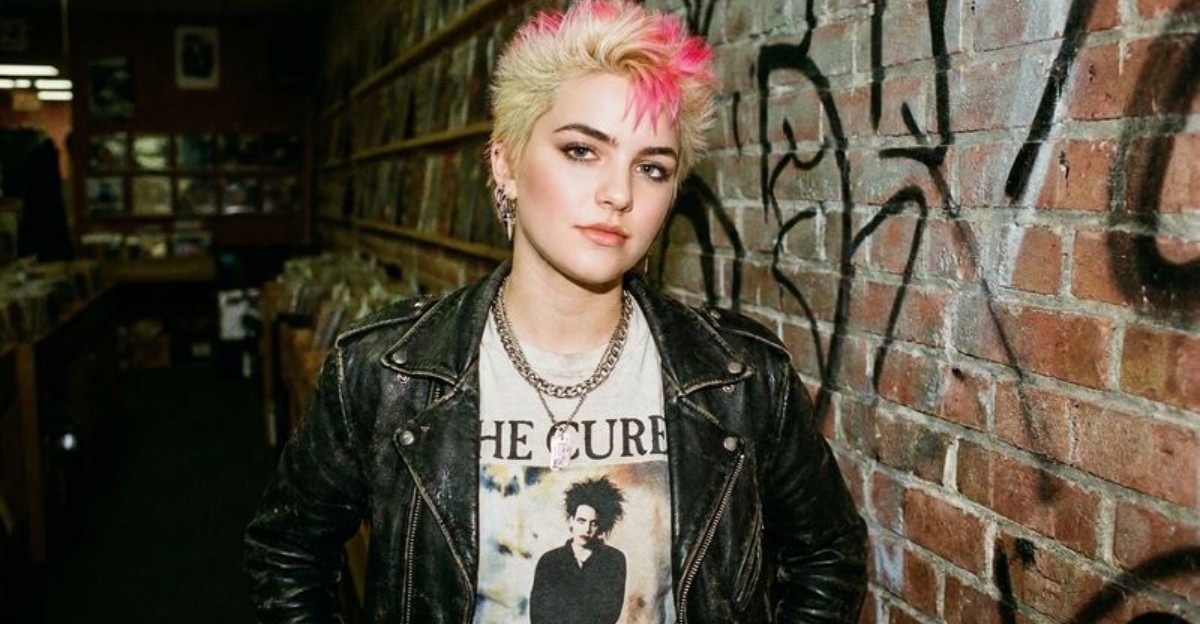
7. Punk Spikes
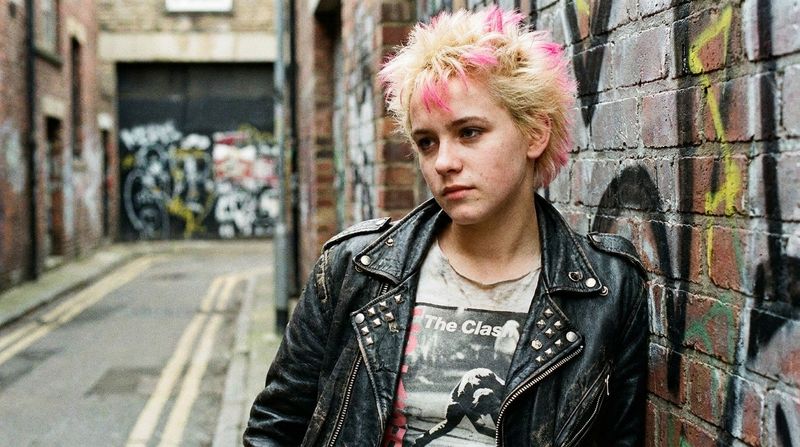
Smooth and polished?
Absolutely not.
Punk-inspired spikes were built to stand up, stand out, and make parents raise an eyebrow.
Short, choppy layers formed the base, often point-cut so the ends stayed textured.
From there, teens reached for strong gel and hairspray.
Some went further with hair glue or even egg whites to hold extreme spikes in place.
Variations got wild.
Shaved sides, mohawks, and tall liberty spikes all came from the same rebellious family.
Bleach and bright dye added another layer of attitude, with neon colors showing up in high school hallways.
Punk culture gave young people a way to show individuality through clothes, music, and hair.
Debbie Harry of Blondie wore choppy, spiky looks that inspired fans.
Want a milder version for today?
A short textured cut with matte paste can give spiky edges without the glue.
If you’re adding bright color, bleaching usually comes first, and that step can be hard on hair, so many people trust a salon for it.
Temporary color sprays and chalks offer a wash-out option.
They’re handy for a concert or costume night when you don’t want to commit.
8. Jheri Curl
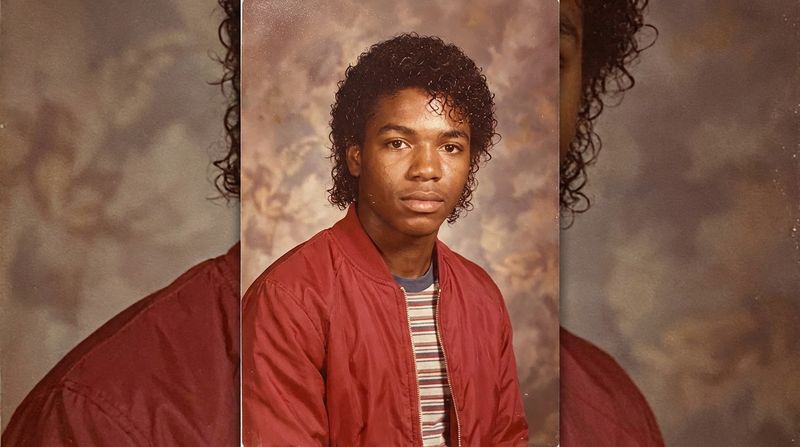
Shine was the whole point.
The Jheri curl gave hair a glossy, wet-looking finish with loose, bouncy curls.
Getting it involved a two-step chemical process.
First, a treatment softened the hair, and then a second step set the new curl pattern.
The result could work on shorter or longer hair, which made it flexible for many people.
Music stars put the style front and center.
Michael Jackson wore curls during the Thriller era, and Lionel Richie, Prince, and Rick James also helped popularize looks in this family.
With faces like those on album covers and music videos, fans naturally took notice.
Keeping the glossy finish meant regular use of moisturizing products.
That routine was part of life for anyone wearing the style.
Today, people chasing defined, shiny curls have many more options, from curl creams to gels that skip harsh chemicals.
If you’re curious about any chemical texture service, talk with a licensed stylist about your hair type and history first.
For a retro photo or costume, a curl-defining cream and a little gloss spray can hint at the look without changing your hair for good.
9. Hi-Top Fade
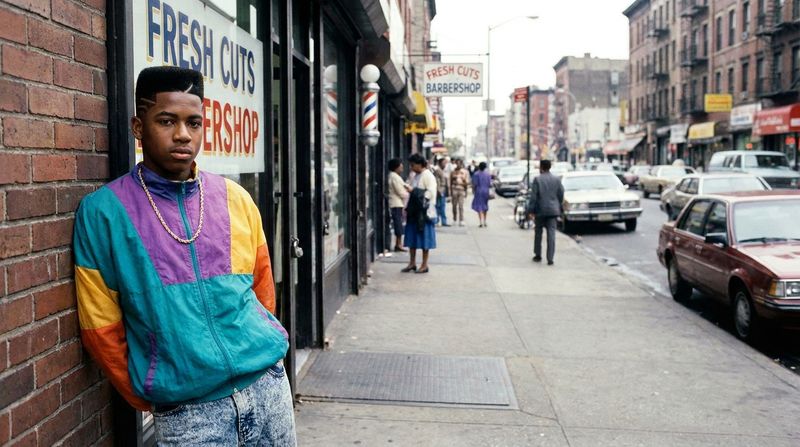
Picture-perfect geometry, cut by hand.
The hi-top fade turned barbers into sculptors and heads into works of art.
Born in Black barbershops in the 1980s, the style kept the sides very short and faded them up into a tall block on top.
Barbers used clippers and combs to shape crisp lines and flat surfaces.
Some versions slanted to one side, a look often called the gumby.
Hip-hop made the cut famous.
Big Daddy Kane, Kid ‘n Play, and Doug E.
Fresh all wore hi-tops as part of their image.
Young Black men across America made it a signature style from the mid-’80s into the early ’90s.
Movies captured it too.
Teen characters in films like Lean on Me and Do the Right Thing wore versions on screen.
The precision is what impresses me most.
A good hi-top needs regular barber visits to keep edges sharp and the top level.
Many wearers added carved lines or designs on the sides for extra personality.
If you want one now, look for a barber who shows fade work in their portfolio.
Then bring photos so you agree on height.
10. The Big Blowout
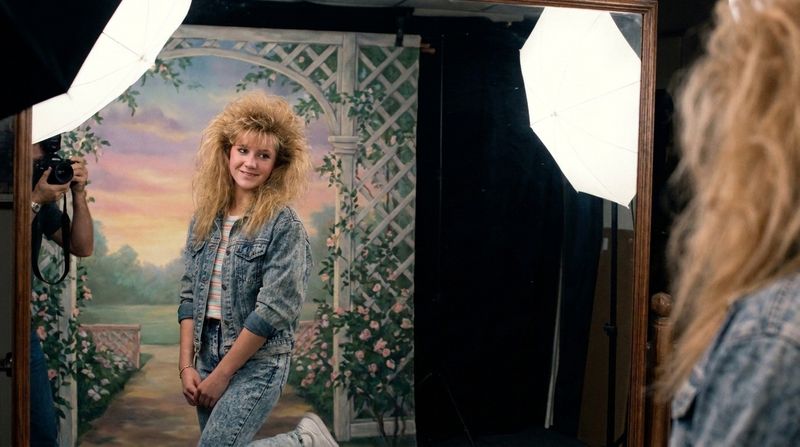
More was more.
Big hair wasn’t one single haircut so much as a rule: fluffier and taller always won.
Building it took several tools at once.
Teens blow-dried hair upside down or with a round brush for lift at the roots.
Heated rollers or curling irons added waves, and teasing pumped up the crown.
Products sealed the deal.
Mousse went in damp hair, gel sometimes helped with shape, and hairspray locked in the final result.
A full bathroom counter of bottles was pretty standard.
John Hughes movies like Sixteen Candles and Pretty in Pink put Molly Ringwald’s fuller hair in front of huge teen audiences.
Prom photos from the decade show the big blowout in full glory.
Modern volume is usually softer and less sticky.
Try volumizing mousse at the roots and a round brush while drying for lift that still moves.
Velcro rollers set on dry hair for twenty minutes can add bounce without extra heat.
Finish with flexible hairspray instead of super-hold if you want hair you can still run fingers through.
Retro party?
That’s your excuse to go full 1986 and tease away.
11. Banana Clip Ponytail
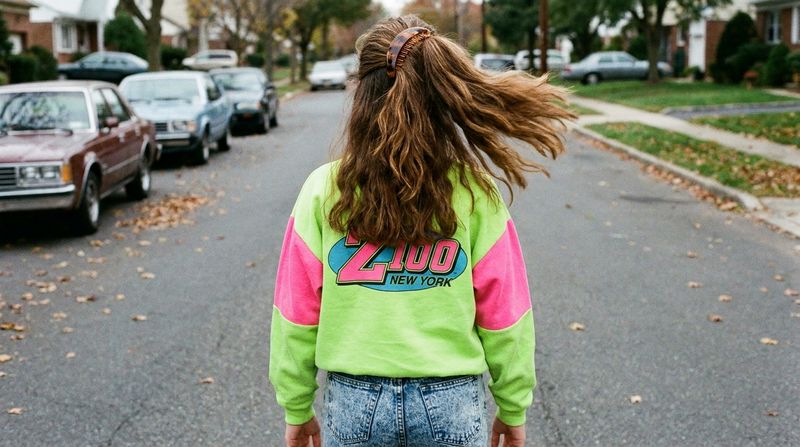
Long, curved, and a little like a plastic claw, the banana clip looked odd sitting on a dresser.
In hair, though, it worked surprisingly well.
Unlike a regular ponytail holder, the clip held hair in a vertical line.
That spread the ponytail out into a fan or crest instead of a tight, flat tail.
You got the neatness of pulled-back hair with plenty of volume.
Using one took a little practice.
Start with brushed hair, maybe with loose waves for bounce, and gather it at the back or mid-height.
Open the clip, slide it under from the bottom, bring it over the top, and snap it shut.
Many girls pulled out a few face-framing tendrils to soften things.
Paired with feathered bangs, the result looked polished without much fuss.
Banana clips have come back in stores, often in tortoiseshell or matte finishes.
Thick or curly hair tends to suit them best because there’s more to fan out.
If your hair is fine, try teasing the crown lightly before clipping.
A slight twist at the base also adds lift and helps the clip grip better.
12. The Rat Tail
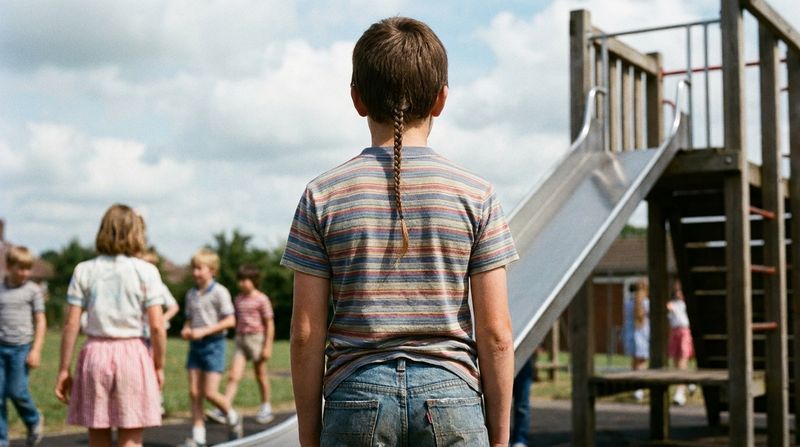
Short all over except for one skinny strand trailing down the neck.
The rat tail was the haircut equivalent of a dare, and plenty of boys took it.
Getting one meant growing out a thin section at the nape while keeping the rest trimmed.
That patience paid off in a tail that could hang straight, get braided, or even be dyed a bright color.
Some kids tried tying it into a tiny ponytail.
The style had roots in punk subculture, and Vietnamese youth helped spread it in Western countries during the 1980s.
Mainstream popularity peaked in the mid-to-late part of the decade.
Jordan Knight of New Kids on the Block gave it a pop-star boost.
People often called it a mullet-lite option.
It offered rebellion with a much smaller commitment, since the rest of the hair stayed short.
Here’s a fun detail about its life span: rat tails faded fast, which makes them a favorite punchline in throwback photos now.
Still, the look keeps popping up on young kids and bold adults.
If you try it, regular trims around the tail keep it looking intentional, and getting rid of it takes just one snip.